Chemistry Technician Visa Pathway to Australia: Complete 2026 Guide
Updated: 16 August 2026
Australia classifies Chemistry Technicians under ANZSCO 311411. VETASSESS conducts the skills assessment. The occupation sits on the Core Skills Occupation List (CSOL) and STSOL, unlocking subclasses 190, 491, 482 and 186. Typical 2026 salaries range AUD $70,000-$95,000, with mining-sector and pharmaceutical labs paying the highest premiums.
Quick Facts: Chemistry Technician Migration Pathway
| Detail | Information |
|---|---|
| ANZSCO Code | 311411 (Chemistry Technician) |
| Skill Level | 2 (AQF Associate Degree, Advanced Diploma or Diploma) |
| Skills Assessment | VETASSESS (Vocational Education and Training Assessment Services) |
| Occupation List | CSOL + STSOL (not on MLTSSL — no 189) |
| Visa Options | 190, 491, 482, 186 |
| Demand Level | Moderate-high — pharmaceutical, mining QA and food-testing labs hiring consistently |
| Salary Range | AUD $70,000-$95,000 (SEEK Salary Hub 2026) |
| Typical 190 Score | 65-75 points with state nomination |
| Key Challenge | "Highly relevant" qualification standard — generic science degrees often fail |
What Chemistry Technicians Do in Australia
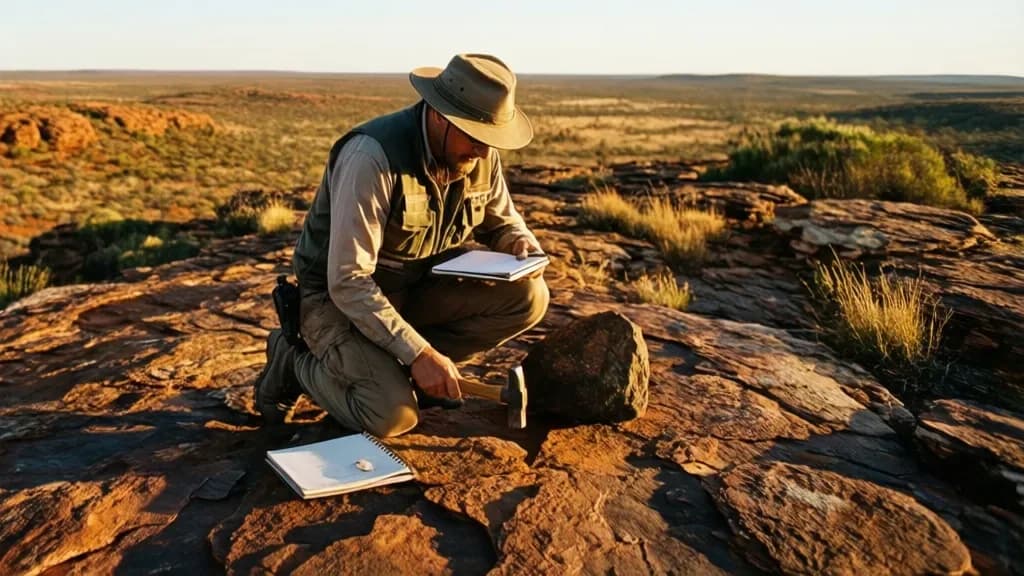
Chemistry Technicians run laboratory tests on organic and inorganic samples and provide technical support to chemists and chemical engineers. The work sits across fuels, agricultural products, food, pharmaceuticals, paints, metals, plastics, textiles, detergents, paper, fertilisers and cosmetics. In Australia, demand concentrates in three sectors: mining and minerals processing (assay labs, environmental monitoring), pharmaceuticals and biotech (CSL, Cochlear, contract manufacturers), and food and beverage QA (Fonterra, CCEP, large bakers and brewers).
Employment sits at roughly 6,500 workers nationally according to Jobs and Skills Australia, with concentrations in Perth (mining labs), Melbourne (pharma and food), Sydney (research and pharma) and regional centres tied to specific industries — for example Kalgoorlie for assay work and Newcastle for materials testing.
Daily duties typically include sample preparation, instrumental analysis (GC, HPLC, ICP-MS, UV-Vis, AAS), method validation, equipment calibration, record keeping in compliance with ISO 17025 or GLP, and report preparation. Senior technicians often supervise junior staff and own specific instruments.
ANZSCO 311411 Code Mapping
Chemistry Technician sits in unit group 3114 alongside Earth Science Technician (311412), Life Science Technician (311413), School Laboratory Technician (311414) and Hydrographer (311415). The named code is used when the work is specifically chemical analysis rather than biology, geology or general school-lab support.
Borderline cases include:
- Food chemists doing mostly compositional analysis — usually 311411
- Pharmaceutical QC analysts running HPLC and dissolution — 311411
- Assay technicians at gold/copper mines — 311411 (the analysis is chemical, not earth-science)
- Environmental samplers doing field collection plus chemical analysis — review carefully against 311412 if earth-science weighting dominates
Where the role is genuinely cross-disciplinary, Science Technicians nec (311499) is the fallback, but VETASSESS prefers the named code where it fits.
Skills Assessment with VETASSESS
VETASSESS is the assessing authority. The current process and fee schedule is published at vetassess.com.au.
Requirements (Pathway 1):
- AQF Diploma or higher in a highly relevant field — chemistry, biochemistry, applied chemistry, chemical engineering technology, food science with strong analytical chemistry
- At least one year of post-qualification employment at appropriate skill level in the last five years
- Documented duties matching the ANZSCO task list
Alternative pathways:
- Pathway 2: AQF Certificate IV + minimum two years employment
- Pathway 3: Non-highly-relevant qualification + three years employment
- Pathway 4: No formal qualification + six years employment (rare success rate)
Assessment cost: AUD $1,070 (Full Skills Assessment, current from 22 October 2025) Priority processing: AUD $825 additional, 10 business days Processing time: 8-10 weeks standard
Common rejection reasons: Position descriptions read as "lab assistant" with cleaning and stock duties dominating; qualifications in general biology or environmental science without enough chemistry units; employer references that conflate research scientist work with technician work.
Visa Pathways for Chemistry Technicians
Subclass 482 — Skills in Demand Visa
The most common offshore route. Mining-sector and pharmaceutical employers sponsor regularly because the work cannot be deferred.
- Visa fee: AUD $4,015 (primary applicant)
- Core Skills salary floor: AUD $79,423 + super (most mid-career technicians exceed this comfortably)
- Processing: 1-3 months for Core Skills nominations
- Duration: Up to 4 years
- Quirk: WA assay labs and Victorian pharma manufacturers are the most experienced sponsors of this code
Subclass 190 — Skilled Nominated Visa
PR with state nomination. Adds 5 points to the points test.
- Visa fee: AUD $6,140 (primary applicant)
- Two-year residency obligation in the nominating state
- Active states for 311411 in 2026: Queensland, Victoria, South Australia, Tasmania
Subclass 491 — Skilled Work Regional Visa
Five-year provisional visa with PR pathway via subclass 191. Adds 15 points.
- Visa fee: AUD $6,140 (primary applicant)
- Regional residence obligation
- Practical fit: Mining labs in regional WA, QLD and SA are natural regional employers; food-processing labs in regional Victoria too
Subclass 186 — Employer Nomination Scheme
Permanent residency through employer sponsorship.
- Visa fee: AUD $6,140 (primary applicant)
- Streams: Direct Entry (3+ years experience) or TRT (after 2 years on 482)
- Used by: Larger pharma and mining employers with established sponsorship programs
189 is not available for 311411 because the code is not on the MLTSSL.
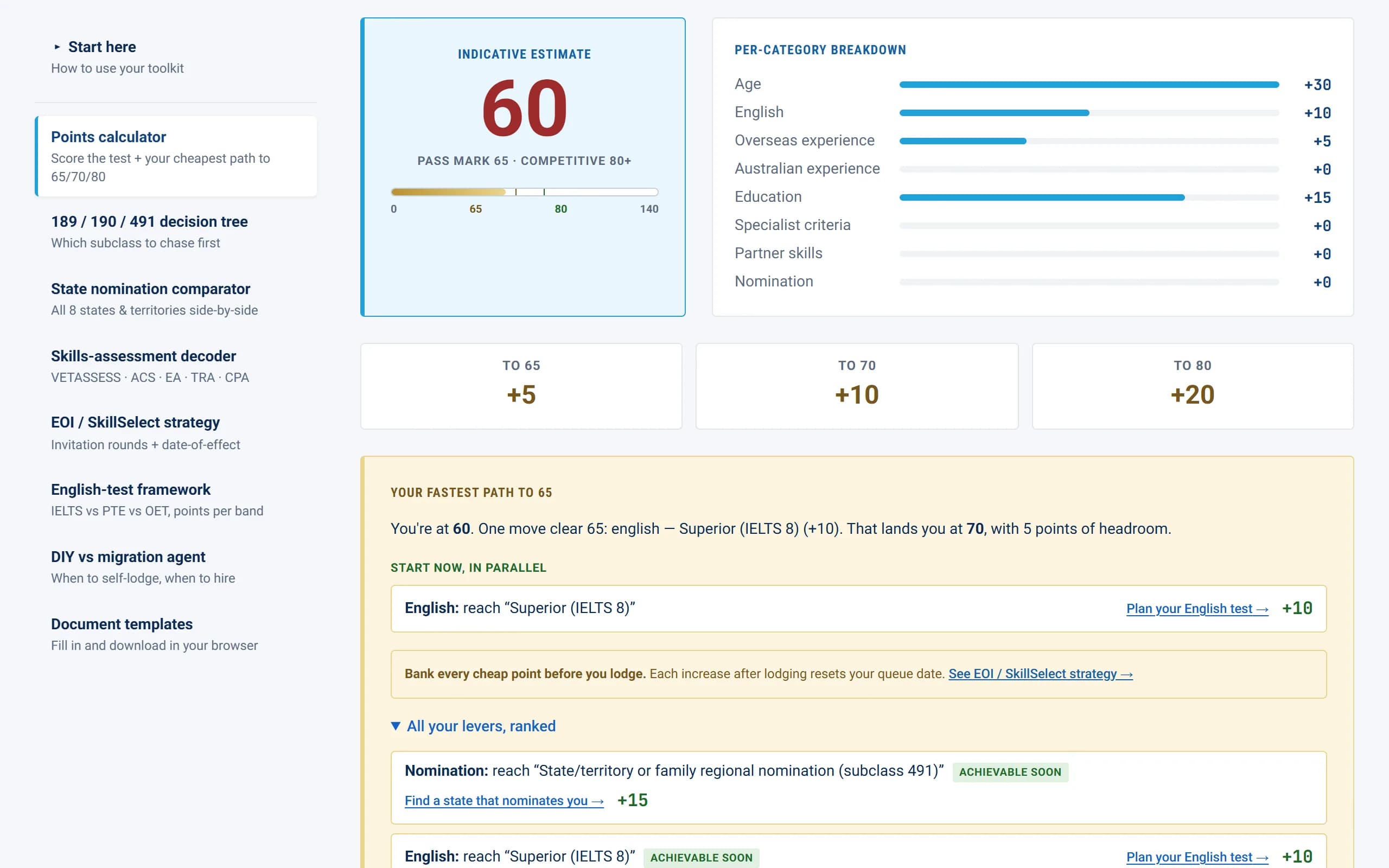
Points Test Strategy
| Points Factor | Points | Notes |
|---|---|---|
| Age (25-32) | 30 | Maximum |
| Age (33-39) | 25 | Strong |
| Bachelor degree | 15 | Most successful applicants hold one |
| Master's degree | 15 | Same points but stronger VETASSESS outcome |
| Diploma | 10 | The skill-level floor |
| English (Proficient — 7.0) | 10 | Most realistic target |
| English (Superior — 8.0) | 20 | Worth the prep |
| Overseas experience (5-7 yrs) | 10 | Common for mid-career applicants |
| State nomination (190) | 5 | Effectively required for this code |
| Regional (491) | 15 | Strongest single boost |
| Partner skills | 5-10 | Assess the partner if possible |
| NAATI/CCL | 5 | Worth the test if eligible |
Realistic scenario — Indian pharma analyst, age 30, Master's in Chemistry, 6 years experience, IELTS 7:
Age 30 + Master's 15 + English 10 + Experience 10 = 65, then +5 state nom = 70 points — competitive for VIC or QLD 190.
Realistic scenario — Filipino assay technician, age 27, Bachelor in Chemistry, 4 years experience, IELTS 7:
Age 30 + Bachelor 15 + English 10 + Experience 5 = 60, then +15 regional = 75 — strong for WA or QLD 491.
State Nomination for Chemistry Technicians
Queensland
Queensland nominates 311411 under its 2025-26 program with a focus on mining-services and food-processing employers. Brisbane's pharmaceutical sector is small but growing, while Townsville, Mackay and the central Queensland mining belt drive analytical-lab demand. The Queensland Skilled Occupation List published by Migration Queensland confirms eligibility annually.
Victoria
Victoria runs a targeted-invitation model rather than a closed list. Chemistry technicians fit the state's advanced manufacturing and life sciences priorities. Melbourne hosts CSL, Pfizer Australia, and contract manufacturers like IDT Australia and Patheon. Three years of relevant experience and a Victorian job offer materially improve invitation odds.
South Australia
South Australia's industries — wine, defence, biopharma, mining — all need chemistry technicians. Adelaide BioMed City and the wine analytical labs in the Barossa and McLaren Vale support steady nomination. The state's offshore list has historically included 311411.
Tasmania
Tasmania nominates the code under subclass 491 only. Salmon-industry water testing, dairy QA, and the University of Tasmania's analytical facilities provide local employment. The state requires evidence of intent to settle, not just nominate.
Western Australia
WA's mining sector creates the deepest demand for assay-focused chemistry technicians, but the state's published occupation list governs access. Confirm 311411 against the current WA list before lodging — WA's list rotates frequently.
Salary and Employment Outlook
| Role | Typical Salary Range (AUD) |
|---|---|
| Junior chemistry technician | $60,000-$75,000 |
| Mid-career technician | $75,000-$92,000 |
| Senior technician / team leader | $90,000-$115,000 |
| QA analyst (pharma) | $80,000-$105,000 |
| Assay technician (FIFO mining) | $95,000-$130,000 |
| Lab manager | $110,000-$140,000 |
Source: SEEK Salary Hub (April 2026) and Talent.com Australia, with mining-sector figures cross-referenced against the 2026 Hays Salary Guide for Resources.
Super is 11.5%. FIFO assay roles often pay site allowances and travel on top of base. Pharmaceutical QC roles in Melbourne and Sydney pay GMP-shift loadings. Wine-industry analytical work in SA pays lower base but offers vintage bonuses.
Sectors and employers
- Mining and minerals processing — Bureau Veritas, ALS Limited, SGS Australia, BHP, Rio Tinto, Fortescue site labs
- Pharmaceutical and biotech — CSL, Pfizer Australia, GlaxoSmithKline, IDT Australia, Patheon
- Food and beverage — Fonterra Australia, Coca-Cola Europacific Partners, Lion, Treasury Wine Estates
- Environmental — Eurofins Environment, ALS Environmental, Envirolab
- Government and research — CSIRO, AGRF, Defence Science and Technology Group
Tips for a Successful Application
1. Pick the named code, not 311499
VETASSESS prefers applicants who use the most specific named code. If 70%+ of your duties are chemical analysis, use 311411 — not Science Technicians nec. The nec route adds a cover-letter justification hurdle that the named code does not.
2. Get duty descriptions in instrumental language
Your references should mention the specific instruments and techniques: HPLC, GC-MS, ICP-MS, AAS, titration, gravimetric analysis, sample preparation, method development. Generic "performed laboratory tests" wording is the most common rejection trigger.
3. Quantify your work
How many samples per day? Which standards (ISO 17025, GLP, GMP, NATA)? Which industries' product specifications? Quantified references convert assessors faster than narrative ones.
4. Confirm "highly relevant" qualification before paying
Pathway 1 requires a qualification VETASSESS considers highly relevant to chemistry technician work. Generic biology or environmental science degrees without analytical chemistry depth fail this test. The body offers a paid pre-assessment service that costs far less than a failed full assessment.
5. Target Victoria or South Australia for pharma careers, WA or QLD for mining
State choice should follow career trajectory. Victoria and SA suit pharma and food-science backgrounds. WA and QLD suit assay and mining-services backgrounds. The cleanest invitations come when the state's industry matches the applicant's CV.
Step-by-Step Migration Roadmap
- Map duties to ANZSCO 311411 using the ANZSCO code finder
- Confirm at least one target state nominates 311411 for your preferred visa stream
- Sit IELTS or PTE — target 7 across all bands minimum, push for Superior English where possible
- Compile employment evidence: payslips, tax records, references with instrument and standards language
- Lodge VETASSESS Full Skills Assessment (AUD $1,070)
- Wait 8-10 weeks; consider priority processing if a state nomination round is imminent
- Submit EOI in SkillSelect with the positive assessment
- Apply for state nomination through the state's own portal
- Receive invitation and lodge visa within 60 days
- Complete health checks, AFP and overseas police certificates
- Receive grant; arrive within the validity period
- Satisfy two-year (190) or regional (491) residency obligation
See the Skills Assessment Bodies Complete List for cross-referencing other potential codes.
Frequently Asked Questions
Is Chemistry Technician on the MLTSSL in 2026?
No. ANZSCO 311411 sits on the CSOL and STSOL but not the MLTSSL. The 189 Skilled Independent visa is therefore not available. State-nominated 190, regional 491, employer-sponsored 482 and 186 are the four pathways. See the 2026 SOL guide for current list assignments.
Can I migrate with a Bachelor of Science (general) rather than a Chemistry Bachelor?
Possibly, but VETASSESS will test how much chemistry content the degree contained. Generic BSc graduates with only first-year chemistry typically fail Pathway 1. Pathway 3 (non-highly-relevant qualification plus three years of relevant employment) is the realistic route for these applicants. Honours work and postgraduate study in analytical chemistry can rescue an otherwise borderline degree.
Which states currently nominate Chemistry Technicians?
Queensland, Victoria, South Australia, Tasmania and (intermittently) Western Australia nominate 311411 in 2026. NSW does not currently list the code. Always confirm against the state's own published occupation list before lodging an EOI or paying for VETASSESS.
Does Australian pharmaceutical experience help my application?
Yes, significantly. One year of Australian work earns 5 points and dramatically improves state-nomination odds. International graduates already in Australia on the 485 Temporary Graduate visa often use that year to convert into 482 or 190.
How is 311411 different from 234212 Food Technologist or 234211 Chemist?
234211 Chemist is Skill Level 1, requires a Bachelor degree minimum, and covers chemists who design analysis methods or lead research — not technicians who execute them. 234212 Food Technologist is also Skill Level 1 and focuses on product development. 311411 Chemistry Technician is Skill Level 2, focuses on running tests under chemist supervision, and accepts Diploma-level qualifications. Choosing the right level matters — overstating leads to negative outcomes.
What's the realistic salary for a mining assay technician in WA?
FIFO assay technicians at gold, lithium and iron-ore operations earn AUD $95,000-$130,000 base, with site allowances and roster premiums on top. Total packages including super and bonuses can reach $150,000+ for senior technicians on 2:1 rosters. Source: SEEK Salary Hub mining-laboratory roles, Kalgoorlie and Pilbara postings, 2026.