Diesel Motor Mechanic Visa Pathway to Australia: Complete 2026 Guide
Updated: 16 August 2026
Australia classifies Diesel Motor Mechanic under ANZSCO 321212. Trades Recognition Australia (TRA) conducts the skills assessment via the Offshore Skills Assessment Program or the Job Ready Program. The occupation sits on the CSOL and MLTSSL, unlocking subclasses 189, 190, 491, 482, and 186. Typical 2026 pay ranges AUD $80,000-$110,000, with mining FIFO rates pushing AUD $140,000-$180,000+ (SEEK, April 2026).
Quick Facts: Diesel Motor Mechanic Migration Pathway
| Detail | Information |
|---|---|
| ANZSCO Code | 321212 (Diesel Motor Mechanic) |
| Skill Level | 3 (AQF Certificate III or IV, or equivalent experience) |
| Skills Assessment | TRA via OSAP (offshore) or Job Ready Program (onshore) |
| Occupation List | CSOL + MLTSSL |
| Visa Options | 189, 190, 491, 482, 186 |
| Demand Level | Critical — mining, freight, and agricultural sectors all report sustained shortages |
| Salary Range | AUD $80,000-$110,000 (SEEK, April 2026); FIFO $140,000-$180,000+ |
| Typical 189 Score | 65-75 points (trades invited at lower thresholds than professions) |
| Key Challenge | TRA assessment requires either an offshore Technical Interview with strong English, or a 12+ month Job Ready Program in Australia |
What Diesel Motor Mechanics Actually Do in Australia
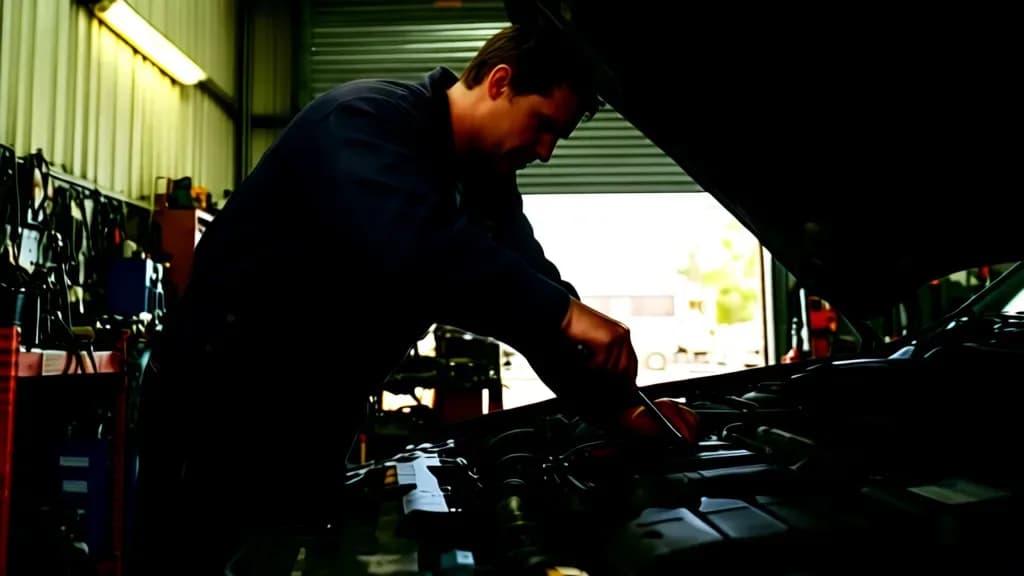
A Diesel Motor Mechanic services, diagnoses, and repairs diesel-powered engines and the mechanical systems wrapped around them — transmissions, drive trains, steering, suspension, hydraulics, and braking. The work covers heavy road transport (prime movers, B-doubles, road trains), buses, mining and earthmoving equipment (Caterpillar 793F haul trucks, Komatsu PC8000 excavators, Liebherr drills), agricultural machinery (John Deere combines, Case IH tractors), and the marine and rail sectors.
Demand is structural and broad. The Pilbara, Bowen Basin, Hunter Valley, Goldfields, and Galilee Basin all need diesel mechanics in volume — mining contractors WestTrac, Liebherr, Hastings Deering, Komatsu, and Volvo CE sponsor international tradespeople routinely. Linfox, Toll, Followmont, Cement Australia, Aurizon, and Pacific National sustain demand outside mining. Agricultural service centres across the Riverina, Darling Downs, and Wimmera struggle to fill workshop vacancies.
Australia's diesel mechanic shortage has been on Jobs and Skills Australia shortage signals for multiple years. FIFO and DIDO rosters from Perth and Brisbane regularly clear AUD $140,000 base plus allowances. Long-cycle field service technicians in iron ore can exceed AUD $200,000 when overtime and on-call premiums are included.
ANZSCO 321212 Mapping
ANZSCO 321212 covers tradespeople who service, diagnose, and repair diesel engines and the associated mechanical systems used in motor vehicles, mobile plant, ships, and stationary engines. Typical tasks include:
- Diagnosing faults in diesel engines and associated mechanical and hydraulic systems
- Dismantling, repairing, and reassembling fuel injection systems, turbochargers, exhaust systems, and engine blocks
- Servicing transmissions, drive shafts, differentials, and braking systems on heavy vehicles
- Performing scheduled preventive maintenance against manufacturer specifications
- Recording fault diagnoses and repairs in fleet management or workshop management systems
321212 is distinct from 321211 Motor Mechanic (General), which covers petrol-engine and light-vehicle work, and from 321111 Automotive Electrician, which covers electrical and electronic systems. There is a separate sub-classification 321214 for Mobile Plant Mechanic; check your duties against both 321212 and 321214 before choosing.
Skills Assessment
Trades Recognition Australia (TRA)
Authoritative reference: tradesrecognitionaustralia.gov.au.
TRA offers two assessment routes for Diesel Motor Mechanic.
Route 1 — Offshore Skills Assessment Program (OSAP)
For applicants outside Australia with a recognised overseas qualification.
Requirements:
- A formal diesel mechanic trade qualification recognised in the home country (typically 3-4 years of training)
- At least 3 years of paid post-qualification work as a diesel motor mechanic
- 12 months of recent trade currency (work in the occupation within the last 3 years)
- Documentary evidence stage followed by a Technical Interview in English (no interpreter permitted)
Cost: Around AUD $1,000-$2,000 depending on program and add-ons (check the TRA fees page for current figures)
Processing time: Documentary stage 8-12 weeks; Technical Interview scheduled after fees clear
Route 2 — Job Ready Program (JRP)
For applicants onshore, usually after completing an Australian Certificate III in Heavy Commercial Vehicle Mechanical Technology or Mobile Plant Technology. Four stages:
- Provisional Skills Assessment (PSA) — confirms qualification authenticity. Around AUD $300.
- Job Ready Employment (JRE) — minimum 12 months full-time paid employment (38 hrs/week) with a TRA-approved employer. Around AUD $450.
- Job Ready Workplace Assessment (JRWA) — after 6+ months of JRE, a TRA-approved assessor conducts a workplace competency assessment.
- Job Ready Final Assessment (JRFA) — final sign-off.
The full JRP must be completed within 3 years of a successful PSA. Most international students who arrived on a 500 study visa and progressed onto a 485 graduate visa use the JRP pathway.
Common rejection reasons:
- Insufficient or non-continuous post-qualification experience
- Documentary evidence that does not map cleanly to the AQF Certificate III requirements
- Reference letters that describe general mechanical work without specifically addressing diesel engines, fuel injection systems, or heavy vehicle drive trains
- Trade currency gaps (more than 3 years without paid work in the occupation)
Visa Pathways for Diesel Motor Mechanics
Subclass 482 — Skills in Demand Visa
Employer-sponsored temporary visa. Often the fastest legal route into Australian work, particularly for mining and heavy transport employers.
- Visa fee: AUD $3,210 (Core Skills stream, primary applicant)
- Salary thresholds (to 30 June 2026): Core Skills stream AUD $76,515; Specialist Skills stream AUD $141,210. Indexed to AUD $79,499 and AUD $146,717 from 1 July 2026.
- Processing time: Specialist Skills stream 7-14 days; Core Skills stream around 8 months for 90% of cases (Home Affairs, April 2026)
- Reality check: Many FIFO diesel mechanic roles in the Pilbara and Bowen Basin exceed AUD $141,210 base, opening the rapid Specialist Skills pathway.
Subclass 491 — Skilled Work Regional Visa
Regional nomination adds 15 points. A five-year provisional visa with a pathway to PR via subclass 191.
- Visa fee: AUD $6,140
- Processing time: 50% within 6-20 months; 90% within 15-28 months (Home Affairs, April 2026)
- Reality check: Mining and agricultural diesel work is almost entirely in regional zones, making 491 a natural fit.
Subclass 190 — Skilled Nominated Visa
State nomination adds 5 points and grants permanent residency.
- Visa fee: AUD $6,140
- Obligation: Live and work in the nominating state for 2 years
- Reality check: Western Australia and Queensland are the dominant nominators for 321212 in 2025-26.
Subclass 189 — Skilled Independent Visa
Permanent residency through the points test. Available because 321212 is on the MLTSSL.
- Visa fee: AUD $6,135
- Minimum points: 65; trades have historically invited at 65-75 in skilled visa rounds
- Processing time: Median 6-9 months following March 2026 reforms
- Reality check: Diesel Motor Mechanic invites at materially lower thresholds than accounting or ICT, making 189 a real option for higher-experience candidates.
Subclass 186 — Employer Nomination Scheme
Permanent residency through employer sponsorship.
- Visa fee: AUD $6,140
- Streams: Direct Entry (3 years' relevant experience) or Temporary Residence Transition (after 2 years on 482)
- Processing time: Direct Entry median 12 months; 90th percentile 19 months (Home Affairs, April 2026)
Points Test Strategy
Trade occupations score similarly to other Cert III/IV occupations. Realistic invitation range sits at 65-75 points.
| Points Factor | Points | Notes |
|---|---|---|
| Age 25-32 | 30 | Maximum |
| Age 33-39 | 25 | Still strong |
| AQF Certificate III/IV or equivalent | 10 | Standard trade qualification |
| Bachelor degree | 15 | Rare for trades but possible |
| Superior English (IELTS 8 / PTE 79) | 20 | High lever, hard to achieve |
| Proficient English (IELTS 7 / PTE 65) | 10 | Realistic target |
| Competent English (IELTS 6 / PTE 50) | 0 | Floor; required to qualify |
| 5-7 years skilled employment overseas | 10 | Standard for senior mechanics |
| 8+ years skilled employment overseas | 15 | |
| State nomination (190) | 5 | |
| Regional nomination (491) | 15 | The biggest controllable lever |
| Partner with skilled occupation | 10 |
Realistic scenario
South African-trained diesel mechanic, 33, 11 years' experience in mining service, IELTS 7: Age 25 + Cert III/IV 10 + Proficient English 10 + 8+ years experience 15 = 60. Add 491 regional (+15) = 75 points, very competitive for invitation rounds in trade categories. With partner skill points (+10), total reaches 85.
State Nomination
Western Australia
The WASMOL for 2026 sits across two schedules and lists Diesel Motor Mechanic prominently. WA has the strongest 321212 demand by an order of magnitude — Pilbara iron ore, Goldfields nickel and gold, and the diversifying lithium sector all sustain hiring. 3,000 subclass 190 places and 2,000 subclass 491 places for 2025-26.
Queensland
QSOL for 2025-26 includes diesel motor mechanic under heavy vehicle and mining categories. Queensland's 2,600 nomination places concentrate on regional centres including Mackay, Townsville, Rockhampton, and Toowoomba — all major mining service hubs for the Bowen and Galilee Basins.
South Australia
SA's 2025-26 occupation list includes diesel mechanic roles under regional categories supporting the BHP Olympic Dam expansion and Whyalla steelworks. Adelaide and regional SA both nominate.
Northern Territory
The NT MINT (Migration NT) program nominates diesel mechanic candidates for both 190 and 491. The NT has the lowest competition of any nomination program in the country, and demand from mining and remote infrastructure sectors is high.
Tasmania
Tasmania includes Diesel Motor Mechanic under its 491 list for regional applicants with a job offer or a confirmed pathway to one. Tasmania's salmon, forestry, and freight sectors all sustain demand.
Salary and Employment Outlook
What Diesel Motor Mechanics earn in 2026
| Role | Typical Salary Range (AUD, ex super) |
|---|---|
| Apprentice / Year 1-3 | $42,000-$65,000 |
| Qualified Diesel Mechanic | $80,000-$95,000 |
| Heavy Diesel Mechanic | $90,000-$110,000 |
| Field Service Technician | $100,000-$130,000 |
| FIFO Mining (entry) | $110,000-$140,000 |
| FIFO Mining (experienced, high cycle) | $140,000-$180,000+ |
| Field Service / Senior FIFO with overtime | $180,000-$220,000+ |
| Workshop Foreman / Supervisor | $115,000-$150,000 |
Source: SEEK Career Advice (April 2026, Diesel Mechanic average AUD $80,000-$95,000; Heavy Diesel Mechanic AUD $90,000-$110,000), and currently advertised FIFO rates from WestTrac, Liebherr, Hastings Deering, and similar contractors.
Hourly contractor rates regularly range AUD $75-$105 per hour for field service technicians on FIFO rotations, with flight, accommodation, and meal allowances on top of base rates.
Highest-paying sectors
- FIFO mining services — WestTrac, Liebherr, Hastings Deering, Komatsu, Volvo CE, Macmahon
- Heavy road freight — Linfox, Toll, Cement Australia, Followmont, Lindsay
- Rail rolling stock — Aurizon, Pacific National, Queensland Rail, ARTC
- Agricultural service — John Deere, Case IH, AGCO dealerships in regional NSW, VIC, and SA
- Marine and ports — DP World, Patrick Terminals, ferry operators
Tips for a Successful Application
1. Use OSAP if your overseas qualification is solid
Applicants from South Africa, the Philippines, the UK, Ireland, and many EU countries have qualifications that map cleanly to AQF Certificate III. OSAP is significantly faster than JRP and avoids the cost of Australian study. Confirm your qualification level on the country-specific guidance in the TRA portal before choosing.
2. Document continuous trade currency
The fastest way to fail TRA is a gap in your work history without contemporaneous evidence. Build a continuous chronological file: employment letters with specific duties, payslips, tax assessments, photographs of completed work, and brand-specific training certificates (Caterpillar, Cummins, Detroit Diesel, Scania).
3. Target the FIFO market as your first Australian role
Pilbara and Bowen Basin contractors actively sponsor 482 visas. Starting in a FIFO role often:
- Clears the Specialist Skills Income Threshold (AUD $141,210)
- Triggers the rapid 7-14 day 482 processing
- Provides Australian experience that strengthens future 186 TRT applications
- Pays back relocation costs faster than metropolitan workshop roles
4. Build brand-specific qualifications
Caterpillar, Komatsu, Liebherr, and Volvo CE all run their own brand training programs. Many Australian employers prefer brand-certified mechanics. If you can complete supplier training in your home country before applying, the employer-sponsorship route gets materially easier.
5. English remains the visa gating factor
Subclass 482 and 186 require Competent English; the TRA Technical Interview must be conducted in English without an interpreter. Many strong tradespeople fail at this step. Build a 6-month English preparation plan including PTE practice; aim for Proficient (PTE 65) to also collect 10 points.
Step-by-Step Migration Roadmap
- Confirm ANZSCO mapping to 321212 using the ANZSCO code finder — verify duties are primarily diesel engine and heavy vehicle, not light vehicle
- Verify list status via the Skilled Occupation List 2026 and the Core Skills Occupation List
- Choose OSAP or JRP — see the skills assessment bodies hub
- Compile trade evidence — employer letters with specific diesel and heavy vehicle duties, payslips, tax records, photos of completed jobs
- Sit IELTS or PTE — target Proficient English (7.0 / 65+); Competent is the visa floor
- Submit TRA application — OSAP for offshore, PSA + JRP for onshore
- Complete Technical Interview (OSAP) or 12-month JRE + JRWA + JRFA (JRP)
- Calculate points including age, qualification, English, and post-qualification experience
- Submit EOI in SkillSelect for 189, 190, or 491
- Apply for state nomination — WA, QLD, NT, or SA
- Alternatively, secure 482 employer sponsorship through mining contractors or fleet operators
- Receive invitation, lodge visa, complete medicals and police checks, and relocate
Frequently Asked Questions
Is Diesel Motor Mechanic in shortage in Australia in 2026?
Yes. Jobs and Skills Australia has flagged diesel motor mechanic and heavy vehicle technician roles as in shortage in recent Skills Priority List and Occupation Shortage List analyses. Sponsorship volume, FIFO sign-on bonuses regularly exceeding AUD $20,000, and base rates above metropolitan industrial averages all confirm structural undersupply.
What's the difference between Diesel Motor Mechanic (321212) and Motor Mechanic (321211)?
321212 covers diesel engines and the heavy vehicles and equipment built around them. 321211 (Motor Mechanic General) covers petrol-engine light vehicles. Many service workshops handle both, but for migration you must nominate the code that matches the majority of your duties. References must describe diesel-specific work — fuel injection, turbochargers, heavy-vehicle drive trains — if you are nominating 321212.
Can I work for an Australian employer while completing the Job Ready Program?
Yes — the Job Ready Employment stage requires it. You need to be working full-time (38 hours per week) with a TRA-approved employer in the nominated occupation for at least 12 months. Most candidates hold a 485 graduate visa with full work rights during JRE. Some 482 visa holders also qualify, subject to the program's eligibility rules.
Do I need brand-specific certifications?
Not for visa purposes. The skills assessment is based on AQF-level competency, not brand certification. However, Australian employers heavily prefer brand-certified mechanics, especially Caterpillar, Komatsu, Liebherr, and Cummins. Brand training improves your sponsorship prospects materially, particularly for FIFO mining roles.
Will I have to live in a regional area on a 491 visa?
Yes. The 491 requires you to live, work, and study only in designated regional areas for the visa duration. For diesel mechanics this is rarely a problem — most demand is in mining-belt cities (Karratha, Mackay, Kalgoorlie, Mount Isa), regional freight hubs, and agricultural service centres, all of which qualify as regional under the migration framework.
How does mining FIFO work for migrants?
FIFO (fly-in, fly-out) means you live in a major city (typically Perth or Brisbane) and fly to a remote mine site for a fixed roster — often 2 weeks on / 1 week off, 1 week on / 1 week off, or 8 days on / 6 days off. The employer provides flights, accommodation, and meals on site. FIFO rosters allow visa holders to satisfy regional residency requirements (the employment is in a regional zone), while keeping family settled in a major city.
For broader trade context, see the Automotive Mechanic Visa Pathway and the Automotive Electrician Visa Pathway. Compare overall demand on the most in-demand occupations list for 2026.