Engineering Patternmaker Visa Pathway to Australia: Complete 2026 Guide
Updated: 16 August 2026
Australia classifies Engineering Patternmaker under ANZSCO 323411. Trades Recognition Australia (TRA) is the assessing authority. The occupation sits on the Core Skills Occupation List (CSOL) only, unlocking subclasses 482 and 186 — there is no Subclass 190 or 491 pathway in 2026. Typical 2026 salaries range AUD $60,000-$100,000. Employer sponsorship is the dominant route.
Quick Facts: Engineering Patternmaker Migration Pathway
| Detail | Information |
|---|---|
| ANZSCO Code | 323411 (Engineering Patternmaker) |
| Skill Level | 3 (AQF Certificate III or IV with relevant trade experience) |
| Skills Assessment | TRA (Trades Recognition Australia) |
| Occupation List | CSOL only (not on MLTSSL, STSOL or ROL) |
| Visa Options | 482, 186 |
| Demand Level | High — small occupation pool with persistent shortage; foundries and casting houses report difficulty filling pattern shops |
| Salary Range | AUD $60,000-$100,000 (SalaryExpert and SEEK Talent, 2026) |
| Typical 189 Score | Not applicable — 323411 is not on the MLTSSL |
| Key Challenge | No state nomination pathway — must secure an Australian employer sponsor |
What an Engineering Patternmaker Does in Australia
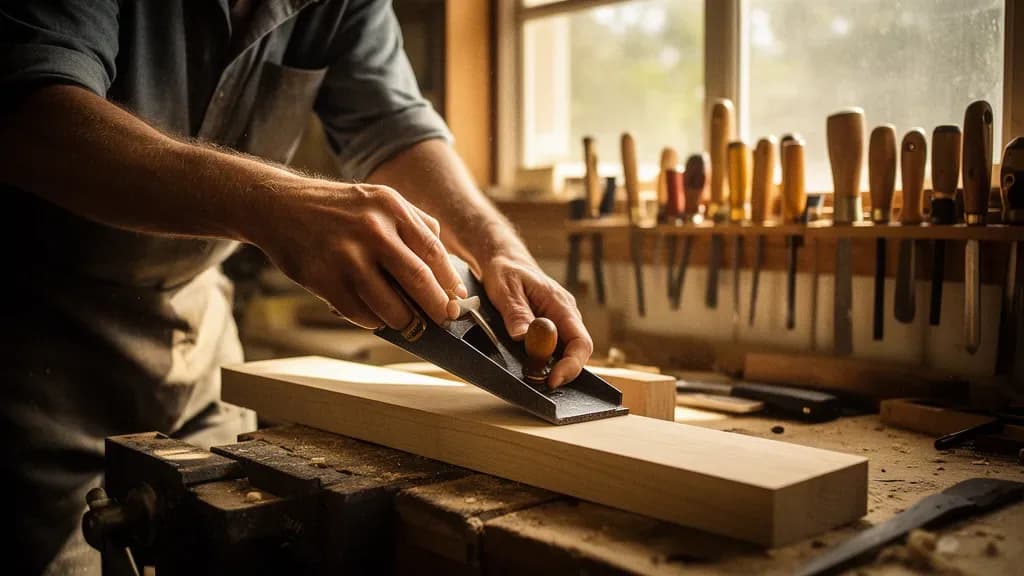
Patternmakers design, fabricate and modify the wooden, metal, plastic or composite patterns used to produce metal castings in foundries. The work spans sand casting, investment casting, and increasingly hybrid workflows that combine CAD modelling with 3D-printed pattern components. Modern shops use SolidWorks, Mastercam or AutoCAD to model the part, then machine or print the pattern from that model.
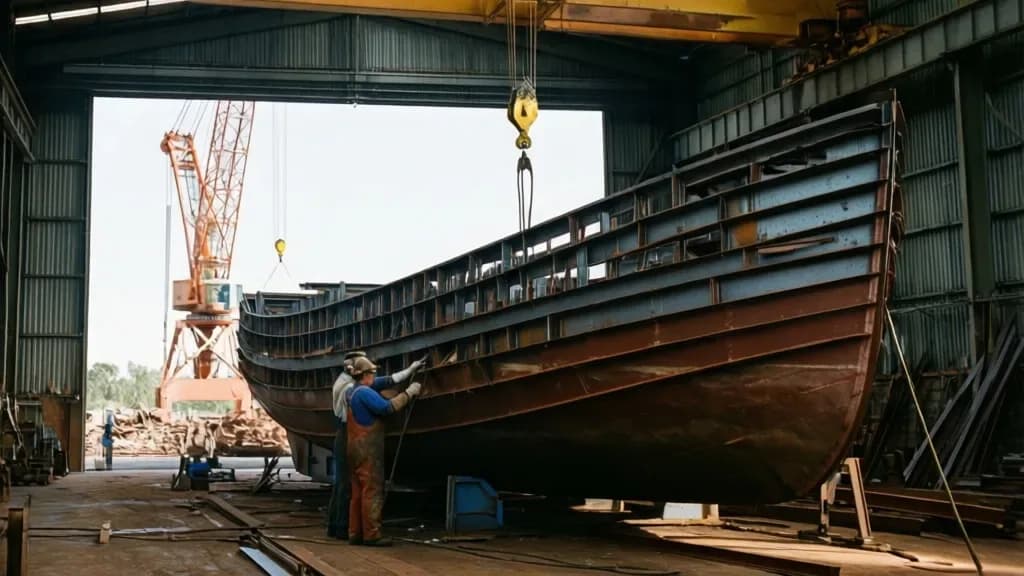
Australian demand sits in three pockets. Heavy industry foundries supply the mining sector with pump housings, wear parts and large-volume castings — operators include Bradken (now Hitachi Construction Machinery), Weir Minerals and ME Elecmetal. The defence and rail sectors drive smaller-batch precision casting, with foundries supplying components to Pacific National, Downer Rail and the naval shipbuilding programme. A third pocket sits in restoration and heritage casting, where one-off patterns are commissioned for industrial restoration and architectural reproduction. Geographic concentration follows the foundry footprint: Newcastle, Wollongong, western Sydney, Geelong, Melbourne's outer west and Adelaide host the bulk of pattern shops.
ANZSCO 323411 Code Mapping
ANZSCO 323411 sits inside Sub-Major Group 32 (Automotive and Engineering Trades Workers), Minor Group 3234 (Toolmakers and Engineering Patternmakers). The official task profile covers interpreting drawings and specifications, selecting materials, fabricating patterns and core boxes, fitting and assembling pattern parts, and modifying patterns to correct casting defects.
The code is distinct from 323412 Toolmaker, which produces dies, jigs and fixtures rather than patterns. Patternmakers focus on the form used to create the mould; toolmakers focus on the tools used to cut or shape parts. If your work spans both — common in small foundries — your employment references should document the relative weighting. TRA will assess against the dominant duty set.
Skills Assessment with TRA
Trades Recognition Australia is the only assessing body for ANZSCO 323411.
Offshore Skills Assessment (OSA)
For applicants outside Australia from eligible countries, the OSA is the standard pathway.
- Requirements: Recognised AQF Certificate III equivalent in patternmaking or foundry trade, at least three years of relevant post-qualification employment, employment evidence matched to ANZSCO task descriptions
- Assessment cost: Approximately AUD $1,070 for the standard OSA (verify the current fee on the TRA fee schedule before lodging)
- Processing time: 12-16 weeks under standard conditions
- Common rejection reasons: Foundry experience documented without specific patternmaking duties, qualifications that fall short of Certificate III equivalent, and insufficient employment evidence (payslips, signed organisational references, tax records)
Job Ready Program (JRP) — Onshore
The JRP applies to onshore applicants (typically Subclass 485 holders) and to applicants from countries not eligible for the OSA pathway.
- Provisional Skills Assessment (PSA)
- Job Ready Employment (JRE) — minimum 12 months of paid skilled employment monitored by TRA
- Job Ready Workplace Assessment (JRWA) — practical assessment on site
- Job Ready Final Assessment (JRFA)
- JRE fee: AUD $490
- Total programme cost: AUD $2,800-$3,500 across the four stages
- Processing time: 12-18 months end-to-end
Refer to the complete list of skills assessment bodies for context on how TRA fits alongside other assessing authorities.
Visa Pathways for Engineering Patternmakers
The CSOL-only listing for 323411 narrows the visa options materially. There is no Subclass 189, 190, 491 or DAMA-default pathway for this occupation in 2026.
Subclass 482 — Skills in Demand Visa (Core Skills Stream)
This is the dominant entry route for offshore engineering patternmakers. ANZSCO 323411 sits on the CSOL, which is the list used for the Core Skills stream.
- Visa fee: AUD $3,210 primary applicant
- Salary requirement: Core Skills Income Threshold of AUD $76,515 per year for applications lodged before 1 July 2026, lifting to AUD $79,499 from that date; employer must also pay the Annual Market Salary Rate
- Processing time: Core Skills stream applications run 2-8 months; medium-term applications target 14 days for half of cases under the new fast-track system
- Eligibility constraint: Employer must be an approved Standard Business Sponsor or accredited sponsor; duties must match ANZSCO 323411
- Quirk that matters: Many Australian foundries are SMEs without an established sponsorship history. Be prepared to provide the employer with reference material on the sponsor accreditation process — the SBS pathway takes 4-8 weeks separately from the visa itself
Subclass 186 — Employer Nomination Scheme
Permanent residency through employer sponsorship via Direct Entry or Temporary Residence Transition.
- Visa fee: AUD $6,140 primary applicant
- Processing time: Direct Entry currently 12-20+ months; TRT comparable median
- Eligibility constraint: Direct Entry requires positive TRA assessment plus at least three years of skilled experience; TRT requires the prerequisite 482 hold period
- Quirk that matters: With CSOL-only status, ANZSCO 323411 qualifies for the Direct Entry stream of Subclass 186 — confirm the foundry employer is willing to commit to a permanent nomination before pursuing the 482 stepping stone
State Nomination
ANZSCO 323411 is not currently on any state's 190 or 491 nomination list in 2026, because the federal CSOL-only listing rules out state-nominated pathways by default. State governments select from MLTSSL and STSOL primarily for 190 and 491, with CSOL-only occupations generally excluded.
In practice this leaves employer sponsorship as the only viable route. The exception would be a regional DAMA (Designated Area Migration Agreement) that explicitly names 323411 — these are negotiated locally and rare. Refer to the DAMA labour agreements explainer for context on whether a regional agreement might apply to your circumstance.
Salary and Employment Outlook
| Role | Typical Salary Range |
|---|---|
| Apprentice / 1st-year Patternmaker | AUD $45,000-$55,000 |
| Pattern Maker (3-7 years) | AUD $70,000-$85,000 |
| Senior Pattern Maker | AUD $85,000-$100,000 |
| Pattern Shop Foreman | AUD $95,000-$115,000 |
| CAD-CAM Pattern Specialist | AUD $90,000-$115,000 |
Figures draw on SEEK Talent 2026 ($80,000-$100,000 average band), SalaryExpert 2026 ($81,278 average gross), and Indeed Australia data. Sydney pays a modest premium (SalaryExpert lists $86,431 gross for Sydney). Total packages typically include 11.5% superannuation and overtime loadings — heavy industry foundries often offer rostered overtime that lifts effective earnings by 10-20%.
The highest-earning niches are CAD-driven pattern specialists working in defence and aerospace casting, where 3D modelling and digital workflow skills command a premium. Heritage and architectural patternmakers serving the restoration market sit at the lower end of the salary band, but can charge premium piecework rates as self-employed contractors after permanent residency.
Tips for a Successful Application
1. Lead Employer Outreach with the SBS Status Question
Many small foundries have never sponsored a 482 visa. Before investing time, ask the employer whether they hold or are willing to apply for Standard Business Sponsorship. If they decline, move on. If they are open, factor 4-8 weeks for SBS approval into your timeline.
2. Document CAD/CAM Skills Separately
Modern patternmaking is increasingly digital. References that list SolidWorks, Mastercam, AutoCAD or Inventor proficiency, plus any 3D-printing or CNC pattern-machining experience, materially improve sponsorship attractiveness. Australian foundries are short of digitally fluent patternmakers in particular.
3. Target Foundries with Recent Sponsorship History
Bradken, ME Elecmetal, Weir Minerals, Mecca Engineering and other large-volume foundries have sponsored skilled migrants previously. Smaller pattern shops often haven't. LinkedIn employment histories will indicate which employers have international team members — a useful proxy for sponsorship readiness.
4. Calibrate Salary Against the Annual Market Salary Rate
Patternmaker salaries cluster around $80,000-$95,000 nationally. The Core Skills Income Threshold of $76,515 (rising to $79,499 from 1 July 2026) is below typical pattern shop pay, which simplifies the salary test. The market rate is the harder constraint — Home Affairs will reject nominations that fall below AMSR even where CSIT is met.
5. Plan the Onshore Pathway Conservatively
If you are onshore on a Subclass 485, the JRP timeline plus 482 processing plus 186 timeline can run three years from start to permanent residency grant. Verify your 485 expiry date allows that runway — bridging visa arrangements work, but compress your room for error.
Step-by-Step Migration Roadmap
- Confirm ANZSCO 323411 is the correct code — review the ANZSCO code finder and compare your duties against the official task list
- Confirm CSOL status — verify 323411 on the CSOL for the visa stream you are targeting
- Compile qualifications and employment evidence — Certificate III equivalent plus three years of documented patternmaking work
- Sit IELTS or PTE Academic — Competent English minimum; higher band scores help with downstream 186 applications
- Identify and approach Australian foundry employers — focus on sponsorship-experienced operators
- Lodge TRA application — OSA if eligible offshore, JRP if onshore
- Receive positive skills assessment
- Employer lodges Subclass 482 nomination — confirm SBS status first
- Lodge Subclass 482 visa application — within validity of nomination
- Work for the sponsor for the required period
- Apply for Subclass 186 via TRT stream — or pursue Direct Entry where eligible
- Complete health and character checks, receive permanent grant
Frequently Asked Questions
Why isn't Engineering Patternmaker on the STSOL or state lists?
The occupation has a small national workforce, and ANZSCO 323411 was placed on the CSOL only in the December 2024 list restructure. CSOL is the federal list for the Skills in Demand visa and the Direct Entry stream of Subclass 186; states have not extended their 190 and 491 lists to include CSOL-only occupations at the patternmaker level in 2026.
Can I claim Toolmaker (323412) instead to access more visa pathways?
Only if your actual duties dominantly match the toolmaker description (dies, jigs, fixtures). Misrepresenting duties to access a broader list is a guaranteed assessment refusal — TRA verifies employment references and conducts workplace assessments precisely to catch this. If your work genuinely spans both, document the breakdown honestly and let TRA classify against the dominant duty.
What size is the Australian engineering patternmaker workforce?
ABS labour force data places the national patternmaker workforce at roughly 1,000-1,500 active workers across all foundry sectors in 2025-26. The small size is partly why the occupation sits CSOL-only — but it also drives the persistent shortage, since each retiring patternmaker creates a hard-to-fill vacancy.
Are 3D-printed patterns replacing traditional patternmaking?
Direct mould printing and additive pattern fabrication are growing but have not displaced traditional patternmaking, particularly for large or high-precision casting. Most Australian foundries now run hybrid workflows — traditional patterns for high-volume work, additive for prototyping and one-offs. Digital fluency is increasingly a hiring requirement.
What are the most common reasons patternmaker applications fail?
Three failure modes recur: employment references that describe general foundry or moulder work rather than patternmaking specifically, qualifications that don't reach AQF Certificate III equivalent on assessment, and visa applications lodged against sponsors who haven't completed SBS approval. Cross-check all three before submitting.