Toolmaker Visa Pathway to Australia: Complete 2026 Guide
Updated: 16 August 2026
Australia classifies Toolmaker under ANZSCO 323412. Trades Recognition Australia (TRA) is the assessing authority. The occupation sits on the Core Skills Occupation List (CSOL) and STSOL, unlocking subclasses 190, 491, 482 and 186. Typical 2026 salaries range AUD $80,000-$95,000 on SEEK Talent. Jobs and Skills Australia lists toolmakers in national shortage.
Quick Facts: Toolmaker Migration Pathway
| Detail | Information |
|---|---|
| ANZSCO Code | 323412 (Toolmaker) |
| Skill Level | 3 (AQF Certificate III or IV with relevant trade experience) |
| Skills Assessment | TRA (Trades Recognition Australia) |
| Occupation List | CSOL and STSOL |
| Visa Options | 190, 491, 482, 186 |
| Demand Level | High — Jobs and Skills Australia lists toolmakers in national shortage; 51% of Australia's persistent shortages sit in technicians and trades workers |
| Salary Range | AUD $80,000-$95,000 (SEEK Talent, 2026); senior toolmakers reach AUD $106,000 (SalaryExpert) |
| Typical 189 Score | Not applicable — 323412 is not on the MLTSSL |
| Key Challenge | Onshore applicants must complete the Job Ready Program (12-18 months); strong CAD/CAM and CNC skills are increasingly the gating requirement |
What a Toolmaker Does in Australia
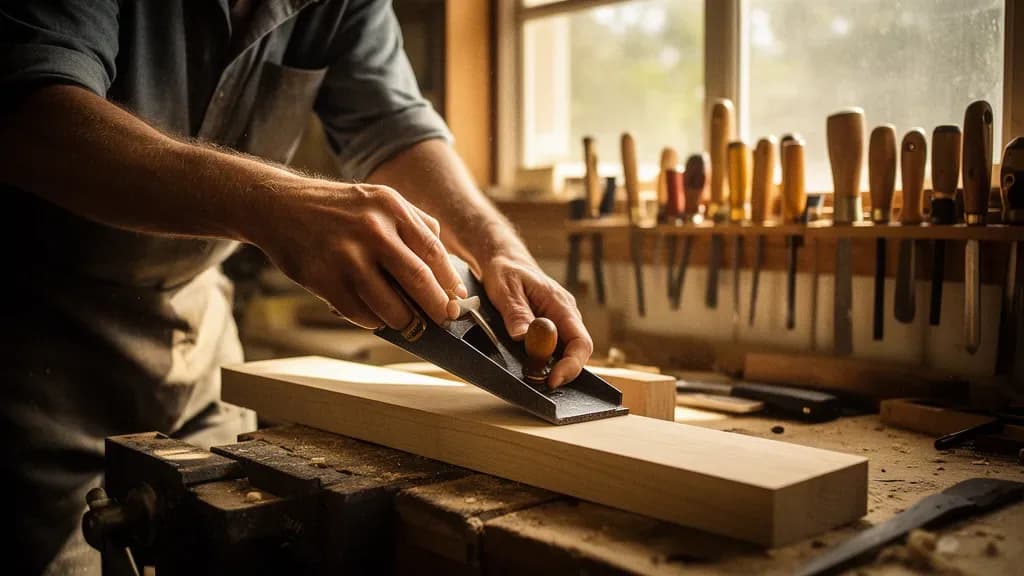
Toolmakers make and repair the dies, jigs, fixtures, gauges and precision parts that production machinery uses to cut, shape, press and assemble manufactured components. The work blends classical trade skills — turning, milling, grinding, hand-fitting to tolerances under 0.01mm — with modern CNC programming, CAD/CAM modelling and EDM (electrical discharge machining). The toolmaker is the trade behind every stamped panel, injection-moulded plastic part, and forged component coming out of an Australian factory.
Demand sits across four sectors. Plastics injection moulding feeds packaging, consumer goods, automotive aftermarket and medical device manufacturing — major employers include Pact Group, Visy, ResMed (manufacturing for the global respiratory market from Sydney) and Cochlear. Defence and aerospace casting and machining drives precision toolmaking around the AUKUS shipbuilding pipeline at Osborne (Adelaide), Henderson (Perth) and Williamstown (Melbourne). Mining wear-parts foundries in Newcastle, Wollongong and the Hunter Valley use toolmakers to fabricate and repair the dies that produce ground-engaging tools and crusher liners. A fourth pocket sits in custom precision machining shops serving the medical device, scientific instrument and renewable-energy supply chains.
ANZSCO 323412 Code Mapping
ANZSCO 323412 sits inside Sub-Major Group 32 (Automotive and Engineering Trades Workers), Minor Group 3234 (Toolmakers and Engineering Patternmakers). The official task profile covers studying drawings and specifications, planning machining sequences, setting up and operating machine tools, performing fine fitting and assembly, and modifying tools to meet production requirements.
The code is distinct from 323411 Engineering Patternmaker (which produces casting patterns rather than tools) and 323213 Fitter (General). Toolmakers who spend significant time on CNC programming sometimes consider 323214 Fitter and Turner or 323299 Other Metal Engineering Process Workers — but where the dominant duty is die, jig or fixture making, 323412 is the correct classification.
Skills Assessment with TRA
Trades Recognition Australia is the only assessing body for ANZSCO 323412.
Offshore Skills Assessment (OSA)
For applicants outside Australia from eligible countries, the OSA is the standard pathway.
- Requirements: Recognised AQF Certificate III equivalent in toolmaking, fitting and turning, or related engineering trade; at least three years of post-qualification employment in toolmaking; employment evidence matched to the ANZSCO task list
- Assessment cost: Approximately AUD $1,070 for the standard OSA (verify against the current TRA fee schedule)
- Processing time: 12-16 weeks under standard conditions
- Common rejection reasons: Employment evidence that describes general machining or fitting work without specific tool, die, jig or fixture references; qualifications below AQF Certificate III equivalent; gaps in employment history that aren't explained
Job Ready Program (JRP) — Onshore
The standard route for onshore applicants (typically Subclass 485 holders) and applicants from countries not eligible for OSA.
- Provisional Skills Assessment (PSA)
- Job Ready Employment (JRE) — minimum 12 months of paid skilled employment monitored by TRA
- Job Ready Workplace Assessment (JRWA) — practical assessment by a qualified TRA assessor
- Job Ready Final Assessment (JRFA)
- JRE fee: AUD $490
- Total programme cost: AUD $2,800-$3,500 across the four stages
- Processing time: 12-18 months end-to-end
Refer to the complete list of skills assessment bodies for context on how TRA fits alongside ACS, Engineers Australia, VETASSESS and other authorities.
Visa Pathways for Toolmakers
Toolmaker is not on the MLTSSL, which rules out Subclass 189. The CSOL + STSOL listing opens 190, 491, 482 and 186.
Subclass 482 — Skills in Demand Visa (Core Skills Stream)
The most common entry route for offshore toolmakers and for those needing to build Australian work history.
- Visa fee: AUD $3,210 primary applicant
- Salary requirement: Core Skills Income Threshold of AUD $76,515 per year for applications lodged before 1 July 2026, lifting to AUD $79,499 from that date; employer must also pay the Annual Market Salary Rate
- Processing time: Core Skills stream applications run 2-8 months; the new fast-track system targets 14 days for half of medium-term applications
- Eligibility constraint: Employer must be an approved Standard Business Sponsor or accredited sponsor; the role must match ANZSCO 323412
- Quirk that matters: Toolmaker pay typically sits at $80,000-$95,000, comfortably above the CSIT — which removes a common 482 obstacle. The market rate constraint is the harder test for smaller toolmaking shops
Subclass 190 — Skilled Nominated Visa
Permanent residency with state nomination adding 5 points.
- Visa fee: AUD $6,140 primary applicant
- Processing time: 9-19 months for visa stage; state nomination decisions add 1-6 months
- Eligibility constraint: Must be nominated by a state that includes 323412 on its current 190 list
- Quirk that matters: South Australia, Victoria and Tasmania have the most consistent appetite for toolmaker nominations in 2026. NSW is selective. Victoria's broad CSOL acceptance under its 2025-26 programme makes it the most accessible route for applicants with a Victorian employer connection
Subclass 491 — Skilled Work Regional (Provisional)
Five-year provisional visa with a pathway to permanent residency via Subclass 191.
- Visa fee: AUD $6,140 primary applicant
- Processing time: 15-28 months for 90% of cases as of April 2026; median 6-20 months
- Eligibility constraint: Must live and work in a designated regional area; nominating state must include 323412 on its 491 list
- Quirk that matters: Newcastle, Wollongong, Geelong and the Hunter Valley host major foundries and toolrooms and qualify as regional under the 491 definition — opening a strong pathway for applicants without a state-capital employer
Subclass 186 — Employer Nomination Scheme
Permanent residency through employer sponsorship via Direct Entry or Temporary Residence Transition.
- Visa fee: AUD $6,140 primary applicant
- Processing time: Direct Entry currently 12-20+ months; TRT comparable median, faster for accredited sponsors
- Eligibility constraint: Direct Entry requires positive TRA assessment plus three years of skilled experience; TRT requires the prerequisite 482 hold period
- Quirk that matters: Defence-aligned toolmaking employers (BAE Systems Australia, Thales, smaller AUKUS supply-chain primes) tend to commit faster to permanent nomination than commercial manufacturing employers
State Nomination
South Australia
South Australia weights trades in its 2025-26 programme. The Osborne shipbuilding pipeline drives sustained demand for precision toolmaking. SA generally requires three years of skilled employment in the nominated or related occupation within the last five years. Adelaide-based toolmakers with defence-adjacent experience have the strongest profile for SA nomination.
Victoria
Victoria's 2025-26 programme accepts all occupations on the federal CSOL with priority weighted to health, social services and education — but trades nominations remain active where employment evidence supports them. Victoria runs an ROI selection process; a confirmed Victorian job offer or documented Victorian work history materially improves ranking.
New South Wales
NSW's 2025-26 programme allocates 2,100 Subclass 190 places and 1,500 Subclass 491 places. Toolmaker is on the NSW skills list; selection is by ROI ranking. Sydney's medical device manufacturing cluster (ResMed, Cochlear, Saluda) and Newcastle's heavy industry create strong sponsorship anchors.
Tasmania
Tasmania nominates from the federal CSOL where occupations align with state demand. The Tasmanian Skilled Employment (TSE) pathway requires six months of full-time skilled employment with a Tasmanian employer, which is the practical route for toolmakers given the smaller Tasmanian manufacturing base.
Salary and Employment Outlook
| Role | Typical Salary Range |
|---|---|
| Apprentice / 1st-year Toolmaker | AUD $45,000-$58,000 |
| Toolmaker (3-7 years) | AUD $80,000-$95,000 |
| Senior Toolmaker | AUD $95,000-$115,000 |
| Tool & Die Specialist (CNC/EDM) | AUD $100,000-$120,000 |
| Toolroom Supervisor | AUD $110,000-$135,000 |
Figures draw on SEEK Talent 2026 ($80,000-$95,000 average band), SalaryExpert 2026 ($86,877 gross), Jora ($83,750), and PayScale Australia. Senior toolmakers with 8+ years reach $106,000 on SalaryExpert data. Total packages typically include 11.5% superannuation, often with overtime loadings — defence and aerospace toolrooms commonly run rostered overtime that lifts effective earnings by 15-25%.
The highest-earning niches are EDM and high-precision die work for medical device manufacturing, CNC programming-led roles in defence supply chains, and toolroom supervision in established mining-services foundries.
Tips for a Successful Application
1. Document CNC, CAD/CAM and EDM Skills Explicitly
Modern Australian toolrooms run on Mastercam, GibbsCAM, Solidworks and Fusion 360, plus EDM machines from Sodick, Mitsubishi or AgieCharmilles. Employment references that name specific software and machine platforms outperform generic "skilled toolmaker" descriptions. CAD/CAM-fluent toolmakers are the gating shortage in 2026.
2. Match Employment References to ANZSCO Tasks Precisely
TRA reviews references against the seven core ANZSCO tasks for 323412. References should describe interpreting engineering drawings, planning machining sequences, fitting parts to tolerance, and modifying tools — not just "operating CNC mills." Generic phrasing is the most common rejection trigger.
3. Plan the Job Ready Program Timeline Around the 485 Expiry
If you are onshore on a Subclass 485, register for the PSA stage as soon as your evidence is in order. JRE runs up to six months, and the full programme often spans 12-18 months. Subclass 485 holders frequently lose pathways because their visa expires mid-JRP — bridging arrangements help but compress your room for error.
4. Target Defence and Medical Device Employers for Earnings
Commercial manufacturing toolrooms tend to pay at the lower end of the band. Defence supply chain primes (BAE Systems Australia, Thales, Lockheed Martin Australia, plus Tier-2 contractors) and the medical device manufacturers (ResMed, Cochlear, Saluda Medical) consistently pay 15-25% above the commercial median.
5. Use Regional Foundry Cities as the 491 Pathway
Newcastle, Wollongong, Geelong, Bendigo and the Hunter Valley qualify as regional under the 491 designation and host major foundries with active toolrooms. For applicants without metropolitan employer access, regional nomination is often a faster route to permanent residency than waiting for state-capital 190 selection.
Step-by-Step Migration Roadmap
- Confirm ANZSCO 323412 is the correct code — review the ANZSCO code finder and compare your duties against tasks 1-7 of the official description
- Verify CSOL and STSOL status — confirm 323412 on the CSOL for the visa stream you are targeting
- Compile qualifications and employment evidence — Certificate III equivalent plus three years of documented toolmaking work, including CAD/CAM and CNC experience where relevant
- Sit IELTS or PTE Academic — Competent English minimum; Proficient or higher improves state nomination ranking
- Lodge TRA application — OSA if eligible offshore, JRP starting with PSA if onshore
- Receive positive skills assessment
- Submit Expression of Interest in SkillSelect — for 190 or 491 pathways
- Apply for state nomination — South Australia, Victoria, NSW and Tasmania are the most active states for toolmakers
- Alternatively, secure a 482 sponsor — defence supply chains, medical device manufacturers and major foundries are the most established sponsors
- Lodge visa application — within 60 days of invitation for 190 or 491; on receipt of nomination for 482 or 186
- Complete health and character checks
- Receive visa grant and relocate
Frequently Asked Questions
Why isn't Toolmaker on the MLTSSL given the shortage?
Jobs and Skills Australia consistently flags toolmakers as in national shortage, but MLTSSL placement reflects a separate set of policy considerations including projected medium-term demand volumes. CSOL + STSOL listing already unlocks 190, 491, 482 and 186. The missing pathway is only Subclass 189, which is increasingly competitive in any case.
Can I claim Fitter and Turner (323214) instead?
Only if your duties are dominantly general fitting and turning rather than tool, die or fixture making. If your work spans both, document the breakdown honestly. Tool and die-specific work strongly supports the 323412 classification; if you spend most of your time machining production parts rather than making tools, 323214 may fit better.
How important is CAD/CAM in current Australian toolrooms?
Critical. Most Australian toolrooms have replaced manual programming with CAD/CAM software for all but the smallest one-off jobs. Mastercam, GibbsCAM, Fusion 360 and Solidworks proficiency is increasingly expected at journeyman level, not just supervisory level. Toolmakers without CAD/CAM evidence face a much narrower employer pool.
What's the demand outlook for toolmakers in 2026 and beyond?
Strong through the late 2020s. Drivers include the AUKUS submarine programme ramp-up, sustained medical device manufacturing growth, the renewable energy component supply chain, and the ageing trades workforce — Australia's average toolmaker age is mid-50s, and apprenticeship completions are insufficient to replace retiring trades. Jobs and Skills Australia continues to flag toolmakers as in shortage.
What are the most common reasons toolmaker applications fail?
Three recurring failure modes: employment references that describe machining or fitting work without specific tool, die, jig or fixture content; qualifications that don't reach AQF Certificate III equivalent on TRA review; and JRP applications where the employment evidence during JRE doesn't match the nominated occupation. Document carefully and consult the ANZSCO code finder before lodging.