Massage Therapist Visa Pathway to Australia: Complete 2026 Guide
Updated: 16 August 2026
Australia classifies Massage Therapist under ANZSCO 411611. VETASSESS conducts the skills assessment. The occupation sits on the Core Skills Occupation List (CSOL), opening subclasses 190, 491, 482 and 186. Typical 2026 full-time salaries range AUD $60,000-$85,000 according to SEEK. The occupation is not on the MLTSSL, so subclass 189 is unavailable.
Quick Facts: Massage Therapist Migration Pathway
| Detail | Information |
|---|---|
| ANZSCO Code | 411611 (Massage Therapist, including Sport and Remedial Massage Practitioner) |
| Skill Level | 2 (AQF Diploma or higher, or equivalent experience) |
| Skills Assessment | VETASSESS (Vocational Education and Training Assessment Services) |
| Occupation List | CSOL (Core Skills Occupation List) |
| Visa Options | 190, 491, 482, 186 |
| Demand Level | Moderate — steady demand in wellness, sports clinics and allied health |
| Salary Range | AUD $60,000-$85,000 (SEEK 2026, full-time) |
| Typical 190/491 Score | 65-80 points with state nomination |
| Key Challenge | VETASSESS qualification matching at Diploma+ level for offshore applicants |
Role Context in Australia
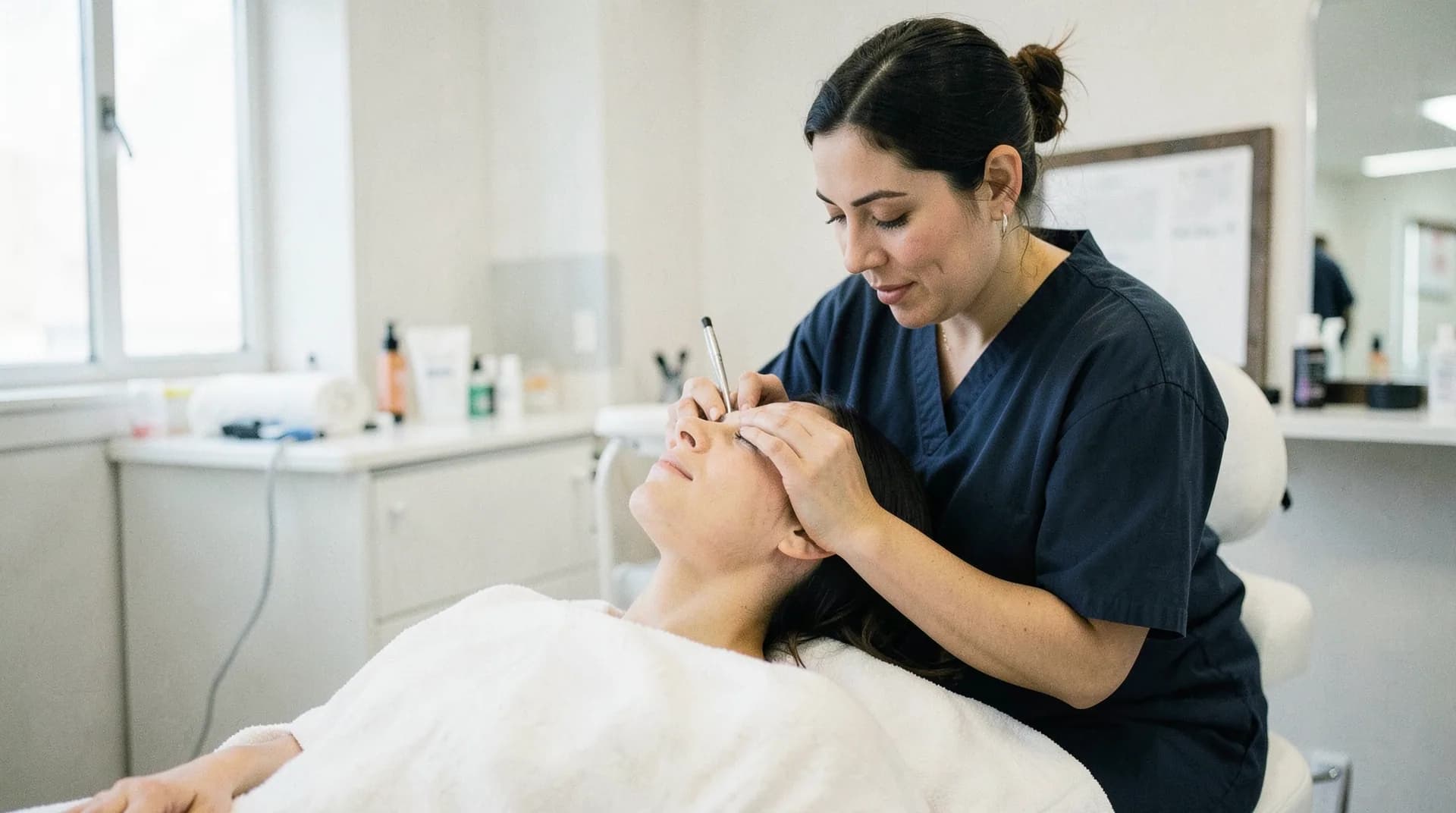
Massage therapists in Australia work across three broad settings: private wellness and day-spa clinics, sports and remedial practices attached to physiotherapy or osteopathy rooms, and corporate or workplace wellness programs. The split between relaxation massage and remedial or sports massage matters for migration. VETASSESS expects evidence of therapeutic, structured treatment plans, not only relaxation services.
Demand is steady rather than acute. The sector grew through the post-pandemic wellness boom and continues to absorb practitioners, particularly in regional centres and inner-city sports-medicine clinics. Sydney, Melbourne and the Gold Coast are the main hiring markets. Health-fund rebate eligibility from associations like the Australian Traditional-Medicine Society (ATMS) or Massage and Myotherapy Australia drives where remedial practitioners can build private books.
Most full-time roles in Australia are clinic-based with a base wage plus per-treatment commission. Independent contractors renting a room within an established clinic are common. The shape of the work — caseload, modality, and rebate eligibility — affects total earnings far more than the headline salary.
ANZSCO 411611 Code Mapping
ANZSCO 411611 covers Massage Therapist and includes Sport Massage Practitioner and Remedial Massage Practitioner as specialisations. The official description centres on performing therapeutic massage, administering treatments to relieve muscle tension, improve circulation, and promote relaxation, and assessing soft-tissue conditions to plan treatments.
Massage Therapist is the only ANZSCO code that captures clinical massage work. Allied roles such as Physiotherapist (252511) and Osteopath (252712) are AHPRA-regulated and require a different pathway. If you also hold a Bachelor in Health Science or Sports Therapy and your primary work crosses into rehabilitation, check the AHPRA-regulated codes separately — but do not pick a code based on what scores best. VETASSESS rejects assessments where duties evidence does not align with 411611.
Skills Assessment — VETASSESS
VETASSESS is the assessing authority for ANZSCO 411611. Massage Therapist is a Group C occupation under the VETASSESS framework.
Qualification requirements:
- Qualification assessed as comparable to an Australian Qualifications Framework (AQF) Diploma or higher
- Highly relevant fields: Massage Therapy, Remedial Massage, Traditional Chinese Medicine Remedial Massage, Shiatsu and Oriental Therapies, Reflexology, Sports Massage
- Four assessment pathways exist, combining qualification level with employment evidence
Employment requirements:
- Minimum 20 hours per week of paid employment
- One year of recent, highly relevant employment at minimum, or longer combinations where the qualification field is less specific
- Voluntary, internship or unpaid placement hours do not count
Assessment cost: AUD $1,205.60 for the full skills assessment (the most recent published VETASSESS Group C fee; fees adjusted from 22 October 2025 in line with inflation). Priority Processing is an additional AUD $907.50.
Processing time: 8-10 weeks from submission, longer if document requests are issued.
Common rejection reasons: Course content is too short or lacks the anatomy and physiology hours VETASSESS expects at Diploma level. Employment evidence describes relaxation-only services without remedial or therapeutic depth. Working hours fall below the 20-hours-per-week threshold for the relevant period.
Visa Pathways for Massage Therapists
Massage Therapist sits on the CSOL, so subclass 189 is not available. The pathway runs through state-nominated and employer-sponsored visas.
Subclass 482 — Skills in Demand Visa
The 482 is often the most direct route for massage therapists with a clinic job offer.
- Visa fee: AUD $3,210 (primary applicant, Core Skills stream)
- Salary threshold: Core Skills stream AUD $76,515 (rising to AUD $79,499 from 1 July 2026)
- Duration: Up to 4 years
- Eligibility note: The base wage in the contract must meet the Core Skills Income Threshold. Many smaller clinics pay below the threshold when commission is excluded, so the structure of the offer matters
The 482 challenge for this occupation is matching the income threshold on base salary alone. Larger sports-medicine clinics and franchise networks meet it; small wellness studios often cannot.
Subclass 190 — Skilled Nominated Visa
Permanent residency through state nomination.
- Visa fee: AUD $6,140 (primary applicant)
- Points boost: +5 from state nomination
- Two-year residency obligation in the nominating state
- Processing: Currently 7-20 months across recent cases
For 411611, state demand is uneven. NSW lists unit group 4117 (Welfare Support Workers) but Massage Therapist is in a different unit group (4116). Check the specific state list against the 6-digit code before lodging an EOI.
Subclass 491 — Skilled Work Regional Visa
Five-year provisional visa with a pathway to permanent residency via subclass 191.
- Visa fee: AUD $6,140
- Points boost: +15 from regional or family-sponsored nomination
- Live and work in a designated regional area for 3 years to qualify for 191
Regional clinics in towns like Cairns, Townsville, Bendigo, Launceston and Wagga Wagga are the typical 491 employers for massage therapists.
Subclass 186 — Employer Nomination Scheme
Permanent residency through employer sponsorship.
- Visa fee: AUD $6,140
- Streams: Direct Entry (requires 3 years full-time post-qualification experience) or Temporary Residence Transition (after 2+ years on 482)
- Processing: Direct Entry stream is currently running at 12-19 months across recent cases
The TRT stream is the more reliable route for massage therapists who have already worked in Australia on a 482.
State Nomination
New South Wales
NSW lists unit group 4117 Welfare Support Workers in its 2025-26 skills list, which does not capture 411611. Massage Therapist applicants should verify with the NSW skills list page before lodging — at the 6-digit level the eligibility can shift between program years.
Victoria
Victoria's 2025-26 program is allocated 3,400 places. Priority sectors are healthcare, social services and education. The Victorian Registration of Interest pool generally favours occupations where there is a verified shortage. Massage Therapist applicants face stronger competition unless paired with regional intent or a Victorian job offer.
Regional and territory programs
Tasmania and South Australia run targeted programs that historically include allied-health and welfare-adjacent occupations. Both shift their lists annually. Confirm against the current published list at the time of application.
Salary and Employment Outlook
Typical Earnings by Setting
| Setting | Typical Salary Range |
|---|---|
| Junior Massage Therapist (Day Spa) | AUD $55,000-$65,000 |
| Remedial Massage Therapist (Clinic) | AUD $65,000-$80,000 |
| Sports Massage Practitioner | AUD $70,000-$90,000 |
| Senior Remedial / Myotherapist | AUD $80,000-$100,000+ |
| Owner-Operator (sole practitioner) | Highly variable — caseload-dependent |
| Contractor (room-rental model) | AUD $80-$140 per hour, room hire deducted |
Source: SEEK Salary Guide, Australia, April 2026. Top of the band is held by myotherapists and sports massage practitioners attached to sports clubs or premier physiotherapy practices.
Most full-time roles include 11.5% superannuation. Many therapists supplement clinic income with private clients on weekends. Health-fund rebate eligibility through ATMS or Massage and Myotherapy Australia membership materially expands a private book.
Highest-paying contexts
- Elite sports clubs (AFL, NRL, A-League, Super Rugby) and high-performance institutes
- Premier private hospitals offering allied-health rehab packages
- Corporate workplace wellness programs in finance and tech
- Boutique sports-medicine clinics in inner Sydney and Melbourne
- Resort and luxury hotel spas (regional and tourist-belt locations)
Tips for a Successful Application
1. Build a documented remedial or sports-massage portfolio
VETASSESS distinguishes structured therapeutic massage from relaxation work. Employment references should describe assessment, treatment planning, and outcome documentation. Generic references that read like spa-menu descriptions are a common rejection driver.
2. Confirm your diploma's content hours
A Diploma of Remedial Massage from an Australian RTO covers around 700-800 hours. Offshore qualifications need to map closely on anatomy, physiology, soft-tissue assessment and treatment planning. If your home-country qualification is below the AQF Diploma standard, VETASSESS may issue a negative outcome regardless of experience.
3. Track the 20-hour-per-week minimum carefully
Many massage therapists work casual or split rosters. VETASSESS will not count weeks where total paid hours fall below 20. Reconstruct your employment record week-by-week before submitting.
4. Plan the 482 base-salary structure with the employer
The 482 Core Skills threshold is AUD $76,515 in 2026 (rising to AUD $79,499 from 1 July 2026). If your clinic pays you a low base with commission on top, the base alone must clear the threshold. Renegotiate the contract structure before nomination.
5. Consider the regional 491 path for higher invite likelihood
Demand is more concentrated in regional sports-injury and rehabilitation clinics than in inner-city wellness spas. A 491 nomination paired with a regional job offer is often a faster route than competing for a limited number of 190 places.
Step-by-Step Migration Roadmap
- Confirm your duties match ANZSCO 411611 — review the ANZSCO code finder and the VETASSESS Group C information sheet
- Audit your qualification against the AQF Diploma benchmark
- Compile employment evidence showing therapeutic and assessment-based work, with weekly hours documented
- Sit IELTS, PTE Academic or equivalent — aim for at least Competent (IELTS 6.0 each band) for nomination
- Lodge the VETASSESS skills assessment (AUD $1,205.60; 8-10 weeks)
- Submit an EOI in SkillSelect for 190 or 491
- Apply for state or territory nomination once your target program opens
- Receive an invitation and lodge the visa application within 60 days
- Alternatively, pursue employer sponsorship (482) with a clinic that meets the Core Skills threshold
- Complete health and character checks
- Move to Australia and start work — register with ATMS or Massage and Myotherapy Australia for health-fund rebate eligibility
- Transition to 191 or 186 at the appropriate milestone
See the skills assessment hub for a side-by-side comparison of VETASSESS and other assessing bodies, and the 2026 SOL guide for current list status across all occupations.
Frequently Asked Questions
Is Massage Therapist on the MLTSSL or the CSOL in 2026?
ANZSCO 411611 sits on the Core Skills Occupation List (CSOL), which means subclass 189 is not available. The eligible subclasses are 190, 491, 482 and 186. Confirm the current list status on the CSOL hub.
Can I qualify with a Certificate IV in Massage Therapy?
A Certificate IV alone usually does not meet the VETASSESS Group C qualification standard, which expects AQF Diploma or higher. A Certificate IV combined with a Diploma in a related discipline plus relevant employment may satisfy one of the four assessment pathways. Read the VETASSESS information sheet carefully before applying.
Does health-fund rebate eligibility matter for migration?
Not directly for the visa, but it shapes your earnings ceiling once you arrive. Membership of ATMS, Massage and Myotherapy Australia or a comparable body unlocks private health insurance rebates for your clients, which substantially expands your potential private book.
Which state has the strongest demand for remedial massage therapists?
Demand is most concentrated in inner Sydney, inner Melbourne, the Gold Coast and Brisbane for sports and remedial work, and across regional centres for clinic-based wellness practitioners. State nomination availability changes annually — verify against the current state list rather than assuming.
What are the most common reasons VETASSESS assessments fail for 411611?
Three patterns dominate: (1) the offshore qualification falls short of AQF Diploma content hours; (2) employment evidence describes relaxation services without the therapeutic and assessment depth VETASSESS expects; (3) total paid hours fall below 20 per week across the claimed employment period.