Boarding Kennel or Cattery Operator Visa Pathway to Australia: Complete 2026 Guide
Updated: 16 August 2026
Australia classifies Boarding Kennel or Cattery Operator under ANZSCO 149911. VETASSESS conducts the skills assessment as a Group C occupation. The role is on the Core Skills Occupation List (CSOL), which unlocks employer-sponsored subclasses 482 and 186 but not the points-tested 189 or 190. Typical 2026 earnings run AUD $60,000 to $100,000 depending on ownership. Sponsorship is the practical route for this niche code.
Quick Facts: Boarding Kennel or Cattery Operator Migration Pathway
| Detail | Information |
|---|---|
| ANZSCO Code | 149911 (Boarding Kennel or Cattery Operator) |
| Skill Level | 2 (AQF Diploma or higher, or equivalent experience) |
| Skills Assessment | VETASSESS (Vocational Education and Training Assessment Services) |
| Occupation List | CSOL (Core Skills Occupation List) |
| Visa Options | 482 (Skills in Demand), 186 (Employer Nomination Scheme) |
| Demand Level | Low to moderate — niche occupation, limited sponsorship |
| Salary Range | AUD $60,000-$100,000 (SEEK, PayScale 2026; higher for owner-operators) |
| Typical 189 Score | Not applicable — CSOL occupation, employer-sponsored only |
| Key Challenge | Establishing managerial duties; few employers sponsor at scale |
What a Boarding Kennel or Cattery Operator Does in Australia
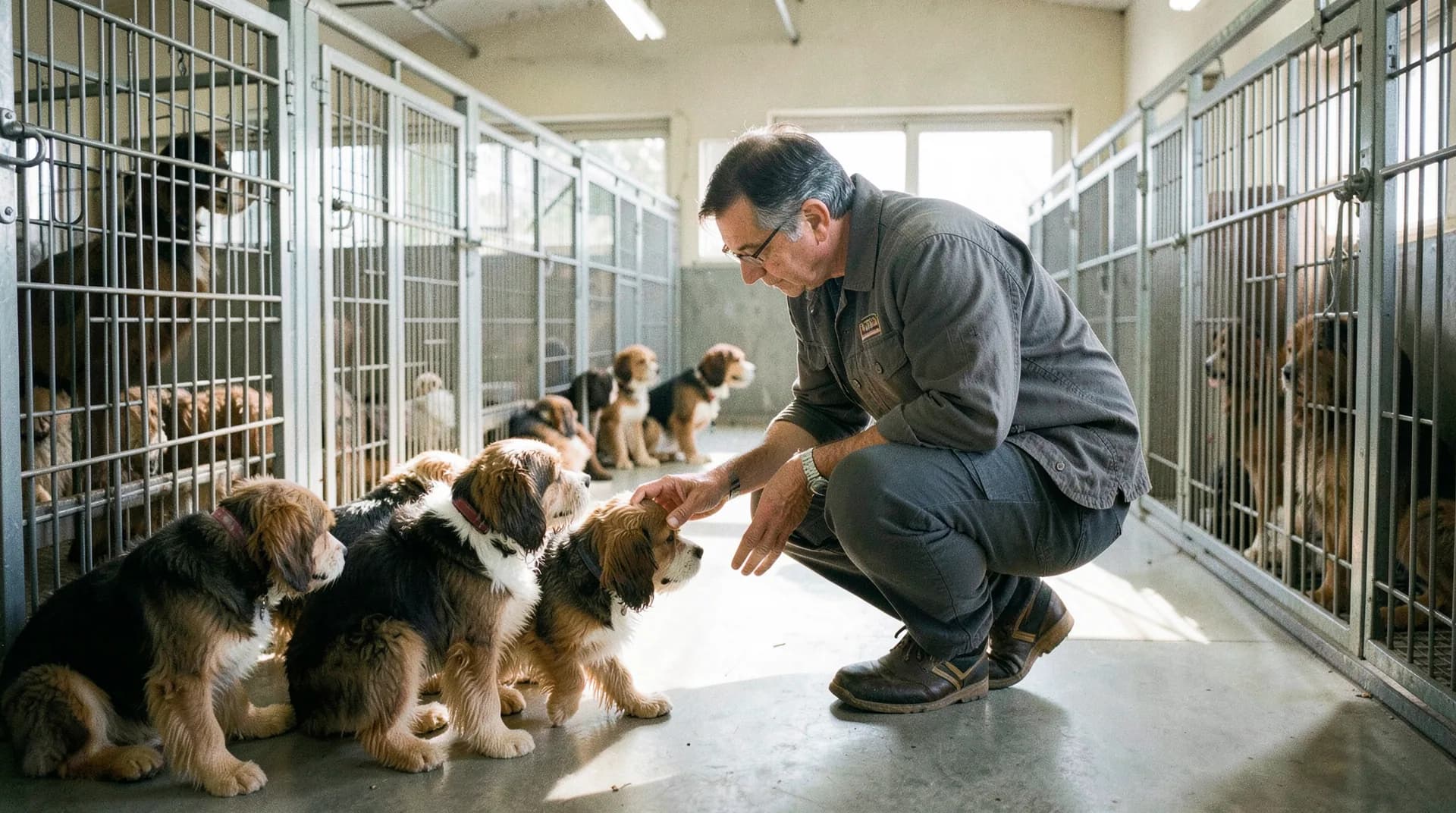
A Boarding Kennel or Cattery Operator runs a business that houses and cares for animals while owners are away. The work mixes hands-on animal care with running a small enterprise: bookings and pricing, staff hiring and rostering, biosecurity and health protocols, facility maintenance, and compliance with state animal welfare regulation. At the larger end, an operator may run a combined boarding, grooming and daycare business with several staff.
The Australian pet care market has grown steadily as pet ownership rose and more owners pay for premium boarding. That growth supports the occupation, but it remains a niche one. Most facilities are owner-operated small businesses, and few employ a salaried operator at a level that would justify sponsoring a worker from overseas. The realistic sponsorship demand sits with larger pet care groups and premium facilities that run boarding as a managed business. Demand follows population and pet ownership, so the larger operations cluster around the capital cities and their outer fringes, where land and demand both exist.
ANZSCO Code 149911 in Detail
ANZSCO 149911 covers an operator who plans, organises and runs the activities of a boarding kennel or cattery. The code sits at Skill Level 2, mapping to an AQF Diploma or above, an Associate Degree, or three years of relevant experience in place of the qualification.
Indicative tasks include planning the range and mix of services, setting service standards, promoting and selling the business, developing customer relations policy, hiring and supervising staff, and meeting health, safety and animal welfare obligations. VETASSESS treats this as a managerial occupation, so the focus is on running the business rather than only caring for animals. A kennel hand or animal attendant is a different occupation at a lower skill level. Check the descriptor through the ANZSCO code finder before lodging.
Skills Assessment with VETASSESS
VETASSESS assesses Boarding Kennel or Cattery Operator as a Group C occupation. Your qualification must be assessed as comparable to an AQF Diploma or higher, with Business Management treated as the highly relevant field. Animal care qualifications support the role but the managerial qualification requirement focuses on business management.
Assessing body: VETASSESS — vetassess.com.au
Qualification and employment pathways. VETASSESS sets four routes, with the employment requirement varying by how relevant the qualification is:
- A highly relevant Diploma or higher plus at least one year of post-qualification employment in the last five years.
- A non-relevant Diploma plus a Certificate IV or higher in a relevant field plus one year of employment.
- A non-relevant Diploma plus two years of post-qualification employment.
- Four years of relevant employment in total, including at least one year of highly relevant work in the last five years.
Each route counts only work of 20 hours or more per week at the appropriate skill level.
Assessment cost: AUD $1,096 for the full skills assessment (offshore applicant, ex-GST). Priority processing adds AUD $825.
Processing time: Standard processing was shortened in 2025; priority processing aims for around 10 business days after eligibility is confirmed.
Common rejection reasons: The most common failure is evidence that describes animal care work rather than running the business. A second is a qualification that does not establish the business-management dimension. VETASSESS asks for an organisational chart showing your position, supervisors and subordinates, so prepare one before you lodge. The full list of authorities is on the skills assessment bodies guide.
Visa Pathways for Boarding Kennel or Cattery Operators
Boarding Kennel or Cattery Operator is on the CSOL only. There is no subclass 189, and the points-tested 190 is not generally available, so the practical routes are employer-sponsored.
Subclass 482 — Skills in Demand Visa
The 482 is the primary pathway. An approved employer nominates you for a genuine role paying at least the Core Skills Income Threshold and the market rate, whichever is higher.
- Visa fee: from AUD $3,210 (Core Skills stream, primary applicant)
- Income threshold: Core Skills Income Threshold of AUD $76,515, rising to AUD $79,499 for nominations lodged on or after 1 July 2026
- Work experience: generally at least one year of relevant full-time experience in the role
- Quirk that matters: the income threshold is the real hurdle here; many salaried operator roles pay below it, so a nomination only works where the business pays a genuine management salary
Subclass 186 — Employer Nomination Scheme
The 186 grants permanent residency through an employer. Operators reach it through the Direct Entry stream or, more commonly, the Temporary Residence Transition stream after holding a 482.
- Visa fee: AUD $6,140 (primary applicant)
- Streams: Direct Entry, or Temporary Residence Transition after time on a 482
- Quirk that matters: Direct Entry generally expects at least three years of relevant experience, and the salary must still meet the threshold, which limits the candidates who qualify
State Nomination
State and territory programs draw on the CSOL, but Boarding Kennel or Cattery Operator is a niche code that few programs nominate, and it does not sit on the points-tested routes used for most 190 nominations. A regional program might consider it where a regional facility cannot recruit locally, but this is uncommon. Confirm the current position on the relevant state migration website, since allocations change each program year. For nearly all applicants the 482 employer-sponsored route is the only realistic option.
Salary and Employment Outlook
| Role | Typical Salary Range (AUD) |
|---|---|
| Kennel / Cattery Manager (salaried) | $60,000-$80,000 |
| Operator of a larger facility | $75,000-$100,000 |
| Owner-operator (business income) | $70,000-$120,000+ depending on the business |
PayScale and SEEK data place salaried kennel and cattery management roles broadly in the $60,000-$80,000 band, with owner-operators of established businesses reporting higher income tied to the size and occupancy of the facility. These figures usually exclude superannuation, which adds 11.5 per cent for employees. Because many salaried roles fall below the Core Skills Income Threshold, the salary itself is often the deciding factor in whether a sponsorship is viable. For broader context see the salary expectations by occupation guide.
Tips for a Successful Application
- Establish the business-management dimension. VETASSESS treats this as a managerial occupation. Evidence should cover pricing, staffing, marketing and compliance, not only animal husbandry.
- Confirm the salary clears the threshold first. This is the most common practical barrier. If the role pays below AUD $76,515 (or $79,499 from July 2026), the 482 nomination cannot proceed regardless of your skills.
- Prepare the organisational chart. VETASSESS specifically asks operators to show their position and the staff reporting to them. A facility with no staff under you weakens the managerial claim.
- Target larger pet care groups. Premium and multi-site operators are the businesses most likely to pay a management salary and to have sponsorship experience.
- Use the 482 as a bridge. Plan to move to a 186 through the Temporary Residence Transition stream once you have completed the qualifying period with the sponsoring business.
Step-by-Step Migration Roadmap
- Confirm your duties match ANZSCO 149911 using the ANZSCO code finder.
- Check the list status — the occupation is on the CSOL, not the points routes within the 2026 skilled occupation list.
- Gather qualifications and management-focused references.
- Prepare your organisational chart.
- Lodge the VETASSESS skills assessment under the right pathway.
- Find an Australian facility prepared to nominate you at a qualifying salary.
- Confirm the offered salary clears the Core Skills Income Threshold.
- Have the employer lodge nomination and sponsorship.
- Lodge your 482 application with the positive assessment.
- Work in the role toward the Temporary Residence Transition requirements.
- Apply for the 186 once eligible.
- Complete health and character checks and receive the grant.
Frequently Asked Questions
Can a boarding kennel operator get permanent residency in Australia?
Yes, through the subclass 186 Employer Nomination Scheme, usually via the Temporary Residence Transition stream after holding a 482 with the sponsoring business. There is no points-tested 189 for this code, because it sits on the Core Skills Occupation List rather than the lists that feed independent skilled migration.
Do I need an animal care qualification or a business qualification?
VETASSESS treats Business Management as the highly relevant qualification field, because this is a managerial occupation. Animal care training supports your experience and is valuable for the role itself, but the assessment focuses on whether you have a qualification at AQF Diploma level or above and the management experience to match.
Why is sponsorship hard to find for this occupation?
Most boarding kennels and catteries are small owner-operated businesses that do not employ a salaried operator at a management level. Sponsorship realistically comes from larger pet care groups or premium facilities that run boarding as a managed business and can pay a salary above the Core Skills Income Threshold.
What is the biggest barrier for this visa?
The salary. The 482 nomination requires the role to pay at least the Core Skills Income Threshold, AUD $76,515 until 30 June 2026 and AUD $79,499 after, as well as the market rate. Many salaried operator roles pay below that figure, which rules out a nomination unless the business offers a genuine management salary.
Can I run my own kennel business on a skilled visa?
The 482 and 186 are employer-sponsored visas tied to working for the nominating business, not to running your own enterprise. Owning and operating your own facility involves different visa considerations, such as business and investment streams, which sit outside the skilled occupation pathway covered here.