Aquaculture Farmer Visa Pathway to Australia: Complete 2026 Guide
Updated: 16 August 2026
Australia classifies Aquaculture Farmer under ANZSCO 121111. VETASSESS conducts the skills assessment. The occupation sits on the Core Skills Occupation List and the Regional Occupation List, unlocking subclasses 491, 494, 482 and 186. It does not appear on the MLTSSL, so there is no subclass 189 route. Typical 2026 salaries run AUD $60,000-$110,000, higher for managers of large operations.
Quick Facts: Aquaculture Farmer Migration Pathway
| Detail | Information |
|---|---|
| ANZSCO Code | 121111 (Aquaculture Farmer) |
| Skill Level | 1 (Bachelor degree or higher, or five years of relevant experience in lieu) |
| Skills Assessment | VETASSESS (Vocational Education and Training Assessment Services) |
| Occupation List | CSOL and ROL — not on MLTSSL or STSOL |
| Visa Options | 491, 494 (regional/employer-sponsored provisional), 482, 186 |
| Demand Level | High in production regions — salmon and prawn sectors expanding, labour concentrated in Tasmania, SA, QLD and NT |
| Salary Range | AUD $60,000-$110,000 (SEEK/PayScale 2026); senior farm managers higher |
| Typical 189 Score | Not applicable — no 189/190 access |
| Key Challenge | No points-tested independent route; almost everything runs through regional nomination or an employer sponsor |
What an Aquaculture Farmer Does in Australia
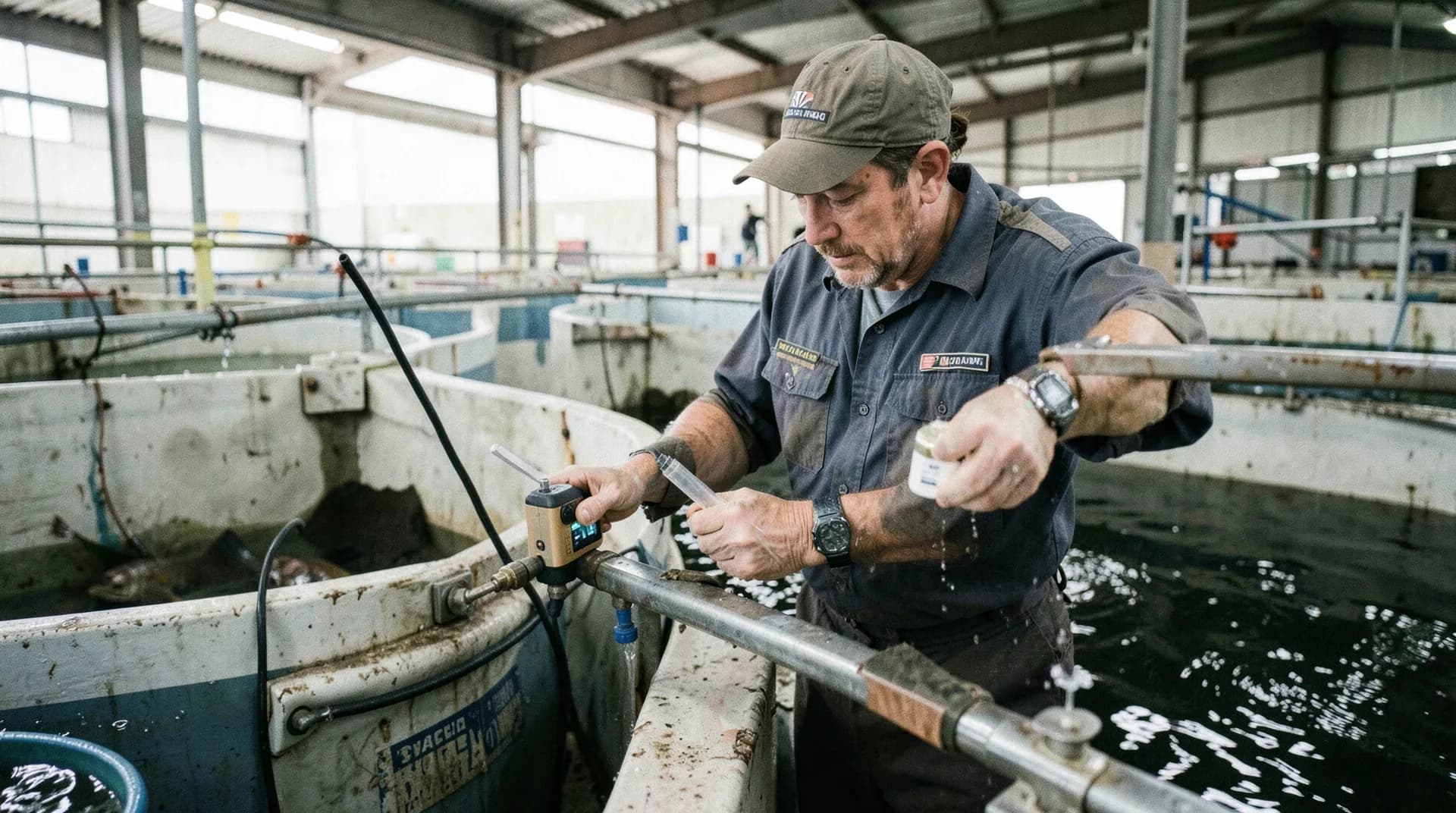
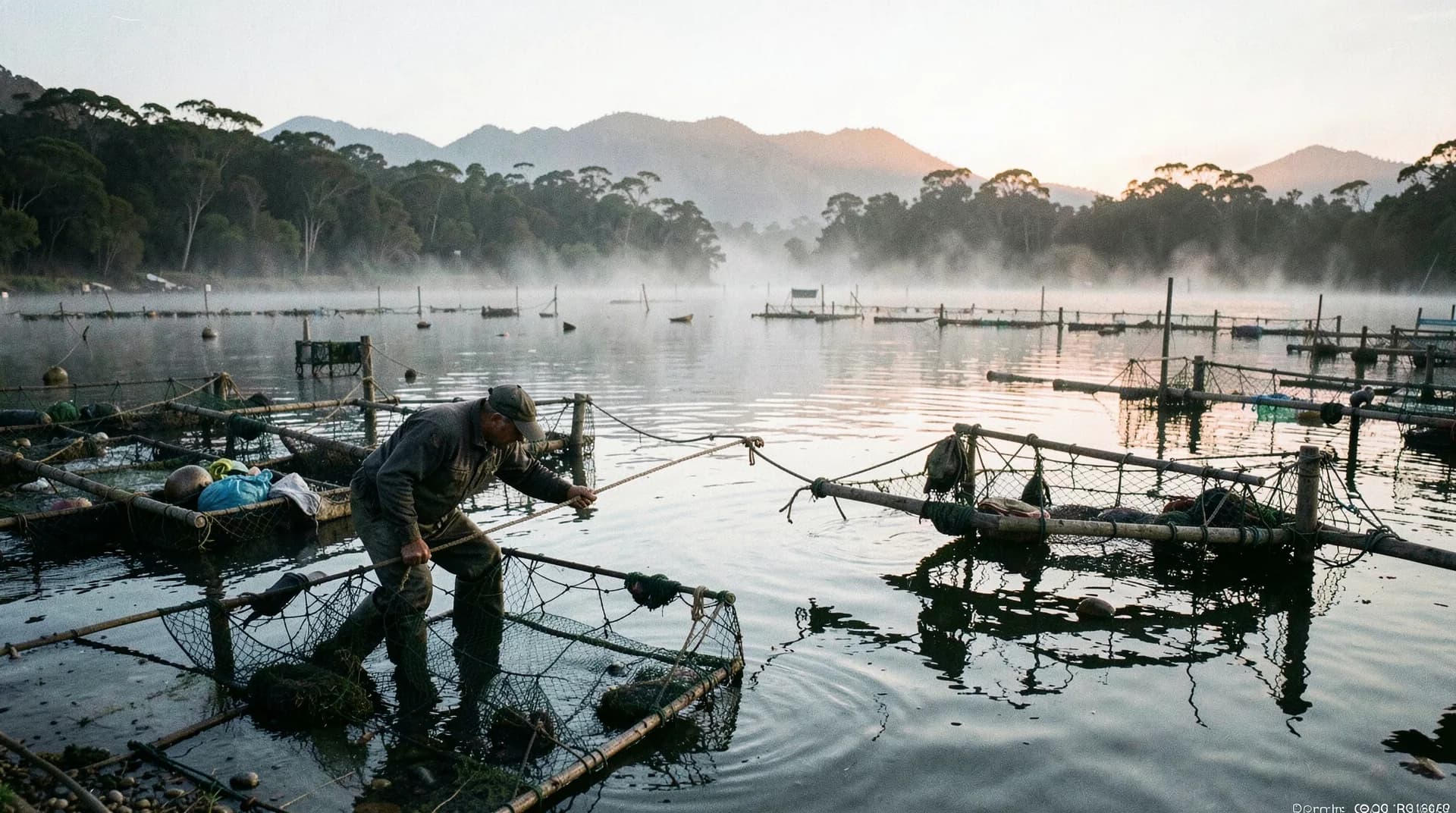
An aquaculture farmer runs the production side of fish and shellfish farming. The work is operational rather than purely scientific. You plan and coordinate hatchery output, monitor water quality and stock health, manage feeding regimes, control disease and biosecurity risk, and organise harvest, grading and transport. On a salmon farm you might oversee sea-cage operations and smolt transfers. On a prawn or barramundi farm the focus shifts to pond management and water chemistry.
The industry is in a long growth phase. Tasmania dominates farmed Atlantic salmon through producers such as Tassal, Huon Aquaculture and Petuna. South Australia farms tuna, kingfish and oysters. Queensland and the Northern Territory run prawn and barramundi operations, and oyster farming continues across NSW, SA and Tasmania. Work is geographically concentrated. If you want this occupation to anchor a visa, expect to live in a coastal regional area near production, which aligns neatly with the regional visa pathways open to the code.
This is a different occupation from the research-side role. If your work is laboratory science, stock assessment or fisheries modelling rather than hands-on production management, the better fit is Aquaculture or Fisheries Scientist, which uses a separate ANZSCO code.
ANZSCO Code 121111
Aquaculture Farmer sits in ANZSCO unit group 1211. The official description covers planning, organising, controlling and coordinating the breeding and rearing of fish, crustaceans and molluscs, including operating hatcheries, monitoring growing environments, controlling disease and harvesting stock.
Indicative tasks include coordinating hatchery operations to produce fish fry, seed oysters, marron and prawns; monitoring the growing environment to maintain optimal conditions; identifying and controlling toxins, predators and disease; recording stock growth rates and mortality; and arranging transport of live stock between facilities. ANZSCO sets this at Skill Level 1, meaning a bachelor degree or higher is the benchmark, though five years of relevant experience can substitute where no formal qualification exists.
Getting the code right matters before you spend anything. If you are unsure whether your duties read as Aquaculture Farmer rather than a technician or scientist role, work through how to find your ANZSCO code first.
Skills Assessment
VETASSESS (Vocational Education and Training Assessment Services)
VETASSESS assesses Aquaculture Farmer as a professional occupation. It checks two things: that your qualification is comparable to the required Australian level and in a highly relevant field, and that your employment is at the right skill level in the nominated occupation.
Requirements. The standard benchmark is a qualification assessed as comparable to an Australian Bachelor degree or higher in a highly relevant field, plus at least one year of post-qualification highly relevant employment in the last five years. Highly relevant fields centre on aquaculture and the study of breeding, rearing, harvesting and processing fish and other aquatic resources. VETASSESS publishes alternative pathways for applicants whose qualification sits below degree level but who hold longer relevant experience.
Assessment cost. AUD $1,205.60 for a full skills assessment covering both qualifications and employment (the standard online application fee for applicants in Australia, GST inclusive). Priority Processing is available for an additional AUD $825.
Processing time. Standard VETASSESS processing currently averages around 7 weeks. Priority Processing targets 10 business days once a complete application is lodged.
Common rejection reasons. The two recurring failures are a field-of-study mismatch (a general agriculture or marine biology degree that VETASSESS does not accept as highly relevant) and employment evidence that reads as farm-hand or technician work rather than the planning and coordination duties the occupation requires. Reference letters that describe daily manual tasks without management responsibility are a frequent cause of a "not suitable" outcome.
For the full list of authorities and how VETASSESS compares to other assessors, see the skills assessment bodies complete list.
Visa Pathways
Because Aquaculture Farmer is on the CSOL and ROL but not the MLTSSL, the visa set is regional and employer-sponsored. Order matters here. The two regional provisional visas and the employer routes do almost all the work.
Subclass 491 — Skilled Work Regional (Provisional)
A five-year provisional visa requiring nomination by a state or territory, or sponsorship by an eligible family member living in a designated regional area.
- Visa fee: AUD $6,140 (primary applicant)
- Points boost: +15 for regional nomination
- Eligibility note: You must commit to living and working in regional Australia, which fits the geography of the job
- Quirk: Aquaculture roles sit in coastal regional zones (Tasmania, regional SA, regional QLD), all of which qualify as regional for 491 purposes
Subclass 494 — Skilled Employer Sponsored Regional (Provisional)
An employer-sponsored five-year provisional visa for roles in regional Australia, with a pathway to permanent residency through subclass 191.
- Visa fee: AUD $4,910 (primary applicant)
- Eligibility note: Requires a regional employer nomination and a positive VETASSESS assessment
- Quirk: Salmon and prawn producers in regional areas are the realistic sponsors; the role and salary must meet the Core Skills Income Threshold
Subclass 482 — Skills in Demand Visa
The employer-sponsored temporary route. Aquaculture Farmer falls in the Core Skills stream.
- Visa fee: AUD $3,210 (primary applicant)
- Salary requirement: The nominated salary must meet or exceed the Core Skills Income Threshold of AUD $76,515 (2025-26; rising to AUD $79,499 from 1 July 2026)
- Processing: Varies by sponsor accreditation
- Quirk: Larger producers with accredited sponsor status process faster than first-time sponsors
Subclass 186 — Employer Nomination Scheme
Permanent residency through employer nomination, available via the Direct Entry stream or the Temporary Residence Transition stream after time on a 482.
- Visa fee: AUD $6,140 (primary applicant)
- Eligibility note: Direct Entry requires a positive skills assessment and at least three years of relevant experience
- Quirk: Many aquaculture farmers reach 186 through TRT after sponsorship on a 482 or 494, rather than applying direct
State and Regional Nomination
State nomination for niche primary-industry codes is selective and changes through the year. Aquaculture Farmer is most realistically nominated where the industry physically sits. Tasmania nominates agriculture and aquaculture occupations tied to its salmon and oyster sectors, and applicants generally need a genuine local job offer or strong regional connection. South Australia nominates primary-industry occupations connected to its tuna, kingfish and oyster operations. Queensland and the Northern Territory run smaller programs aligned to prawn and barramundi production.
Two rules hold across states. First, you must verify the occupation is open on the relevant state list at the time you apply, because primary-industry codes open and close with allocation. Second, a regional job offer is usually the deciding factor. Before committing, confirm current status against the skilled occupation list for 2026 and the Core Skills Occupation List.
Salary and Employment Outlook
| Role | Typical Salary Range (AUD) |
|---|---|
| Aquaculture worker / technician | $50,000-$65,000 |
| Aquaculture farmer (operational) | $65,000-$90,000 |
| Senior / production farm manager | $90,000-$120,000+ |
Figures draw on SEEK and PayScale 2026 ranges for aquaculture and farming roles, cross-checked against published agricultural salary data. Total packages on remote sites often add accommodation, vehicle use and superannuation at 11.5%, which lifts the effective value above the headline base.
The highest pay sits with managers of large salmon operations in Tasmania and tuna and kingfish operations in South Australia. Prawn farming in northern Queensland and the Northern Territory pays competitively for experienced production staff because the labour pool is thin. Oyster farming tends to sit lower on the scale unless you run a sizeable lease. Demand is steady to rising: farmed salmon production alone is a multi-billion-dollar sector, and recirculating and land-based systems are drawing fresh investment.
Tips for a Successful Application
- Frame your duties as management, not labour. VETASSESS wants planning, coordination and control. Ask referees to describe budgeting, stock-health decisions, biosecurity oversight and staff supervision, not just feeding and netting.
- Check your degree field early. A marine biology or general agriculture degree may not pass as highly relevant. If it is borderline, lodge the qualification-only Points Test Advice (AUD $342.10) before committing to a full assessment.
- Target the region, not just the visa. Because almost every pathway is regional or employer-sponsored, securing a job offer in Tasmania, SA, QLD or the NT does more for your odds than chasing points.
- Confirm the salary clears the threshold. For 482 and 494, the role must meet the Core Skills Income Threshold. Entry-level worker pay often falls short, so the nominated position needs to be a genuine farmer role.
- Keep five years of evidence if you lack a degree. The experience-in-lieu pathway works, but only with detailed, dated employment references covering the full period at the right skill level.
Step-by-Step Migration Roadmap
- Confirm your duties map to Aquaculture Farmer using the ANZSCO code finder.
- Verify current list status on the CSOL hub and the 2026 SOL.
- Gather qualification documents and detailed employment references covering duties and dates.
- Sit an English test (IELTS, PTE or equivalent) at the level your visa requires.
- Lodge the VETASSESS skills assessment (AUD $1,205.60), or Points Test Advice first if your field is borderline.
- Secure a regional job offer or state nomination interest, since the realistic routes are 491, 494, 482 and 186.
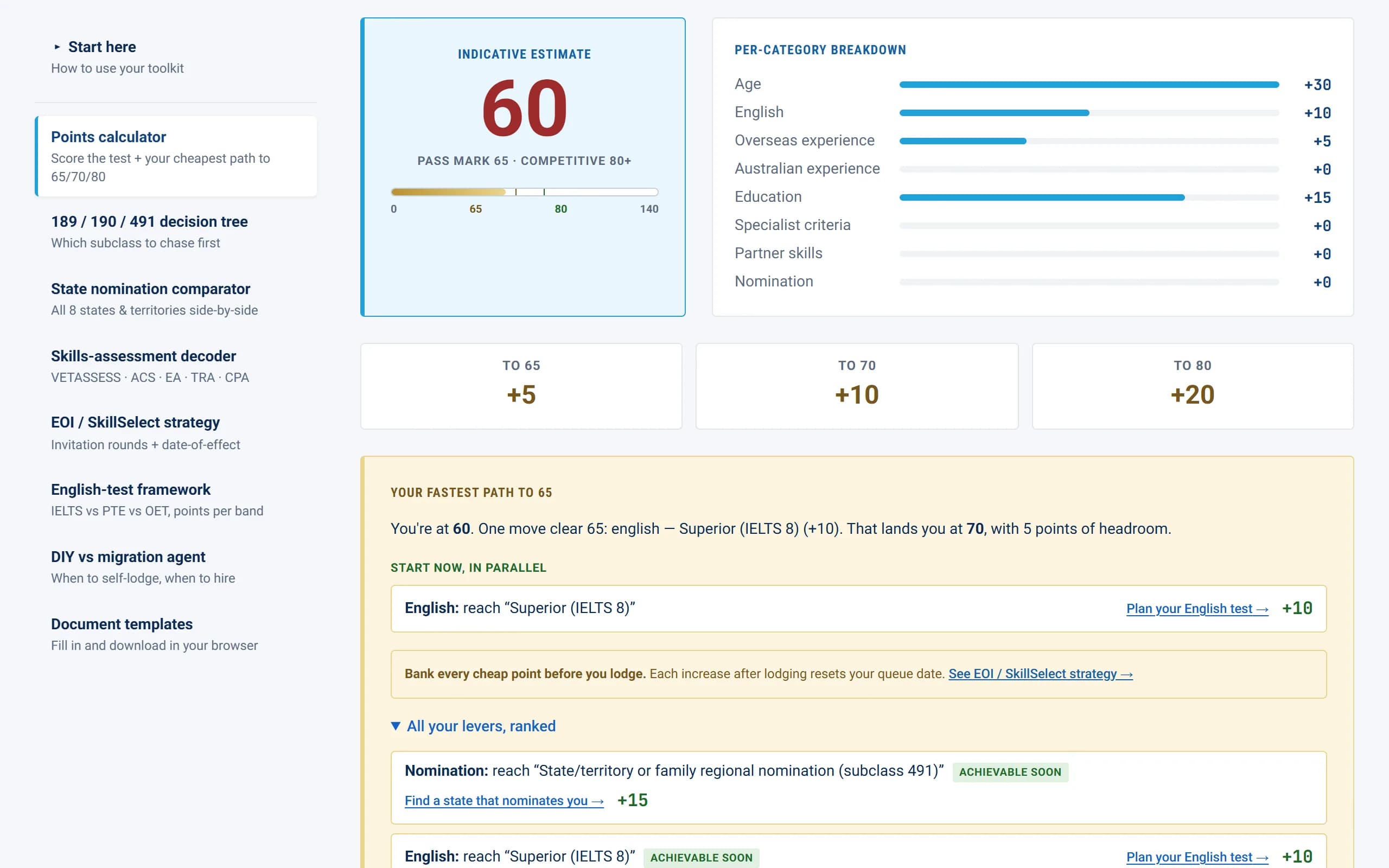
- Submit an Expression of Interest in SkillSelect — see how SkillSelect and the EOI work.
- Apply for state/regional nomination (491) or have your employer lodge a nomination (494, 482, 186).
- Receive your invitation or nomination approval.
- Lodge the visa application and pay the relevant charge.
- Complete health examinations and police checks.
- Receive the grant and relocate to the nominating region.
Frequently Asked Questions
Can an Aquaculture Farmer get a subclass 189 visa?
No. Aquaculture Farmer (121111) is not on the Medium and Long-term Strategic Skills List, and subclass 189 only draws from the MLTSSL. The code sits on the CSOL and the Regional Occupation List, so the available routes are the regional provisional visas 491 and 494, the employer-sponsored 482, and the permanent 186.
Is Aquaculture Farmer different from an Aquaculture Scientist?
Yes. Aquaculture Farmer (121111) is a production and management role assessed by VETASSESS at unit group 1211. Aquaculture or Fisheries Scientist (234116) is a research and analysis role with its own assessment requirements. Choose the code that matches what you actually do day to day, because a mismatch between your duties and the code is a common assessment failure.
How much does the VETASSESS assessment cost and how long does it take?
A full skills assessment covering qualifications and employment is AUD $1,205.60 for applicants in Australia, GST inclusive. Standard processing currently averages around 7 weeks. Priority Processing, which targets 10 business days, is available for an extra AUD $825 once your application is complete.
Which states nominate Aquaculture Farmers?
Nomination tracks the industry. Tasmania, South Australia, Queensland and the Northern Territory are the realistic options because that is where salmon, tuna, oyster and prawn production is based. Lists change with allocation through the year, so confirm the code is open at the time you apply and treat a genuine regional job offer as the deciding factor.
Do I need a degree, or is experience enough?
A bachelor degree or higher in a highly relevant field is the standard benchmark, but VETASSESS accepts five years of relevant experience in lieu of a formal qualification through its alternative pathways. The catch is evidence: you need detailed, dated employment references showing work at the right skill level across the full period.