Metal Casting Trades Worker Visa Pathway to Australia: Complete 2026 Guide
Updated: 16 August 2026
Australia classifies Metal Casting Trades Worker under ANZSCO 322114. Trades Recognition Australia (TRA) conducts the skills assessment. The occupation sits on the CSOL only — not the MLTSSL or STSOL — which limits the visa pathway to employer-sponsored 482 and 186 routes. Typical 2026 salaries range AUD $65,000-$95,000. The workforce is small, ageing, and concentrated in Victoria and Queensland foundries.
Quick Facts: Metal Casting Trades Worker Migration Pathway
| Detail | Information |
|---|---|
| ANZSCO Code | 322114 (Metal Casting Trades Worker) |
| Skill Level | 3 (AQF Certificate III with two years on-the-job training, or Certificate IV) |
| Skills Assessment | TRA (Trades Recognition Australia) |
| Occupation List | CSOL only (not MLTSSL, not STSOL) |
| Visa Options | 482, 186 |
| Demand Level | High — small workforce, median age 52, persistent replacement need |
| Salary Range | AUD $65,000-$95,000 (Foundry industry awards, SEEK indicative listings 2026) |
| Typical 189 Score | Not applicable — 189 and 190 are not available |
| Key Challenge | Narrow sponsor pool and ageing employer base — match the role to a financially stable foundry before lodging |
What a Metal Casting Trades Worker Does in Australia
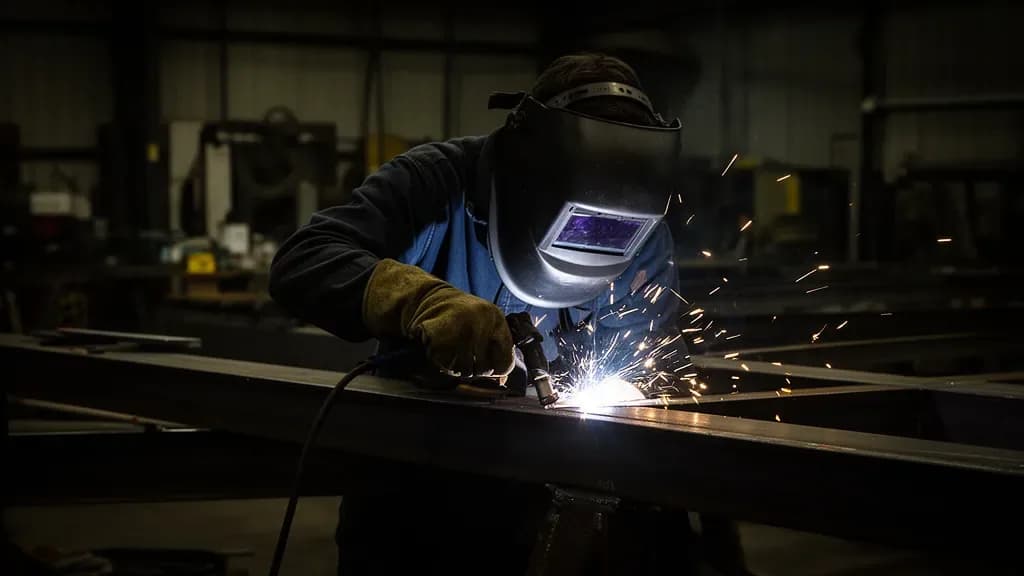
A metal casting trades worker forms sand moulds and cores, prepares pattern equipment, and pours molten ferrous and non-ferrous metal to produce castings used in machinery, mining equipment, defence, marine, and architectural components. The trade includes moulders, coremakers, pattern-makers and finishing tradespeople. Day-to-day tasks include interpreting drawings and casting specifications, preparing green sand or chemically bonded sand mixtures, ramming moulds around patterns, setting cores and gating systems, controlling pouring temperatures, breaking out and finishing the cooled casting, and inspecting for porosity, shrinkage and surface defects.
Australia's foundry sector is small but strategically important. Jobs and Skills Australia records only about 170 employed metal casting trades workers nationally, with a median age of 52 — meaning a large share of the workforce is within ten years of retirement. Victoria carries 39.3% of the workforce, Queensland 29.9%, with the balance spread across NSW, South Australia and Western Australia. Major employers include heavy industry casting houses servicing mining (Caterpillar, Komatsu, Bradken), defence (BAE Systems, NIOA), rail (Pacific National, Aurizon supply chain), and architectural work (heritage restoration, decorative ironwork).
The trade overlaps with metallurgist (234912) and engineering production manager roles, but ANZSCO treats casting work as distinct because the skill set is tactile and craft-based — pattern interpretation, sand chemistry, pouring discipline — rather than analytical. See the metallurgist visa pathway if your work is primarily in laboratory metallurgical analysis.
ANZSCO 322114 — The Code and Tasks
ANZSCO 322114 covers tradespeople who form sand moulds and cores for the production of metal castings. The Australian Bureau of Statistics describes core tasks as: studying drawings and specifications of components to determine sand mould requirements; selecting patterns and packing sand into moulding boxes; using rams, jolts and squeezes to compact sand around patterns; setting cores in moulds and assembling mould halves; preparing molten metal in furnaces and controlling pouring; breaking down moulds to retrieve castings; and inspecting and trimming castings.
The code has no nec fallback within unit group 3221. A migrant working primarily on continuous-casting strip mill operations or rolling mill work would more likely sit under a different unit group; 322114 specifically captures discrete moulded-casting production.
Skills Assessment: TRA
Trades Recognition Australia (tradesrecognitionaustralia.gov.au) assesses ANZSCO 322114 through one of two main programs.
Migration Skills Assessment (MSA)
The MSA pathway is the standard route for offshore foundry workers. TRA compares the applicant's qualifications and employment evidence against the Australian benchmark — Certificate III in Engineering (Casting and Moulding Trade) or equivalent — plus a minimum of three years of post-qualification skilled employment.
- Fee: From AUD $300 for the documentary stage, with the full fee schedule depending on whether a practical assessment is required (published in section 2.1 of the TRA fee guide)
- Processing time: 8-16 weeks for a standard documentary MSA; longer where a technical interview or practical is scheduled
- Common rejection reasons: Employment references missing TRA-required detail (letterhead, signatory's contact information, exact dates, duty list); applicants whose actual work is in non-casting metal trades (forging, sheet metalwork, fitting) attempting to claim 322114; lack of evidence of working with both ferrous and non-ferrous metals at trade level
Job Ready Program (JRP)
The JRP applies to offshore-trained casting workers who complete an Australian Certificate III through a registered training organisation, and to onshore migrants already working in Australia under a sponsored visa. The four-step JRP totals around AUD $3,540 in TRA fees and requires 1,725 hours of paid skilled employment plus a workplace assessment. Total program duration is typically 12-18 months.
Evidence packaging tips
TRA places weight on photographic evidence in moulding and casting trades. Submit images of the applicant working at the moulding box, at the furnace, and at the fettling station. Pair this with detailed reference letters that name the patterns produced, the metals worked, and the casting weights and tolerances handled. Pattern-only or finishing-only experience may not satisfy the full 322114 task list — TRA expects breadth across moulding, coring and pouring.
Visa Pathways for Metal Casting Trades Workers
The 322114 visa pathway is unusually narrow. The occupation is CSOL-listed but not MLTSSL-listed or STSOL-listed, which means no points-tested route (189), no state-nominated 190, and no regional 491. The realistic options are employer-sponsored only.
Subclass 482 — Skills in Demand Visa
The 482 is the dominant pathway for ANZSCO 322114. Foundry employers experienced in the visa system include the major mining-equipment casting houses and defence-sector specialists.
- Visa fee: AUD $3,210 (primary applicant)
- Salary thresholds (until 30 June 2026): Core Skills Income Threshold AUD $76,515; Specialist Skills Income Threshold AUD $141,210. From 1 July 2026 these rise to $79,499 and $146,717
- Processing time (Core Skills stream): 51 days median; up to eight months for 90% of applications (April 2026 data)
- Stream choice: Most foundry sponsorships flow through the Core Skills stream because the role typically pays below the Specialist threshold. Senior casting supervisors with overseas certifications may clear the Specialist threshold and benefit from the faster 8-day median processing
Subclass 186 — Employer Nomination Scheme
Permanent residence through employer sponsorship. The Direct Entry stream accepts 322114 nominations because the occupation is on the CSOL.
- Visa fee: AUD $6,140 (primary applicant)
- Processing time: 12 months for 50% of applications; 19 months for 90% (Direct Entry, April 2026)
- TRT pathway: Available after two years on a 482 with the same approved sponsor
- Reality check: Direct Entry requires three years of full-time skilled employment in the occupation post-qualification, plus a positive TRA outcome. The TRT pathway is more common in practice because it lets the foundry trial the worker on a 482 first
Salary and Employment Outlook
What metal casting trades workers earn in Australia
| Role | Typical Earnings (2026) |
|---|---|
| Junior moulder / coremaker | AUD $65,000-$75,000 |
| Experienced moulder (5+ years) | AUD $75,000-$90,000 |
| Senior casting tradesperson / foreman | AUD $90,000-$120,000 |
| Foundry supervisor (above trade level) | AUD $110,000-$140,000+ |
| Specialist pattern maker | AUD $80,000-$110,000 |
Foundry awards include overtime loadings, foundry allowances (paid for working in heat-affected environments under Fair Work's MA000010), and shift penalties for afternoon and night work. Most full-time roles in mining-equipment casting houses include overtime in the base package, which lifts realistic earnings 10-25% above the headline figure.
Highest-paying sectors
- Mining equipment castings — Bradken, Caterpillar Australia, Komatsu Mining — the largest single foundry market
- Defence and shipbuilding — ASC, BAE Systems Henderson and Osborne, marine propulsion castings
- Rail rolling stock — wheel sets, axle boxes, drawgear castings for Aurizon, Pacific National, ARTC supply chains
- Heritage and architectural restoration — specialised heritage iron foundries for council and trust work
- Specialist non-ferrous foundries — aluminium and bronze castings for aerospace, marine and electrical applications
Geographic variation
Victoria's Geelong-Bell Park industrial belt and the Dandenong south-east house the largest concentration of Australian foundries and pay the most consistent trade rates. Queensland's Mackay and Gladstone regions sustain mining-equipment foundries with regional loading. South Australia's Whyalla and Port Adelaide host steel and casting work tied to ship and rail. Western Australia's Kwinana industrial strip pays the highest rates because foundries compete with mining FIFO for skilled trades.
Tips for a Successful Application
- Confirm sponsor financial health before committing. The Australian foundry sector has consolidated over the past 15 years and several casting houses have closed. Before accepting a 482 offer, check the sponsor's ABN status, recent ASIC filings if it is a Pty Ltd entity, and whether the parent group has had any insolvency events. A failed sponsor means a 60-day window to find another or leave.
- Document the breadth of your casting experience. Migrants who have worked only on aluminium die-casting may struggle to satisfy a TRA assessment expecting sand-moulding breadth. Reference letters should detail the metals, casting weights, mould types, and finishing methods you have hands-on experience with.
- Use photographic evidence aggressively. A 10-image pack covering the moulding box, core-making, furnace charging, pouring, knock-out and finishing dramatically strengthens a TRA file. The trade is hard to evidence in writing alone.
- Plan for a 482-to-186 transition from day one. Because 189/190/491 are closed for 322114, permanent residence runs through the 186 TRT stream. Negotiate the sponsor commitment for the two-year transition before accepting the 482 offer.
- Target Victoria or Queensland first. Victoria's foundry density and Queensland's mining-aligned casting work account for two-thirds of the national workforce. Sponsor availability is materially higher in these two states than anywhere else.
Step-by-Step Migration Roadmap
- Confirm ANZSCO 322114 fits the work using the how to find your ANZSCO code guide
- Verify CSOL status on the Core Skills Occupation List page
- Gather TRA-compliant employment references covering the full task list — moulding, coring, pouring, finishing
- Sit an English test (IELTS 5.0 for TRA, typically IELTS 5.0 each band for 482 Core Skills)
- Apply for TRA Migration Skills Assessment (offshore) or JRP (onshore)
- Search for sponsors through foundry industry associations — Australian Foundry Institute, Australian Industry Group manufacturing networks
- Receive nomination — the sponsor lodges the SBS approval and nomination first
- Lodge the 482 visa within 28 days of the nomination decision
- Complete health and character checks
- Receive grant, relocate, register with the local foundry trade body
- Plan the 186 TRT transition: two years with the sponsor, then 186 lodgement
- Confirm Australian state licensing requirements if the foundry handles food-grade or pressure-vessel castings
Frequently Asked Questions
Why is metal casting trades worker only on the CSOL?
The CSOL captures occupations with verified shortage but lower total employment volume. Metal casting trades worker has a workforce of around 170 nationally — too small to register on the MLTSSL but persistently in shortage relative to demand. The CSOL listing exists precisely to keep an employer-sponsored route open for niche trades like this.
Can I migrate as a metal casting worker on a points-tested visa?
No. Subclasses 189, 190 and 491 require the occupation to appear on the relevant skilled lists; 322114 is CSOL-only. The realistic pathways are 482 followed by 186 TRT, or 186 Direct Entry if the applicant has three years of post-qualification skilled employment and a willing employer.
What countries' foundry qualifications does TRA recognise?
TRA assesses on a case-by-case basis. UK NVQ Level 3 Foundry trade qualifications, Indian ITI foundry trade certificates with relevant Diploma top-up, Chinese senior technician (高级技工) certifications, and German Gießereimechaniker apprenticeships are all routinely assessed. Where no formal qualification exists, the trade-test pathway requires evidence of long-term skilled employment plus a practical assessment.
Is the Australian foundry industry growing or shrinking in 2026?
The sector has been consolidating for two decades, but specific segments are growing. Mining-equipment castings, defence shipbuilding programs (Hunter-class frigates, future submarines), and rail freight expansion all create demand for skilled casting trades. The workforce is ageing, which means even a flat industry size produces strong replacement demand for migrants.
Can I work on continuous casting plant under ANZSCO 322114?
Generally no. Continuous casting in steel mills typically falls under different ANZSCO classifications because the work is operator-led rather than trade-led. ANZSCO 322114 specifically covers discrete moulded casting — sand moulds, investment casting, die casting at a trade level. If your actual work is operating slab or billet continuous casters, expect TRA to reassign you to a different code, which may not be CSOL-listed.
What's the safest 482 path given foundry consolidation?
Aim for accredited sponsors with long sponsorship histories — the major mining-equipment casting houses (Bradken under CQMS Razer, Caterpillar Australia) and defence-tied foundries (ASC supply chain) typically have stable sponsor approval and a high success rate transitioning workers to 186 TRT. Avoid sponsors who have not previously held the SBS approval; they may face delays or refusal that derail your timeline.