Metallurgist Visa Pathway to Australia: Complete 2026 Guide
Updated: 16 August 2026
Australia classifies Metallurgists under ANZSCO 234912. VETASSESS conducts the skills assessment. The occupation appears on both the MLTSSL and the Core Skills Occupation List (CSOL), unlocking subclasses 189, 190, 491, 482, and 186. Typical 2026 salaries range AUD $115,000-$200,000+. Battery-metals experience commands the highest premiums.
Quick Facts: Metallurgist Migration Pathway
| Detail | Information |
|---|---|
| ANZSCO Code | 234912 (Metallurgist) |
| Skill Level | 1 (Bachelor degree or higher in Metallurgy, Materials Science, Minerals Processing, or Chemical Engineering with relevant majors) |
| Skills Assessment | VETASSESS (Vocational Education and Training Assessment Services) |
| Occupation List | MLTSSL and CSOL |
| Visa Options | 189, 190, 491, 482, 186 |
| Demand Level | Very high — the Minerals Council of Australia identifies metallurgists in persistent national shortage, with battery-metals processing creating acute pressure |
| Salary Range | AUD $115,000-$200,000+ (SEEK 2026, PayScale 2026, mining sector salary reports) |
| Typical 189 Score | 80-90 points |
| Key Challenge | VETASSESS expects clear differentiation between process, extractive, and physical metallurgy duties — generic Materials Science backgrounds need careful framing |
What a Metallurgist Does in Australia
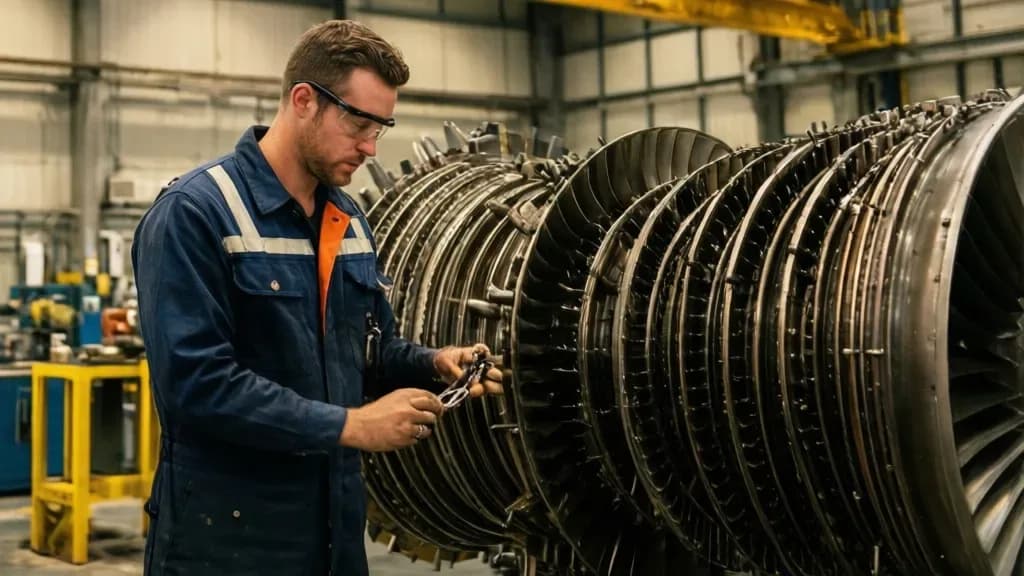
Metallurgists in Australia work primarily in mineral processing and refining, with smaller cohorts in steel-making (BlueScope), aluminium (Tomago, Boyne, Rio Tinto Bell Bay), and specialty alloys. The work splits into three streams: process metallurgists running concentrators, leach circuits, and smelters; extractive metallurgists designing pyrometallurgical and hydrometallurgical flowsheets; and physical metallurgists working on heat treatment, welding, and metals fabrication.
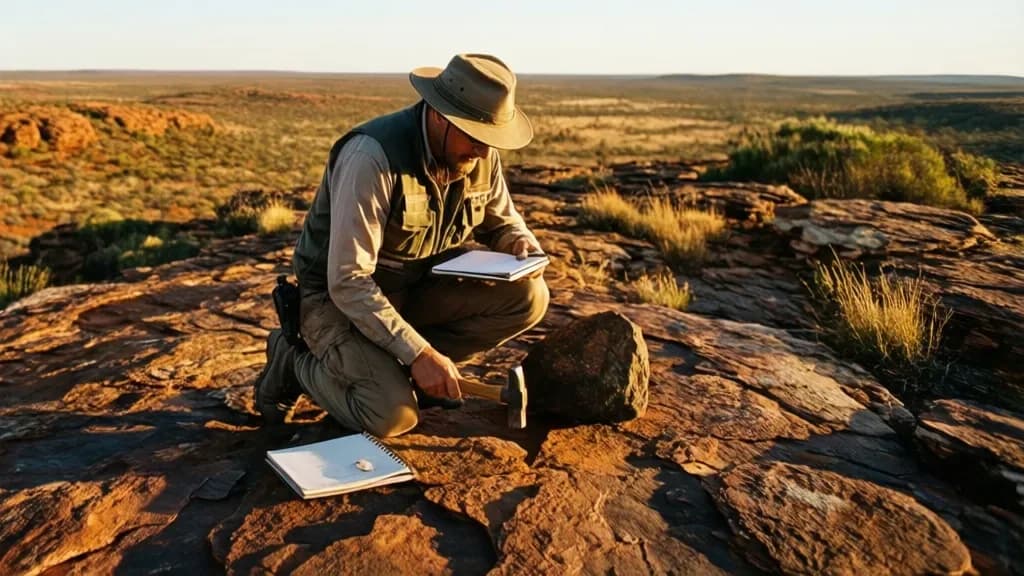
Geographically, Western Australia dominates. The Pilbara iron ore province, Goldfields-Esperance gold belt, lithium operations around Greenbushes and Kathleen Valley, and nickel-cobalt operations at Murrin Murrin all employ resident process metallurgists. Queensland hosts copper smelters at Mt Isa and Townsville, and the Mary Kathleen-era base-metals belt continues to drive flowsheet development. Newcastle and Wollongong house the integrated steel operations.
Demand drivers in 2026 are sharp. The federal critical-minerals strategy has funded multiple lithium hydroxide refineries (Kwinana, Kalgoorlie), nickel sulphate plants, rare-earths separation projects (Eneabba, Mount Weld), and high-purity alumina facilities. All require metallurgists with hydrometallurgy and solvent-extraction experience. The Minerals Council of Australia continues to list metallurgists among the most-difficult-to-fill roles across its member companies.
ANZSCO Code 234912
The ANZSCO description for Metallurgist covers researching, developing, controlling, and providing advice on processes used in extracting metals from ores, and processes used for casting, alloying, heat treating, or welding refined metals to produce commercial products or develop new alloys. Typical tasks include designing and operating concentrators, leaching circuits, electrowinning cells, smelters, and refineries; planning metallurgical testwork; conducting failure investigations; and developing flowsheets for new ore bodies.
There is no separate "nec" fallback within unit group 2349 — Metallurgist is the dedicated code. 234999 Natural and Physical Science Professionals nec can apply to materials-science specialists whose work falls outside the standard metallurgical task list, but VETASSESS rarely accepts this substitution for genuine metallurgists.
Skills Assessment — VETASSESS
VETASSESS is the sole assessing authority for ANZSCO 234912.
Qualification requirement. A qualification assessed as comparable to an AQF Bachelor degree or higher, in a field highly relevant to the nominated occupation. Metallurgy, Extractive Metallurgy, Minerals Processing, Materials Science and Engineering, and Chemical Engineering with metallurgical majors are accepted directly. Mining Engineering, Industrial Chemistry, and Mechanical Engineering with materials specialisation are assessed case by case.
Employment requirement. At least one year of post-qualification employment at the appropriate skill level, in the last five years, working 20 or more hours per week, with duties highly relevant to 234912.
Cost. AUD $1,205.60 for a standard professional assessment (online application; non-residents at AUD $1,096). Priority processing adds approximately AUD $825-$907.50.
Processing time. 12-14 weeks for standard. Priority is 10 business days from confirmation.
Common rejection reasons. Chemical engineers working in petroleum refining or fertiliser plants sometimes nominate Metallurgist on the strength of similar unit operations — VETASSESS rejects when the materials in process are not metallic. Materials Science graduates whose work centres on polymers, ceramics, or semiconductors face the same wall. Production metallurgists in foundries can succeed but must show technical decision-making, not pure operator duties.
Visa Pathways
Subclass 482 — Skills in Demand
The lead pathway for offshore metallurgists hired by majors and mid-tiers. Rio Tinto, BHP, Newmont, South32, IGO, Fortescue, Lynas, Iluka, and the lithium hydroxide refiners all sponsor through the 482.
- Visa fee: AUD $3,210 primary applicant
- Duration: up to 4 years on the Specialist stream; salary thresholds easily met
- Processing time: typically 1-3 months for standard processing, faster under accredited sponsorship
- Quirk: the Specialist stream salary threshold is well below typical senior metallurgist packages, making sponsorship administratively simple
Subclass 186 — Employer Nomination Scheme
Permanent residency through employer sponsorship via Direct Entry (offshore, with positive VETASSESS and three years experience) or Temporary Residence Transition (after time on a 482).
- Visa fee: AUD $6,140 primary applicant
- Quirk: mining majors routinely transition long-serving 482 metallurgists to the 186 TRT stream once eligibility is met
Subclass 189 — Skilled Independent
Permanent residency through SkillSelect. Available because 234912 is on the MLTSSL.
- Visa fee: AUD $6,135 primary applicant
- Realistic points: 80-90 for invitation in 2026 rounds
- Processing time: 8-14 months on the published global processing-times page
Subclass 190 — Skilled Nominated
State nomination adds 5 points and grants permanent residency. WA, Queensland, NSW, and SA are receptive states.
- Visa fee: AUD $6,140 primary applicant
- Obligation: two-year commitment to live and work in the nominating state
Subclass 491 — Skilled Work Regional (Provisional)
Adds 15 points. Most metallurgist work in WA outside Kwinana, and almost all work in Queensland outside Brisbane, falls in regional postcodes.
- Visa fee: AUD $6,140 primary applicant
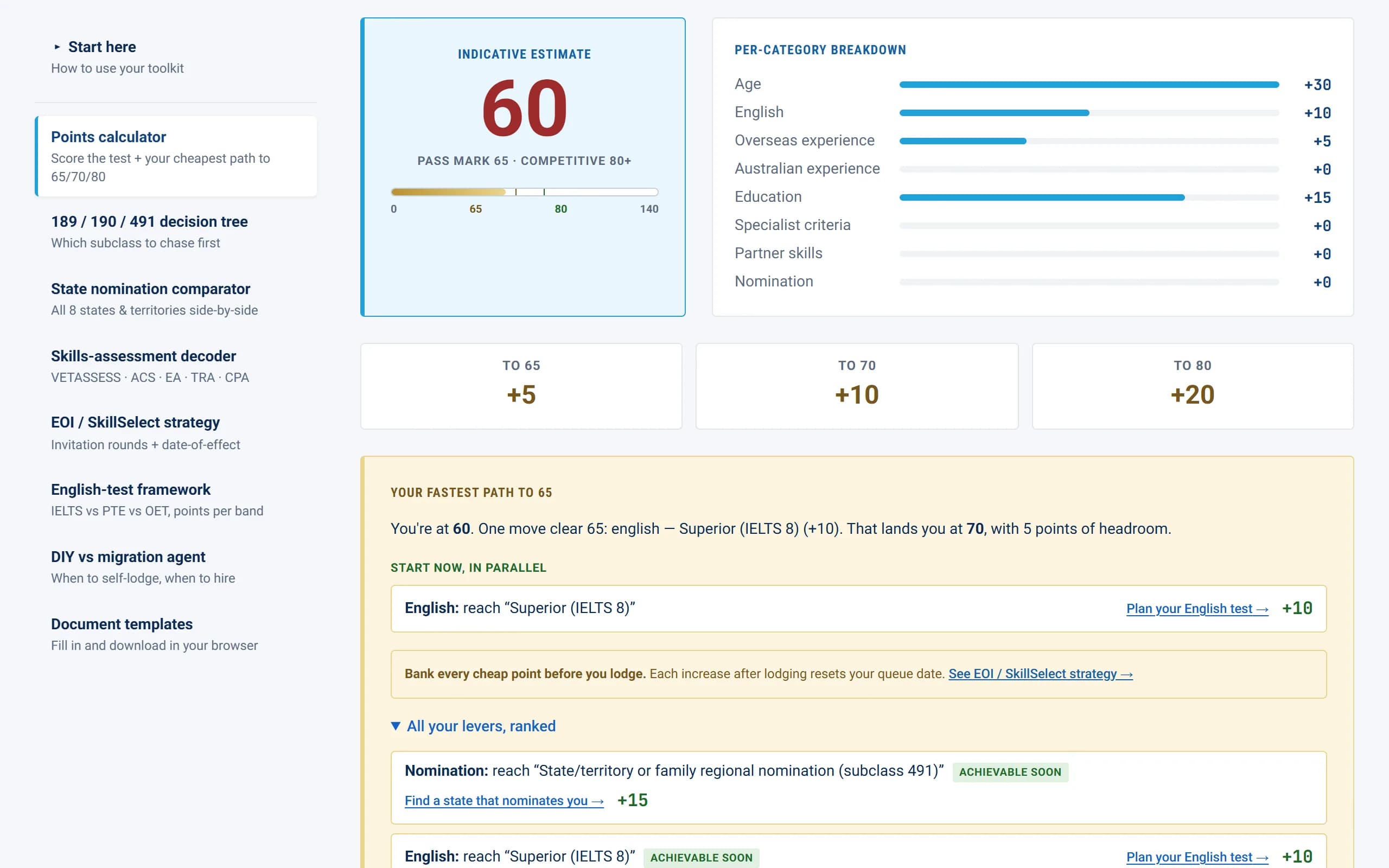
Points Test Strategy
| Points Factor | Points | Notes |
|---|---|---|
| Age (25-32) | 30 | Maximum |
| Age (33-39) | 25 | Common for senior process metallurgists |
| English (Superior 8.0+) | 20 | Worth pursuing |
| English (Proficient 7.0) | 10 | Typical for non-native speakers |
| PhD | 20 | Common in extractive metallurgy and R&D |
| Master's | 15 | Standard for senior process roles |
| Bachelor | 15 | Minimum |
| Overseas experience (8+ yrs) | 15 | Many senior candidates qualify |
| Australian work experience | 5-20 | Significant boost when present |
| State Nomination (190) | 5 | |
| Regional (491) | 15 | Best leverage given the work geography |
| Partner skills | 5-10 | If partner has a skilled occupation |
Scenario 1: 32-year-old process metallurgist from South Africa
Bachelor of Engineering in Metallurgy, 8 years at Anglo American and Sibanye, Proficient English. Age 30 + Bachelor 15 + English 10 + Experience 15 = 70 points. Add 491 WA = 85 points. Invitation-grade.
Scenario 2: 29-year-old hydrometallurgist from Canada
Master's in Chemical Engineering (extractive metallurgy specialisation), 4 years at Vale and a copper refinery, Superior English. Age 30 + Master's 15 + English 20 + Experience 10 = 75 points. Add 190 WA = 80; add 491 = 90. Comfortable in 2026 rounds.
State Nomination for Metallurgists
Western Australia
WA is the dominant employer market for Australian metallurgists. The Pilbara iron ore province, gold operations across the Goldfields, lithium hydroxide refineries (Kwinana, Kemerton), nickel sulphate facilities, and rare-earths processing all hire continuously. Migration WA lists 234912 in its priority occupation pool with strong invitation flow across both 190 and 491. The Kwinana strip near Perth is the only metropolitan zone — every other major operation is regional under Home Affairs postcodes.
Queensland
Queensland nominates Metallurgists for 190 and 491 streams, with demand concentrated around the Mt Isa copper-lead-zinc-silver operations, the Townsville copper refinery, the Phosphate Hill operations, and base-metals projects in north Queensland.
South Australia
SA hires metallurgists for the Olympic Dam copper-uranium-gold-silver smelter and refinery, the Whyalla steelworks, and the wider Stuart Shelf copper-cobalt projects. The state's nomination program includes 234912 across both 190 and 491.
New South Wales
NSW lists Metallurgist with focus on the Cobar and Broken Hill base-metals operations, the Newcastle steel operations, and aluminium at Tomago. NSW nomination rounds are smaller than WA's but invite at lower competition.
Northern Territory
NT nominates Metallurgist with focus on the McArthur River zinc-lead concentrator, the Ranger uranium legacy, and developing critical-minerals projects. NT runs both 190 and 491 with relatively low competition.
Salary and Employment Outlook
| Role | Typical Salary Range (AUD, 2026) |
|---|---|
| Graduate Metallurgist | $90,000-$115,000 |
| Process Metallurgist (3-7 yrs) | $115,000-$150,000 |
| Senior Metallurgist | $150,000-$185,000 |
| Principal / Consulting Metallurgist | $185,000-$240,000+ |
| Superintendent / Manager Metallurgy | $200,000-$280,000+ |
| Contract Day Rate (FIFO) | $1,200-$2,000/day |
Sources: SEEK 2026, PayScale 2026, Talent.com 2026, mining sector salary reports. SEEK 2026 data shows the highest-paying locations as Brisbane ($170,000), Adelaide ($155,000), and the Pilbara (Port Hedland, Karratha — ~$155,000), with Sydney and Perth on the metro figures slightly below. PayScale reports an average of approximately AUD $115,600 for Process Metallurgist across all experience levels.
Total packages add 11.5% superannuation, FIFO travel allowances and rosters, completion bonuses, and project-share in juniors. Battery-metals experience (lithium, nickel sulphate, cobalt, rare earths) carries a noticeable premium in 2026, with experienced hydrometallurgists frequently negotiating 20-30% above equivalent base-metals roles.
Highest-paying sub-sectors:
- Battery-metals processing (lithium hydroxide, nickel sulphate, cobalt, rare earths)
- Gold metallurgy (CIL/CIP circuits, refractory ore treatment)
- Copper smelting and refining
- Steel production at integrated mills
- Consulting (Hatch, Worley, Ausenco, Wood)
Tips for a Successful Application
- Match references to one of the three metallurgical streams. Process, extractive, or physical metallurgy — pick the dominant stream of your career and have references reinforce that focus. VETASSESS will accept hybrid careers but the evidence must demonstrate skill-level work in metals processing, not just exposure to a plant.
- Battery metals beat base metals in the 2026 market. If you have hydrometallurgy, solvent extraction, electrowinning, or precipitation experience on a lithium, nickel, cobalt, or rare-earths plant, lead with it. WA refiners are hiring continuously and pay premiums.
- The 482 is the fastest route for senior offshore metallurgists. Mining majors are accredited sponsors and routinely complete the visa within weeks. Pursue 482 alongside (not after) skills assessment if an employer offer is realistic.
- Target WA 491 if open to regional work. Every operating mine in WA outside Kwinana is in a regional postcode. The 15 points from 491 is decisive for most points-tested candidates, and the work matches the geography.
- Keep technical reports, plant trials, and conference papers in a portfolio. VETASSESS occasionally requests samples. AusIMM proceedings, SME papers, and ALTA Conference papers are particularly strong evidence of skill-level work.
Step-by-Step Migration Roadmap
- Confirm duties match the ANZSCO 234912 description — use the ANZSCO code finder.
- Verify 234912 on the Skilled Occupation List 2026 and the CSOL.
- Gather degree certificates and detailed transcripts.
- Draft employment references that emphasise metals-specific duties for the last five years.
- Sit IELTS, PTE, TOEFL, or OET. Aim for Superior where possible.
- Lodge the VETASSESS Full Skills Assessment.
- Submit a SkillSelect EOI for 189/190/491.
- Apply for state nomination if pursuing 190 or 491 — WA is the strongest market.
- If pursuing 482/186, secure an offer from an approved sponsor. Mining majors, lithium refiners, and engineering consultancies are the most active.
- Receive invitation and lodge the visa within 60 days.
- Complete health and character checks.
- Receive grant and relocate. Consider Chartered Professional membership through the AusIMM after arrival — see the Skills Assessment Bodies Complete List for context.
Frequently Asked Questions
Is Chemical Engineering accepted by VETASSESS for ANZSCO 234912?
Yes, but case by case. VETASSESS accepts Chemical Engineering degrees with a clear metallurgical specialisation — usually demonstrated by units in mineral processing, extractive metallurgy, pyrometallurgy, hydrometallurgy, or electrochemistry on the transcript. Pure process-engineering qualifications oriented to oil and gas, fertiliser, or petrochemicals typically fail the "highly relevant" qualification test. Provide a course-mapping document with the application.
Is the 482 sponsorship pathway easier than the 189 for metallurgists?
Often, yes. The 482 typically completes in 1-3 months and avoids the points competition. Senior metallurgist salaries comfortably exceed the Specialist-stream threshold, which keeps sponsorship straightforward. The 189 sits in the 8-14 month band and requires a competitive points score. Most offshore metallurgists join Australian operators on a 482 and transition to the permanent 186 after two years.
What experience commands the highest premium in 2026?
Battery-metals hydrometallurgy. Lithium hydroxide conversion, nickel sulphate refining, cobalt precipitation, and rare-earths separation are all active hiring zones in WA. Solvent extraction, ion exchange, and crystallisation experience on metals streams attract significant premiums over equivalent base-metals or gold-circuit experience.
Can a five-year specialist degree in Metallurgy be accepted?
Yes. VETASSESS routinely maps five-year specialist degrees from Russia, Ukraine, China, India, Iran, and South Africa to AQF Bachelor Honours or Master's level. The strongest profiles include subjects in extractive metallurgy, mineral processing, and metallurgical thermodynamics. Provide certified transcripts, the degree certificate, and a course-mapping document if the curriculum naming differs from Australian conventions.
What's the demand outlook for Metallurgists in 2026?
Very strong. The federal critical-minerals strategy has funded multiple new processing facilities; gold and copper operations continue at full output; and the Minerals Council of Australia lists metallurgists among its most-difficult-to-fill roles. WA is the leading market; Queensland, SA, NSW, and NT all hire continuously. See the most in-demand occupations page for the wider context.