Regional Australia vs City Living: Immigration Benefits, Costs and Lifestyle
Updated: 16 August 2026
If you're migrating to Australia, the decision of where to live isn't just about lifestyle — it's about visa strategy. Australia's immigration system actively rewards applicants who choose regional areas with bonus points, priority processing, additional visa pathways, and lower competition. But city living offers things regional areas often can't match: job density, cultural diversity, established migrant communities, and career advancement opportunities.
This isn't simply a question of Sydney versus the bush. The definition of "regional" in immigration terms is broader than you'd expect — and some surprising places now qualify. Here's the full picture.
Quick Comparison Table
| Factor | Regional Australia | Major Cities (Syd/Melb) |
|---|---|---|
| Bonus Points (491) | +15 points | 0 |
| Processing Priority | Yes — priority processing | Standard processing |
| Competition for Invitations | Lower cut-off scores | Higher cut-off scores |
| Occupation Lists | Expanded — more occupations available | Standard lists only |
| Cost of Living | 20-40% lower (housing) | Higher across all categories |
| Job Market Size | Smaller but growing | Largest in the country |
| Average Rent (2-bed) | AUD $350-$500/week | AUD $550-$800+/week |
| Regional Visa Pathways | 491, 494 → 191 permanent | 189, 190, 186 |
| Minimum Regional Stay for PR | 3 years | N/A |
| Migrant Community Size | Smaller | Large and established |
What Counts as "Regional" for Immigration Purposes?
This is the first thing most people get wrong. "Regional Australia" in the immigration context doesn't mean remote farming towns and outback stations. The Department of Home Affairs defines regional areas by postcode, and the definition includes some places that would surprise you.
Regional areas include everywhere in Australia EXCEPT:
- Sydney metropolitan area
- Melbourne metropolitan area
- Brisbane metropolitan area (inner city only — outer Brisbane suburbs are regional)
That means these are all classified as regional:
- Perth — the entire Perth metropolitan area (reclassified as regional from November 2022)
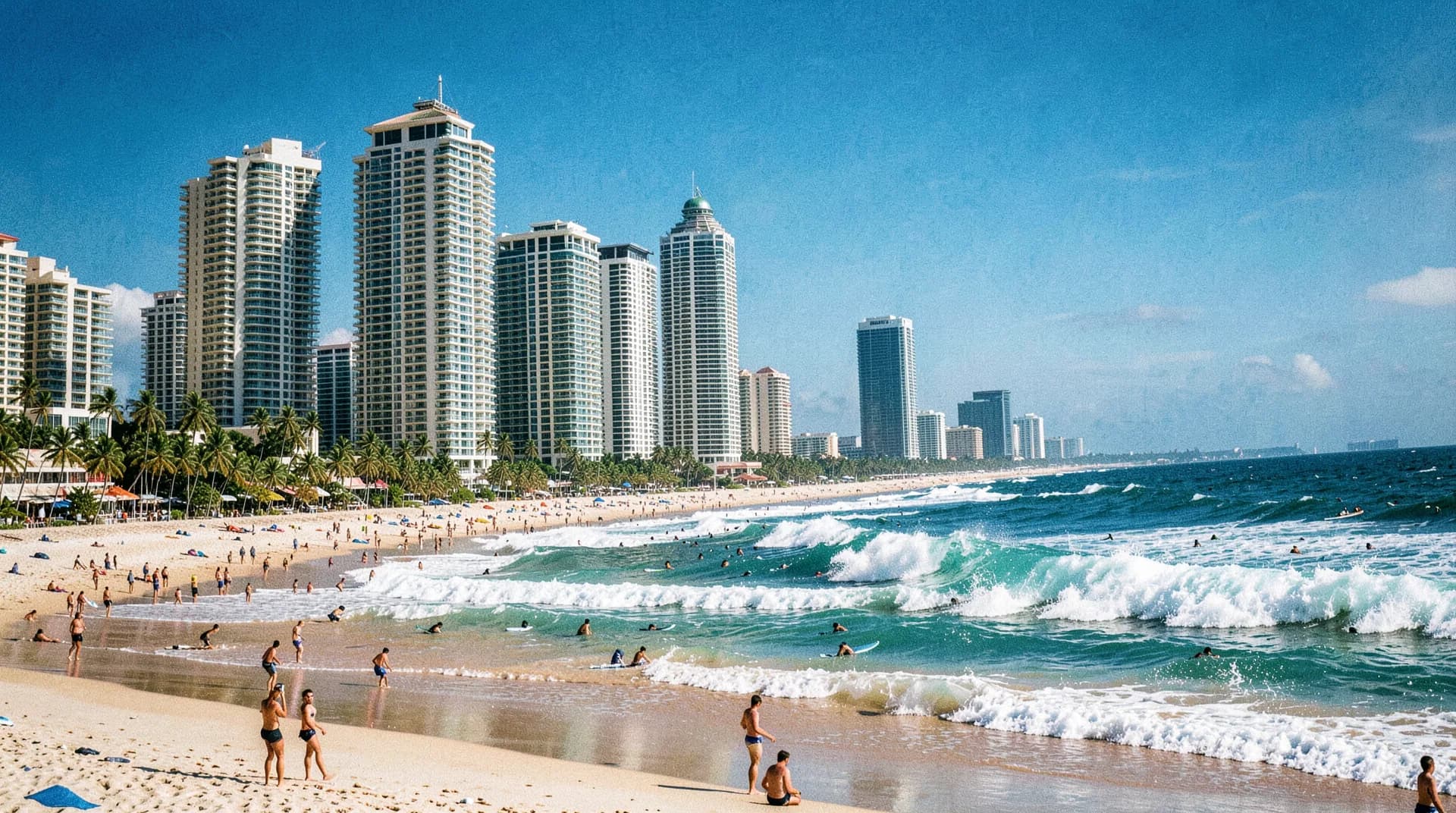
- Gold Coast — reclassified as regional
- Adelaide — has always been classified as regional
- Hobart — regional
- Canberra — regional
- Darwin — regional
- Newcastle, Wollongong, Geelong — regional
- Every town and city outside the Sydney, Melbourne, and inner Brisbane boundaries
Perth's reclassification was a game-changer. A city of over 2 million people, with a developed job market, world-class beaches, and established infrastructure, now qualifies for every regional immigration benefit. If you think "regional" means compromising on lifestyle, Perth proves otherwise.
The Gold Coast reclassification similarly opened up a major population centre — one of Australia's fastest-growing cities — for regional visa advantages.
The 15-Point Advantage: Why It Matters
The single biggest immigration incentive for regional living is the 15 bonus points available through the Subclass 491 (Skilled Work Regional) visa. To understand why 15 points is transformative, consider this:
A skilled migrant with 70 points on the 189 might wait years for an invitation — or never receive one. That same person, with 15 additional regional points, sits at 85 on the 491. At 85 points, invitations come quickly for most occupations.
Those 15 points can be the difference between migrating to Australia and not migrating at all.
How the 491 Works
The Subclass 491 is a provisional visa valid for five years. It requires:
- State or territory government nomination, or sponsorship by an eligible family member in a regional area
- Minimum 65 points (including the 15-point regional bonus)
- Skills assessment in a listed occupation
- Under 45 years of age
- Competent English
- Application cost: AUD $6,140
After holding the 491 for three years, living and working in a designated regional area, and meeting income requirements (currently a taxable income of at least AUD $53,900 per year for at least three years), you can apply for the Subclass 191 permanent visa.
The pathway: 491 (provisional, 5 years) → 191 (permanent residency)
For a detailed breakdown of which states are easiest to get nomination from, see our state nomination comparison.
The 494 Employer Sponsored Regional Visa
The 494 is the regional equivalent of the 482 temporary employer-sponsored visa. It's a 5-year provisional visa for workers sponsored by an employer in a regional area. Like the 491, it leads to the 191 permanent visa after three years.
Key differences from the 482:
- Must be in a regional area
- Leads directly to the 191 (permanent) after 3 years
- Broader occupation list than the 482
If you've got an employer in a regional area willing to sponsor you, the 494 → 191 pathway can be faster and more certain than the 482 → 186 city-based equivalent.
Cost of Living: The Numbers
Let's compare actual living costs across Australian cities and regional areas. These figures represent typical expenses for a single person or couple in 2026.
Housing Costs (Weekly Rent, 2-Bedroom Apartment/House)
| Location | Weekly Rent | Annual Difference vs Sydney |
|---|---|---|
| Sydney | AUD $650-$850 | — |
| Melbourne | AUD $500-$700 | Save AUD $7,800-$10,400 |
| Brisbane | AUD $450-$600 | Save AUD $10,400-$13,000 |
| Perth | AUD $450-$600 | Save AUD $10,400-$13,000 |
| Adelaide | AUD $380-$500 | Save AUD $14,040-$18,200 |
| Hobart | AUD $400-$520 | Save AUD $13,000-$17,160 |
| Canberra | AUD $480-$620 | Save AUD $8,840-$11,960 |
| Regional NSW | AUD $350-$480 | Save AUD $15,600-$19,240 |
| Regional VIC | AUD $300-$420 | Save AUD $18,200-$22,360 |
| Regional QLD | AUD $320-$450 | Save AUD $17,160-$20,800 |
The housing savings alone are staggering. A couple paying AUD $400 per week in regional Victoria instead of AUD $750 in Sydney saves over AUD $18,000 annually — and that's just rent. Add in lower prices for groceries, childcare, and general services, and the total savings can exceed AUD $25,000-$30,000 per year.
Beyond housing, groceries run 15-20% cheaper regionally, and childcare — one of the biggest expenses for families — drops from AUD $130-$180 per day in Sydney to AUD $90-$130 in regional areas. Across all categories, a family can save AUD $25,000-$30,000 annually by choosing regional over Sydney.
Salary Comparison: What You'll Earn
Lower costs of living come with a caveat: salaries in regional areas tend to be lower too. But the gap isn't as large as many people assume, and for some occupations, regional salaries actually match or exceed city rates.
| Occupation | Sydney | Melbourne | Perth | Adelaide | Regional Average |
|---|---|---|---|---|---|
| Registered Nurse | AUD $78,000 | AUD $75,000 | AUD $80,000 | AUD $72,000 | AUD $72,000-$80,000 |
| Software Developer | AUD $110,000 | AUD $105,000 | AUD $95,000 | AUD $85,000 | AUD $80,000-$95,000 |
| Civil Engineer | AUD $95,000 | AUD $90,000 | AUD $100,000 | AUD $85,000 | AUD $85,000-$100,000 |
| Accountant | AUD $80,000 | AUD $75,000 | AUD $75,000 | AUD $68,000 | AUD $65,000-$75,000 |
| Electrician | AUD $85,000 | AUD $82,000 | AUD $90,000 | AUD $78,000 | AUD $75,000-$90,000 |
| Chef | AUD $65,000 | AUD $62,000 | AUD $62,000 | AUD $58,000 | AUD $55,000-$65,000 |
Notice something? Perth — now classified as regional — matches or beats Sydney salaries in engineering and trades, driven by mining and resources. An engineer in Perth earns Sydney money while paying Adelaide rent. Regional healthcare facilities struggling for staff often sweeten packages with housing and relocation assistance.
Job Market Reality
Regional: Fewer Jobs, Less Competition
The regional job market is smaller. Melbourne offers dozens of marketing agency roles; Ballarat might have a handful. But "fewer jobs" means "fewer applicants." Regional employers regularly struggle to fill positions in nursing, teaching, engineering, trades, and healthcare. If your occupation is in shortage regionally, you'll find work faster than in a city competing against thousands. The Department maintains expanded occupation lists for regional areas because of these shortages.
City: More Jobs, More Competition
Sydney and Melbourne account for roughly 40% of all employment. For finance, tech, media, and professional services, cities are where the jobs are. Career progression is faster in cities — more senior roles, more employers to move between, and stronger industry networks. If your career requires a specific ecosystem, cities offer what regional areas can't replicate.
The Perth Factor
Perth's reclassification as regional fundamentally changed the migration calculus. A city of 2.1+ million people — with proper infrastructure, hospitals, universities, and an international airport — now qualifies for every regional visa benefit. Mining and resources boost salaries, living costs sit well below Sydney, and the beaches rival anywhere in Australia.
The trade-off? Geographic isolation (it's the most isolated major city in the world), a smaller cultural scene than the east coast, and summer temperatures above 40°C. But for many migrants, Perth is the ideal compromise: a software developer can earn AUD $95,000, pay AUD $500 per week in rent, and claim 15 bonus regional points.
The Three-Year Regional Commitment
If you go the 491 pathway, you're committing to three years of living and working in a regional area before you can apply for the 191 permanent visa. Three years is a significant chunk of life, and it's worth understanding what it actually means.
What Counts
You must live in a designated regional area (by postcode), earn a taxable income of at least AUD $53,900 per year for at least three of the five years, and the Department verifies this through tax returns, employment records, and residential address.
If you move to Sydney or Melbourne before completing three years, you won't meet the 191 requirements. Your 491 remains valid for five years regardless, but the PR transition won't be available. Many people complete three years regionally, get their 191, and then move to a city. That's entirely legitimate.
Making Regional Life Work
Migrants who thrive regionally embrace the community, explore the outdoors, engage with local migrant networks, and focus on the financial advantage — the money saved on housing alone can fund travel, investments, or faster home ownership. Three years passes quickly when you treat it as a strategic chapter rather than a sacrifice.
Regional vs City: Lifestyle Factors
Education and Healthcare
Regional areas have solid public schools, though private school options narrow outside major centres. Regional universities like Charles Sturt, James Cook, and University of the Sunshine Coast offer quality degrees with lower living costs. For healthcare, major regional centres (Geelong, Newcastle, Ballarat, Cairns, Townsville) have well-equipped hospitals. Smaller towns may require travel for specialist appointments, though telehealth has improved access significantly.
Transport and Lifestyle
Regional areas are car-dependent — factor in vehicle costs. But commute times of 15 minutes replace the hour-plus drives common in Sydney and Melbourne. Cities win on cultural diversity, dining, and entertainment. Regional areas win on space, community, and natural beauty. For the Skilled Independent 189 as an alternative, or the 482 employer-sponsored pathway in regional areas, follow those links.
Strategic Considerations for Your Visa Application
When Regional Is the Smart Move
- Your points score is below 80 for the 189 — the 15 regional bonus can be decisive
- Your occupation is on the regional occupation list but not the MLTSSL
- You have family in a regional area who can sponsor your 491
- You're in a healthcare, trade, or engineering occupation with strong regional demand
- You want to fast-track PR through a pathway with lower competition
- You're comfortable with a 3-year location commitment
When City Living Makes More Sense
- Your points score is already competitive for the 189 (85+)
- Your occupation is city-centric (finance, corporate law, advertising, etc.)
- You have established networks in Sydney or Melbourne
- Your employer is based in a city and willing to sponsor a 186 visa
- Access to specific cultural communities or services is important for your family
- Career progression in your field requires a city-based industry ecosystem
The Hybrid Approach
Many migrants take a strategic hybrid approach:
- Apply for 491 with regional nomination (+15 points)
- Live and work in a regional area for three years
- Apply for 191 permanent visa
- Once PR is granted, relocate to a city if desired
This approach uses regional incentives to get permanent residency, then leverages the freedom of PR to live wherever you choose. It's pragmatic, and it's exactly what the government designed the pathway for — even if the hope is that some migrants will choose to stay regional permanently.
For more on which states offer the best nomination prospects, check our state nomination comparison.
FAQ
Is Perth really classified as regional for immigration?
Yes. Since November 2022, the entire Perth metropolitan area has been designated as a regional area for immigration purposes. This means Perth-based applicants and employers can access all regional visa incentives, including the 15 bonus points for the 491, expanded occupation lists, and priority processing.
Can I move between regional areas during my 3-year commitment?
Yes. You can move from one regional area to another — for example, from Adelaide to Perth, or from regional NSW to regional Queensland. The requirement is that you live in a designated regional area, not a specific one. Just ensure you're always in a postcode classified as regional.
What happens if I lose my job during the 491 period?
The 491 has work rights that aren't tied to a specific employer (unlike the 494). You can change employers freely as long as you remain in a regional area. Job loss doesn't affect your visa, but you'll need to find new employment to meet the income threshold for the 191 transition.
Do my children get any educational benefits in regional areas?
Yes. As a 491 visa holder, your children can attend public schools — and some states offer reduced or waived international student fees for children of provisional visa holders. Check with the specific state's education department for current policies.
How do I prove I've been living regionally for three years?
The Department assesses your residential address through multiple sources: your address on government records, bank statements, employment records, utility bills, and tax returns. Maintaining consistent documentation at a regional address throughout the three years is essential.
Are regional areas safe?
Overall crime rates in regional Australia are comparable to or lower than metropolitan areas for most categories. Some remote areas have specific challenges, but major regional centres like Geelong, Newcastle, Adelaide, and Perth are as safe as any Australian city. Research specific towns or cities before committing, just as you would with any relocation decision.