Australian Visa for Nigerian Citizens: Complete 2026 Guide
Updated: 16 August 2026
Nigeria is Africa's most populous nation and one of the largest source countries on the continent for Australian visa applications. Whether you're planning a short visit, enrolling at an Australian university, or aiming for permanent residency through skilled migration, you'll need to understand how the system works for Nigerian passport holders. Applications from Nigeria face higher scrutiny, and the health examination requirements are more extensive due to tuberculosis risk classification. But thousands of Nigerians successfully obtain Australian visas each year — and with the right preparation, you can too.
Quick Facts: Australian Visas for Nigerian Citizens
| Detail | Information |
|---|---|
| Tourist Visa | Subclass 600 (Visitor) — AUD $250, full application required |
| Student Visa | Subclass 500 — AUD $2,500, growing numbers |
| Working Holiday | Not available for Nigerian citizens |
| ETA/eVisitor | Not eligible |
| Skilled Migration | Subclass 189, 190, 491 — from AUD $6,135 |
| Employer Sponsored | Subclass 482, 494, 186 |
| Health Exam | Yes — full medical, chest X-ray (TB risk country) |
| Police Clearance | NPF Police Extract (4-8 weeks processing) |
| Embassy | Australian High Commission, Abuja |
Tourist Visa (Subclass 600) for Nigerian Citizens
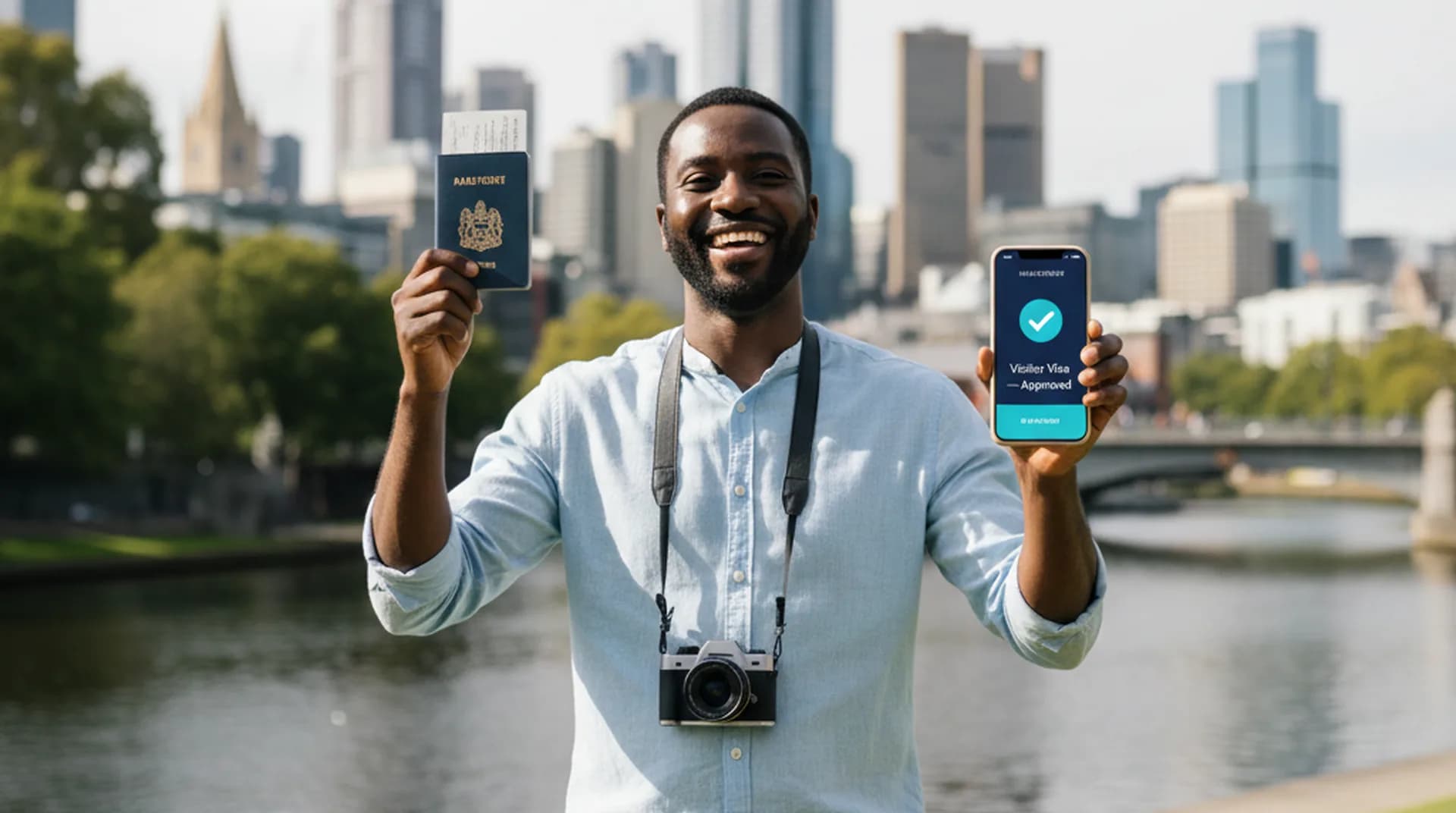
The Visitor visa is the standard entry pathway for Nigerian citizens wanting to travel to Australia for tourism, family visits, or business purposes. There's no fast-track option available — every application goes through the full assessment process.
What You'll Need to Apply
Prepare these documents carefully before submitting:
- Valid Nigerian passport (at least six months validity remaining)
- Completed online application through ImmiAccount
- Bank statements covering the last six months — consistent balances, not sudden deposits
- Employment letter on company letterhead stating your role, salary, and approved leave
- If self-employed, CAC registration documents, business bank statements, and tax filings
- Evidence of assets in Nigeria (property title deeds, vehicle registration)
- Travel itinerary with accommodation bookings
- Travel insurance covering the full duration of your stay
- If visiting family, an invitation letter from your host with their Australian visa status and financial details
- Previous passport pages showing travel history to other countries
Processing Times and Costs
The application fee is AUD $250 when applying from outside Australia. Processing typically takes 30 to 90 days for Nigerian applicants, though it can stretch longer during busy periods. Why the extended timeline? The Department applies enhanced scrutiny to applications from Nigeria, so allow plenty of lead time before your planned travel date.
Strengthening Your Application
Refusal rates for Nigerian visitor visas sit above the global average. The most common reasons include:
- Weak financial evidence or inconsistent bank statements
- Insufficient ties to Nigeria (no property, unstable employment)
- Previous visa refusals for Australia or other countries
- Vague or inconsistent travel plans
If you've previously travelled to the UK, US, Schengen zone, or Canada, include that evidence. Clean travel history to strict visa countries significantly boosts your credibility.
Student Visa (Subclass 500) for Nigerian Citizens
Nigeria has seen strong growth in student visa applications to Australia, with thousands of Nigerians now studying across Australian universities and vocational institutions. It's one of the most viable long-term pathways for Nigerians looking to build a future in Australia.
Genuine Student (GS) Assessment
The Genuine Student requirement is where many Nigerian applications succeed or fail. The Department examines:
- Course relevance: Does your chosen course connect logically to your previous education and career goals? A bachelor's in engineering followed by a diploma in hospitality will raise red flags.
- Institution quality: Applications for well-ranked universities tend to perform better than those for small private colleges.
- Financial capacity: Can you genuinely afford tuition and living costs, or does your financial profile suggest the student visa is primarily a work pathway?
- Return incentive: What professional opportunities exist for you in Nigeria after graduation?
- Study gaps: If you've been out of education for years, explain the gap convincingly.
Financial Evidence
You'll need to show access to approximately AUD $29,710 per year for living costs, plus full tuition fees and airfare. Acceptable evidence includes:
- Personal or family savings with consistent six-month history
- Bank loan approval from a recognised Nigerian bank
- Scholarship or sponsorship documentation
- Employer sponsorship letters with financial backing
- Fixed deposit certificates
The application fee is AUD $2,500, and processing for Nigerian applicants typically takes 8 to 16 weeks. Start your application well ahead of your course start date.
Popular Study Fields
Nigerian students in Australia tend to cluster in high-demand fields that also offer strong skilled migration pathways:
- Nursing and healthcare
- Information technology and cybersecurity
- Engineering (civil, mechanical, electrical)
- Accounting and finance
- Business and management
Skilled Migration from Nigeria
The Nigerian professional community in Australia is growing rapidly, and skilled migration is a realistic pathway for qualified professionals. Are you a nurse, software developer, or engineer? Your skills could be exactly what Australia needs.
Points-Tested Visas
- Subclass 189 (Skilled Independent) — permanent residency, no sponsor needed, AUD $6,135
- Subclass 190 (Skilled Nominated) — state nomination adds 5 points
- Subclass 491 (Skilled Work Regional) — regional nomination adds 15 points
You'll need your occupation on the skilled occupation list, a positive skills assessment, at least Competent English (IELTS 6.0 each band), and a competitive points score.
Skills Assessment for Nigerian Qualifications
Nigerian qualifications from recognised institutions are assessed by the relevant Australian assessing authority:
- ANMAC — Nursing qualifications (one of the strongest pathways for Nigerians)
- ACS — IT and computing qualifications
- Engineers Australia — Engineering degrees assessed via the CDR pathway
- CPA/CA ANZ/IPA — Accounting qualifications
- VETASSESS — General professional occupations
Documents in languages other than English must be accompanied by NAATI-certified translations.
English Language Requirements
English proficiency is a strength for many Nigerian applicants, given Nigeria's English-speaking education system. However, you still need formal test results:
- Competent (IELTS 6.0 each): baseline requirement
- Proficient (IELTS 7.0 each): 10 bonus points
- Superior (IELTS 8.0 each): 20 bonus points
Higher scores can make the difference between an invitation and a long wait. Check the full breakdown in our English language requirements guide.
Employer Sponsored Visas
Nigerian nationals with job offers from approved Australian employers can access:
- Subclass 482 (Temporary Skill Shortage) — AUD $3,210, salary threshold Core: $76,515 / Specialist: $141,210
- Subclass 494 (Skilled Employer Sponsored Regional) — regional pathway
- Subclass 186 (Employer Nomination Scheme) — direct permanent residency
These require an approved sponsor, a role matching your skills assessment, and meeting salary, English, and character requirements.
Health Examination Requirements
As a TB-risk country, Nigeria triggers mandatory health examinations for all visa types. You'll need:
- Full medical examination by a Bupa Medical Visa Services panel physician
- Chest X-ray for tuberculosis screening
- HIV, hepatitis B, and hepatitis C testing
- Additional tests may be required depending on the visa type and intended stay length
Panel physicians in Nigeria are located in Lagos and Abuja. Book your appointment early — wait times can extend to several weeks.
Police Clearance: NPF Police Extract
The Nigeria Police Force (NPF) Police Extract is the standard police clearance certificate. Here's what you should know:
- Apply through the Nigeria Police Force Criminal Investigation Department
- Processing takes 4 to 8 weeks — don't leave this to the last minute
- The certificate is generally valid for 12 months from issue
- You'll need it for student visas, skilled migration, and some visitor visa applications
Partner and Family Visas
Nigerian citizens can apply for partner visas if their spouse or de facto partner is an Australian citizen or permanent resident:
- Subclass 309/100 (Partner visa) — AUD $11,710
- Processing times are lengthy (typically 18 to 30 months)
- Genuine relationship evidence is thoroughly assessed
- Health and character requirements apply to all applicants
Frequently Asked Questions
Is it hard to get an Australian visa from Nigeria?
Applications from Nigeria face higher scrutiny, but visas are granted regularly to applicants who present strong documentation, genuine travel purposes, and credible financial evidence. The key is thorough preparation — don't rush your application or submit incomplete documents.
Can Nigerian citizens get a Working Holiday visa?
No. Nigeria isn't eligible for either the Working Holiday (417) or Work and Holiday (462) visa. The student visa or skilled migration pathways are your best options for living and working in Australia.
How long does the NPF Police Extract take?
The NPF Police Extract typically takes 4 to 8 weeks to process. Given this timeline, you should apply for it as soon as you decide to submit a visa application. An expired certificate means starting the process again.
What's the best visa pathway for Nigerian nurses?
Nursing is one of the strongest skilled migration pathways for Nigerians. Get your ANMAC skills assessment, achieve the required English scores (typically IELTS 7.0 each band for nursing registration), and you could be looking at subclass 189, 190, or 491 permanent residency pathways. Many Nigerian nurses also enter through employer-sponsored routes.
Do I need a health exam for a tourist visa?
Yes. Because Nigeria is classified as a TB-risk country, health examinations are required even for short-stay visitor visas. Book with a Bupa panel physician in Lagos or Abuja well before your intended application date.