Living in Hobart as an Immigrant: Tasmania's Capital Guide
Hobart is the smallest Australian state capital and the only one where the entire surrounding state qualifies as a Designated Regional Area for skilled visa purposes. For migrants, that translates into the Tasmanian state nomination program (1,200 places for subclass 190 and 650 places for subclass 491 in the 2025-26 program year), the 15-point regional uplift on the 491, and a clear path to permanent residency via the subclass 191. The local economy runs on the Tasmanian State Service, tourism, salmon aquaculture, Antarctic logistics and the University of Tasmania. Hobart apartment rents sat around $490 a week in late 2025 with the country's tightest vacancy rate at 0.4%, and average full-time wages trail mainland capitals. Summers are mild and winters are cold, with snow regularly visible on kunanyi / Mount Wellington.
Quick Stats
- Population (Greater Hobart, ABS estimated resident population, 30 June 2024): around 255,000
- State: Tasmania
- Climate: temperate oceanic (Köppen Cfb), mild summers and cool wet winters
- Time zone: AEST (UTC+10), AEDT (UTC+11) in summer with daylight saving observed
- Distance to airport: about 17 km east of the CBD, roughly a 15 to 25 minute drive
- Key industries: public sector, tourism and hospitality, aquaculture and agriculture, Antarctic and Southern Ocean research, healthcare, higher education
Why Immigrants Move to Hobart
The defining feature of Hobart from a migration standpoint is that every postcode in Tasmania falls within a Designated Regional Area under Department of Home Affairs rules. Tasmania has no non-regional zones. That status unlocks the subclass 491 Skilled Work Regional (Provisional) visa, the additional 15 points on the skilled points test, and after three years of regional residence and meeting the minimum taxable income threshold, the subclass 191 permanent residence visa. Hobart specifically sits in the Home Affairs Category 2 "Cities and major regional centres" zone, which carries the same 491 eligibility as the rest of the state.
Tasmania's state nomination program has historically had a reputation for being one of the more accessible state pathways for candidates already onshore, particularly graduates of the University of Tasmania and skilled workers already employed in Tasmania. The 2025-26 program runs 1,200 subclass 190 nomination places and 650 subclass 491 places. Both pathways require a commitment to live in Tasmania for at least two years after nomination, and applicants must be under 45, have a positive skills assessment, hold competent English and meet the federal 65-point pass mark before state nomination points are added.
Hobart is the operational and intellectual gateway to Antarctica. The Australian Antarctic Division headquarters sits at Kingston, south of the city. The CSIRO marine laboratories occupy a purpose-built site on the Hobart waterfront. The icebreaker RSV Nuyina is homeported in Hobart. The Institute for Marine and Antarctic Studies (IMAS) is part of the University of Tasmania. For polar scientists, marine biologists, logistics specialists and engineers in cold-climate fields, Hobart is the only Australian city where this work concentrates.
Tasmanian salmon aquaculture is a billion-dollar industry built around Tassal (owned by Cooke Inc since 2022), Huon Aquaculture and Petuna. The industry directly employs more than 2,200 full-time equivalent workers across farming, processing, veterinary, biosecurity and logistics, and Hobart is the corporate base for most of it.
Cultural rebuild since 2011 has been led by the Museum of Old and New Art (MONA), David Walsh's private collection that turned Hobart into a destination for contemporary art tourism. MONA runs two festivals, MONA FOMA in summer and Dark Mofo in midwinter (held 11 to 22 June for the 2026 edition). The food scene has followed: Tasmanian whisky, cool-climate wines from the Tamar and Coal River valleys, oysters, abalone and salmon. Salamanca Market has run every Saturday since 1972.
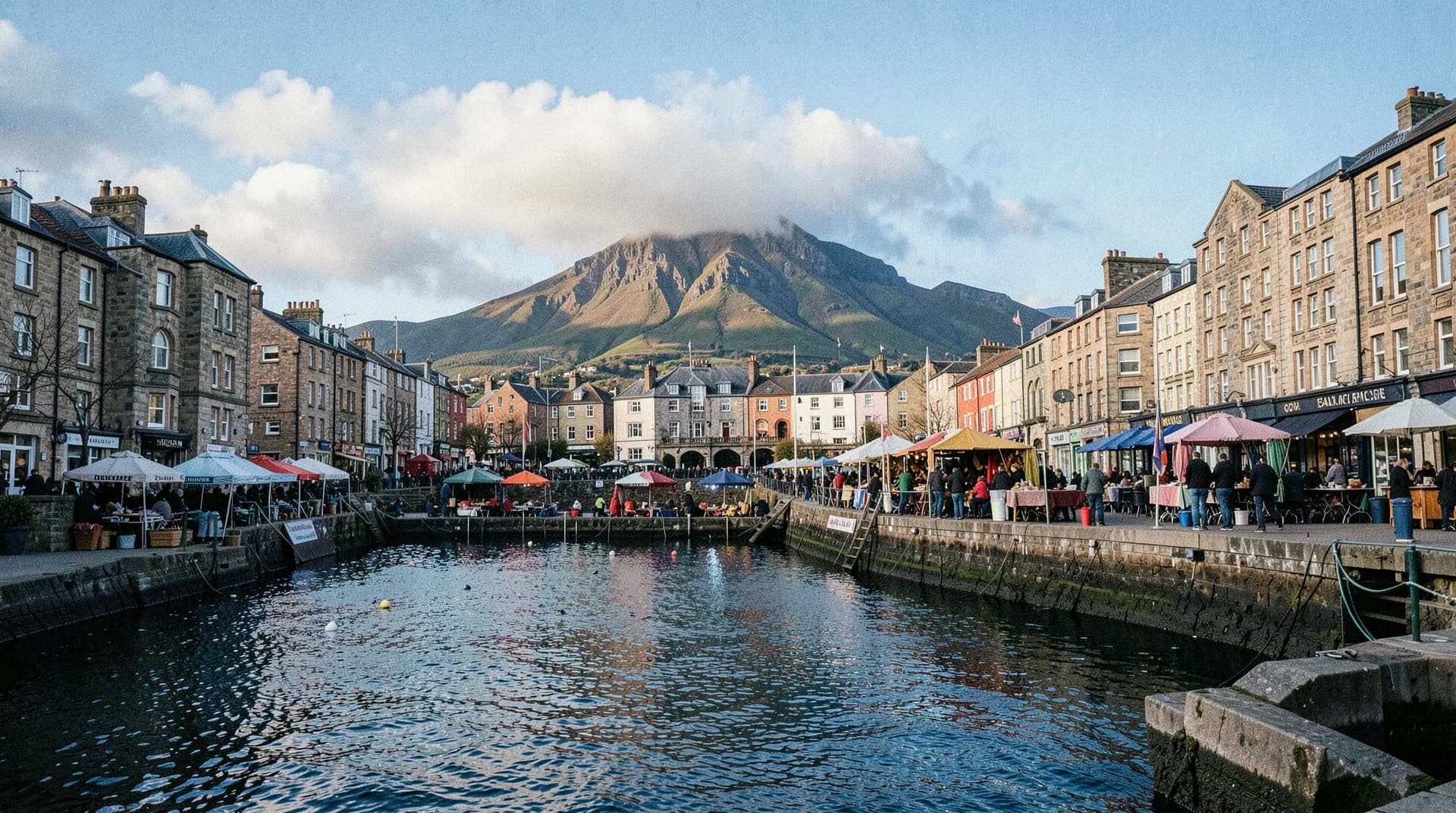
Lifestyle is the other pull. Greater Hobart is small enough that most suburbs are within 20 minutes of the CBD. kunanyi / Mount Wellington rises 1,271 metres directly behind the city. Bruny Island is a 35-minute drive plus 15 to 20 minute ferry crossing. Property prices rose sharply post-pandemic and have not fully unwound: the Hobart median dwelling value reached around $722,000 by early 2026, still below mainland capital medians but no longer the bargain it was in 2018.
Jobs and Economy
The Hobart labour market is smaller than any other Australian state capital. The dominant sectors are public administration and healthcare, with tourism, aquaculture and education filling the rest. Wages trail mainland capitals: average ordinary time earnings for full-time workers in Tasmania sit around $1,619 per week, with the average Hobart full-time salary reported by PayScale at around $65,000 and ERI SalaryExpert reporting an average around $83,700 (figures vary by methodology).
| Sector | Major Employers | Indicative Salary | Notes |
|---|---|---|---|
| Public sector | Tasmanian State Service (over 30,000 employees statewide), Australian Public Service offices | TSS classification-based, broadly $70k to $130k | Largest single employer in the state |
| Healthcare and social assistance | Royal Hobart Hospital (684 beds), Calvary Lenah Valley, Hobart Private Hospital | Registered nurses around $75k to $95k mid-career | Largest Hobart employment sector at around 22% of workforce |
| Higher education and research | University of Tasmania (around 34,000 students), CSIRO Marine Laboratories, Australian Antarctic Division | Academic and professional bands, $80k to $160k | UTAS is a major regional employer across Hobart, Launceston and Burnie |
| Tourism and hospitality | MONA, Wrest Point, Federal Group, cruise ship and tour operators | Chefs around $65k to $80k, hospitality managers $75k to $100k | Seasonal weighting, peak summer and Dark Mofo winter |
| Aquaculture and seafood | Tassal (Cooke), Huon Aquaculture, Petuna, Petuna Aquaculture | Aquaculture technicians around $70k to $85k, vets and biologists $90k to $130k | Combined industry employs 2,200+ FTE in Tasmania |
| Antarctic and Southern Ocean logistics | Australian Antarctic Division (Kingston HQ, around 300 staff), Serco Defence (Nuyina), CSIRO | Specialist scientist and engineer scales | Federal employment, mostly based at Kingston |
| Construction | TasBuilt, Vos Group, Hutchinson Builders TAS, John Holland on infrastructure | Site engineers $100k to $140k | Smaller pipeline than mainland states |
The state government is by far the largest employer. Health Care and Social Assistance accounted for around 22% of Hobart employment at the 2021 Census, and Public Administration and Safety another 16%. Combined, these two government-funded sectors employ nearly four in every ten Hobart workers, which means the local economy is unusually exposed to state budget cycles.
Cost of Living Snapshot
Hobart had Australia's tightest rental market through 2025 and into 2026. The SQM Research vacancy rate sat at 0.4% in December 2025 and January 2026, equating to just over 100 vacant rental properties in the entire Greater Hobart area at the start of the year. Renters compete aggressively for listings and inspections.
| Item | Hobart (2025 to early 2026) | Source / note |
|---|---|---|
| Median apartment rent, weekly | About $490 to $504 | Domain Rental Report, September 2025 |
| Median house rent, weekly | $585 | Domain Rental Report, September 2025 |
| 2-bedroom unit rent, weekly | $517 | Domain Rental Report, September 2025 |
| Median asking rent (all dwellings) | About $555 | SQM Research, early 2026 |
| Rental vacancy rate | 0.4% | SQM Research, December 2025 to January 2026 |
| Public transport (bus) fares | Free statewide | Tasmanian Government fare-free trial in effect as of 2026 |
| Groceries, single person | About $80 to $120 per week | Multiple Hobart cost-of-living guides, 2025 |
| Utilities (electricity, gas, water) | About $300 per quarter, higher in winter | Tasmanian residential averages, 2025 |
| Median dwelling value | About $722,000 | Cotality (formerly CoreLogic), February 2026 |
Heating costs are the cost-of-living trap most mainland migrants do not anticipate. Tasmanian winters run cold enough that a typical Hobart household can add several hundred dollars to a winter quarter's power bill compared with summer. Reverse-cycle heat pumps and wood heaters are standard, and well-insulated rental stock is not.
Best Neighbourhoods for New Arrivals
Young professionals. North Hobart sits directly north of the CBD along Elizabeth Street, which carries most of the suburb's restaurants and cafes. The strip is sometimes compared to Lygon Street in Melbourne, on a smaller scale. Battery Point is the historic upmarket area immediately south of Salamanca, gentrified since the 1970s, expensive to rent but walkable. Sandy Bay covers the slopes south of the CBD towards UTAS, with a mix of older houses, apartments and the main UTAS campus.
Families. Kingston, 12 km south of the CBD across the Southern Outlet, is the main southern commuter hub with schools, beaches and the Channel Court shopping centre. Glenorchy to the north along the Brooker Highway offers larger and more affordable housing stock with bus connections to the CBD and the MONA ferry pier. Howrah and Bellerive on the Eastern Shore are popular for families wanting newer housing and beach access, with a 10 to 20 minute drive into the CBD.
Students. Sandy Bay is the obvious choice for UTAS students, with the main sandstone campus, share houses and apartments within walking distance. Battery Point and South Hobart are within cycling distance for those wanting more character.
Budget-conscious. Glenorchy and the suburbs further north (Moonah, Berriedale, Claremont) carry the more affordable rental stock within Greater Hobart. Bridgewater and Brighton, 20 to 25 km north of the CBD, push prices lower again but mean longer commutes and limited bus services.
Transport
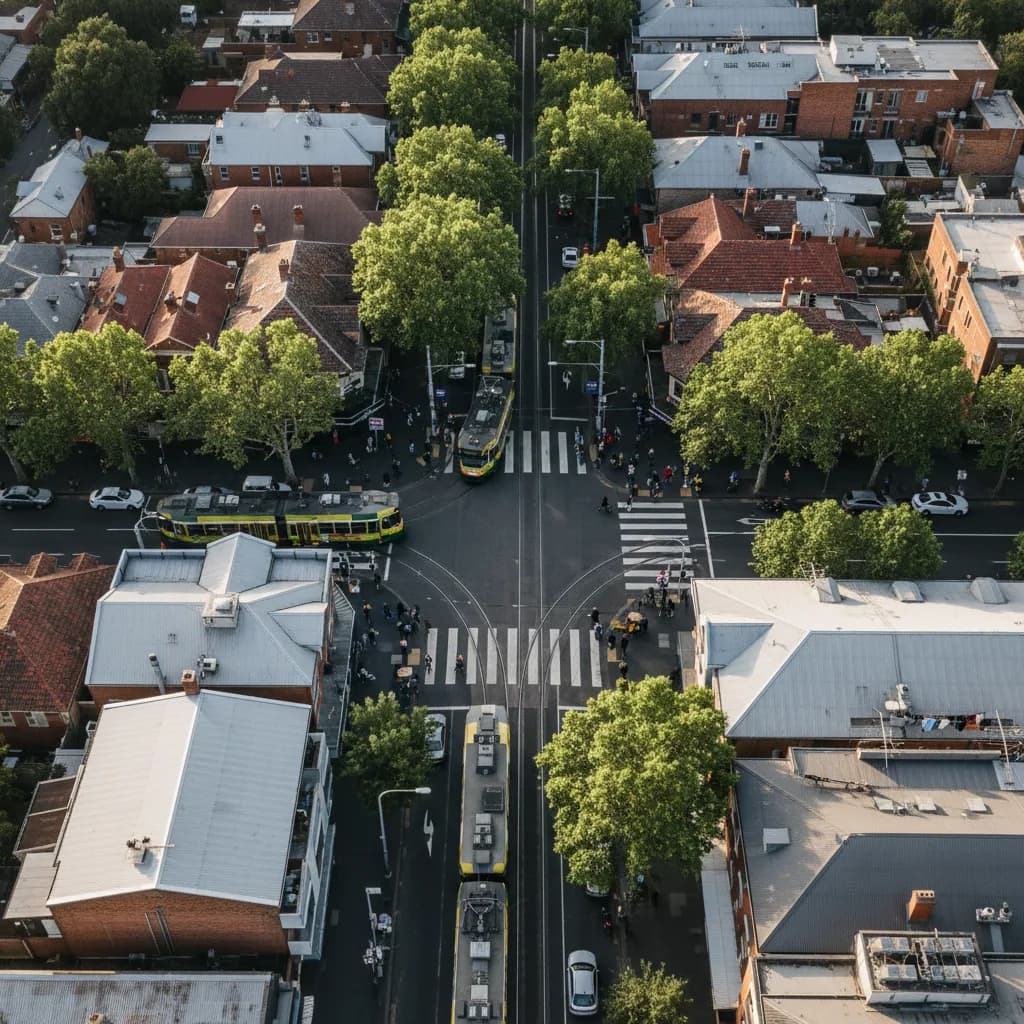
Hobart is the only Australian capital city with no rail-based public transport. The system is buses only. Metro Tasmania runs the urban network out of Hobart, Launceston and Burnie. Coverage is concentrated on the main arterial corridors to Glenorchy, Kingston, Howrah and the University. Outer suburbs are served infrequently. Most Hobart households own at least one car, and the city is structured around driving.
The Greencard is the Metro Tasmania smartcard, normally costing $5 with a 20% fare discount and free 90-minute transfers across Metro buses, Derwent Ferries and Tassielink. As of 2026, the Tasmanian Government is running a fare-free trial across public buses, meaning Greencard taps are recorded but no fare is deducted. Check transport.tas.gov.au for the current status of the trial before relying on it for your budget.
Hobart Airport (HBA) sits 17 km east of the CBD across the Tasman Bridge, about a 15 to 25 minute drive. Direct flights operate to Melbourne, Sydney, Brisbane and Adelaide, with seasonal services to Perth and limited international charters. The Derwent ferry runs MONA-bound services from Brooke Street Pier to MONA at Berriedale and is used by some commuters in the northern suburbs. SeaLink runs the Bruny Island car ferry from Kettering, 32 km south of Hobart, with crossings every 20 minutes between 6:10 am and 7:00 pm.
Education
The University of Tasmania (UTAS) is the state's only university and runs around 34,000 students across its Hobart (Sandy Bay), Launceston and Burnie campuses, with about 4,500 international enrolments as of 2024. UTAS plans to consolidate the Hobart campus into the CBD over the next decade, although the project has faced public opposition and revised timelines. UTAS sits in the Times Higher Education top 350 globally and houses the Institute for Marine and Antarctic Studies, the Menzies Institute for Medical Research and the Australian Maritime College in Launceston.
School-age children attend Tasmanian state schools (administered by the Department for Education, Children and Young People), Catholic schools (Tasmanian Catholic Education Office) or independent schools. Inner-Hobart selective public high schools include Taroona High and Ogilvie/New Town High. Independent schools include The Friends' School, Hutchins, Fahan, Mount Carmel and St Michael's Collegiate.
For migrant families, school enrolment for visa holders follows Tasmanian Department for Education rules, with international student fees applying to most temporary visa subclasses. See our school enrolment guide for visa holders for details by visa type.
Healthcare
The Royal Hobart Hospital (RHH) is the major public tertiary hospital in southern Tasmania, with 684 beds. It is the principal teaching hospital for UTAS medicine and runs the state's only major trauma centre. Calvary Lenah Valley is the largest private hospital in Tasmania, with neurosurgery, orthopaedics, urology, gynaecology and a 24/7 private emergency department reopened in 2025 in partnership with Care 24-7. Hobart Private Hospital sits on the same campus as RHH.
Medicare covers most public hospital and GP costs for permanent residents and eligible temporary visa holders. Tasmania has acknowledged gaps in its primary care workforce: rural and regional Tasmanian towns have been on RACGP shortage lists, and the state has introduced a single-employer model to keep GP registrars employed by the Tasmanian Health Service across rural rotations. In practice, new arrivals can find it slow to secure a long-term GP, and bulk-billing rates are lower than in Sydney or Melbourne.
For migrant healthcare coverage, see our Medicare guide for visa holders.
Climate
Hobart has a temperate oceanic climate (Köppen Cfb). Summers are mild and dry by Australian capital standards, winters are cool and wet, and weather can shift several times in a day. The Hobart (Ellerslie Road) station, the city's long-term reference site since 1882, gives the following monthly normals:
| Month | Avg High °C | Avg Low °C | Rainfall mm |
|---|---|---|---|
| January | 23.1 | 12.6 | 45 |
| February | 22.5 | 12.4 | 40 |
| March | 21.1 | 11.0 | 35 |
| April | 18.2 | 8.8 | 45 |
| May | 15.6 | 6.9 | 40 |
| June | 13.2 | 4.9 | 45 |
| July | 13.0 | 4.4 | 45 |
| August | 13.9 | 5.0 | 65 |
| September | 15.7 | 6.4 | 55 |
| October | 17.7 | 7.9 | 55 |
| November | 19.5 | 9.7 | 50 |
| December | 21.4 | 11.2 | 55 |
Hobart rarely exceeds 30°C in summer. Heatwaves do happen but they are infrequent and short. Winter low temperatures in inner suburbs sit around 4 to 5°C, with frosts on still mornings. Snow falls on the upper slopes of kunanyi / Mount Wellington several times each winter and occasionally settles in higher Hobart suburbs. The city's "four seasons in one day" reputation is real: a fine still morning can turn into wind-driven rain by afternoon, particularly in spring.
Culture and Lifestyle
The cultural anchor is MONA, opened by David Walsh in 2011 at Berriedale on the Derwent. Its two festivals (MONA FOMA in summer and Dark Mofo in midwinter) have shifted Hobart's national visibility. Dark Mofo 2026 runs 11 to 22 June and brings winter visitor numbers that the city would not otherwise see in June.
Salamanca Market has run every Saturday since 1972 in the Georgian sandstone warehouses of Salamanca Place, with over 300 stallholders. The Tasmanian food scene is built around cool-climate produce: oysters from Pittwater and Coffin Bay-style growers, Atlantic salmon and ocean trout, Wagyu beef from the Midlands, single-malt whisky from Lark, Sullivans Cove and Overeem, sparkling and Pinot Noir from the Tamar and Coal River valleys.
Outdoor life is structured around kunanyi / Mount Wellington (1,271 m) directly behind the city, the Derwent estuary, Bruny Island, the Tasman Peninsula and the Freycinet coast. Bushwalking, sea kayaking, sailing and mountain biking are all within day-trip range of central Hobart.
Sport is changing significantly. Tasmania has historically had no AFL team. The Tasmania Football Club, branded the Devils, was granted an AFL licence in May 2023 and will join the AFL and AFLW for the 2028 season. The club is competing in the VFL and VFLW from 2026 as a stepping stone, and a new Hobart stadium at Macquarie Point is part of the broader package. Cricket Tasmania runs the Tigers (Sheffield Shield and One-Day Cup) and the Hobart Hurricanes (BBL and WBBL), with Bellerive Oval (Blundstone Arena) the main venue.
Immigration Pathways to Hobart
The two primary state-nominated pathways for skilled migrants are:
Subclass 190 Skilled Nominated (permanent). 1,200 places allocated to Tasmania for 2025-26. Adds 5 points to the federal points test. Nominees commit to live in Tasmania for at least two years after nomination.
Subclass 491 Skilled Work Regional (Provisional). 650 places allocated to Tasmania for 2025-26. Five-year provisional visa. Adds 15 points to the federal points test. Nominees commit to live and work in regional Australia (and specifically Tasmania, per the state's terms) for the duration. After three years living in regional Australia and meeting the minimum taxable income threshold, holders can apply for the subclass 191 permanent residence visa.
Tasmania runs four nomination pathways within those two visa subclasses, depending on whether the candidate is in Tasmania already or applying from offshore. The three onshore pathways are the Tasmanian Skilled Employment (TSE) pathway for skilled workers already employed in Tasmania, the Tasmanian Skilled Graduate (TSG) pathway for UTAS graduates, and the Tasmanian Established Resident (TER) pathway for longer-term Tasmanian residents. The offshore pathway is the Tasmanian Backed Occupation (TBO) pathway for skilled workers living overseas with occupations on Tasmania's priority list.
For onshore pathways, Migration Tasmania typically asks for a track record of living and working or studying in Tasmania as a baseline. Minimum periods, qualifying employment hours and acceptable occupations are updated each program year. Check migration.tas.gov.au directly for the current 2025-26 settings before lodging a Registration of Interest, because the parameters shift between program years and are not always reflected in third-party migration agent summaries.
For the offshore TBO pathway, Tasmania publishes a list of priority occupations each year. Selection is competitive: meeting the minimum requirements does not guarantee an invitation, because annual quotas cap available places.
The 491 to 191 pathway is the most reliable route to permanent residency for migrants without a state-sponsored skilled occupation pathway elsewhere, and Tasmania's all-state regional status means any Tasmanian address qualifies. The post-study route via UTAS (Temporary Graduate 485, then TSG-pathway nomination for the 491 or 190) is the most common pathway for international students.
For full federal-level visa rules, see immi.homeaffairs.gov.au. For visa-by-visa working rights, see our working rights by visa type guide.
Pros and Cons
| Pros | Cons |
|---|---|
| Every postcode in Tasmania is a Designated Regional Area, unlocking the 491 and 191 pathway | Hobart labour market is the smallest of any state capital |
| TAS state nomination quotas (1,200 x 190 and 650 x 491 in 2025-26) and onshore pathways through UTAS or Tasmanian employment | Average wages trail mainland capitals |
| Antarctic, marine, aquaculture and renewable energy specialisations available locally | Few headquarters of large private corporates; the state public service dominates |
| Lower median dwelling value than mainland capitals (around $722k) | Rental vacancy at 0.4%, the tightest in Australia |
| Strong food, art and lifestyle culture for a city of 250,000 | Winters are cold by Australian standards and heating costs add to bills |
| Compact city, most suburbs within 20 minutes of CBD | Bus-only public transport, car effectively required |
| Direct access to kunanyi, Bruny Island, Freycinet, Tasman Peninsula | Limited direct flights, most interstate travel routes via Melbourne |
FAQ
Is Tasmania easier than mainland states for state nomination? Tasmania has historically had a reputation as one of the more accessible state nomination programs, particularly for UTAS graduates and people already employed in Tasmania through the TSG and TSE pathways. That said, Tasmania has firmed up requirements in recent years, and meeting the minimum eligibility does not guarantee an invitation. Check the current program year settings on migration.tas.gov.au.
Is Hobart as cold as people say? Yes and no. Average January maximums sit around 23°C and February only marginally cooler, so summers are mild and pleasant rather than hot. Winters are genuinely cold for Australia: July averages a maximum of 13°C and a minimum of 4.4°C, frosts are common, and snow regularly falls on kunanyi / Mount Wellington. Rental stock is often poorly insulated, which makes winter feel colder indoors than the numbers suggest.
What is the job market like beyond government and tourism? The Tasmanian State Service, healthcare and tourism dominate, but there is a meaningful private sector in salmon aquaculture (Tassal, Huon, Petuna), Antarctic and Southern Ocean research and logistics (Australian Antarctic Division, CSIRO, IMAS), construction, agriculture and food processing, and a smaller technology sector. Senior corporate roles are scarce compared with mainland capitals, because most large companies run Hobart as a satellite office rather than a head office.
Is Hobart cheaper than mainland capitals? Mixed. The median dwelling value (around $722,000 in early 2026) is below Sydney, Melbourne, Brisbane and Adelaide. Median rents are also lower than Sydney, Melbourne and Perth. But the vacancy rate is the lowest of any capital at 0.4%, salaries trail mainland averages, and winter heating costs eat into the savings. Hobart is no longer the bargain it was in 2018.
Can you live in Hobart without a car? It is possible in the inner suburbs (North Hobart, South Hobart, Battery Point, Sandy Bay near UTAS, parts of West Hobart) where buses run frequently and most amenities are walkable. Outside that core, the bus network thins quickly and most households own a car. For families and outer-suburb residents, a car is effectively required.
Will the Tasmania Devils AFL team change the city? Probably, although the effect won't land until 2028. The Devils will join the AFL and AFLW from the 2028 season after building up through the VFL and VFLW from 2026. A new Hobart stadium at Macquarie Point is part of the federal-state funding package, although the project remains politically contested. Expect a step-up in winter sport attendance, visitor numbers and Macquarie Point precinct development from 2027 onwards.
What are the cheapest suburbs in Greater Hobart? Within the Glenorchy City Council area, suburbs such as Moonah, Berriedale and Claremont carry more affordable rental stock. Bridgewater and Brighton, north of Hobart in the Brighton municipality, are cheaper again but mean longer commutes and limited public transport. On the Eastern Shore, Risdon Vale and Warrane sit at the lower end. Bargain hunting is harder than it was: even the cheapest Greater Hobart suburbs have shifted upward since 2020.
Sources
- ABS Regional Population 2024-25 -- Greater Hobart estimated resident population and growth components
- Centre for Population 2025 Population Statement, Tasmania snapshot -- Greater Hobart population projection
- Migration Tasmania, Skilled Workers and Graduates Living in Tasmania -- TAS state nomination eligibility, residency commitment, pathway structure
- Migration Tasmania, Skilled Migration overview -- 2025-26 program year context
- Department of Home Affairs, Designated regional area postcodes -- Confirmation that all Tasmanian postcodes are Category 2 or 3 regional areas
- Bureau of Meteorology, Hobart (Ellerslie Road) climate statistics, station 094029 -- Monthly temperature and rainfall normals
- Climates to Travel, Hobart climate page -- Monthly temperature and rainfall summary table
- Domain Rental Report, September 2025 -- Median Hobart house and unit rents
- SQM Research, residential vacancy rates Hobart -- December 2025 and January 2026 vacancy rate of 0.4%
- Cotality (formerly CoreLogic), Hobart dwelling values, February 2026 -- Median dwelling value of approximately $722,000
- Metro Tasmania, Greencard -- Bus fare and Greencard structure
- Tasmanian Government, Public Transport fares -- Fare-free trial status
- Australian Antarctic Division, About us -- Kingston HQ and Hobart gateway role
- Royal Hobart Hospital, Tasmanian Department of Health -- 684-bed capacity
- Calvary Lenah Valley Hospital -- Largest private hospital in Tasmania
- University of Tasmania 2024 Annual Report -- UTAS enrolment context
- Tasmania Football Club, Wikipedia -- 2028 AFL and AFLW entry and VFL/VFLW build-up from 2026
- Hobart Airport, traveller guide -- 17 km airport-to-CBD distance
- SeaLink Bruny Island ferry information -- Kettering ferry timetable and crossing time
- RACGP, GP shortage and Tasmanian workforce -- GP workforce shortage context
- Australia Institute, Tasmanian salmon industry employment -- Aquaculture employment data