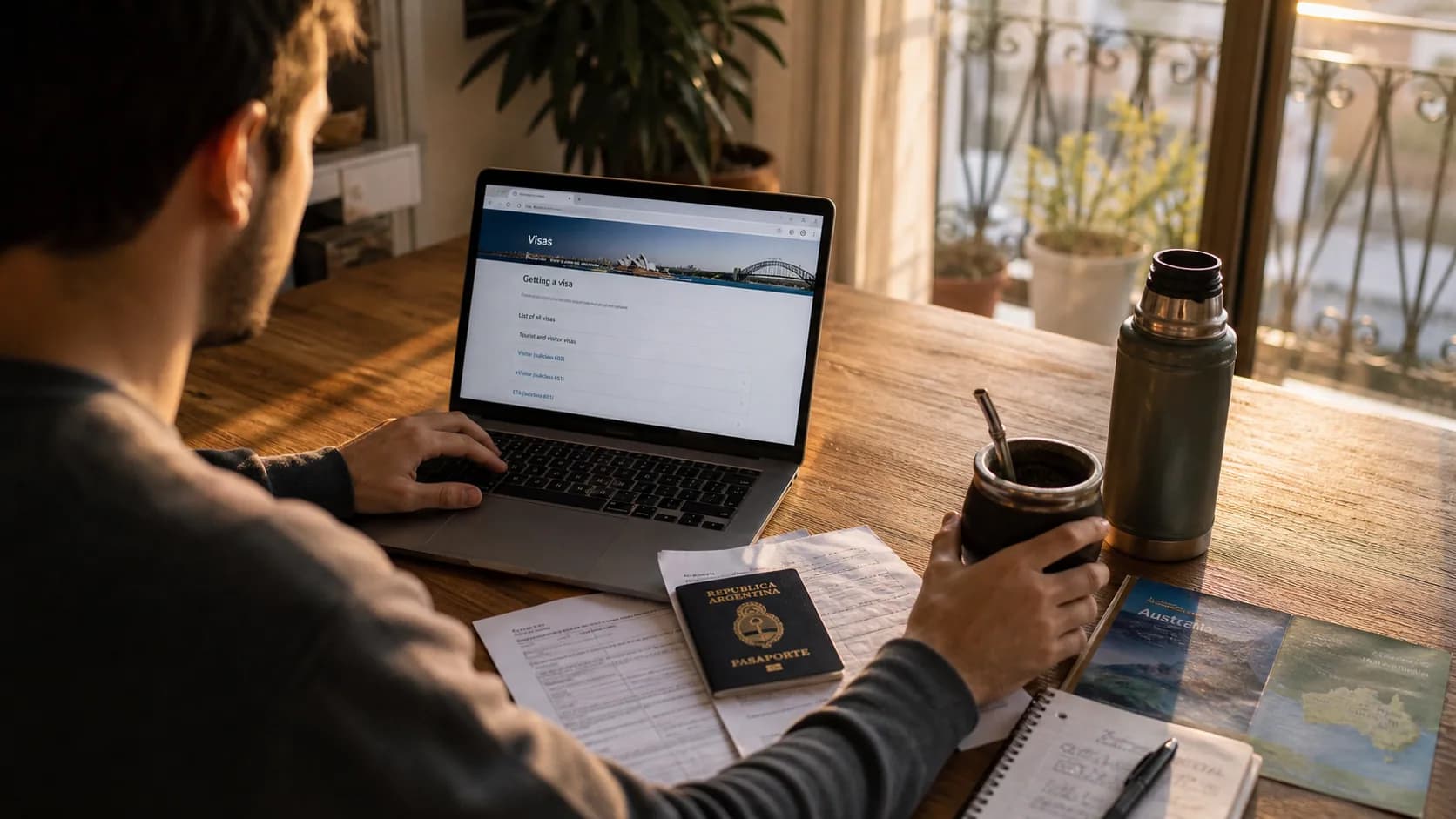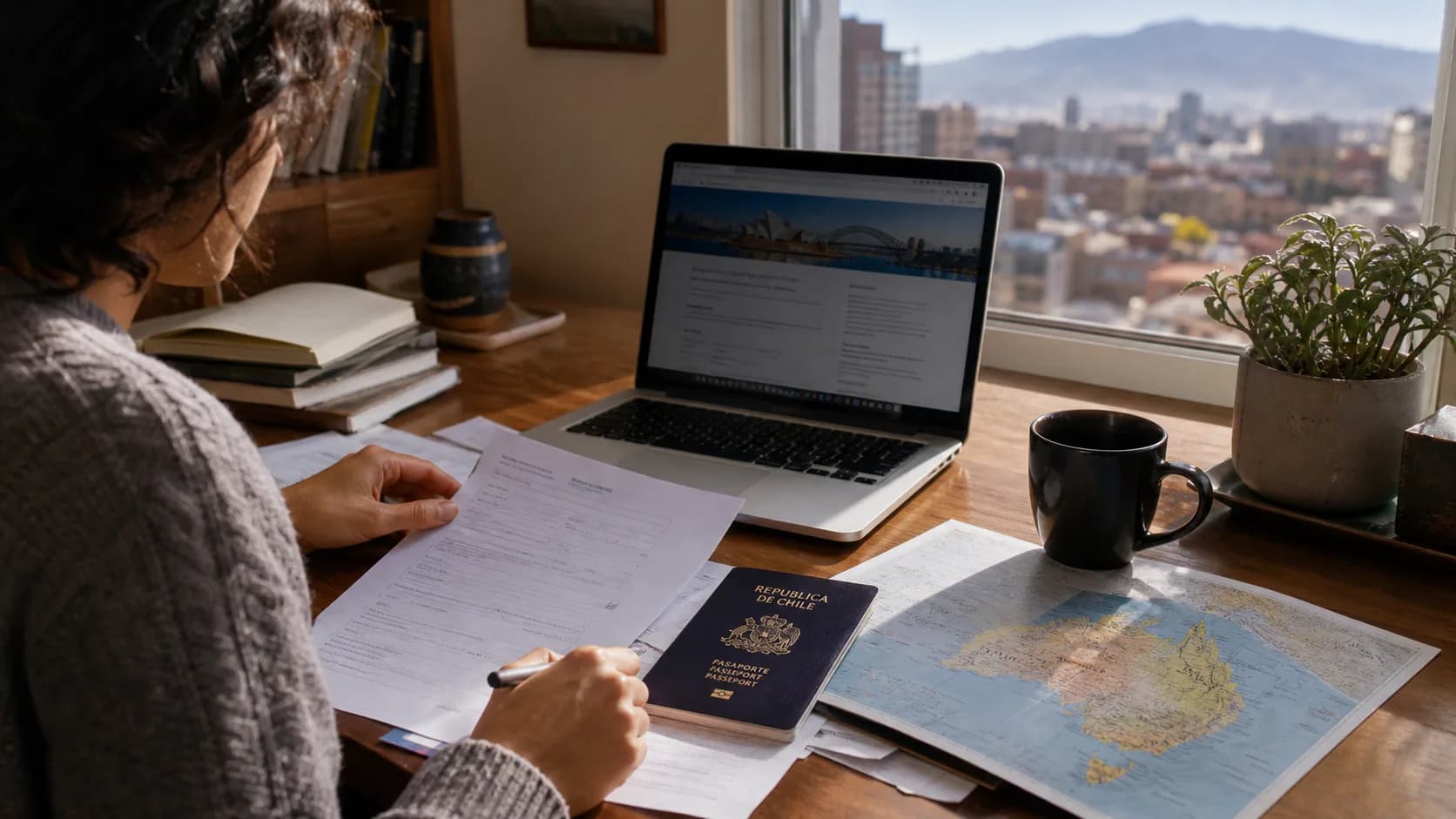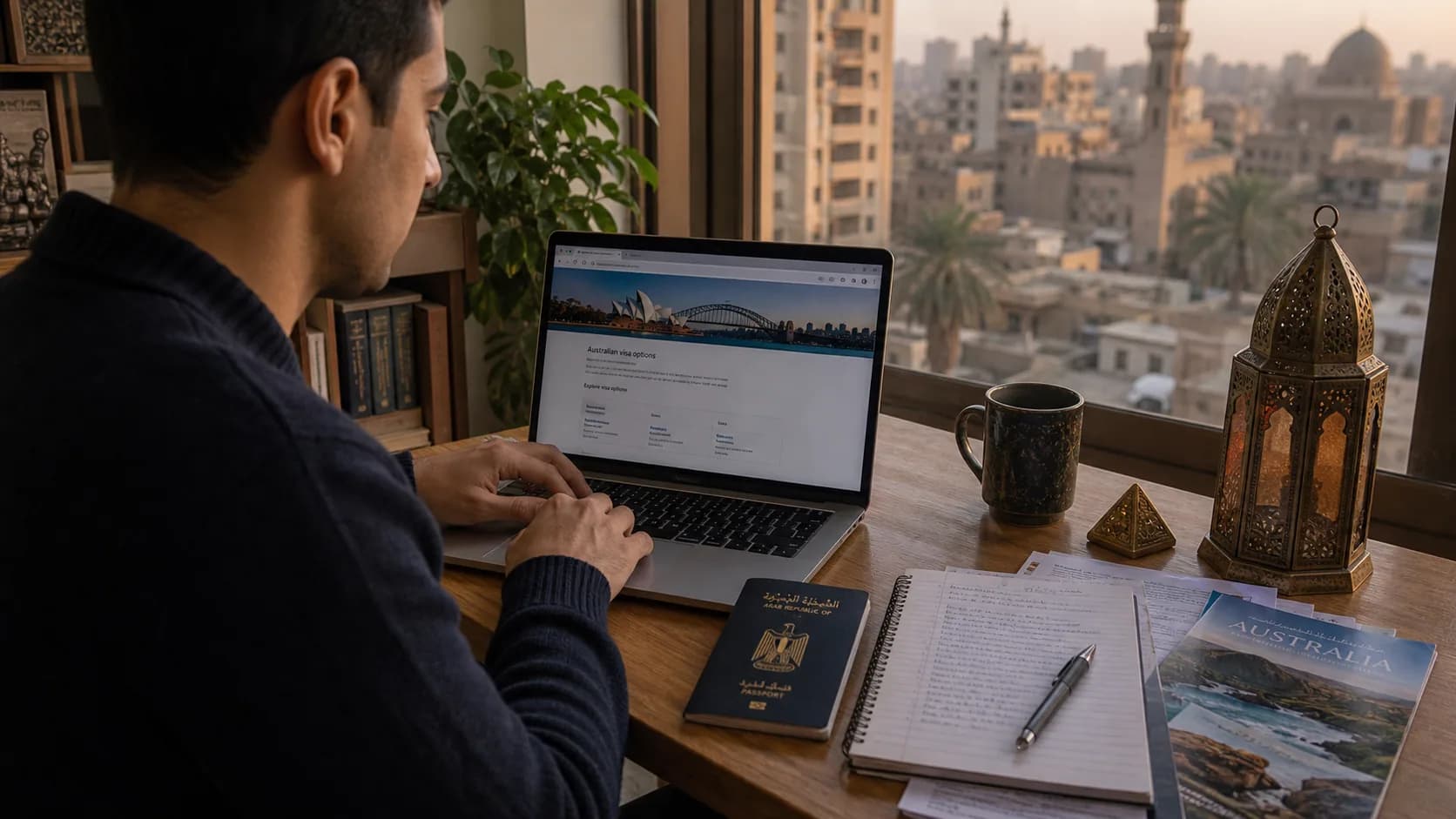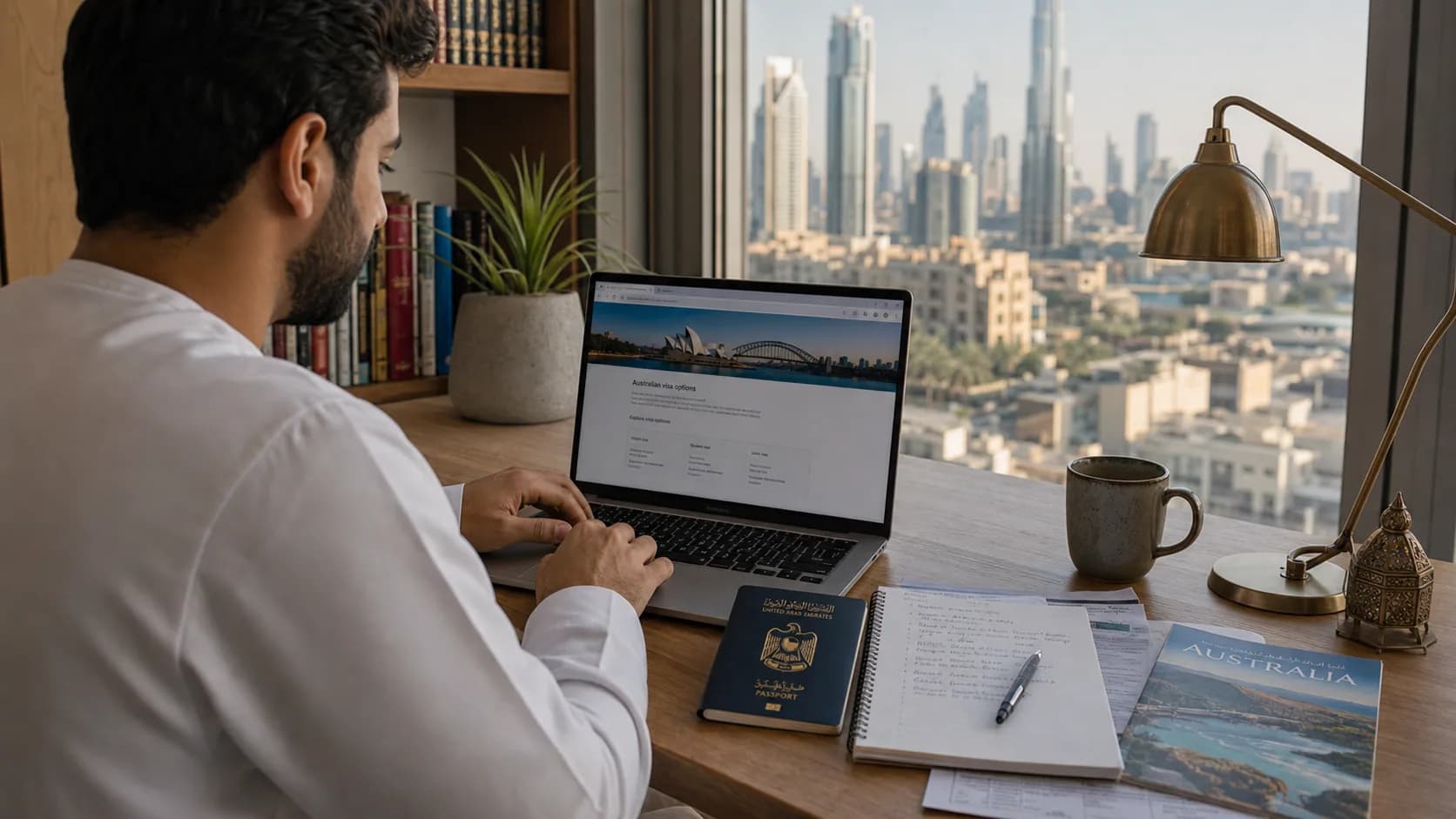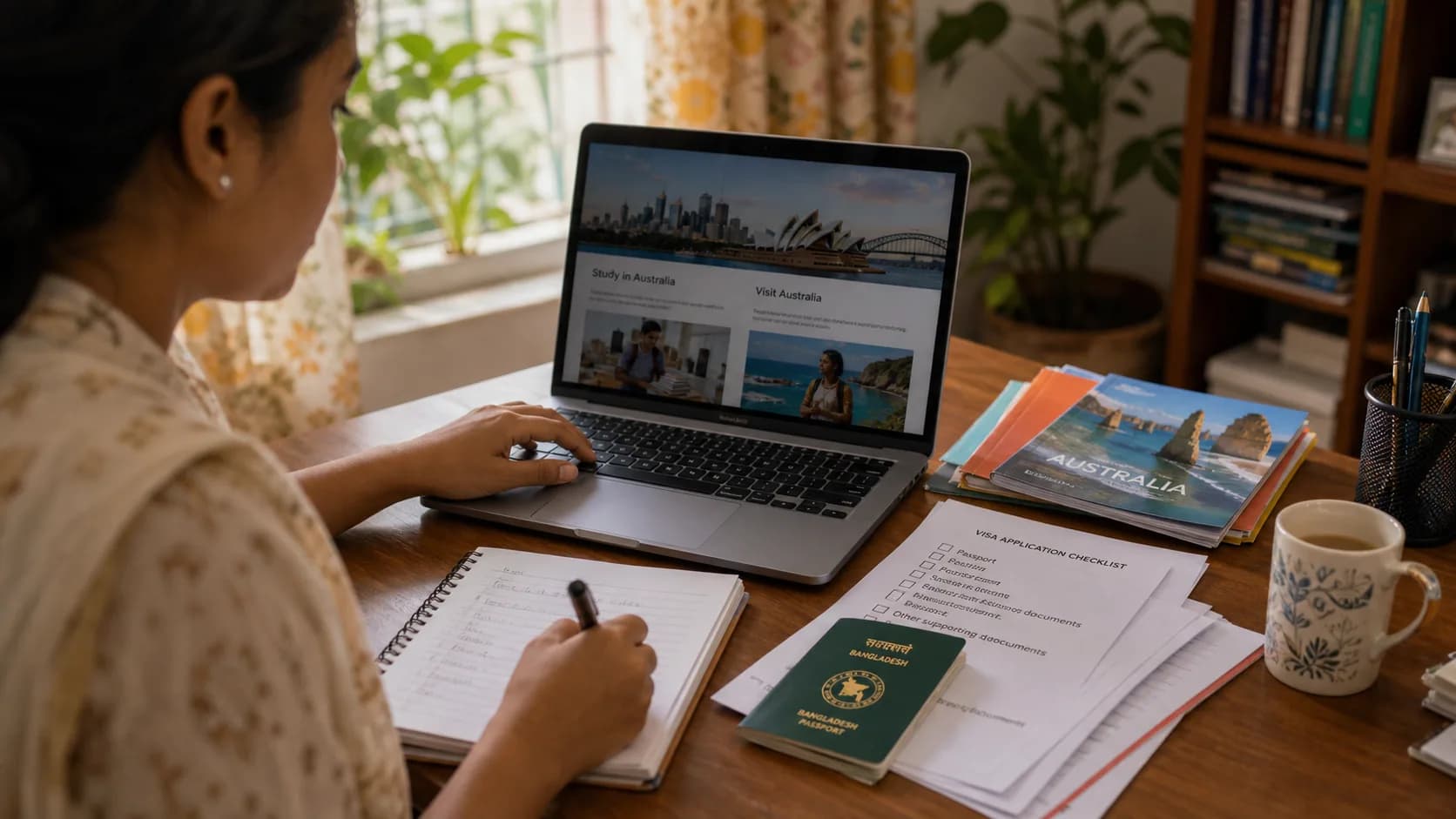
Many people who want to visit Australia don't live in the country on their passport. An Indian engineer in Dubai, a Pakistani nurse in London, an Indonesian student in Singapore: all of them can apply for an Australian visitor visa from where they live now. What decides which visa you need is your passport. Where you live changes a few practical things, like where you give biometrics and which health checks apply.
Independent guide — not a government service. Australian Visa Online is an independent information resource. We are not affiliated with the Australian Government or the Department of Home Affairs, and we do not lodge applications on your behalf. Facts on this page were checked against Home Affairs pages on 28 October 2026 unless another date is shown.
Quick Facts
| Question | Answer |
|---|---|
| Can I apply from a country that isn't my home country? | Yes. For the Tourist stream you must be outside Australia when you apply and when it is decided |
| What decides ETA, eVisitor or subclass 600? | Your passport |
| Does a US, UK or Schengen visa or residence permit help me get an ETA? | No. Both lists are lists of passports |
| Visitor visa cost (Tourist stream, outside Australia) | From AUD250 (checked 28 October 2026) |
| Processing (Tourist stream) | 50% in 21 days, 90% in 33 days (checked 28 October 2026) |
| Biometrics | Only if Home Affairs asks. You may need to travel to another country for an appointment |
| Health exams | Depend on several things, including "the country you apply from" |
| How you apply | Online in ImmiAccount |
The location rule: anywhere outside Australia
The Tourist stream (apply outside Australia) has one location rule. Home Affairs says "you must be outside Australia when you apply and when we decide your visa".
It does not say you must apply from your home country. So you can apply from the country where you live, work or study.
Two things to watch:
- Don't fly to Australia while you wait. If you are in Australia when the decision is made, you break the rule. Home Affairs also says: "Do not arrange to travel to Australia until we let you know, in writing, that we have granted you the visa."
- Already in Australia? The rules are different. The Tourist stream (apply in Australia) costs from AUD630 (checked 28 October 2026), and you can only apply online if you hold a substantive visa, or yours ended within the last 28 days. See how to extend an Australian tourist visa.
Your passport decides the visa, not where you live
Australia has three common visitor visas. Your passport decides which ones are open to you.
| Visa | Who can use it | Cost (checked 28 October 2026) |
|---|---|---|
| ETA (subclass 601) | Holders of 34 listed passports, such as the USA, Canada, Japan, Singapore, Malaysia, the UK and many Western European countries | AUD20 service charge |
| eVisitor (subclass 651) | Citizens of 36 listed European countries | Free |
| Visitor visa (subclass 600) | Any passport holder who meets the criteria | Tourist stream from AUD250 |
The ETA page says: "You must hold a valid passport from one of these countries or jurisdictions to be eligible for an ETA." The eVisitor page says you "must be a citizen of and hold a valid passport from one of these countries".
What this means for people living abroad:
- A visa or residence permit doesn't count. A US visa, a UK visa, a Schengen visa, a green card or a UAE residence visa is not a passport. It doesn't put you on the ETA or eVisitor list.
- Travel documents don't count. "You cannot apply for an ETA with a non-citizen passport, certificate of identity or other travel document, such as a Titre de Voyage."
- New Zealand residence doesn't count. Only New Zealand passport holders can travel without a visa and get one on arrival.
So an Indian passport holder who lives in the USA still needs a Visitor visa (subclass 600). So does a Pakistani passport holder who lives in the UK.
Not sure which list you are on? Our ETA vs eVisitor guide shows both lists in full.
If you hold two passports
If you are a citizen of two countries (neither of them Australia), use the passport that gives you the better option. Then stick with it. Home Affairs says you "must use the passport you used when applying for your visa for both entering and leaving Australia". If you show a different passport, your airline may refuse to board you (checked 15 September 2026).
Biometrics when you live abroad
Biometrics means your fingerprints and a photo of your face. For the Tourist stream, Home Affairs says: "We will let you know if you need to provide biometrics." You don't book an appointment unless you are asked.
If you are asked, the Biometrics page says:
- "We will tell you if you need to attend an Australian Biometrics Collection Centre (ABCC) in person or if you are eligible to use the Australian Immi App to provide your biometrics."
- VFS Global runs the ABCCs. You must make an appointment.
- "You may need to travel to another country to attend an ABCC."
- "ABCCs charge a service fee for biometrics collection."
- Bring "the passport linked to your visa application", or VFS will generally not be able to collect your biometrics.
The official ABCC list ("correct as of October 2026") is set out by country. Examples include Singapore, Kuala Lumpur in Malaysia, and Manila, Cebu and Davao in the Philippines. India has centres in 16 cities. Check the official list for the country where you live before you apply. If there is no centre there, plan for a trip.
Health exams: "the country you apply from" matters
Home Affairs says whether you need health exams, and which ones, "depends on: the visa you are applying for; how long you plan to stay in Australia; what you plan to do in Australia; the country you apply from; any special circumstances that might apply to you; whether you have any significant medical conditions" (checked 15 September 2026).
The main rules for visitors (checked 28 October 2026):
- Low TB-risk country: no health exams "unless special circumstances apply", for short or long stays.
- High TB-risk country, staying less than 6 months: no exams unless special circumstances apply.
- High TB-risk country, staying 6 months or more: a medical examination, a chest x-ray (age 11 and over) and a serum creatinine/eGFR test (age 15 and over).
- Aged 75 or older: a medical examination and a serum creatinine/eGFR test for any subclass 600.
"Any country not listed below as low risk of TB is considered to be high risk of TB." The low-risk list includes the United Kingdom (British citizen), the USA, Canada, Germany and France. China, India, Pakistan, the Philippines, Nepal, South Africa and Vietnam are not on it.
Home Affairs doesn't publish a simple answer for someone whose passport country and home country have different risk levels. Follow what your health request says. Outside Australia, "You must be examined by one of the Department's approved panel physicians or clinics." You can do your exams before you apply, or wait until Home Affairs asks. Our health examination guide explains the process.
Showing ties when you don't live in your home country
The Tourist stream asks for "proof that you have reasons to return home". The official examples are:
- a letter from your employer stating you plan to return to your job
- proof that you study at a school, college or university in your home country
- proof that you have immediate family members in your home country
- proof that you can return home
- proof that you own a house or other major assets in your home country
These are written for people who live where their passport is from. If you live somewhere else, "home" is where you will go back to after the trip. Here is how we suggest you show it (our advice, not an official list):
- Your right to live there. Upload your residence visa, residence permit or work permit, and make sure it is valid for your whole trip and your return.
- Your job there. A letter from your employer that confirms your job and your approved leave. Home Affairs' own tips mention "a letter from your employer granting you leave from work" and "a current payslip".
- Your life there. A lease or property papers, your children's school enrolment, or your spouse's job in that country.
- Your money. Bank statements from the country where you live. The official list asks for "itemised personal bank statements for a 3 month period".
- Your travel history. Home Affairs suggests you "Outline your previous travel history (if any) in as much detail as possible."
Make sure your form answers match your documents. Write your current country of residence clearly. For more on what makes an application weak, read why Australian tourist visas are refused.
Translations
Documents from the country where you live may not be in English. Translate them. "Translators outside Australia do not have to be accredited", but each translation must show the translator's full name, address and phone number, and their qualifications and experience. "You do not need to have any documents certified unless we ask you to."
Worked examples (hypothetical)
These examples apply the official rules above. They are not legal advice.
An Indian citizen living in the UAE. An Indian passport is not on the ETA or eVisitor list, so she applies for the subclass 600 Tourist stream from the UAE, from AUD250. She uploads her UAE residence visa, an employer leave letter and her UAE bank statements. If Home Affairs asks for biometrics, she checks the ABCC list for the UAE. If there is no centre, she may need to travel to another country.
An Indian citizen living in the UK. Living in the UK doesn't give him an eVisitor or an ETA. Those lists are for UK passports. He applies for the subclass 600 from the UK. His UK visa and his job letter show his reason to return.
A Pakistani citizen living in the UK. Same answer. A Pakistani passport needs the subclass 600. She plans a 3-week trip, so the 6-month health rule doesn't apply to her stay. She still follows any health or biometrics request Home Affairs sends.
An Indian citizen living in the USA on a work visa. A US visa or green card is not a passport. He needs the subclass 600. There is no visa waiver for Indian passport holders because they hold a US visa.
An Indonesian citizen living in Singapore. An Indonesian passport is not on the ETA list. She applies for the subclass 600 Tourist stream. Because Indonesia is on the Frequent Traveller list, she can also look at the Frequent Traveller stream if she will visit often. Singapore has an ABCC if she is asked for biometrics.
How to apply from where you live
- Check your passport against the ETA and eVisitor lists. If it isn't on either, you need the subclass 600.
- Pick the right stream. Most visitors use the Tourist stream. A business trip uses the Business Visitor stream. A visit sponsored by a relative in Australia can use the Sponsored Family stream.
- Gather your documents, including proof of your residence where you live. Use our Visitor visa 600 documents checklist.
- Apply online in ImmiAccount and pay. "We will not process your application until you pay the fee."
- Respond to any request for biometrics, health exams or more documents.
- Stay outside Australia until you get the written decision. Then book your travel.
Each person applies separately. "Each family member, including those listed on your passport, must submit a separate application." If your family hold different passports, some may use an ETA or eVisitor while others need the subclass 600.
Processing time
The Home Affairs processing times tool showed the Tourist stream at 50% decided in 21 days and 90% in 33 days, checked on 28 October 2026. The tool doesn't give separate figures by country. It is "a guide only and not specific to your application". See our subclass 600 processing time guide.
Key takeaways
- You can apply for the subclass 600 Tourist stream from any country, as long as you are outside Australia when you apply and when it is decided.
- Your passport, not your home, decides whether you can use the ETA or eVisitor.
- A US, UK or Schengen visa, a green card or a residence permit doesn't count as an eligible passport.
- Biometrics are only needed if asked, and you may have to travel to another country for them.
- Show strong ties to the country where you live now: your residence permit, job, money and home there.
Frequently Asked Questions
Can I apply for an Australian visa from a country I don't hold citizenship of?
Yes. For the Tourist stream, Home Affairs only says you "must be outside Australia when you apply and when we decide your visa". It does not require you to apply from your home country.
I'm an Indian citizen living in the UK. Can I get an eVisitor or ETA?
No. The eVisitor is for citizens of 36 European countries, including UK British Citizen passport holders. The ETA is for 34 listed passports. Living in the UK doesn't make you eligible. You need a Visitor visa (subclass 600).
Is there a visa waiver for Australia if I hold a US visa?
No. The ETA and eVisitor lists are lists of passports. A US visa or green card doesn't qualify you, so you need a Visitor visa (subclass 600) unless your passport is on one of the lists.
Where do I give biometrics if I live abroad?
Only if Home Affairs asks. You then book an appointment at an Australian Biometrics Collection Centre run by VFS Global, or use the Australian Immi App if you are told you can. "You may need to travel to another country to attend an ABCC."
Does living abroad change the visa fee?
The Tourist stream (apply outside Australia) costs from AUD250 for each applicant (checked 28 October 2026). The official price list doesn't set a different fee by country of residence. Extra costs can apply for health checks, police certificates and biometrics.
Do I need a police certificate from the country where I live?
Home Affairs "may ask you to provide a police certificate". If it does, follow the instructions in the request. We don't list country-by-country police certificate rules for visitors here.
Will applying from another country take longer?
The official tool doesn't publish times by country. It showed 90% of Tourist stream applications decided in 33 days (checked 28 October 2026). Missing information is a common reason for delay, so upload proof of your residence with your application.