Australian Working Holiday Visa for Nepalese Citizens: 2026 Guide
Updated: 16 August 2026
Nepal has subclass 462 Work and Holiday access under the 2024 programme expansion. Eligibility requires age 18 to 30, at least two years of tertiary study, functional English, settlement funds of around AUD $5,000, and a Nepalese government letter of support. An annual cap applies. Prospective applicants should verify current cap status before lodgement.
Quick Facts: Work and Holiday Visa for Nepalese Citizens
| Detail | Information |
|---|---|
| Visa subclass | 462 (Work and Holiday) |
| Programme status | Nepal added under the 2024 expansion of the WHV programme |
| Age | 18 to 30 at the date of application |
| Education | At least two years of undergraduate university study |
| English | Functional English (IELTS 4.5 overall or equivalent) |
| Government letter | Letter of support required from Nepalese authorities |
| Annual cap | Applies — verify current allocation before lodgement |
| Stay | 12 months on first visa, with second and third year options if eligible |
| Application charge | AUD $840 |
Who Can Apply
The Work and Holiday visa is designed for young, educated travellers who want to spend up to 12 months working casually and travelling around Australia. The settings are deliberately narrower than the subclass 417 used by countries like the UK and Ireland. To qualify as a Nepalese applicant, you must:
- Hold a Nepalese passport
- Be 18 to 30 years old when you lodge the application
- Have completed at least two years of undergraduate university study, evidenced by official transcripts
- Demonstrate functional English (typically IELTS 4.5 overall, or accepted alternative PTE, TOEFL, or Cambridge result)
- Have access to settlement funds of approximately AUD $5,000 plus return airfare
- Have no dependent children accompanying you
- Hold a letter of support from the Nepalese government, issued under the programme arrangements
- Meet standard health and character requirements
The visa is intended as a first 462 grant. If you've previously held two 462 visas, you cannot apply for a third unless you've completed the regional work that unlocks the third-year option.
How the Cap Works
The 462 programme runs on country-specific annual caps. For Nepal, the allocation is finite and renewed each Australian financial year (1 July to 30 June). When the cap is filled, no further applications are accepted from Nepalese applicants until the next allocation opens.
In practice, this means three things for prospective applicants:
- Lodgement timing matters. Early in the financial year, slots are more likely to be available.
- Application quality matters more than usual, because applications are processed in order and a flagged file delays everyone behind it.
- Government letter of support availability is itself often the rate-limiting step on the Nepal side, not the Australian cap.
We're not publishing a specific cap number on this page because programme settings for newly-added countries can change at short notice. The Department of Home Affairs and the Department of Foreign Affairs and Trade publish current quota status. Check both before lodging.
For the wider context, the country-eligibility roundup for WHV in 2026 summarises where Nepal sits among the 462 cohort.
The Government Letter of Support
This is unique to the 462 and the document that most often delays Nepalese applications. The letter confirms the Nepalese government's support for your participation in the Work and Holiday programme. Without it, your application cannot be lodged.
The letter is administered by the relevant Nepalese ministry under the bilateral arrangements. Typical requirements include:
- Proof of Nepalese citizenship
- University transcripts evidencing the two-year tertiary study requirement
- Passport-sized photographs
- A completed Nepali-side application form
- Any administrative fee set by the issuing authority
Allow time for the letter. It's not issued same-day in most cases, and you cannot lodge your subclass 462 application in ImmiAccount without it.
What the 462 Lets You Do
Once granted, your subclass 462 visa allows you to:
- Stay in Australia for up to 12 months from first entry
- Work for any employer, but no more than 6 months with the same employer in most cases
- Study or train for up to 4 months
- Travel in and out of Australia as many times as you want during the visa period
The visa is single-grant in the sense that once you depart Australia for the final time and your 12 months elapses, it can't be reactivated. You can apply for a second and third year if you complete specified work in regional Australia in eligible sectors such as agriculture, tourism, hospitality, fishing and pearling, tree farming, or construction. The current rules for second-year and third-year extensions sit on dedicated guides.
How to Apply Step by Step
- Confirm you meet the age, education, English, and funds tests.
- Apply for the Nepalese government letter of support. Allow lead time.
- Sit IELTS or an accepted alternative if you don't have a current English result.
- Create an ImmiAccount.
- Start a new subclass 462 application. Select Nepal as your country of passport.
- Upload the government letter, transcripts, English result, passport, photo, evidence of funds, and any character documents.
- Pay the AUD $840 application charge.
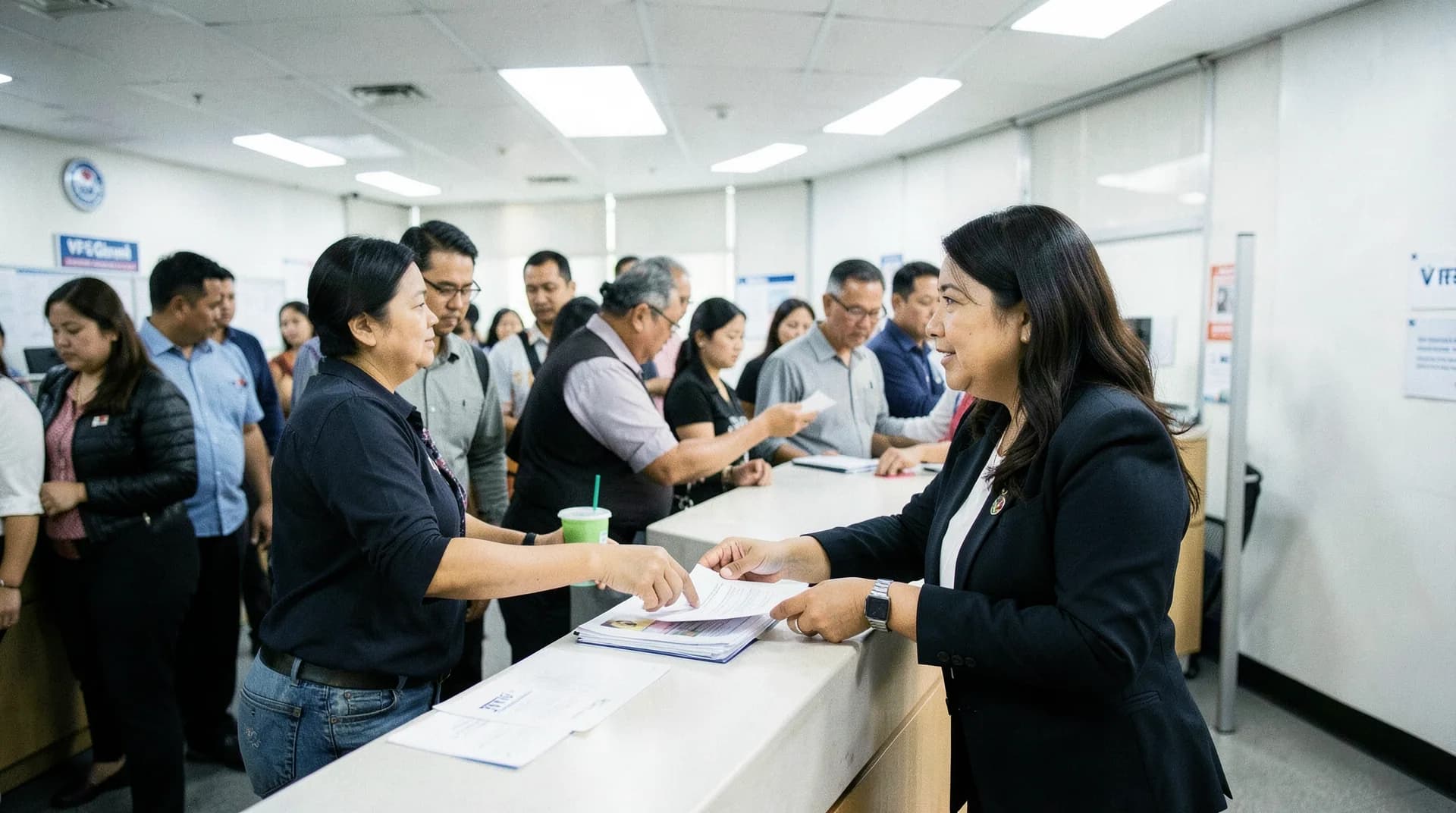
- Attend biometrics at VFS Global Kathmandu if requested.
- Complete the Bupa panel medical if requested (more common for stays over six months or where a flag arises).
- Wait for the decision by email.
The wider lodgement process is the same as for other Australian visas, covered in the step-by-step application guide. The differences for the 462 are the letter of support and the cap mechanics.
Cost and Processing Times
The application charge is AUD $840. On top of that, budget for:
- IELTS or PTE sitting fee
- Government letter of support fee on the Nepali side
- Biometric and VFS service fees in Kathmandu
- Panel medical if required
- Return airfare and AUD $5,000 settlement funds
Processing times for newly-added 462 countries can move around in the first few intake years. Lodge early in the financial year, and don't book non-refundable flights before grant. The processing times guide carries the current published medians.
What Nepalese Applicants Need to Know
Don't confuse the 462 with the 417
The subclass 417 Working Holiday visa applies to a different set of countries, mostly higher-income partner economies such as the UK, Ireland, Germany, France, Canada, and Japan. The 417 does not require a government letter or tertiary study. As a Nepalese citizen, you can apply for the 462, not the 417. The distinction matters because online articles often conflate the two. The subclass 417 vs 462 comparison lays out the differences in one table.
Tertiary study evidence
The two-year university requirement is verified against your official transcripts. A completed bachelor's degree clearly meets it. Two completed years of an in-progress bachelor's, evidenced by transcripts and a letter from the registrar, also meets it. Diplomas alone do not meet the requirement.
English at the functional level
IELTS 4.5 overall is the standard. PTE Academic 30, TOEFL iBT 32, and Cambridge B1 Preliminary at score 140 are typical accepted alternatives. The Department isn't looking for academic-level English here, just enough to live and work safely.
The 462 isn't a backdoor to PR
The 462 is genuinely temporary. It can lead indirectly to other pathways, like employer sponsorship if you find a willing employer, or a switch to a student visa, or a skilled migration EOI if your profile supports it. The visa itself cannot be extended into permanent residency. Treat it as a year (or two, or three) of working travel, not a migration shortcut.
Age 30 cut-off is strict
You must be under 31 at the date you lodge. Applying on your 31st birthday is too late. If you're close to the cut-off, get the government letter sorted well in advance so the Australian application can be lodged before your birthday.
Common Pitfalls for Nepalese Applicants
Late letter-of-support applications. Treat the Nepali-side letter as the first thing you do, not the last. It controls your timeline.
Cap-blind lodgement timing. Lodging in May or June, when the financial-year cap is nearly exhausted, is the highest-risk path. Aim for July to October.
English test attempt regret. Sitting once and submitting a marginal score is common. If the band score will sit on the official record, take the test seriously the first time.
Treating the visa as a study visa. Studying for more than four months in total is a condition breach. If your real plan is to study, the 500 student visa is the correct vehicle.
Working more than six months with one employer. This is a common condition breach for hospitality and farm workers. Track your start dates carefully and rotate employers within the cap rules.
Frequently Asked Questions
Can Nepalese citizens get a Working Holiday visa for Australia?
Nepalese citizens have access to the subclass 462 Work and Holiday visa, added to the programme under the 2024 expansion. You are not eligible for the subclass 417. The 462 requires age 18 to 30, two years of tertiary study, functional English, settlement funds, and a Nepalese government letter of support. Annual caps apply.
How much money do I need to apply for the 462 from Nepal?
You need to demonstrate roughly AUD $5,000 in settlement funds plus the cost of a return airfare. The Department doesn't publish a fixed figure, but $5,000 is the working benchmark referenced in programme guidance. Funds should be in your own name and held for at least three months.
Do I need a job offer before applying?
No. The 462 is granted without a sponsoring employer. You find work after arrival. Many Nepalese applicants start in hospitality, retail, or farm work, then move into more specialised roles as they build local references.
Can I extend the 462 to a second year?
Yes, if you complete the specified work in eligible regional industries during your first year. The current second-year rules are in the second-year working holiday visa guide. The third-year extension follows similar logic and is covered separately.
Is the 462 a faster path to PR than the student visa?
No. Most Nepalese applicants who target permanent residency follow the student-graduate-skilled migration route, not the WHV. The 462 is a working travel visa. It can support a later PR plan only if a sponsoring employer or a skills assessment opportunity arises during the visa period.
Can I bring my spouse on a 462?
Not as a dependant of your visa. The 462 doesn't carry dependant rights. Your spouse would need to apply independently for their own visa.
Related Guides
- Australian Visa for Nepalese Citizens (country overview)
- Subclass 462 Work and Holiday Visa: full guide
- Work and Holiday Visa subclass 462 details
- Subclass 417 vs 462: what's the difference?
- Every country eligible for the WHV in 2026
- Second-year working holiday visa
- How to apply for an Australian visa: step by step
- Visa processing times 2026