Construction Worker Visa Pathway to Australia: Complete 2026 Guide
Australia is in the middle of a construction boom — and it doesn't have enough workers. From housing estates to highways, rail networks to renewable energy installations, the demand for skilled construction tradespeople is at record levels. Carpenters, bricklayers, welders, and other construction workers have strong visa pathways into Australia, with excellent earning potential and long-term career prospects. Here's your complete guide.
Quick Facts: Construction Trades Migration Pathway
| Detail | Carpenter (331212) | Bricklayer (331111) | Welder (322311) |
|---|---|---|---|
| ANZSCO Code | 331212 | 331111 | 322311 |
| Skill Level | 3 | 3 | 3 |
| Skills Assessment | TRA | TRA | TRA |
| Occupation List | MLTSSL | MLTSSL | MLTSSL |
| 189 Eligible | Yes | Yes | Yes |
| 190 / 491 | Yes | Yes | Yes |
| 482 / 186 | Yes | Yes | Yes |
| Demand Level | Critical | High | High |
Why Construction Workers Are in Massive Demand
The Infrastructure Boom
Australia is investing more in infrastructure than at any point in its history. Here's a snapshot of what's happening:
- Housing crisis — the federal government has committed to 1.2 million new homes by 2029
- Road and rail — major highway upgrades and new rail lines across multiple states
- Renewable energy — wind farms, solar installations, and transmission infrastructure
- Defence — billions in defence construction projects, including the AUKUS submarine program
- Olympics — Brisbane 2032 Olympics driving massive construction in Queensland
Each of these programs needs thousands of skilled tradespeople, and Australia simply can't produce enough domestically.
The Numbers Tell the Story
The construction industry employs over 1.3 million Australians, making it one of the country's largest employment sectors. Despite this, the Master Builders Association estimates a shortfall of over 90,000 workers across the industry. Vacancy rates for construction trades are 2-3 times higher than the national average for all occupations.
Post-COVID Impact
The pandemic created a perfect storm for construction labour shortages. International workers (including backpackers and temporary visa holders who traditionally filled labourer roles) left Australia in droves during border closures. Simultaneously, government stimulus programs (like HomeBuilder) created a surge in construction demand. The result? A deficit that still hasn't recovered.
Key Construction Occupations for Migration
While there are dozens of construction-related ANZSCO codes, here are the most common trades used for skilled migration:
Carpenter (ANZSCO 331212)
Carpenters construct, install, and repair wooden structures and fixtures. This includes residential framing, commercial fit-outs, formwork, and finishing carpentry.
- List status: MLTSSL — full visa access
- Demand: Critical shortage nationwide, especially in residential construction
- Typical work: Framing houses, installing doors and windows, building formwork for concrete, shop fit-outs
Bricklayer (ANZSCO 331111)
Bricklayers lay bricks, concrete blocks, and other types of building blocks in mortar to construct and repair walls, partitions, and other structures.
- List status: MLTSSL — full visa access
- Demand: High shortage, particularly in housing construction
- Typical work: Residential brickwork, retaining walls, commercial facades, restoration work
Welder (ANZSCO 322311)
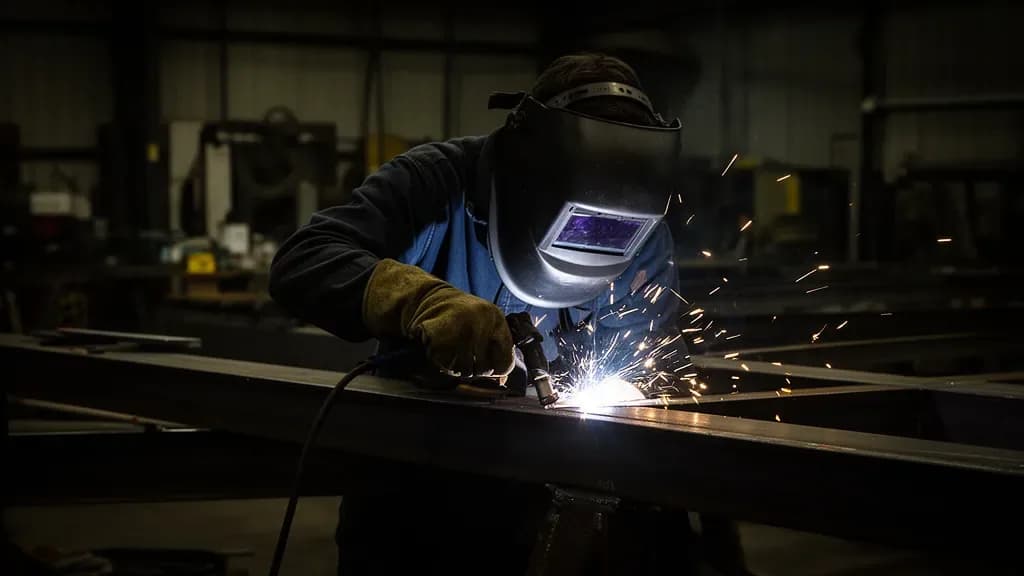
Welders join metal parts using heat and welding equipment. This includes structural welding, pipe welding, and fabrication work.
- List status: MLTSSL — full visa access
- Demand: High, driven by infrastructure, mining, and manufacturing
- Typical work: Structural steel, pipeline welding, mining equipment, pressure vessels
Other In-Demand Construction Trades
| Occupation | ANZSCO | List |
|---|---|---|
| Wall and Floor Tiler | 333411 | MLTSSL |
| Painting Trades Worker | 332211 | MLTSSL |
| Glazier | 333111 | MLTSSL |
| Plasterer | 333211 | MLTSSL |
| Stonemason | 331112 | MLTSSL |
| Fibrous Plasterer | 333211 | MLTSSL |
| Solid Plasterer | 333212 | MLTSSL |
| Roof Tiler | 333311 | STSOL |
Check the skilled occupation list guide for the latest list placement for your specific trade.
Skills Assessment: TRA (Trades Recognition Australia)
All construction trades are assessed by TRA. The assessment confirms that your qualifications and experience meet Australian trade standards.
What TRA Assesses
- Qualifications — your trade certificate or equivalent must align with Australian Certificate III standards
- Employment experience — detailed references showing at least 3 years of post-qualification trade experience
- Skills and duties — your work must match the ANZSCO description for your nominated occupation
Documentation Requirements
For a successful TRA assessment, you'll need:
- Certified copies of trade qualifications
- Detailed employment references (on company letterhead, signed by supervisor)
- References must list: your job title, employment dates, hours worked per week, and a detailed description of duties
- Passport and identity documents
- English language test results
- Photographs of your work (recommended but not mandatory for some trades)
Assessment Cost: AUD $500-$3,000 depending on the pathway. Check the skills assessment complete guide for current fees.
Processing Time: 8-16 weeks for standard assessments.
Job Ready Program (Onshore Graduates)
If you completed your trade qualification in Australia, you'll go through TRA's Job Ready Program (JRP):
- Provisional Skills Assessment — qualification check
- Job Ready Employment — 1,170 hours of paid trade work
- Job Ready Workplace Assessment — on-site assessment
- Job Ready Final Assessment — final skills confirmation
The JRP takes 12-18 months and costs AUD $1,800-$3,000 across all stages.
White Card Requirement
Before you can set foot on any construction site in Australia, you'll need a White Card (Construction Induction Card). This is mandatory for every worker on every construction site in Australia — no exceptions.
What Is It?
The White Card certifies that you've completed general construction induction training covering:
- Workplace health and safety legislation
- Risk identification and hazard management
- Safe work practices on construction sites
- Emergency procedures
How to Get It
- Complete a course through a registered training organisation (RTO)
- Courses are available in-person and online (some states accept online completion, others require in-person)
- Cost: AUD $50-$100
- Duration: 6-8 hours
- You'll receive your White Card within 1-2 weeks of completing the course
Important: You can only get a White Card once you're in Australia. It's not something you can complete from overseas. Factor this into your arrival planning — you'll need the card before you can start work on any construction site.
Visa Pathways for Construction Workers
Because most construction trades are on the MLTSSL, you have access to the full range of skilled visas.
Subclass 189 — Skilled Independent Visa
Permanent residency through the points-based system, no employer or state sponsor needed.
Key Details:
- Visa fee: AUD $6,135
- Minimum points: 65 (realistically 80+ in 2026)
- Processing: 6-12 months
- Benefit: Freedom to live and work anywhere in Australia
Subclass 190 — State Nominated Visa
Permanent residency with a 5-point boost from state nomination.
Key Details:
- Visa fee: AUD $6,140
- Points boost: +5 from state nomination
- Obligation: Live in the nominating state for 2 years
- Best for: Applicants scoring 70-80 points who need the extra 5
Subclass 491 — Skilled Work Regional Visa
A 5-year provisional visa with a 15-point boost and a pathway to permanent residency (subclass 191).
Key Details:
- Visa fee: AUD $6,140
- Points boost: +15 from regional nomination
- Pathway: 191 permanent visa after 3 years
- Best for: Construction workers — regional areas are where the biggest building projects are happening
The 491 is arguably the best fit for construction tradespeople. Why? Because major infrastructure projects (roads, rail, mining, housing estates) are overwhelmingly located in regional areas. You're going where the work is, and you get 15 bonus points for it.
Subclass 482 — Temporary Skill Shortage Visa
Employer-sponsored temporary visa.
Key Details:
- Visa fee: AUD $3,210 (SID stream)
- Salary threshold: Core stream AUD $76,515
- Duration: Up to 4 years
- Pathway: Transition to 186 permanent visa after 2 years
Construction companies frequently sponsor overseas tradespeople on 482 visas. The salary threshold is generally achievable — experienced tradespeople in construction regularly earn above $76,515, especially with overtime.
Subclass 186 — Employer Nomination Scheme
Permanent residency through employer sponsorship.
Key Details:
- Visa fee: AUD $6,140
- Streams: Direct Entry (skills assessment + 3 years experience) or TRT (after 2+ years on 482)
Points Test Strategy for Construction Workers
Trade qualifications score fewer education points than university degrees, so you'll need to make up points elsewhere. Here's how:
| Points Factor | Points | Strategy |
|---|---|---|
| Age (25-32) | 30 | Maximum bracket — apply while you're in it |
| English (Superior) | 20 | The biggest game-changer for tradespeople |
| English (Proficient) | 10 | Minimum target |
| Trade Qualification | 10 | Certificate III/IV or Diploma |
| Overseas Experience (8+ years) | 15 | Maximise your experience claims |
| Australian Experience (1+ years) | 5-20 | If you've worked in Australia |
| State Nomination (190) | 5 | Strong option |
| Regional (491) | 15 | Best for points-short applicants |
| Partner Skills | 5-10 | If your partner is skilled |
| NAATI/CCL | 5 | Community language test |
The English Test Is Your Best Friend. For construction tradespeople, the difference between Competent English (0 points) and Superior English (20 points) can be the difference between getting invited and waiting forever. Invest in English test preparation — it's the single most effective way to boost your score.
State Nomination: Where's the Demand Strongest?
Western Australia
WA is a construction powerhouse. Mining infrastructure, Perth's residential growth, and major road and rail projects create enormous demand. WA actively nominates construction tradespeople and often has lower competition than eastern states.
Queensland
QLD's construction sector is booming thanks to population growth in South-East Queensland, resource projects in Central and North Queensland, and Brisbane 2032 Olympics preparations. Strong demand for carpenters, bricklayers, and welders.
South Australia
SA actively recruits tradespeople through its state nomination program. Adelaide's growing defence sector (including the submarine project at Osborne) needs welders and other construction workers. Lower living costs and less competition make SA attractive.
Northern Territory
The NT has consistent demand for construction workers, particularly in Darwin and remote infrastructure projects. Lower competition for nomination means better chances.
New South Wales and Victoria
Both states have massive construction pipelines (Sydney Metro, Suburban Rail Loop in Melbourne, housing developments), but competition for nomination can be higher because more applicants target these states.
Salary and Employment Outlook
What Can You Expect to Earn?
| Role | Typical Salary Range |
|---|---|
| Carpenter (Employee) | AUD $65,000-$90,000 |
| Carpenter (Experienced/Foreman) | AUD $90,000-$120,000+ |
| Bricklayer (Employee) | AUD $65,000-$85,000 |
| Bricklayer (Subcontractor) | AUD $80,000-$130,000+ |
| Welder (General) | AUD $70,000-$95,000 |
| Welder (Coded/Specialist) | AUD $90,000-$140,000+ |
| Mining/FIFO Construction | AUD $100,000-$180,000+ |
Overtime is king in construction. Base salaries tell only part of the story. Most construction tradespeople work 50-60 hour weeks during busy periods, and overtime rates (time-and-a-half, double-time) add significantly to annual earnings. Weekend work on major projects can push take-home pay well above the base salary.
Working Conditions
Construction work in Australia comes with some realities you should be prepared for:
- Heat — summer temperatures in many parts of Australia exceed 40°C. Outdoor work stops at certain heat thresholds on some sites.
- Early starts — 6:00 or 6:30 AM starts are standard on most construction sites
- Physical demands — this is hard physical work, especially in trades like bricklaying and carpentry
- Safety culture — Australia has a strong safety culture on construction sites. PPE, safe work method statements, and toolbox talks are mandatory.
- Union presence — the CFMEU (Construction, Forestry and Maritime Employees Union) is powerful in the construction sector, and many larger sites are unionised
Step-by-Step Migration Roadmap
- Identify your ANZSCO code — use the ANZSCO code finder to match your trade
- Check the occupation list — confirm your trade is on the MLTSSL or STSOL
- Prepare documentation — gather qualifications, employment references, identity documents
- Sit your English test — IELTS or PTE, aiming for Proficient (7.0) or higher
- Apply for TRA skills assessment — allow 8-16 weeks
- Calculate your points — determine which visa pathway is realistic
- Submit EOI in SkillSelect — target 189, 190, or 491
- Apply for state nomination — if pursuing 190 or 491
- Alternatively, find an employer sponsor — construction companies actively recruit overseas
- Receive invitation and lodge visa — within 60 days
- Complete health and character checks — medical exam and police clearances
- Arrive in Australia — complete White Card training before starting work
- Begin working — once White Card is obtained
Frequently Asked Questions
Do I need a White Card before I arrive in Australia?
No — you can't get one until you're in Australia. The White Card (Construction Induction) is obtained by completing a short training course through a registered training organisation after arrival. It typically takes one day and costs AUD $50-$100. You can't work on any construction site without it, so do this in your first week.
Which construction trade has the best migration prospects?
In 2026, carpenters and welders have some of the strongest prospects because both are on the MLTSSL with critical shortages nationwide. However, most construction trades are in demand. The key factor is often your state nomination eligibility rather than the specific trade — check which states are actively nominating your occupation on the occupation demand list.
Can I bring my tools and equipment to Australia?
Yes, but there are customs considerations. Personal tools used for your trade can generally be imported duty-free as part of your personal effects, provided they've been owned and used by you for more than 12 months. Electrical tools must comply with Australian standards (240V, 50Hz). Some power tools may need to be tested and tagged before use on construction sites.
What's a realistic timeline from decision to working in Australia?
For most construction tradespeople: 6-12 months. That breaks down as roughly 2 months for English test preparation and sitting the exam, 2-4 months for TRA skills assessment, 2-4 months for visa processing (after EOI invitation), and 1 week for White Card training upon arrival. Employer-sponsored (482) pathways can sometimes be faster if a company is actively recruiting.
Are construction wages really that high in Australia?
Yes — and they're rising. Base salaries for experienced tradespeople are genuinely AUD $75,000-$110,000+, and with overtime, many construction workers take home over $100,000 per year. FIFO (fly-in-fly-out) roles in mining and remote infrastructure can pay AUD $150,000-$180,000 or more. Australia's strong workplace laws, penalty rates, and superannuation (retirement savings at 11.5% on top of salary) make the total package even more attractive.