Welder (First Class) Visa Pathway to Australia: Complete 2026 Guide
Updated: 16 August 2026
Australia classifies Welder (First Class) under ANZSCO 322313. Trades Recognition Australia (TRA) conducts the skills assessment. The occupation sits on the CSOL and MLTSSL, unlocking subclasses 189, 190, 491, 482 and 186. Typical 2026 salaries range AUD $80,000-$120,000, with FIFO and mining-services welders earning above that band. Demand is consistently high across construction, infrastructure and resources.
Quick Facts: Welder (First Class) Migration Pathway
| Detail | Information |
|---|---|
| ANZSCO Code | 322313 (Welder (First Class)) |
| Skill Level | 3 (AQF Certificate III with two years on-the-job training, or Certificate IV) |
| Skills Assessment | TRA (Trades Recognition Australia) |
| Occupation List | CSOL + MLTSSL |
| Visa Options | 189, 190, 491, 482, 186 |
| Demand Level | Very high — welders are among the most consistently short-staffed trades in Australia |
| Salary Range | AUD $80,000-$120,000 (SEEK Salary Hub, April 2026); FIFO and shutdown roles higher |
| Typical 189 Score | 70-80 points (small trade pool, lower threshold than ICT) |
| Key Challenge | Distinguishing first-class welding from fabrication or pressure work in employment evidence |
What a Welder (First Class) Does in Australia
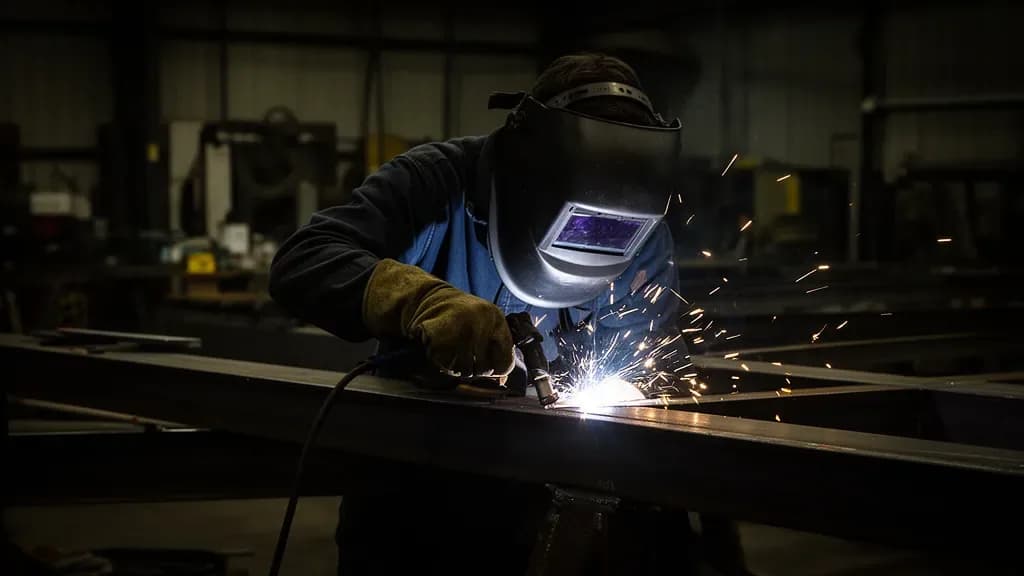
Welders (First Class) join structural metalwork to engineering drawings and welding procedure specifications using a range of techniques — manual metal arc (MMA), gas metal arc (MIG/MAG), gas tungsten arc (TIG), submerged arc, and flux-cored arc welding. The "first class" designation distinguishes qualified welders capable of producing code-compliant welds to AS 1554 or equivalent international structural welding standards — work that is inspected visually and often by NDT methods.
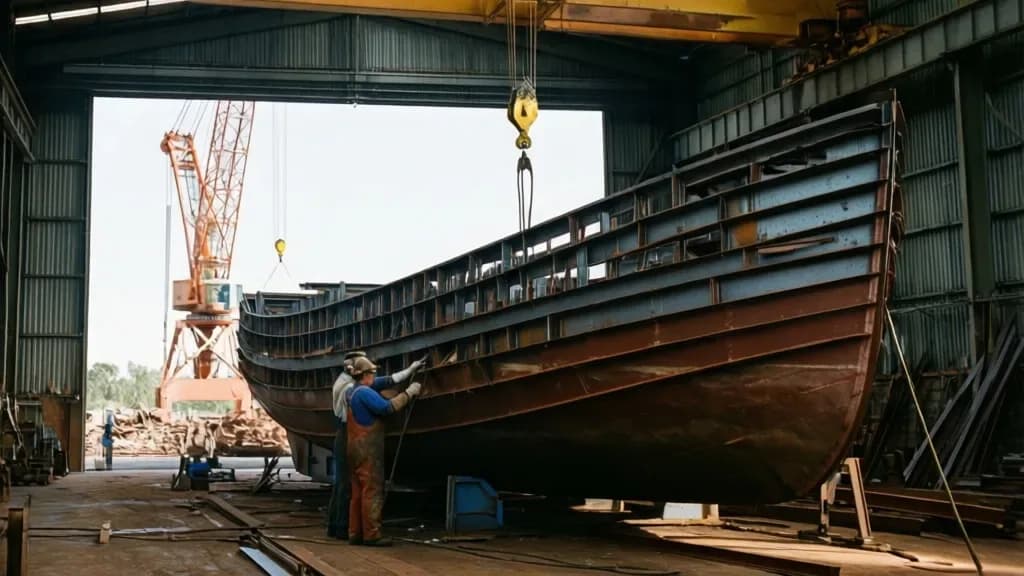
Demand is broad and persistent. Welders are wanted across the construction trades, infrastructure projects, rail and transport manufacturing, mining-services workshops, shipbuilding, defence manufacturing, and metal product fabrication. Major employers include the same project contractors that hire metal fabricators — Civmec, Monadelphous, McConnell Dowell, John Holland, Lendlease civil, Watpac — plus the manufacturing supply chain that fabricates structural steel, transport equipment and resource processing infrastructure.
The trade overlaps with Metal Fabricator (322311) and Pressure Welder (322312). Welder First Class is the right code if welding is your dominant task — you may also be involved in setting up, tacking and assembly, but your skill specialism is producing first-class welds to drawing and standard.
ANZSCO 322313 — The Code and Tasks
ANZSCO 322313 covers tradespeople who weld metal parts together using gas or electric-arc welding equipment. The Australian Bureau of Statistics describes core tasks as: studying blueprints, drawings and specifications to determine job requirements; cleaning and degreasing parts using wire brushes, portable grinders and chemical baths; clamping and joining metal sections; selecting and setting welding equipment, including amperage, gas flow and electrode type; welding parts in flat, horizontal, vertical and overhead positions; examining welds for width of bead, penetration and precision; and repairing faulty welds.
The unit group 3223 covers Metal Fabricator (322311), Pressure Welder (322312) and Welder (First Class) (322313). Applicants whose work is primarily fabrication setup rather than welding should consider Metal Fabricator (322311); those with current pressure-code qualifications should consider Pressure Welder (322312) for a higher-paying pathway.
Australian employment evidence often blurs these codes. Choose the code that matches your dominant duty and the documentation you can produce.
Skills Assessment: TRA
Trades Recognition Australia (tradesrecognitionaustralia.gov.au) is the sole assessing authority. The applicable program depends on whether you apply offshore or onshore.
Offshore applicants — Migration Skills Assessment (MSA) or OSAP
Requirements:
- Qualification equivalent to AQF Certificate III with at least two years of on-the-job training, or AQF Certificate IV
- At least three years of paid full-time experience in welding
- Detailed identity, qualification and employment evidence — payslips, tax records, employer references describing welding-specific tasks
- Welding qualifications and tickets — AS 1554, AWS D1.1, EN ISO 9606, or equivalent national standards
Assessment cost: Documentary stage from AUD $300; full MSA fees vary by stage. Refer to TRA's published fee schedule for current amounts. Processing time: TRA targets 120 days (around 17 weeks) from a complete submission.
The Offshore Skills Assessment Program (OSAP) is available for applicants from countries with comparable training systems (UK, Ireland, parts of Europe). OSAP includes practical and technical assessment at an approved offshore centre — particularly suited to a hands-on trade like welding.
Common rejection reasons: Employment references that describe general fabrication or assembly without welding-specific tasks; missing welding ticket documentation; qualifications from training providers TRA does not recognise as equivalent to AQF Certificate III; insufficient evidence of work in multiple welding positions and processes.
Onshore applicants — Job Ready Program (JRP)
Four stages: Provisional Skills Assessment, Job Ready Employment (12 months of paid Australian work), Job Ready Workplace Assessment, Final Assessment.
JRWA fee: AUD $2,845 per TRA's current schedule. Other stages priced separately. Processing time: 12-18 months end to end.
The JRP is rigorous and time-bound but produces a strong outcome. Applicants on student or working holiday visas often pursue this route.
Visa Pathways for Welders (First Class)
Subclass 482 — Skills in Demand
A common pathway. Major construction, resources and shipbuilding contractors sponsor welders regularly.
Visa fee: AUD $3,210 (primary applicant) Salary threshold: Core Skills stream income threshold around AUD $76,515 — most welder roles clear this, especially with overtime, FIFO loadings or shift premiums Processing time: 1-3 months for Core Skills stream nominations Quirk that matters: Labour Market Testing is well documented for welders by major sponsors. Labour agreement arrangements process faster but tie the welder to the specific sponsor.
Subclass 491 — Skilled Work Regional (Provisional)
Strong route for welders willing to work in regional areas — which captures most of the major project regions.
Visa fee: AUD $6,140 (primary applicant) Eligibility constraint: Must live and work in a designated regional area for the visa duration Processing time: 7-12 months Quirk that matters: Three years on a 491 plus income above threshold opens transition to subclass 191 permanent residency. Mining-services hubs (Pilbara, Bowen Basin, central QLD) all sit in designated regional postcodes, as does most of WA, SA, TAS and the NT.
Subclass 190 — Skilled Nominated
Permanent residency through state nomination plus the points test.
Visa fee: AUD $6,140 (primary applicant) Points boost: +5 from state nomination Processing time: 6-10 months Quirk that matters: WA and SA are the most active 190 nominators for Welder, reflecting shipbuilding and resources demand. NSW and VIC also nominate in years when the occupation appears on their state lists.
Subclass 186 — Employer Nomination Scheme
Permanent residency via direct employer sponsorship.
Visa fee: AUD $6,140 (primary applicant) Processing time: 6-12 months (Direct Entry); shorter for Temporary Residence Transition stream Quirk that matters: Most welders reach 186 via the Temporary Residence Transition stream after two to three years on a 482 with the same sponsor. Direct Entry is rarer for trades but possible for experienced welders with specialist tickets.
Subclass 189 — Skilled Independent
The points-only permanent residency option.
Visa fee: AUD $6,135 (primary applicant) Realistic points: 75-80 typically needed for invitation Processing time: 8-12 months once invited Quirk that matters: Trade invitation rounds for 189 have been small in 2026. Most welders reach PR faster via 482-to-186 or 491-to-191 transitions.
Points Test Strategy
| Points Factor | Points | Notes |
|---|---|---|
| Age (25-32) | 30 | Most favourable bracket |
| Age (33-39) | 25 | Still competitive |
| Trade qualification (AQF III-IV) | 10 | Standard |
| English (Competent 6.0) | 0 | Mandatory minimum |
| English (Proficient 7.0) | 10 | Worth the test prep |
| English (Superior 8.0) | 20 | Decisive in close rounds |
| Overseas skilled experience (5-7 years) | 10 | Common |
| Overseas skilled experience (8+ years) | 15 | Common ceiling |
| Australian skilled work | 5-20 | Strong lever if available |
| State Nomination (190) | 5 | Modest but useful |
| Regional Nomination (491) | 15 | The decisive lever for resources roles |
| Partner skills | 5-10 | Often overlooked |
Realistic Scenarios
Scenario 1: Offshore welder from Vietnam, age 29, eight years experience, Proficient English, SA 491 nomination targeting shipbuilding
- Age 29: 30 + Trade qual: 10 + English Proficient: 10 + Experience 8+ years: 15 + 491: 15 = 80 points
- Strong for invitation in current trade rounds; shipbuilding specialism strengthens state nomination
Scenario 2: Onshore JRP completer from India, age 31, five years experience, Competent English, QLD 190 nomination
- Age 31: 30 + Trade qual: 10 + English Competent: 0 + Experience 3-4 years: 5 + 190: 5 + Australian work: 5 = 55 points
- Below typical threshold — would need Proficient English plus 491 to clear competitive levels
State Nomination for Welders
Western Australia
WA is the most active state for welder nomination, driven by Henderson shipbuilding, Pilbara iron ore infrastructure, LNG project work in the North West Shelf, and Perth's manufacturing supply chain. WA's 491 program covers all postcodes outside the Perth metro core; 190 nominations target welders with specific tickets (e.g. high-precision TIG, structural certificates).
South Australia
SA nominates Welder on both 190 and 491 streams, driven by defence shipbuilding at Osborne (BAE Systems Hunter-class frigates), defence aligned manufacturing, and resources-related work at Olympic Dam and Roxby Downs. SA's program publishes monthly invitation numbers and is one of the more predictable for trade applicants.
Queensland
Queensland's 491 program covers Welder in regional postcodes including Gladstone (LNG), Mackay and Townsville (resources support), Cairns, and Toowoomba's manufacturing precinct. Migration Queensland accepts casual employment of 20+ hours per week as valid skilled experience, which suits the project-based welding workforce.
New South Wales
NSW's 491 program targets regional areas including the Hunter, Illawarra, Central West and North Coast. Sydney metro is excluded from 491 eligibility. NSW 190 nominations for welders are smaller but appear in years when the occupation is included on the state's priority list.
Tasmania
Tasmania nominates Welder under both 190 and 491 streams, with applicants typically required to demonstrate genuine intent to settle long-term — through a regional job offer, business plan or family connection.
Salary and Employment Outlook
What Can You Expect to Earn?
| Role | Typical Salary Range |
|---|---|
| Apprentice Welder | AUD $50,000-$60,000 |
| Qualified Welder First Class | AUD $80,000-$95,000 |
| Senior Welder | AUD $95,000-$110,000 |
| Site Welder (regional construction) | AUD $100,000-$120,000 |
| FIFO Welder (Pilbara, Bowen Basin) | AUD $120,000-$160,000+ (incl. allowances) |
| Shutdown Specialist (day rate) | AUD $600-$1,200/day |
| Welding Supervisor | AUD $120,000-$160,000 |
Source: SEEK Salary Hub (April 2026) shows average AUD $80,000-$85,000; SalaryExpert reports AUD $84,556 average with AUD $41 per hour; mining-services and shutdown roles routinely clear higher.
Total packages typically include 11.5% superannuation. FIFO and shutdown contracts add site allowances, travel, accommodation and meals — often increasing total package by 30-50% over base. Welders with current pressure tickets, restricted clearances or specialist TIG capability earn well above the median.
Highest-Paying Sectors
- Mining-services FIFO — Pilbara iron ore, Bowen Basin coal, gold mining in WA
- LNG and gas processing — Karratha, Darwin, Gladstone
- Defence shipbuilding — Osborne (SA), Henderson (WA), Williamstown (VIC)
- Major civil infrastructure — Snowy 2.0, Inland Rail, Sydney Metro projects
- Power generation — Hunter Valley, Latrobe Valley, large solar and storage installations
Tips for a Successful Application
1. Demonstrate welding as your dominant task
TRA reviewers see many applications from fabricators who file as Welder First Class to hit a more attractive demand profile. If you nominate 322313, your employment references must describe welding as the primary activity — not setting out, cutting or assembly. Project-level descriptions of weld procedures, materials and inspection methods strengthen the application.
2. Document your welding tickets explicitly
List every active welding qualification: AS 1554, AWS D1.1, EN ISO 9606, ISO 14732, or national equivalents. Specify the processes (MMA, MIG/MAG, TIG, FCAW, SAW), positions (1G through 6G), and materials (carbon steel, stainless, aluminium, exotic alloys). Specificity is the single most important differentiator versus a generic "welder" description.
3. Plan your route around your specialism
Structural welders should target SA shipbuilding or WA construction. Mining-services welders should target WA or QLD with FIFO experience evidenced. Stainless and food-grade welders should target Melbourne or Adelaide manufacturing. Aluminium welders are particularly valued in marine and aerospace work. Choose your visa pathway and nominating state to match your specialism.
4. Prepare for on-arrival verification welds
Australian employers routinely require new welders to produce verification welds before starting paid work — typically butt welds in carbon and stainless materials, inspected visually and often by NDT. A failed verification weld can withdraw an offer post-grant. Practise current procedures before arrival and consider gaining a recent code qualification.
5. Get Proficient English even though Competent is the minimum
Trade migrations have lower English thresholds, but Proficient (IELTS 7.0) adds 10 points, improves state nomination competitiveness, and matters in safety-critical work where written procedures, isolation permits and toolbox talks all happen in English.
Step-by-Step Migration Roadmap
- Confirm ANZSCO 322313 fits your duties — welding as dominant task, not fabrication or pressure work — see the how to find your ANZSCO code guide
- List your welding qualifications and processes — AS 1554, AWS, EN ISO, with positions and materials
- Audit your trade qualification against AQF Certificate III — gather syllabus and hours evidence
- Compile project-level employment evidence — payslips, tax records, references describing welding scope
- Sit your English test — Proficient (7.0) ideally, Competent (6.0) minimum
- Apply to TRA — MSA offshore, JRP onshore, OSAP if from a comparable-system country
- Receive your skills assessment outcome — 17 weeks typical for MSA
- Submit your EOI in SkillSelect — flag 482, 190 and 491 visa interest
- Apply for state nomination — WA, SA, QLD and TAS are the priority nominators
- Or pursue employer sponsorship — major construction, resources and shipbuilding contractors sponsor welders regularly
- Receive your invitation to apply — within 60 days, lodge visa application
- Complete health and character checks — police certificates from every country lived in 12+ months
- Receive grant and relocate — prepare for on-arrival verification welds
See the skills assessment hub and the most-in-demand occupations list for further reading.
Frequently Asked Questions
Is Welder still in shortage in Australia in 2026?
Yes. Jobs and Skills Australia rates Welder among the most consistently short-staffed trades, with Skill Level 3 occupations filling at only 54.3% of advertised vacancies. The shortage spans construction, resources, shipbuilding and manufacturing — and is particularly acute in regional Australia, where most major projects are located.
Should I nominate Welder (First Class) or Pressure Welder?
Match the code to your current code qualifications. Pressure Welder (322312) requires current AS 3992, ASME IX or EN ISO 9606 qualifications — without these you cannot defend the code. Welder First Class (322313) covers structural and general welding to AS 1554 or equivalent. Many welders hold both, in which case choose the code your dominant work and employment evidence most strongly support.
Can my international welding qualifications be recognised?
Yes — for visa purposes. TRA assesses your qualifications against AQF Certificate III equivalence. However, Australian employers usually require verification welds on arrival, regardless of paperwork. Welders from comparable-system countries (UK, Ireland, parts of Europe) often use the OSAP program, which includes a practical assessment offshore — a strong proof point for employers.
Which Australian welding tickets should I get after arrival?
The most useful tickets are AS 1554 structural welder qualifications (1A, 2, 3 across positions), AS 3992 pressure-welding qualifications, and process certifications for TIG, MIG and SMAW in the materials and positions matching your specialism. White Card (general construction induction) is mandatory for site work and can be done in a single day. Many regional employers will sponsor advanced ticket upgrades for high-performing welders.
Do I need separate registration to work as a welder in Australia?
No. Unlike electricians and plumbers, welders do not require a separate state licence. The TRA skills assessment is sufficient for visa purposes. Code qualifications (AS 1554, AS 3992, AWS D1.1) are issued by approved testing centres and recognised by employers and inspectors — these are practical qualifications rather than government licences.
How fast can I get to Australia as a welder?
With current qualifications and an offer from an approved sponsor, the 482 pathway can move 3-6 months from offer to grant. Without an offer, the 491 pathway typically takes 12-18 months end to end — TRA assessment first, then state nomination, then visa processing. Onshore JRP is the slowest because of the 12-month Australian employment requirement. For experienced welders with specialist tickets, employer sponsorship is usually the fastest realistic route.