Dairy Cattle Farmer Visa Pathway to Australia: Complete 2026 Guide
Updated: 16 August 2026
Australia classifies Dairy Cattle Farmer under ANZSCO 121313. VETASSESS conducts the skills assessment. The occupation sits on the Core Skills Occupation List and the Regional Occupation List, unlocking subclasses 491, 494, 482 and 186. It is not on the MLTSSL, so there is no subclass 189 route. Typical 2026 salaries run AUD $70,000-$110,000, with managers of large herds at the upper end.
Quick Facts: Dairy Cattle Farmer Migration Pathway
| Detail | Information |
|---|---|
| ANZSCO Code | 121313 (Dairy Cattle Farmer) |
| Skill Level | 1 (Bachelor degree or higher, or five years of relevant experience in lieu) |
| Skills Assessment | VETASSESS (Vocational Education and Training Assessment Services) |
| Occupation List | CSOL and ROL — not on MLTSSL or STSOL |
| Visa Options | 491, 494, 482, 186 |
| Demand Level | High in dairy regions — persistent labour shortages in Victoria, Tasmania and northern NSW |
| Salary Range | AUD $70,000-$110,000 (SEEK/PayScale 2026); herd and farm managers higher |
| Typical 189 Score | Not applicable — no 189/190 access |
| Key Challenge | No points-tested independent route; the role must read as management, not milking labour, to pass VETASSESS |
What a Dairy Cattle Farmer Does in Australia
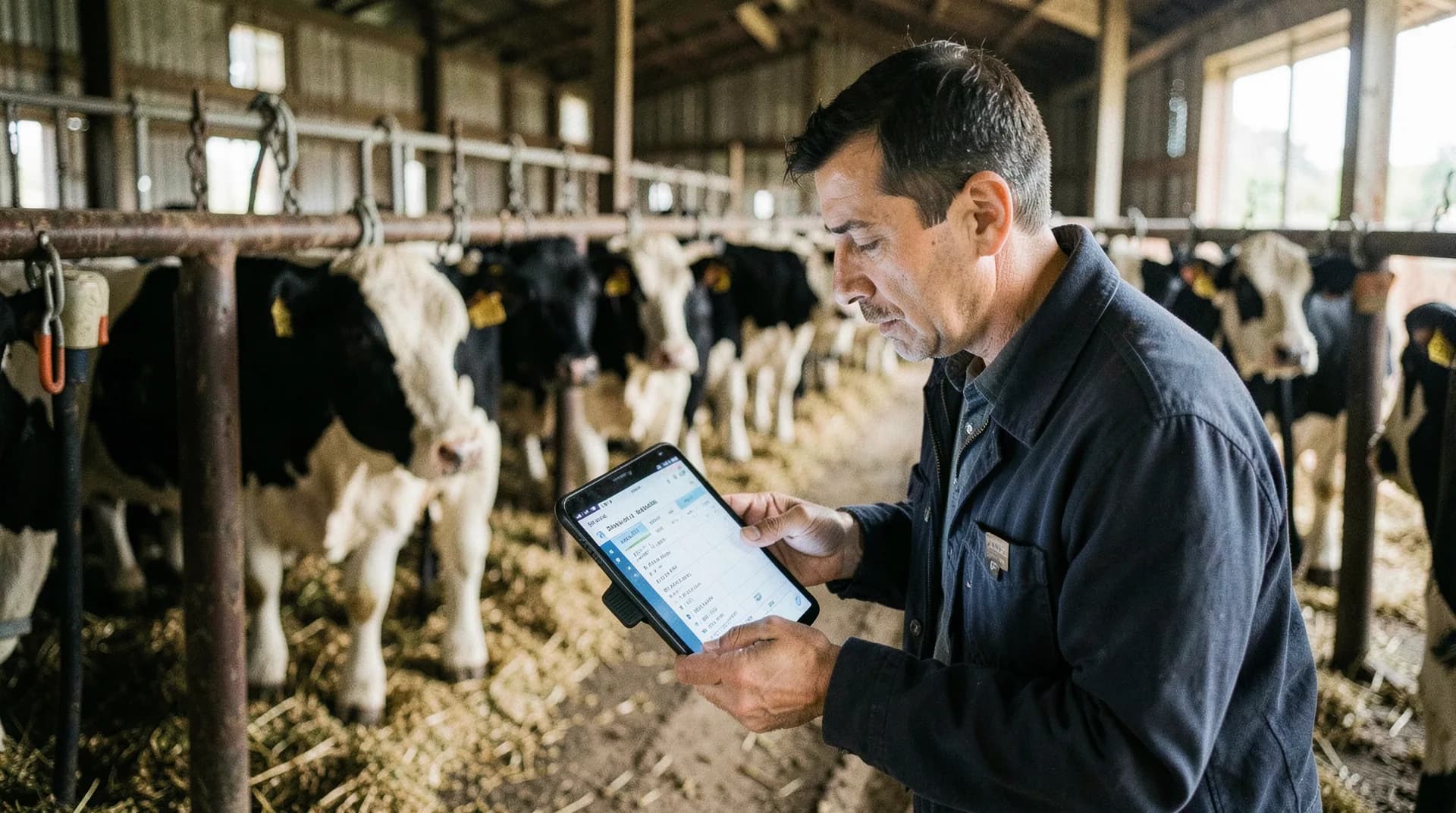
A dairy cattle farmer runs the production of milk from a herd. The role covers herd health and breeding, pasture and feed management, milking-system operation, milk quality and compliance, staff supervision and the financial side of running the farm. On a modern Australian dairy that means managing rotary or herringbone dairies, automated milking on some operations, pasture rotation, and tight margins driven by milk price and feed cost.
The industry sits mainly in the south-east. Victoria produces the bulk of Australia's milk, especially Gippsland and the western districts. Tasmania has expanded strongly on the back of reliable rainfall and irrigation. Northern Victoria, southern New South Wales, South Australia and parts of Queensland and Western Australia round out the map. Labour is a chronic problem. Dairy is physically demanding, the hours are unsociable, and farms in regional areas struggle to fill skilled roles locally, which is exactly why the occupation appears on the migration lists.
Day-to-day dairy work is operational and people-heavy. If your background is animal science, herd genetics or veterinary research rather than running a working farm, a science-side role such as Agricultural Scientist is the closer fit.
ANZSCO Code 121313
Dairy Cattle Farmer sits in ANZSCO unit group 1213, Livestock Farmers. The official description covers planning, organising, controlling, coordinating and performing farming operations to breed and raise dairy cattle and produce milk.
Indicative tasks include monitoring and maintaining herd health and welfare; planning breeding programs and managing calving; managing pasture, fodder and feed; operating and maintaining milking and milk-storage equipment; ensuring milk quality and regulatory compliance; keeping production and financial records; and selecting, training and supervising farm staff. ANZSCO sets Dairy Cattle Farmer at Skill Level 1, with a bachelor degree or higher as the benchmark and five years of relevant experience accepted in lieu where no formal qualification exists. If you are choosing between dairy and a related livestock code, confirm the match through how to find your ANZSCO code.
Skills Assessment
VETASSESS (Vocational Education and Training Assessment Services)
VETASSESS assesses Dairy Cattle Farmer as a professional occupation, checking that your qualification is comparable to the required Australian level and in a highly relevant field, and that your employment sits at the right skill level in the nominated occupation.
Requirements. VETASSESS publishes four assessment pathways. The primary pathway requires a qualification assessed as comparable to an Australian Bachelor degree or higher in a highly relevant field, plus at least one year of post-qualification highly relevant employment in the last five years. Further pathways cover non-relevant degrees combined with a relevant diploma and extra experience, or longer employment periods where the qualification is less directly related. Highly relevant fields include agriculture, animal husbandry, dairy science, livestock production, ruminant nutrition and agribusiness.
Assessment cost. AUD $1,205.60 for a full skills assessment covering both qualifications and employment (standard online application, applicants in Australia, GST inclusive). Priority Processing is available for an additional AUD $825.
Processing time. Standard processing currently averages around 7 weeks. Priority Processing targets 10 business days from a complete application.
Common rejection reasons. The recurring failure is employment evidence that reads as milking-shed or general farm-hand work rather than the management duties the occupation requires. References must show responsibility for herd-health decisions, breeding programs, budgeting and staff supervision. The second issue is a field-of-study mismatch where a general or unrelated degree does not pass as highly relevant, pushing the applicant onto a longer-experience pathway they cannot fully document.
For how VETASSESS compares to other assessors, see the skills assessment bodies complete list.
Visa Pathways
Dairy Cattle Farmer is on the CSOL and ROL but not the MLTSSL, so the visa set is regional and employer-sponsored. The order below reflects what actually works for this occupation.
Subclass 491 — Skilled Work Regional (Provisional)
A five-year provisional visa via state nomination or eligible family sponsorship in a designated regional area, with a permanent-residency pathway through subclass 191.
- Visa fee: AUD $6,140 (primary applicant)
- Points boost: +15 for regional nomination
- Eligibility note: Requires regional living and work, which suits dairy geography
- Quirk: Dairy regions in Victoria, Tasmania and southern NSW all qualify as regional, so the residence rule rarely conflicts with the job
Subclass 494 — Skilled Employer Sponsored Regional (Provisional)
An employer-sponsored five-year provisional visa for regional roles, with a pathway to permanent residency through subclass 191.
- Visa fee: AUD $4,910 (primary applicant)
- Eligibility note: Requires a regional employer nomination and a positive VETASSESS assessment
- Quirk: Larger dairy operations and corporate farms are the realistic sponsors; the nominated salary must meet the Core Skills Income Threshold
Subclass 482 — Skills in Demand Visa
The employer-sponsored temporary route. Dairy Cattle Farmer falls in the Core Skills stream.
- Visa fee: AUD $3,210 (primary applicant)
- Salary requirement: The nominated salary must meet or exceed the Core Skills Income Threshold of AUD $76,515 (2025-26; rising to AUD $79,499 from 1 July 2026)
- Quirk: Clearing the income threshold is the binding constraint, since base milking pay often falls short; the nominated role must be a genuine farmer position
Subclass 186 — Employer Nomination Scheme
Permanent residency through employer nomination, via Direct Entry or the Temporary Residence Transition stream after time on a 482.
- Visa fee: AUD $6,140 (primary applicant)
- Eligibility note: Direct Entry requires a positive skills assessment and at least three years of relevant experience
- Quirk: Many dairy farmers reach permanent residency through TRT after sponsorship rather than applying direct
State and Regional Nomination
State nomination for Dairy Cattle Farmer tracks the dairy map. Victoria, with the largest milk output in the country, is the central case, and the state runs nomination streams that periodically include agriculture occupations tied to regional labour need. Tasmania nominates agriculture occupations connected to its expanding dairy sector and generally expects a genuine local job offer or strong regional connection. Southern New South Wales, South Australia and parts of Queensland also nominate primary-industry occupations aligned to their dairy regions.
Two rules apply across states. Confirm the code is open on the relevant list at the time you apply, because primary-industry codes open and close with allocation. And treat a regional job offer as the deciding factor, since these programs rarely invite niche agriculture codes on points alone. Check current status against the skilled occupation list for 2026 and the Core Skills Occupation List.
Salary and Employment Outlook
| Role | Typical Salary Range (AUD) |
|---|---|
| Dairy farm hand / assistant | $52,000-$65,000 |
| Dairy cattle farmer (operational) | $70,000-$90,000 |
| Herd / farm manager | $90,000-$115,000+ |
Figures draw on SEEK and PayScale 2026 ranges for dairy and farming roles, cross-checked against published agricultural salary data. Total packages frequently add on-farm housing, a vehicle and superannuation at 11.5%, which raises the effective value well above the cash base, especially on remote farms.
The best pay sits with herd and farm managers running large operations in Victoria and Tasmania. Corporate and aggregated dairy businesses pay competitively for experienced managers because skilled local staff are hard to retain. Demand is consistently high: dairy has long-standing skilled-labour shortages, the work is demanding, and regional farms cannot reliably fill management roles from the local pool. That shortage is the reason the occupation holds its place on the migration lists.
Tips for a Successful Application
- Make the role read as management. VETASSESS distinguishes a Dairy Cattle Farmer from a farm hand. References must show herd-health decisions, breeding planning, budgeting and staff supervision, not just milking and feeding.
- Pick the right VETASSESS pathway for your qualification. With four pathways available, a non-relevant degree paired with a relevant diploma and extra experience can still work. Map your evidence to a specific pathway before lodging.
- Confirm the salary clears the threshold. For 482 and 494 the nominated salary must meet the Core Skills Income Threshold. Entry-level dairy pay often falls short, so the position must be a genuine farmer role.
- Target a dairy region from the start. Because every route is regional or employer-sponsored, a job offer in Victoria, Tasmania or southern NSW does more for your application than chasing points.
- Keep five years of clean records if you lack a degree. The experience-in-lieu pathway is real but demands detailed, dated references covering the full period at the right skill level.
Step-by-Step Migration Roadmap
- Confirm your duties map to Dairy Cattle Farmer using the ANZSCO code finder.
- Verify current list status on the CSOL hub and the 2026 SOL.
- Gather qualification documents and detailed employment references covering duties and dates.
- Sit an English test at the level your chosen visa requires.
- Lodge the VETASSESS skills assessment (AUD $1,205.60), choosing the pathway that fits your qualification and experience.
- Secure a regional job offer or state nomination interest, since the realistic routes are 491, 494, 482 and 186.
- Submit an Expression of Interest in SkillSelect — see how SkillSelect and the EOI work.
- Apply for regional nomination (491) or have your employer lodge a nomination (494, 482, 186).
- Receive your invitation or nomination approval.
- Lodge the visa application and pay the relevant charge.
- Complete health examinations and police checks.
- Receive the grant and relocate to the nominating region.
Frequently Asked Questions
Can a Dairy Cattle Farmer get a subclass 189 visa?
No. Dairy Cattle Farmer (121313) is not on the Medium and Long-term Strategic Skills List, and subclass 189 only draws from the MLTSSL. The occupation sits on the CSOL and the Regional Occupation List, so the routes are the regional provisional visas 491 and 494, the employer-sponsored 482, and the permanent 186.
Why is dairy farming on the skilled migration lists?
Australian dairy regions have persistent skilled-labour shortages. The work is physically demanding with unsociable hours, and regional farms cannot reliably fill management roles from the local workforce. That ongoing shortage is the reason Dairy Cattle Farmer holds a place on the migration lists, particularly through the regional and employer-sponsored visas.
How does VETASSESS assess a dairy farmer with no degree?
VETASSESS offers four pathways. Where you hold no relevant degree, you can qualify through a relevant diploma plus additional experience, or through a longer period of highly relevant employment. Five years of relevant experience can substitute for a formal qualification, but you must document it with detailed, dated references showing management-level work.
Which states nominate Dairy Cattle Farmers?
Victoria, Tasmania, southern New South Wales, South Australia and parts of Queensland nominate agriculture occupations connected to their dairy sectors, but allocations are small and change through the year. Confirm the code is open on the relevant list when you apply, and expect a genuine regional job offer to be the deciding factor.
What is the difference between a dairy farm hand and a Dairy Cattle Farmer for migration?
It is the difference between labour and management. A farm hand performs milking and feeding under direction. A Dairy Cattle Farmer plans breeding, manages herd health and pasture, controls budgets and supervises staff. VETASSESS assesses the management-level role, so your employment evidence must reflect those responsibilities rather than routine manual tasks.