Diver Visa Pathway to Australia: Complete 2026 Guide
Updated: 16 August 2026
Australia classifies Divers under ANZSCO 399911. VETASSESS conducts the skills assessment. The occupation sits on the Core Skills Occupation List (CSOL) but is restricted to subclasses 482 and 186 — no state or regional nomination route applies. Typical 2026 salaries range AUD $80,000-$140,000, with offshore saturation divers and inspection specialists earning significantly more on day rates.
Quick Facts: Diver Migration Pathway
| Detail | Information |
|---|---|
| ANZSCO Code | 399911 (Diver) |
| Skill Level | 3 (AQF Certificate IV in commercial diving or equivalent) |
| Skills Assessment | VETASSESS (Vocational Education and Training Assessment Services) |
| Occupation List | CSOL — eligible for 482 and 186 only (no 190 or 491) |
| Visa Options | 482, 186 |
| Demand Level | High in offshore oil and gas, infrastructure inspection and aquaculture |
| Salary Range | AUD $80,000-$140,000 base; saturation divers higher on day rates |
| Typical 189 Score | Not applicable — 189 not available for this code |
| Key Challenge | Restricted to employer sponsorship — no points-based independent path |
What Divers Do in Australia
Commercial divers work underwater on tasks no surface worker can reach. The major employers are offshore oil and gas operators (Woodside, Santos, INPEX, Chevron), subsea infrastructure contractors (Subsea 7, Saipem, McDermott), port authorities, fisheries and aquaculture businesses, defence contractors, civil-marine builders working on wharves and bridges, and scientific research operations.
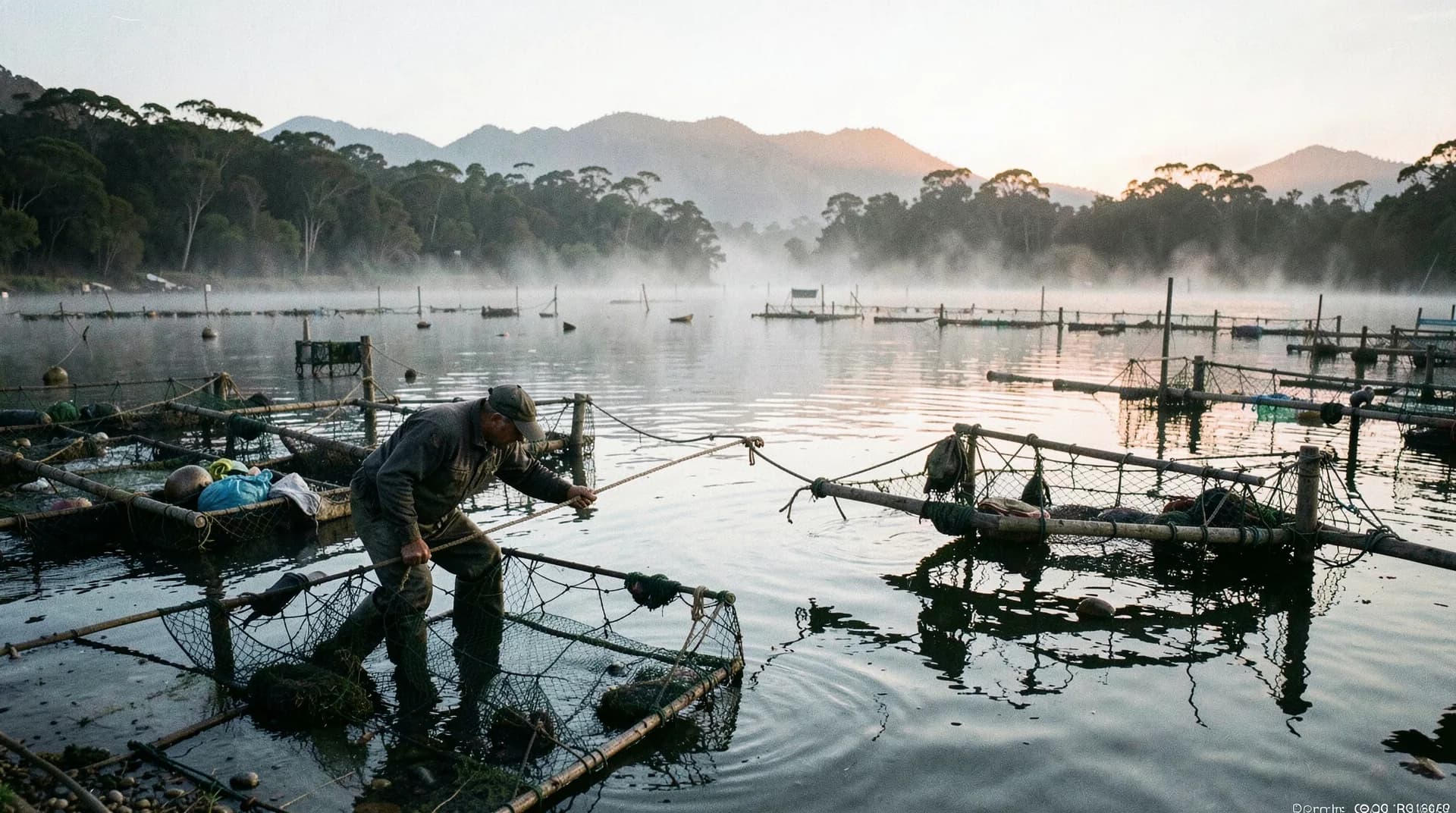
Work types include: air diving and surface-supplied diving on inshore civil work; mixed-gas and saturation diving on offshore platforms in the North West Shelf and Bass Strait; non-destructive testing (NDT) and inspection diving on subsea pipelines and platforms; aquaculture diving on salmon, tuna and oyster operations in Tasmania, South Australia and Port Lincoln; scientific diving for research institutions and consultancies. Hours are intense — most offshore work runs in 28-day swings — but day rates are high. ANZSCO 399911 sits at Skill Level 3 but commands skill-level-1 salaries in the offshore sector because of risk loadings and certification investment.
ANZSCO Code: 399911
ANZSCO classifies Diver inside unit group 3999 (Other Miscellaneous Technicians and Trades Workers). The code covers anyone who performs underwater work using SCUBA or surface-supplied breathing apparatus, including inspection, repair, salvage, marine construction, scientific observation and aquaculture diving.
Typical tasks include: pre-dive equipment checks; descending to specified depths within safe-decompression limits; using underwater cutting, welding and hydraulic tools; inspecting submerged structures and recording defects; participating in salvage and recovery operations; communicating with surface support via comms hardline; carrying out decompression schedules. Most commercial divers also hold qualifications in NDT, underwater welding, hydraulic tooling, or saturation operations on top of the base diving certificate.
Skills Assessment
VETASSESS
VETASSESS is the assessing authority. The body's canonical occupation page is vetassess.com.au/check-my-occupation/professional-occupations/diver.
Requirements:
- A qualification assessed as comparable to AQF Certificate IV in a highly relevant field (commercial diving, occupational diving)
- At least one year of post-qualification highly relevant employment at appropriate skill level in the last five years
- Alternative pathway: AQF Certificate III with three years of post-qualification highly relevant employment
- If the qualification is not highly relevant, an additional year of employment is generally required
- Most applicants also need to demonstrate current commercial diving medical fitness
Assessment Cost: AUD $1,096 for the full skills assessment (priority processing AUD $1,921). GST applies for onshore applicants (approximately AUD $1,205.60 inclusive). Review of unsuccessful assessment AUD $350.
Processing Time: Standard 8-12 weeks. Some applications run longer (12-20 weeks) where overseas qualifications need verification or supplementary evidence is requested.
Common rejection reasons: Recreational diving qualifications submitted as commercial — VETASSESS reads PADI, NAUI and similar recreational schemes as insufficient for ANZSCO 399911. Qualifications from countries without IDSA-aligned commercial diving training. Employment references that describe support roles (dive tender, deck crew) rather than diving duties. Gaps in current medical fitness or commercial diving certification.
Visa Pathways for Divers
The 189 Skilled Independent visa is not available for ANZSCO 399911, and state and regional nomination (190 and 491) are also closed for this code. The only live paths are 482 and 186.
Subclass 482 — Skills in Demand (formerly TSS)
The dominant pathway. Offshore oil and gas contractors and major civil-marine contractors regularly sponsor international commercial divers.
- Visa fee: AUD $4,015 (primary applicant)
- Salary thresholds: Core Skills stream AUD $79,423; Specialist Skills stream AUD $146,576
- Duration: Up to four years
- Reality: Most offshore packages clear the Core Skills threshold easily once allowances and day rates are included. Senior saturation roles can sit above the Specialist Skills threshold
Subclass 186 — Employer Nomination Scheme
Permanent residency through employer sponsorship. Direct Entry stream or TRT after time on a 482.
- Visa fee: AUD $6,140
- Streams: Direct Entry or TRT (after 2+ years on a 482)
- Reality: Most divers transition to 186 through TRT rather than Direct Entry, after completing two years on a 482 with the sponsoring employer
State Nomination
ANZSCO 399911 is not currently available for 190 or 491 nomination in any state. This restriction reflects the highly employer-driven nature of commercial diving work — divers move between offshore projects rather than settling in a single state. If your priority is permanent residency without an employer sponsor, the diver pathway will not deliver it.
Salary and Employment Outlook
What You Can Expect to Earn
| Role | Typical Salary Range |
|---|---|
| Aquaculture / Inshore Diver | AUD $75,000-$95,000 |
| Civil-Marine / Port Diver | AUD $90,000-$120,000 |
| Inspection / NDT Diver | AUD $110,000-$150,000 |
| Offshore Air Diver | AUD $120,000-$170,000 |
| Saturation Diver (offshore) | AUD $250,000-$500,000+ on day rates |
| Diving Supervisor | AUD $150,000-$220,000 |
Base salary figures draw from SEEK, PayScale and Indeed 2026 data. Saturation divers are paid on day rates that vary by project and operator — public salary databases understate this market. Total earnings include day-rate loadings, depth pay, saturation pay, FIFO allowances and offshore allowances, often doubling base.
Highest-Paying Employers and Sectors
- Offshore oil and gas operators (Woodside, Santos, INPEX, Chevron) and their subsea contractors (Subsea 7, Saipem, McDermott, Fugro)
- Defence contractors and Royal Australian Navy clearance diver roles (Australian citizenship required for many)
- Aquaculture majors (Tassal, Huon, Petuna, Clean Seas Tuna)
- Port authorities and civil-marine contractors (Royal HaskoningDHV, John Holland Marine)
- Scientific institutions (AIMS, CSIRO Oceans and Atmosphere, university marine science programs)
Tips for a Successful Application
1. Lead With Commercial — Not Recreational — Credentials
VETASSESS draws a hard line between recreational and commercial diving qualifications. ADAS Part 1 (Restricted SCUBA), ADAS Part 2 (Surface Supplied Breathing Apparatus to 30m), ADAS Part 3 (SSBA to 50m), ADAS Part 4 (Closed Bell Mixed Gas), HSE Part I-IV, IMCA-recognised certifications, and IDSA-aligned international programs are the recognised commercial pathways. PADI Divemaster and similar recreational credentials are not assessed as commercial.
2. Document Current Medical Fitness
Australian commercial divers must hold a current AS/NZS 2299-aligned diving medical from an SPUMS-recognised practitioner. While the visa application doesn't require this in itself, employers won't sponsor a 482 without it. Get the medical organised in parallel with the skills assessment.
3. Plan for Sponsored Pathways Only
Without 190 or 491 access, divers must secure an employer sponsor. Approach offshore contractors and aquaculture majors directly. Many maintain rolling sponsorship arrangements for skilled divers with verifiable offshore hours and competency cards.
4. Quantify Your Diving Hours
VETASSESS and Australian employers both verify experience in dive hours. Maintain a current logbook with depth, mode, gas, vessel, supervisor sign-off and project reference for every dive. A logbook that survives scrutiny is the single strongest piece of evidence in this assessment.
5. Specialise to Earn Premium Rates
The Australian market pays a substantial premium for divers with NDT (CSWIP 3.1U or 3.2U), inflatable seal welding, hot-tap or hyperbaric welding, and saturation experience. If you're earlier in your career, target specialisation as the path to the higher salary brackets.
Step-by-Step Migration Roadmap
- Confirm your role maps to ANZSCO 399911 using the ANZSCO code finder and the VETASSESS information sheet
- Check current CSOL status on the 2026 Skilled Occupation List and CSOL hub
- Compile qualification certificates (commercial diving, NDT, welding, etc.) with translations where needed
- Build a verifiable logbook record with employer sign-offs and project references
- Sit your English test — Competent (IELTS 6.0) minimum
- Lodge VETASSESS skills assessment via the skills assessment bodies hub
- Wait for the outcome (standard 8-12 weeks)
- Approach Australian offshore, aquaculture or civil-marine employers for sponsorship
- Have the sponsoring employer file the 482 nomination and visa application
- Complete an AS/NZS 2299-aligned diving medical
- Complete health, character and biometric checks
- Receive grant, mobilise to project and target 186 transition after two years
Frequently Asked Questions
Why is Diver restricted to 482 and 186 only?
The CSOL governs which visas an occupation is eligible for, and Diver currently sits in the segment of the list that allows only employer-sponsored pathways. This reflects the project-driven, employer-led structure of the commercial diving labour market — there is little independent or self-employed diving work in Australia.
Are PADI or NAUI qualifications recognised?
Recreational qualifications are not accepted for ANZSCO 399911 assessment. Australia recognises commercial diving qualifications aligned to AS/NZS 2815 and the Australian Diver Accreditation Scheme (ADAS), or internationally recognised commercial schemes such as HSE (UK), IDSA-accredited programs, and IMCA recognition. Recreational programs target leisure diving and don't cover the safety, gas-management and supervisor competencies that commercial diving requires.
Which employers are most likely to sponsor international divers?
Offshore subsea contractors working in the North West Shelf and Bass Strait have a structural shortage of certified saturation, mixed-gas and air divers. Aquaculture operators in Tasmania and South Australia also sponsor internationally where local supply runs short. Defence work is largely restricted to Australian citizens.
What's the demand outlook for divers in Australia in 2026?
Demand is bifurcated. Offshore oil and gas demand is project-cyclical but underpinned by long-term decommissioning work for ageing platforms in Bass Strait, ongoing operations on the North West Shelf, and emerging carbon capture and storage subsea infrastructure. Aquaculture is in a multi-decade growth phase. Civil-marine work follows port and bridge infrastructure investment cycles. Overall, the commercial diving workforce is forecast to grow modestly through 2030.
Can I bring my family on a 482 as a diver?
Yes. The 482 allows the inclusion of partners and dependent children. Family members generally hold full work rights on the secondary visas. The cost of additional applicants for the 482 is the same as the primary applicant in 2026 (AUD $4,015 for adults, AUD $1,005 for children).