Aquaculture or Fisheries Scientist Visa Pathway to Australia: Complete 2026 Guide
Updated: 16 August 2026
Australia classifies Aquaculture or Fisheries Scientist under ANZSCO 234116. VETASSESS conducts the skills assessment. The occupation sits on the Core Skills Occupation List (CSOL) only, unlocking employer-sponsored subclasses 482 and 186. Typical 2026 salaries range AUD $85,000-$140,000. Tasmania (salmon), South Australia (tuna and oysters) and the Northern Territory (barramundi and prawns) drive demand.
Quick Facts: Aquaculture or Fisheries Scientist Migration Pathway
| Detail | Information |
|---|---|
| ANZSCO Code | 234116 (Aquaculture or Fisheries Scientist) |
| Skill Level | 1 (Bachelor degree or higher) |
| Skills Assessment | VETASSESS (Vocational Education and Training Assessment Services) |
| Occupation List | CSOL only — not on MLTSSL or STSOL |
| Visa Options | 482 (Core Skills stream), 186 (Direct Entry / TRT) |
| Demand Level | High — flagged on the Jobs and Skills Australia priority occupation lists, aquaculture sector expanding |
| Salary Range | AUD $85,000-$140,000 (government APS bands; private sector research roles); senior research scientists higher |
| Typical 189 Score | Not applicable — no 189/190/491 access |
| Key Challenge | Roles geographically concentrated in Tasmania, SA and NT; major sponsoring employers are a small list |
What an Aquaculture or Fisheries Scientist Does in Australia
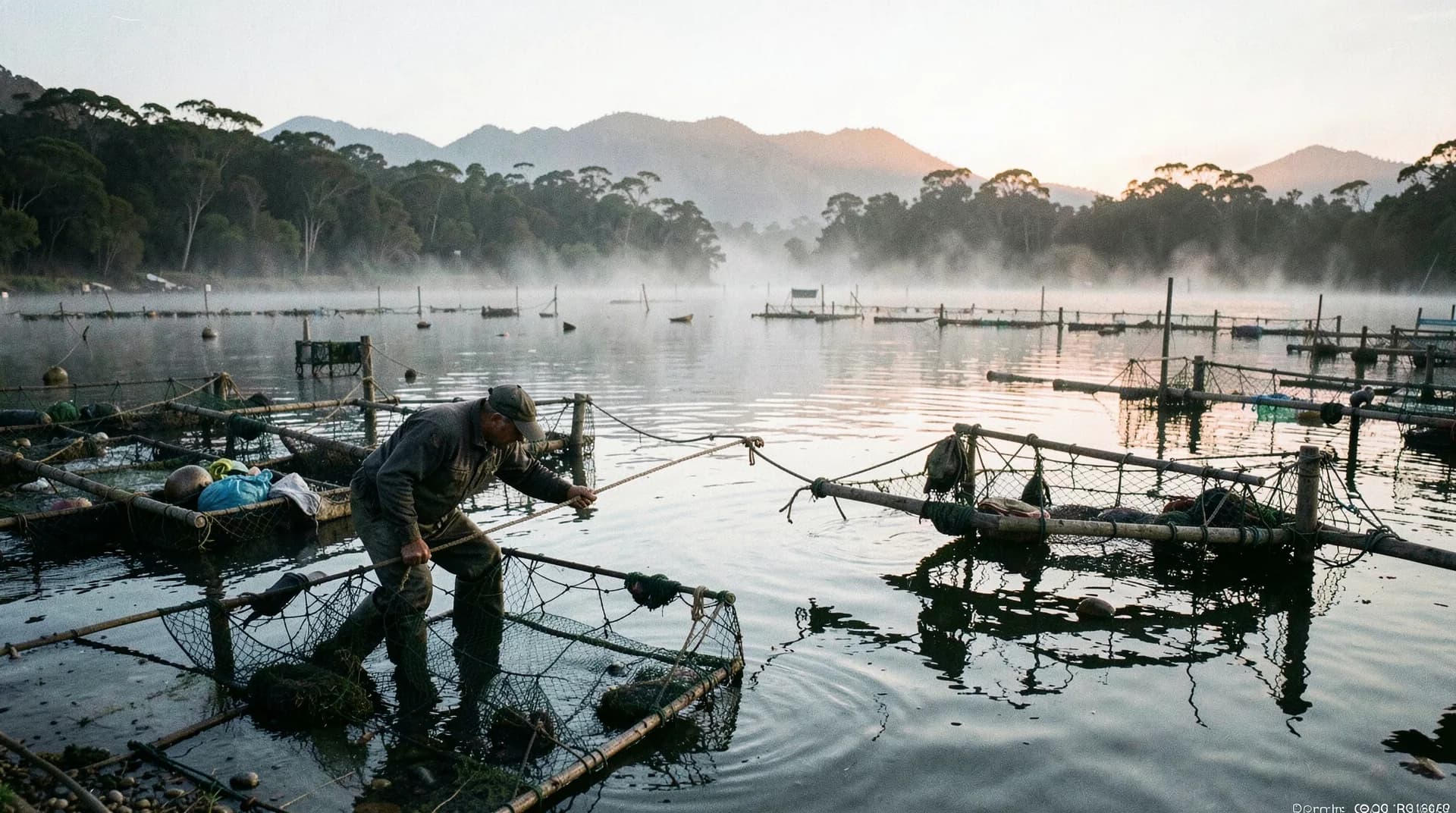
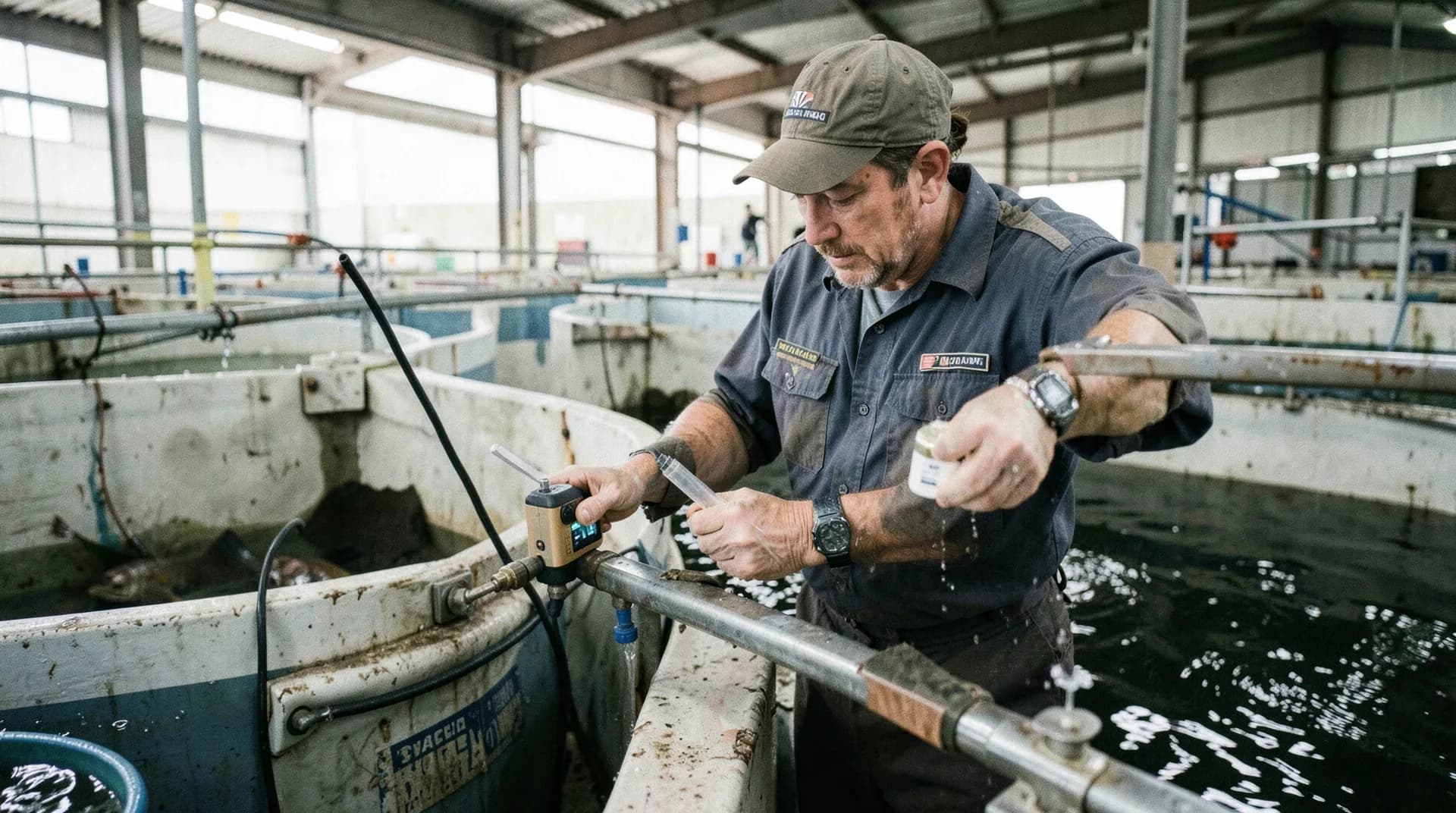
Aquaculture scientists work in commercial sea-cage and land-based production — Atlantic salmon in Tasmania (Tassal, Huon Aquaculture, Petuna), prawns in northern Queensland and the NT, kingfish and barramundi in SA, oysters across multiple states. Day-to-day work covers stock health, water quality, feed formulation, breeding and genetics, and biosecurity. Fisheries scientists work the wild-catch and stock-assessment side — quotas, fishing effort, stock biomass modelling, environmental impact. Employers include CSIRO (Hobart), the Australian Antarctic Division (Kingston, TAS), state primary industries departments, and the Fisheries Research and Development Corporation (FRDC).
The Australian aquaculture industry is in a structural growth phase. Production of farmed Atlantic salmon alone exceeds AUD $1.2 billion annually, with continued investment in selective breeding and recirculating aquaculture systems. Wild-catch fisheries are stable to declining in volume but value remains strong in southern rock lobster, abalone and tuna. Both sub-sectors compete for the same scientific talent.
ANZSCO Code 234116
The official ANZSCO description for 234116 covers scientists who study commercial marine and aquatic plants and animals to enhance the productivity of aquatic wild harvest and aquaculture. Typical tasks include designing and running experiments on growth, health and reproduction; advising on environmental impact and stocking density; conducting stock assessments; and contributing to fishery management plans.
Adjacent codes that sometimes apply:
- 234112 Agricultural Scientist — for cross-disciplinary roles bridging terrestrial and aquatic biology
- 234518 Marine Biologist — research-focused work without a direct commercial production focus (Marine Biologist is a different VETASSESS-assessed occupation)
- 234114 Agricultural Research Scientist — university or CSIRO research-focused appointments in aquaculture nutrition or genetics may sometimes align with this code, depending on duty framing. See the agricultural research scientist pathway.
The 234116 code is the strongest fit when employment is in or directly serving the commercial aquaculture or wild-catch fisheries industry.
Skills Assessment
VETASSESS Assessment
VETASSESS classifies Aquaculture or Fisheries Scientist as a Group A occupation: the qualification field must be highly relevant.
Requirements:
- Qualification assessed as comparable to an Australian Qualifications Framework (AQF) Bachelor degree or higher
- Field of study highly relevant — aquaculture, fisheries science, marine biology, aquatic science, zoology with relevant specialisation
- At least one year of highly relevant post-qualification employment at an appropriate skill level in the last five years
- Employment must show commercial application or stock-management focus, not purely academic marine biology
Assessment Cost: AUD $1,096 offshore (excl. GST) / AUD $1,205.60 onshore (incl. GST), effective from 22 October 2025 Priority Processing Fee: AUD $825 offshore / AUD $907.50 onshore (additional) Processing Time: 7 weeks standard; 10 business days under Priority Processing
Common rejection reasons: General marine biology degrees without aquaculture or fisheries content can fail the relevance test. Employment as an aquarium curator, dive guide or recreational fisheries officer often does not satisfy the skill-level requirement. The strongest applications combine an aquaculture or fisheries-specific degree with employment at a recognised producer, research agency, or fishery management authority.
Confirm fees against the VETASSESS professional occupations fee table before lodging. The skills assessment bodies list sets out comparable bodies for related science occupations.
Visa Pathways
Aquaculture or Fisheries Scientist is on the CSOL but not the MLTSSL or STSOL, so 189, 190 and 491 are closed. The pathway is employer sponsorship.
Subclass 482 — Skills in Demand (Core Skills Stream)
The dominant route. Major Tasmanian salmon producers, SA tuna and oyster operations, and the federal research agencies are the main sponsors.
- Visa fee: AUD $4,015 (primary applicant)
- Salary threshold: Core Skills Income Threshold AUD $79,423 for nominations lodged from 1 July 2026 (previously AUD $76,515)
- Processing time: Median 4-7 months for Core Skills
- Duration: Up to 4 years, with pathway to 186 PR after 2 years on the same employer
- Occupation quirk: Specialist Skills stream (AUD $146,576 threshold from 1 July 2026, previously AUD $141,210) applies to senior research scientist appointments at CSIRO and the Australian Antarctic Division, where base salaries clear the higher band.
Subclass 186 — Employer Nomination Scheme
Permanent residency through employer sponsorship.
- Visa fee: AUD $6,140 (primary applicant)
- Streams: Direct Entry or Temporary Residence Transition (TRT, after 2+ years on a 482)
- Processing time: 90% of Direct Entry applications finalised within 15-19 months in early 2026; TRT around 13 months median
- Occupation quirk: The Tasmanian salmon industry has a well-established pipeline of overseas-trained aquaculture scientists transitioning from 482 to 186 TRT after the standard two years.
See the subclass 482 hub for the broader employer-sponsored framework.
State Nomination
Aquaculture or Fisheries Scientist is not on the STSOL, which removes direct 190 and 491 access through standard skilled migration. State demand is real but channels via:
- Tasmania DAMA — the Tasmanian Designated Area Migration Agreement lists aquaculture occupations on its endorsed list, with concessions on age, English and salary for regional employers
- Northern Territory DAMA — covers aquaculture for prawn and barramundi operations
- Direct employer sponsorship — Tassal, Huon Aquaculture, Petuna, Clean Seas Seafood, Tassal Group, Australis Aquaculture and CSIRO sponsor directly under standard 482 arrangements
Verify against current state and DAMA lists. See the 2026 SOL hub and the CSOL hub.
Salary and Employment Outlook
What Aquaculture or Fisheries Scientists Earn in Australia
| Role | Typical Salary Range (2026) |
|---|---|
| Graduate / Junior Aquaculture Scientist | AUD $75,000-$90,000 |
| Aquaculture Scientist (2-5 years) | AUD $90,000-$115,000 |
| Senior Aquaculture Scientist | AUD $115,000-$145,000 |
| Fisheries Research Scientist (APS 6 / EL1) | AUD $92,000-$130,000 |
| Principal / Lead Scientist | AUD $145,000-$180,000+ |
| Research Director / Group Leader | AUD $180,000-$240,000+ |
Sources: SEEK job ad data (2026), Australian Public Service classification rates for APS 5-EL2 positions (Australian Antarctic Division, CSIRO Marine and Atmospheric, ABARES), and published company role bands at Tassal and Huon. Superannuation at 15-17% applies to APS and research agency roles, above the 11.5% statutory minimum.
Highest-paying employers
- CSIRO Oceans and Atmosphere (Hobart) — flagship national research agency for marine science
- Australian Antarctic Division (Kingston, TAS) — Antarctic and Southern Ocean fisheries research
- Tassal, Huon Aquaculture, Petuna — the three major Tasmanian salmon producers
- Clean Seas Seafood, Stehr Group — South Australian kingfish and bluefin tuna
- Australian Bureau of Agricultural and Resource Economics and Sciences (ABARES) — fisheries economics and stock assessment
- State fisheries departments — DPIPWE Tasmania, PIRSA SA, DPI NSW, DAF Queensland, DPIRD WA
Tips for a Successful Application
1. Distinguish commercial from academic experience
VETASSESS prefers employment evidence linked to commercial aquaculture or active fisheries management, not pure academic research with no industry application. A PhD on coral reef ecology rarely supports a 234116 assessment; a PhD on salmon nutrition or stock assessment of southern bluefin tuna will.
2. Lead with species-specific evidence
Reference letters that name specific species, production volumes, husbandry techniques or assessment methods carry more weight than generic descriptions. Mention Atlantic salmon, southern bluefin tuna, prawns, oysters, or wild fisheries species worked on, with the relevant production scale.
3. Target a focused list of sponsoring employers
The Australian sponsor pool for 234116 is narrow but well-defined. Build a target list of 12-20 organisations covering Tasmanian salmon, SA tuna and kingfish, NT and QLD prawn farming, CSIRO Hobart, the Australian Antarctic Division, ABARES and state fisheries departments. Cold-applications via LinkedIn and direct email work better than mass job-board applications.
4. Use Priority Processing if a job offer is pending
If a sponsor is waiting to lodge the nomination, the AUD $825-$907 Priority Processing fee brings the assessment to 10 business days and often pays for itself in deferred relocation costs.
5. Check sponsoring employer accreditation status
Many of the larger sponsors hold "Accredited Sponsor" status with Home Affairs, which fast-tracks nomination processing. Tassal, Huon, CSIRO and the Australian Antarctic Division are typically in this category. Confirm before committing.
Step-by-Step Migration Roadmap
- Confirm ANZSCO 234116 fits your duties — review against 234112, 234518 Marine Biologist and 234114 via the ANZSCO code finder
- Confirm CSOL status — aquaculture or fisheries scientist is on the Core Skills Occupation List
- Compile qualifications — full transcripts, thesis if relevant, professional memberships (e.g. World Aquaculture Society, Australian Society for Fish Biology)
- Prepare employment evidence — statements detailing species, production scale, technical duties, dates, hours, salary
- Sit an English test — IELTS, PTE or OET; aim for at least Competent for 482 eligibility
- Lodge VETASSESS assessment — Standard or Priority
- Build a focused list of sponsoring employers — Tasmanian salmon, SA tuna and kingfish, CSIRO Hobart, Australian Antarctic Division
- Employer lodges nomination — Core Skills or Specialist Skills stream depending on salary
- Lodge 482 visa application — within 60 days of nomination
- Complete health and character checks
- Receive 482 grant and relocate — Tasmania, SA, NT or other regional location
- Apply for 186 TRT after 2 years — same employer, same occupation
Frequently Asked Questions
Why is Aquaculture or Fisheries Scientist only on the CSOL, not the MLTSSL?
The MLTSSL is reserved for occupations with broad-based long-term shortages where points-tested independent migration scales well. Aquaculture and fisheries science is in shortage but the demand is geographically concentrated and clusters around a small number of well-known sponsors. The CSOL captures this by enabling 482 and 186 sponsorship without opening the points-tested visas.
Can a marine biology degree map to 234116?
Sometimes. The decisive factor is the field of study and the employment that follows. A marine biology degree with fisheries science or aquaculture coursework, plus employment in commercial aquaculture or fisheries management, will typically pass VETASSESS for 234116. A general marine biology degree followed by academic coral or whale research will not.
How does Tasmania's salmon industry recruit international scientists?
Tassal, Huon Aquaculture and Petuna run formal graduate and experienced-hire programs that include relocation and 482 sponsorship. Recruitment goes through the company HR teams directly and through specialist agencies such as Rimfire Resources and Agricultural Appointments. Hobart is the operational base; field locations include Macquarie Harbour, the D'Entrecasteaux Channel and Storm Bay.
What's the demand outlook for 234116 in 2026?
Strong. Aquaculture production continues to expand, particularly in salmonids and prawns. Climate-driven shifts in wild fisheries are creating demand for stock-assessment scientists. CSIRO and the Australian Antarctic Division continue to recruit through their standard hiring cycles. Jobs and Skills Australia flags shortages in this group.
Can I do a PhD in Australia and transition to a sponsored role?
Yes — this is one of the most common pathways for international aquaculture scientists. PhD programs at the University of Tasmania (IMAS), University of Adelaide, James Cook University, and the Australian Maritime College feed directly into industry and CSIRO. The 485 post-study work visa provides a transitional period, after which 482 sponsorship typically follows.