Mechanical Engineer Visa Pathway to Australia: Complete 2026 Guide
Updated: 16 August 2026
Australia classifies mechanical engineers under ANZSCO 233512. Engineers Australia conducts the skills assessment through the Migration Skills Assessment (MSA) programme. The occupation sits on both the MLTSSL and the Core Skills Occupation List, unlocking subclasses 189, 190, 491, 482 and 186. SEEK 2026 salary data shows typical earnings between AUD $90,000 and $140,000, with strong demand across mining, defence and renewable energy projects.
Quick Facts: Mechanical Engineer Migration Pathway
| Detail | Information |
|---|---|
| ANZSCO Code | 233512 (Mechanical Engineer) |
| Skill Level | 1 (Bachelor degree in engineering or higher) |
| Skills Assessment | Engineers Australia (Migration Skills Assessment) |
| Occupation List | MLTSSL and CSOL |
| Visa Options | 189, 190, 491, 482, 186 |
| Demand Level | High — driven by mining, defence shipbuilding, renewables and infrastructure |
| Salary Range | AUD $90,000-$140,000 (SEEK Salary Hub, May 2026) |
| Typical 189 Score | 80-90 points in 2026 invitation rounds |
| Key Challenge | Demonstrating recent post-graduate experience aligned to the ANZSCO task list during the MSA |
Role context: what mechanical engineers do in Australia
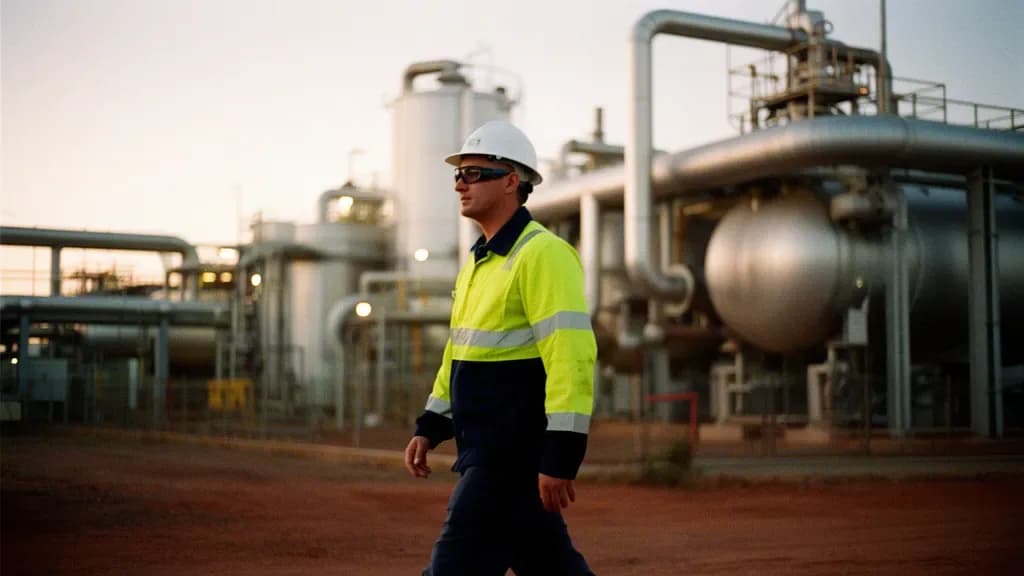
Mechanical engineers in Australia design, build and maintain the physical systems behind almost every industrial sector. The work spans HVAC design for commercial buildings, fluid systems for water utilities, rotating equipment for mining operations, propulsion systems for defence shipbuilding, and increasingly the mechanical balance of plant for wind, solar and hydrogen projects. Employers range from large EPC contractors such as Worley, GHD and Aurecon, through to original equipment manufacturers servicing the resources sector in Western Australia and Queensland.
Demand concentrates in three corridors. Perth and the Pilbara absorb a steady flow of mechanical engineers into iron ore, LNG and lithium operations. Adelaide has become a national hub for naval shipbuilding under the AUKUS programme, with BAE Systems Australia, ASC and the Future Submarine programme creating long-term demand for mechanical specialists with manufacturing or marine experience. Sydney, Melbourne and Brisbane offer broader exposure to consulting, building services, manufacturing automation and renewable energy. Jobs and Skills Australia lists engineering occupations as a sustained shortage area, and the Department of Home Affairs has retained mechanical engineer across both the MLTSSL and the CSOL in 2026.
ANZSCO 233512 mapping
The official ANZSCO description for 233512 covers mechanical engineers who plan, design, organise and oversee the construction, operation and maintenance of mechanical and process plant and installations. Typical tasks listed by the Australian Bureau of Statistics include preparing designs and specifications for machinery and systems, organising the manufacture and installation of mechanical components, conducting research into the mechanical and thermal behaviour of materials, and establishing maintenance and inspection procedures.
The code captures HVAC engineers, plant engineers in continuous-process industries, building services engineers and rotating equipment specialists. If your work is concentrated in production line optimisation, time studies and process improvement, industrial engineer (233511) is the better fit. If your work centres on managing a continuous process plant (oil refinery, cement plant, power station), production or plant engineer (233513) may apply. Specialised disciplines that do not fit the named codes (mechatronics, biomedical mechanical, acoustic) typically sit under engineering professionals nec (233999).
Skills Assessment with Engineers Australia
All five MLTSSL engineering codes go through Engineers Australia's Migration Skills Assessment. The body offers three primary academic pathways, plus optional add-on services.
Accord pathways (faster, document-based)
If you graduated from a programme accredited under the Washington Accord (4-year Bachelor in engineering), Sydney Accord (3-year Bachelor in engineering technology) or Dublin Accord (2-year Associate Degree), Engineers Australia recognises the qualification without requiring a Competency Demonstration Report.
- International Accord assessment: AUD $539
- Australian accredited qualification assessment: AUD $335.50
- Processing time: typically 8-12 weeks after a complete submission
Competency Demonstration Report (CDR) pathway
If your qualification is from a non-accord country (most Indian, Chinese, Iranian, Egyptian and Pakistani institutions, although check the current Engineers Australia accreditation list), you submit a CDR consisting of three career episodes, a continuing professional development log and a summary statement.
- CDR assessment: AUD $1,001
- Processing time: 10-16 weeks for a complete CDR
- Common rejection reasons: plagiarism flagged by Engineers Australia's text-matching software, career episodes that describe team activity rather than the applicant's personal engineering input, and a summary statement that does not map competencies back to specific paragraphs in the episodes.
Optional add-ons
- Relevant skilled employment assessment: add AUD $462 to confirm how many years of post-qualification experience count toward your points
- Overseas PhD assessment: add AUD $291.50
- Fast-track allocation: AUD $385 non-refundable, guarantees assignment to an assessor within 20 business days (does not guarantee outcome timing)
Fees confirmed against the Engineers Australia assessment fees page as at 13 May 2026. Engineers Australia has flagged a 3-4% fee increase from 1 July 2026.
For a wider view of assessing authorities by occupation, see the skills assessment bodies complete list.
Visa Pathways for Mechanical Engineers
Subclass 189 — Skilled Independent
Permanent residency by invitation. Mechanical engineer remains a 189-eligible occupation, but invitation rounds in 2025-26 have skewed toward healthcare and trades. Engineering codes are still invited each round, with cut-offs settling between 80 and 90 points.
- Visa application charge: AUD $6,135 (primary applicant)
- Realistic 2026 cut-off: 85+ points
- Processing: 6-12 months from invitation
- Worth noting: the 189 programme is now released on a quarterly schedule, so points strategy needs to be locked in before each round rather than monitored monthly
Subclass 190 — Skilled Nominated
State or territory nomination adds 5 points and grants permanent residency in exchange for a commitment to live and work in the nominating state for at least two years.
- Visa application charge: AUD $6,140
- Realistic threshold: 75-85 points including the nomination boost
- Best states for 2026: Queensland (large allocation, offshore-friendly), South Australia (all skilled occupations broadly eligible), Western Australia (priority for resources-aligned engineering)
Subclass 491 — Skilled Work Regional
A five-year provisional visa with a pathway to the 191 permanent visa after three years of living and working in a designated regional area.
- Visa application charge: AUD $6,140
- Points boost: +15 from regional nomination
- Where it works: Pilbara, Hunter Valley, Gladstone, Whyalla, and most non-metropolitan engineering jobs qualify as "regional" under Home Affairs postcodes
Subclass 482 — Skills in Demand visa
Employer-sponsored temporary visa. Mechanical engineer is on the Core Skills stream of the CSOL.
- Visa application charge: AUD $4,015 (Core Skills stream)
- Core Skills Income Threshold (from 1 July 2026): AUD $79,423 base salary, excluding superannuation
- Specialist Skills Income Threshold: AUD $146,576 (senior mechanical engineers on FIFO mining or AUKUS-aligned defence contracts often qualify)
- Processing: Specialist Skills stream is being decided in as little as 7 days; Core Skills stream takes up to 8 months at the 90th percentile (Home Affairs, April 2026)
- Duration: up to 4 years, with a transition to subclass 186
Subclass 186 — Employer Nomination Scheme
Direct permanent residency through an employer nomination. Mechanical engineer is on the CSOL, so the Direct Entry stream is available.
- Visa application charge: AUD $6,140
- Streams: Direct Entry (skills assessment + 3 years post-qualification experience required) or Temporary Residence Transition (after 2 years on a 482)
- Use case: mining majors, AUKUS contractors and large consultancies routinely use 186 to convert 482 hires to PR
For deeper detail on each subclass, the site maintains a dedicated skilled independent visa subclass 189 guide. Compare list eligibility through the MLTSSL vs STSOL vs ROL vs CSOL guide.
Points Test Strategy
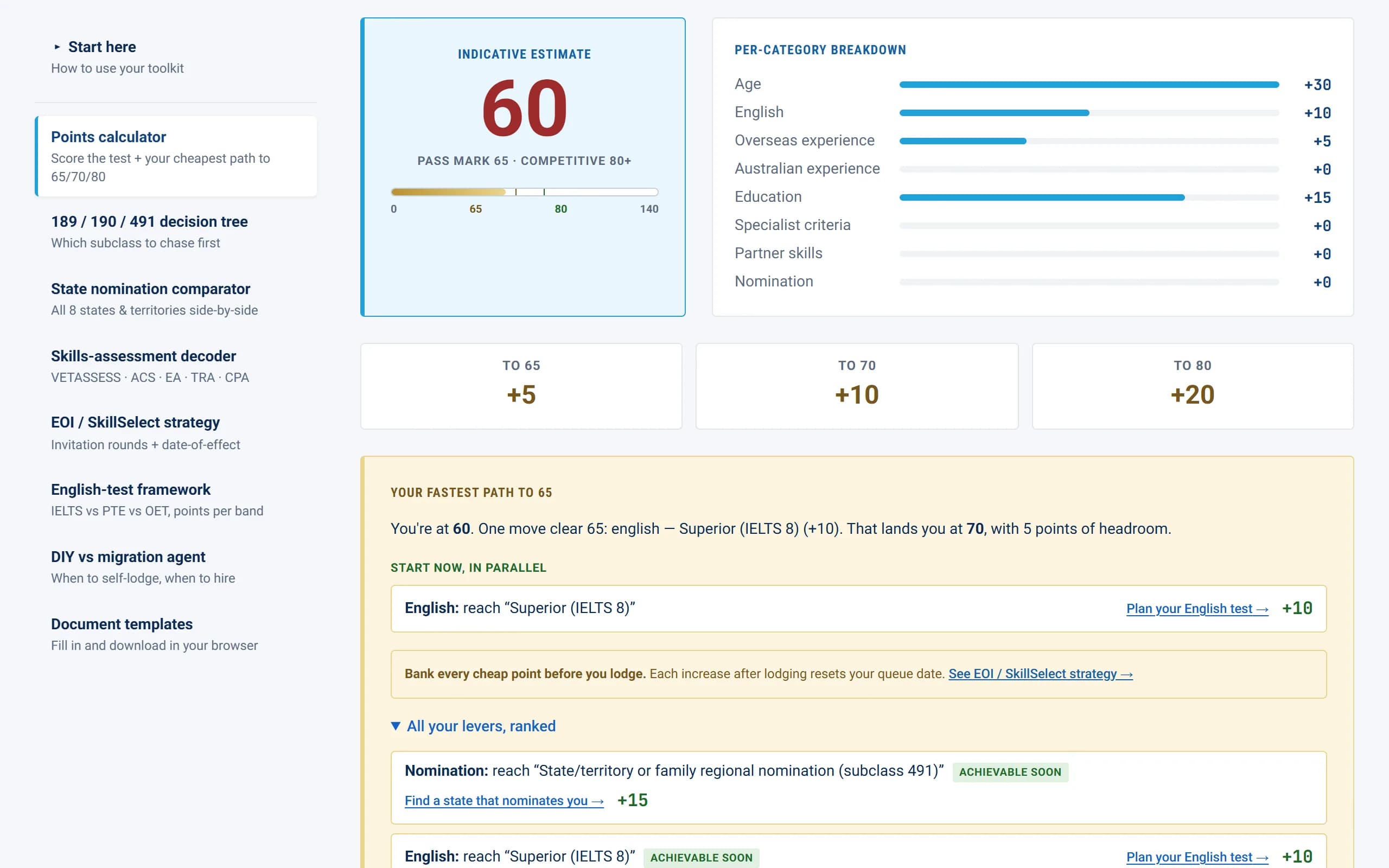
The points test for 189/190/491 awards a maximum of 130 points. Mechanical engineers usually score on a familiar profile.
| Points Factor | Points | Realistic for Mechanical Engineers |
|---|---|---|
| Age 25-32 | 30 | Most candidates |
| Age 33-39 | 25 | Senior plant engineers |
| Bachelor degree | 15 | Minimum for skills assessment |
| Master degree | 15 | Common in defence and energy |
| PhD | 20 | R&D, university and CSIRO roles |
| English Proficient (IELTS 7.0) | 10 | Achievable target |
| English Superior (IELTS 8.0) | 20 | Decisive for 189 candidates |
| Overseas experience 5-8 years | 10 | After Engineers Australia confirms relevant years |
| Australian experience 1-2 years | 5 | If already on a 482 or graduate visa |
| Australian Master/PhD (2 years CRICOS) | 5 | Australian Study Requirement |
| Regional study | 5 | Adelaide, Hobart, Newcastle, Wollongong |
| State nomination (190) | 5 | If invited |
| Regional nomination (491) | 15 | If invited |
| Partner skills | 10 | Partner under 45, competent English, positive skills assessment |
Realistic scenario 1 — offshore Indian Washington Accord graduate
A 29-year-old Bachelor of Mechanical Engineering from a Washington Accord NBA-accredited Indian programme, 6 years experience at a Tier 1 OEM, IELTS 7.5 across the board.
- Age 30 + Bachelor 15 + Proficient English 10 + Experience 10 = 65 points
- Add 190 nomination from Queensland: 70 points (likely below current invitation thresholds)
- To clear, the candidate should either retake English for Superior (+10), pursue regional 491 (+15) or secure a 482 employer offer in resources
Realistic scenario 2 — onshore PhD with renewable energy specialisation
A 34-year-old PhD in mechanical engineering from an Australian Group of Eight university, 4 years post-PhD as a renewable energy consultant in Sydney, IELTS 8.0.
- Age 25 + PhD 20 + Superior English 20 + Australian experience (3-4 years) 10 + Australian Study Requirement 5 = 80 points
- Highly competitive for 189 in current rounds; 190 from NSW or Victoria reaches 85
State Nomination for Mechanical Engineers
Queensland
Queensland's 2025-26 program allocates 2,600 places across 190 and 491. Mechanical engineer (233512) sits on Queensland's offshore Skilled Occupation List, and the state actively recruits offshore engineering applicants for the Gladstone, Mackay and Townsville regions. Job offers from a Queensland-registered business strengthen the application; the 491 pathway is the easier of the two streams to secure from offshore. See the Queensland state nomination 2026 guide.
South Australia
South Australia made all skilled occupations eligible for its 2025-26 programme, with each occupation flagged as either onshore or offshore. The Future Submarine programme, the Osborne shipyard expansion and the state's renewable energy build-out have created a steady pipeline of mechanical engineering roles. South Australia is the most accessible state for offshore mechanical engineering candidates with a job offer or graduate qualification from an SA university. See South Australia state nomination 2026.
New South Wales
NSW prioritises occupations linked to housing, renewables and advanced manufacturing. Mechanical engineering roles in renewable energy, building services and defence (Williamtown, Lucas Heights, naval engineering) regularly receive invitations. NSW's 190 invitations have typically gone to 85+ point candidates in 2025-26. Full criteria at the NSW state nomination 2026 guide.
Western Australia
WA's skilled migration program leans heavily into resources and energy. Mechanical engineers with FIFO experience, fixed plant maintenance backgrounds or LNG/hydrogen experience are typical invitees. WA waives the local job-offer requirement for offshore applicants in priority engineering categories. See Western Australia state nomination 2026.
Victoria
Victoria does not publish a separate state occupation list, accepting all national SOL occupations subject to ROI evaluation through the Live in Melbourne portal. Recent invitation patterns show ICT, civil and engineering professional codes invited under the 491 stream; mechanical engineers with renewable energy or transport infrastructure experience are best placed.
Salary and Employment Outlook
Typical 2026 salary ranges (SEEK Salary Hub, May 2026)
| Role | Salary range (base, AUD) |
|---|---|
| Graduate mechanical engineer | $75,000-$90,000 |
| Mechanical engineer (3-5 years) | $90,000-$120,000 |
| Senior mechanical engineer | $120,000-$155,000 |
| Mechanical design engineer | $100,000-$135,000 |
| Plant/maintenance engineer (resources) | $130,000-$180,000 |
| Mechanical engineering manager | $160,000-$220,000 |
| FIFO mechanical engineer (Pilbara) | $150,000-$210,000 (package) |
Superannuation adds 11.5% on top in 2026. Resources sector packages typically include FIFO travel, accommodation, site allowance and a 30-50% loading over capital city pay. Defence contractors pay above-median base salaries; Naval Group, BAE Systems Australia and ASC offer security-cleared mechanical engineers premiums of 15-25%.
Highest-paying sectors
- Mining and resources — BHP, Rio Tinto, Fortescue, Woodside, lithium operators in WA
- Defence and shipbuilding — BAE Systems Australia (Hunter Class), ASC, Naval Group, Saab
- Renewable energy — wind farm developers (Goldwind, Vestas, Squadron Energy), pumped hydro (Snowy 2.0), hydrogen project EPCs
- Major consultancies — Worley, GHD, Aurecon, Jacobs, Mott MacDonald
- Manufacturing — automotive aftermarket, food and beverage processing, medical devices
Tips for a Successful Application
-
Pick the right ANZSCO code before paying Engineers Australia. If 70% of your last five years has been process optimisation, time studies and continuous improvement, file under 233511 (industrial). If it has been HVAC, rotating equipment or building services, 233512 is correct. A poorly matched application costs you the $539-$1,001 fee plus three months.
-
Write career episodes that show personal engineering input, not project history. Engineers Australia rejects CDRs that read like project case studies. Each career episode must use "I" sentences ("I calculated", "I designed", "I specified") tied to specific Stage 1 competencies referenced in the summary statement.
-
Front-load the relevant skilled employment assessment. Pay the extra AUD $462 to have Engineers Australia confirm exactly how many years of post-qualification experience count. This number drives your points claim; getting it wrong in the EOI triggers a refusal at invitation stage.
-
Sit IELTS or PTE before your skills assessment. The English result is independent of the MSA outcome and takes weeks to schedule. Stacking these in parallel saves two to three months.
-
For offshore candidates, target Queensland or South Australia first. Both are accepting mechanical engineer (233512) for offshore 190/491, allocations are large, and the state-specific points threshold is lower than NSW or Victoria. Once invited, you have 60 days to lodge the visa.
Step-by-Step Migration Roadmap
- Confirm your ANZSCO code matches the work you have actually done by reading the ANZSCO code finder guide.
- Check current list status against the Skilled Occupation List 2026 and the Core Skills Occupation List.
- Sit IELTS Academic or PTE Academic. Target Superior (8.0/79) for maximum points.
- Determine whether your degree falls under an Engineers Australia Accord pathway or requires a CDR.
- Lodge the Migration Skills Assessment with Engineers Australia, including the relevant skilled employment assessment.
- Receive the MSA outcome (8-16 weeks depending on pathway).
- Submit an Expression of Interest in SkillSelect, ranking 189, 190 and 491 by priority.
- Apply for state or territory nomination through the relevant state portal.
- Receive your invitation to apply (60 days to lodge the visa).
- Lodge the visa through ImmiAccount with health checks, AFP/overseas police checks and biometric data.
- Receive the visa grant.
- Activate the visa by entering Australia within the timeframe specified on the grant letter.
Frequently Asked Questions
Is mechanical engineer on both the MLTSSL and CSOL in 2026?
Yes. ANZSCO 233512 sits on the Medium and Long-Term Strategic Skills List (which feeds the 189, 190 and 491 visas) and on the Core Skills Occupation List (which feeds the 482 Skills in Demand and 186 Employer Nomination Scheme). This dual listing is one of the strongest list positions an occupation can hold in 2026.
Do I need an Engineers Australia chartered status (CPEng) to migrate?
No. The Migration Skills Assessment is a separate process from chartered membership. CPEng is helpful for senior consulting roles and is required for some Principal Engineer positions in Australia, but it is not a migration prerequisite. Most candidates pursue CPEng after arrival.
My degree is from India and accredited by the NBA. Is that a Washington Accord pathway?
It depends on the year. India became a full Washington Accord signatory in 2014, and NBA accreditation is recognised from the year accreditation was first granted to your specific programme. Engineers Australia maintains a list of recognised Indian programmes by year. If your programme was accredited at the time of your graduation, you qualify for the international accord pathway. Otherwise, you submit a CDR.
Will the AUKUS programme keep demand high for mechanical engineers?
Through 2040 at minimum. The AUKUS submarine programme, the Hunter Class frigate build at Osborne, and the wider naval shipbuilding plan have created a multi-decade pipeline. Defence Industry workforce planning released in 2025 forecast a need for 20,000+ additional shipbuilding workers by 2030, with mechanical engineers among the most acute shortages.
How does the ACS deduction work for mechanical engineers? Does Engineers Australia deduct years the same way?
Engineers Australia does not apply a flat 2/4/6-year deduction the way ACS does for ICT codes. Instead, the relevant skilled employment assessment determines how many years of your post-qualification experience are "relevant" to the nominated occupation. Years not deemed relevant simply do not count toward points; there is no automatic deduction from total years. This typically gives mechanical engineers a higher effective experience count than ICT applicants.
Can I migrate as a mechanical engineer if I work mostly in HVAC building services?
Yes. HVAC engineering falls squarely within the ANZSCO 233512 task list. Building services experience is also recognised by Engineers Australia, particularly if your degree is in mechanical engineering rather than building services engineering. If your degree is specifically in building services engineering, Engineers Australia may assess you against the engineering technologist competency standard (Sydney Accord) rather than the full professional engineer standard.