Electrical Engineer Visa Pathway to Australia: Complete 2026 Guide
Updated: 16 August 2026
Australia classifies Electrical Engineer under ANZSCO 233311. Engineers Australia conducts the skills assessment via the Migration Skills Assessment program. The occupation sits on both the MLTSSL and the Core Skills Occupation List, unlocking subclasses 189, 190, 491, 482, and 186. Typical 2026 SEEK salaries range AUD $105,000-$125,000 across the national market, with Mining, Resources & Energy averaging AUD $151,812 and remote SA regions reaching AUD $220,000. The Integrated System Plan has anchored a decade-long transmission and renewables demand cycle.
Quick Facts: Electrical Engineer Migration Pathway
| Detail | Information |
|---|---|
| ANZSCO Code | 233311 (Electrical Engineer) |
| Skill Level | 1 (Bachelor degree in electrical engineering) |
| Skills Assessment | Engineers Australia (Migration Skills Assessment) |
| Occupation List | MLTSSL and CSOL |
| Visa Options | 189, 190, 491, 482, 186 |
| Demand Level | Critical — sits on the Jobs and Skills Australia Occupation Shortage List with sustained vacancy growth driven by the energy transition |
| Salary Range | AUD $105,000-$152,000 (SEEK, 2026); Mining, Resources & Energy sector average AUD $151,812 |
| Typical 189 Score | 80-90 points |
| Key Challenge | Some state-restricted work (high-voltage, building services in Victoria) requires registration as a Registered Electrical Engineer separate to the skills assessment |
What Electrical Engineers Do in Australia
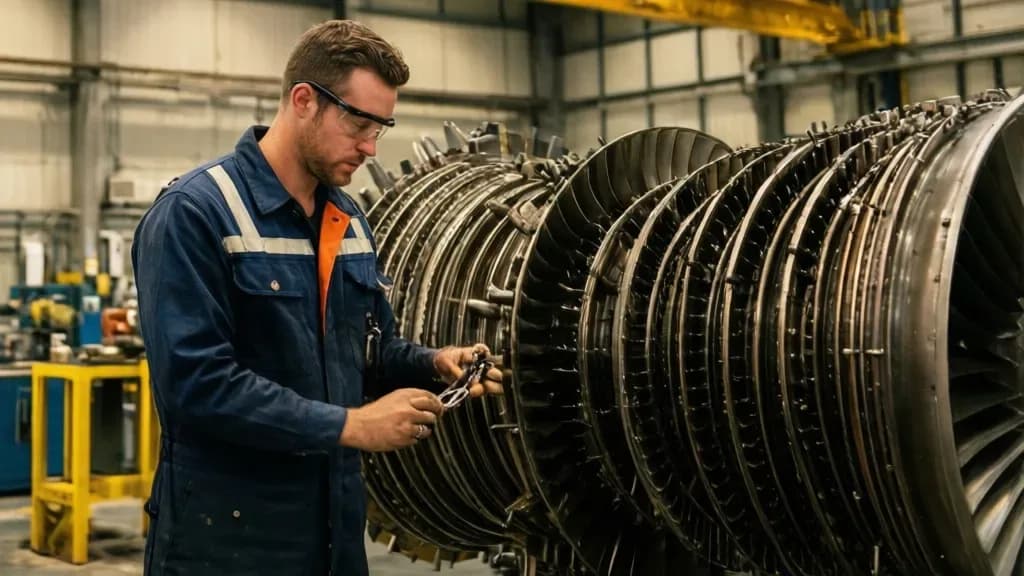
Australian electrical engineers design, commission, and maintain the electrical systems behind the national grid, building services, industrial automation, transport infrastructure, and the renewables build-out. Work splits across power systems engineering (transmission, distribution, substations), building services (commercial and institutional MEP), industrial control and automation, renewables (solar farms, wind, battery storage), mining electrical, defence and rail electrification, and the rapidly growing grid-connection engineering niche.
Major employers include the network service providers (Ausgrid, Essential Energy, Endeavour Energy in NSW; AusNet and Powercor in Victoria; Energex and Ergon in Queensland; Western Power in WA; SA Power Networks; TasNetworks; Power and Water in NT), the consultancies (Aurecon, AECOM, WSP, Arup, GHD, Jacobs, Mott MacDonald, Stantec), tier-one contractors (Lendlease, John Holland, Acciona, CIMIC), and the mining and resources groups (BHP, Rio Tinto, Fortescue, Woodside, Santos, Glencore). The Australian Energy Market Operator (AEMO), Transgrid, Powerlink, and AusNet's transmission arm all run sizable engineering teams.
Demand is anchored to the Integrated System Plan — the AEMO blueprint that commits Australia to a transmission and renewables build-out running through 2050. The 2024-2050 plan includes more than 10,000 km of new transmission, large-scale solar and wind farms in renewable energy zones across every state, pumped hydro at Snowy 2.0 and Pioneer-Burdekin, distributed battery storage, and the grid-connection engineering work to wire it all together. The defence pipeline (AUKUS, Hunter-class frigate program, F-35 sustainment) adds a parallel demand stream.
ANZSCO Code Mapping
Electrical Engineer is ANZSCO 233311, within the unit group 2333 Electrical Engineering Professionals. The code covers engineers who design, develop, and supervise the manufacture, installation, operation, and maintenance of electrical systems, components, and equipment.
Adjacent codes worth knowing: 263311 Telecommunications Engineer and 233312 Electronics Engineer cover communications and electronics work respectively. If your work is primarily power systems, building services, industrial control, or renewables, 233311 is the right code. If your work is primarily semiconductor design, embedded systems, or signal processing, 233312 may fit better. Both sit on the MLTSSL with identical visa access — this is an evidentiary fit question.
There is no separate code for power systems engineer, building services electrical engineer, renewables engineer, grid-connection engineer, or industrial control engineer — all map to 233311 if duties align with the ANZSCO statement.
Skills Assessment with Engineers Australia
Engineers Australia is the Department of Home Affairs-nominated assessing authority for 233311. EA runs three pathways depending on qualification origin.
The Three EA Pathways
- Washington Accord pathway — for graduates of programs accredited under the Washington Accord (UK, Ireland, USA, Canada, Hong Kong, Singapore, India NBA-accredited from 2014 onward, and others). Fastest route; no CDR required.
- Sydney/Dublin Accord pathway — for engineering technologist and associate engineer programs from accredited countries.
- Competency Demonstration Report (CDR) pathway — for graduates of programs not covered by the Accords. Requires three career episodes, a summary statement, and a continuing professional development record.
Requirements
- A four-year bachelor degree (or higher) in engineering with a major in electrical engineering
- Curriculum vitae covering the full professional career
- For CDR applicants: three career episodes (each 1,000-2,500 words), a summary statement, and a CPD log
- English language evidence at IELTS 6.0 across each band (or PTE equivalent) for the assessment
Cost and Processing Time
- Standard CDR: AUD $1,001 inc GST (AUD $910 ex GST) through 30 June 2026; increasing 3-4% from 1 July 2026
- Washington/Sydney/Dublin Accord pathway: AUD $539 inc GST (AUD $490 ex GST)
- Fast-track service: Additional AUD $385 inc GST — assigns to an assessor within 20 business days
- Processing time: Washington Accord pathway 8-12 weeks; CDR pathway 10-16 weeks after submission of a complete application
Common Rejection Reasons
The two recurring failure modes are CDR plagiarism — Engineers Australia runs every career episode through similarity-detection software and a single matched section triggers refusal and a five-year ban — and career episodes that describe team or company work without isolating the applicant's personal engineering contribution. Episodes must use first-person "I" verbs (I designed, I sized, I commissioned, I tested) backed by specific technical detail including voltage levels, equipment types, and applicable standards.
Professional Registration (Separate to Skills Assessment)
Some work requires state-based registration that operates separately to the skills assessment. Queensland requires Registered Professional Engineer of Queensland (RPEQ) for signing off engineering services. Victoria runs the Building Practitioner registration scheme for building services electrical work. These registrations are not visa requirements but are required to certify drawings or run certain types of work onshore. Plan to register within your first 12-18 months.
Visa Pathways
Subclass 482 — Skills in Demand Visa
Often the fastest pathway for electrical engineers in 2026, particularly for power systems and renewables specialists.
- Visa application charge: AUD $3,210 (Core Skills stream, primary applicant)
- Core Skills income threshold: AUD $76,515 — electrical engineer salaries clear this from graduate level
- Specialist Skills threshold: AUD $141,210 — senior power systems, grid-connection, and mining electrical roles
- Duration: Up to 4 years, with a permanent pathway via 186
- Reality: Network service providers, tier-one consultancies, and resources companies all sponsor 482 visas for electrical engineers regularly
Subclass 190 — Skilled Nominated Visa
State nomination adds 5 points. A common permanent route alongside employer sponsorship.
- Visa application charge: AUD $6,140
- Points boost: +5 from state nomination
- Obligation: Live and work in the nominating state for 2 years
- State activity: All states invite Electrical Engineer in 2026 rounds. South Australia and Western Australia have been particularly active for offshore applicants.
Subclass 491 — Skilled Work Regional Visa
Regional nomination adds 15 points. A 5-year provisional visa with a defined pathway to subclass 191 permanent residency.
- Visa application charge: AUD $6,140
- Points boost: +15 from regional nomination
- Where the work is: Renewable Energy Zones across regional NSW (Central-West, New England), regional Victoria (Murray River, Western Victoria), regional Queensland (Darling Downs, Far North Queensland), regional SA (Mid North, Yorke Peninsula), the Pilbara, and the Goldfields
Subclass 189 — Skilled Independent Visa
Points-tested permanent visa, available because 233311 is on the MLTSSL.
- Visa application charge: AUD $6,135
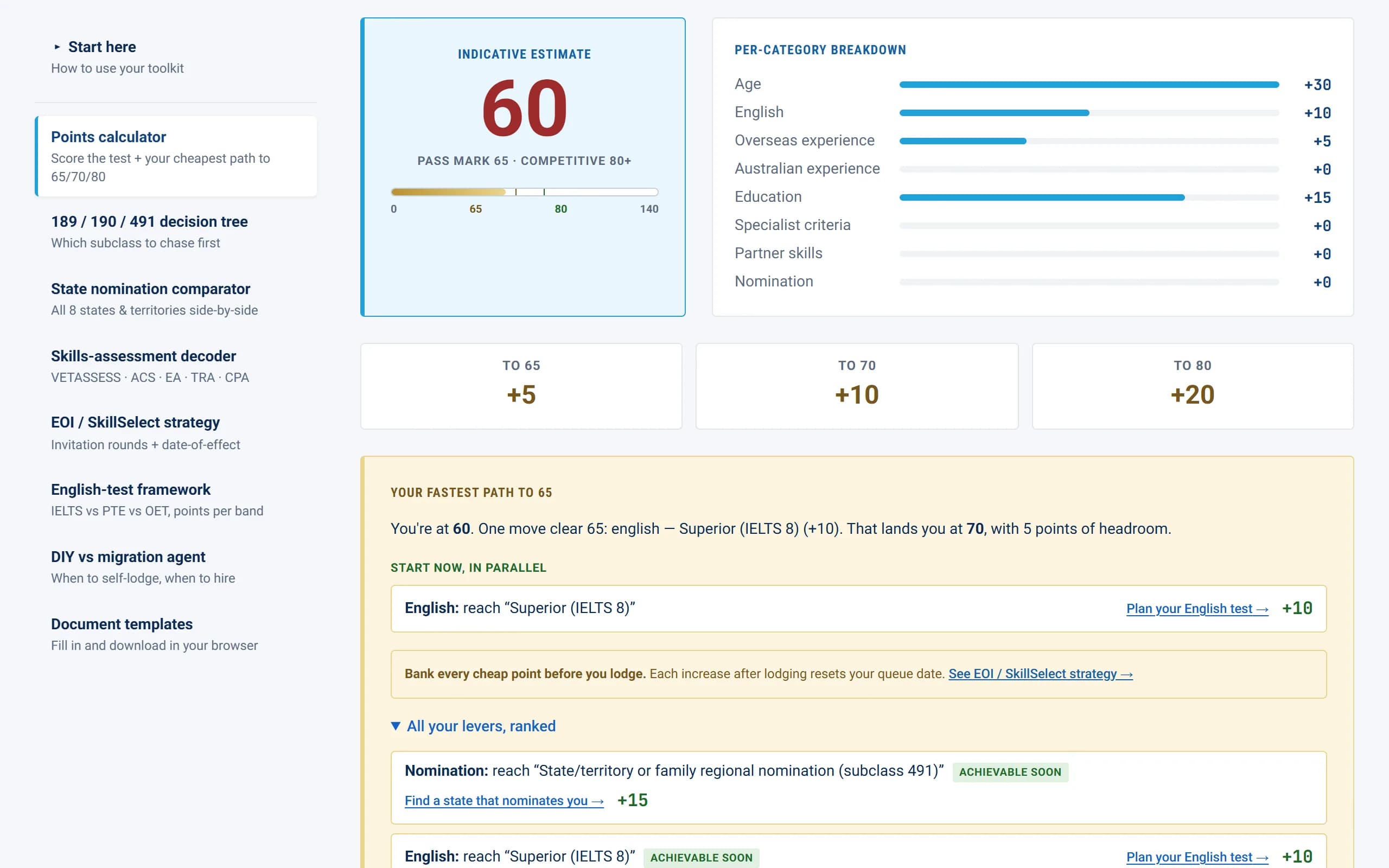
- Realistic invitation score: 85+ points in 2026; engineering occupations have historically been invited at lower scores than ICT, but 189 invitation volumes have been thin
- Processing time: 6-12 months from invitation
Subclass 186 — Employer Nomination Scheme
Permanent residency through employer sponsorship.
- Visa application charge: AUD $6,140
- Streams: Direct Entry for senior offshore hires, or Temporary Residence Transition after two years on a 482
Points Test Strategy
| Points Factor | Points | Notes |
|---|---|---|
| Age (25-32) | 30 | Maximum bracket |
| Age (33-39) | 25 | Common for mid-career engineers |
| English (Superior, 8.0+) | 20 | Biggest controllable lever |
| English (Proficient, 7.0) | 10 | Achievable for most non-native applicants |
| Bachelor degree | 15 | Skill Level 1 baseline |
| Master's degree | 15 | Same band as bachelor |
| PhD | 20 | Common among power systems researchers |
| Overseas experience 8+ years | 15 | After any EA experience deductions |
| Australian experience 3+ years | 15 | If you are already onshore |
| State nomination (190) | 5 | Adds 5 |
| Regional nomination (491) | 15 | Adds 15 |
| Partner skills (assessed) | 10 | If partner is also assessed in a relevant occupation |
Realistic Score Scenarios
Scenario 1: Indian B.Tech electrical engineer, 28 years old, 5 years power systems experience, IELTS 7.0
- Age: 30 + Proficient English: 10 + Bachelor: 15 + Overseas experience 5-7: 10 = 65 points
- Add 190: 70 points; or push English to Superior: 80 points
- Or pursue 482 employer sponsorship — power systems is a high-sponsor niche
Scenario 2: UK CEng MIET grid-connection engineer, 33 years old, IELTS 8.0
- Age (33-39): 25 + Superior English: 20 + Bachelor: 15 + Overseas experience 8+: 15 = 75 points
- Add 190: 80 points; or 482 employer sponsorship is often faster
State Nomination
New South Wales
NSW has the largest concentration of network service providers (Ausgrid, Essential Energy, Endeavour Energy), the Renewable Energy Zone program covering Central-West Orana and New England, and Transgrid's transmission portfolio. The state invites Electrical Engineer in 2026 rounds with cut-offs typically in the high 80s for 190.
Victoria
AusNet, Powercor, and CitiPower run Victoria's distribution network, with AEMO's Victorian operations and the Suburban Rail Loop electrification driving demand. Victoria has moved to an ROI-only system with selective invitations and closed to new ROIs partway through 2025-26 but continues to invite engineering occupations.
Queensland
Energex and Ergon run the Queensland network, with Powerlink operating the transmission system. The Renewable Energy Zone program in Far North Queensland, Brisbane 2032 infrastructure, and the resources electrical pipeline (Bowen Basin, Galilee Basin) anchor demand. Queensland's onshore list includes 233311 for both 190 and 491.
South Australia
South Australia has the highest renewable penetration of any Australian state and has explicitly flagged engineering as a priority sector. SA Power Networks and the Mid North REZ anchor demand. SA continues to be one of the more accessible 190 routes for electrical engineers in 2026.
Western Australia
Western Power's distribution network, the Pilbara mining electrical pipeline, the LNG corridor, and the Goldfields all drive demand. WA's 2025-26 list includes 233311 for both 190 and 491. Regional Pilbara salaries are among the highest in the country.
Tasmania
TasNetworks runs the Tasmanian network with the Battery of the Nation program driving demand. Tasmania carries a smaller program but Electrical Engineer features on its list with sustained invitation activity.
Salary and Employment Outlook
What Electrical Engineers Earn in Australia (2026)
| Role / Seniority | Typical Salary Range (SEEK, 2026) |
|---|---|
| Graduate Electrical Engineer | AUD $75,000-$90,000 |
| Electrical Engineer (2-4 yrs) | AUD $95,000-$125,000 |
| Senior Electrical Engineer | AUD $130,000-$165,000 |
| Principal Engineer | AUD $165,000-$220,000 |
| Discipline Lead / Technical Director | AUD $220,000-$280,000 |
| Mining / Resources contract | AUD $1,400-$2,200/day |
The 2026 SEEK industry breakdown puts Mining, Resources & Energy at AUD $151,812, Engineering at AUD $117,047, and Government & Defence at AUD $112,791. Total packages typically include 12% superannuation (per the 2025-26 increase), professional development allowance, and 10-15% bonuses in consultancy and tier-one operations.
Highest-Paying Sectors
- Mining, resources, and energy — Pilbara iron ore, Bowen Basin coal, lithium, LNG, transmission projects
- Network service providers — Ausgrid, Energex, Western Power, and the state distribution operators
- Grid-connection consultancies — A high-margin niche serving renewable energy developers
- Tier-one consultancy — Aurecon, WSP, AECOM, Arup, GHD, Jacobs, Mott MacDonald, Stantec
- Defence — BAE Systems, Lockheed Martin Australia, Saab, Naval Group, and the AUKUS sustainment pipeline
Geographic Variation
SEEK 2026 shows extreme regional variation: Riverland & Murray Mallee SA at AUD $220,000, Tumut Snowy & Monaro NSW at AUD $175,000, Wagga Wagga Riverina NSW at AUD $167,500, and Coober Pedy Outback SA at AUD $165,000. Sydney and Brisbane sit at AUD $115,000-$125,000 metro average. The regional premiums reflect renewables, mining, and remote-area allowances.
Tips for a Successful Application
1. Verify Your Accord Status Before Lodging
A Washington Accord-accredited degree skips the CDR and cuts assessment time. Indian NBA-accredited programs from 2014 onward, UK IEng/CEng programs, and most US ABET programs qualify. Verify at the IEA register before lodging — the saving in time and money is substantial.
2. Use Technical Specifics in Your CDR
Career episodes that name specific voltage levels (11kV, 33kV, 132kV, 220kV, 500kV), equipment types, applicable standards (AS/NZS 3000, AS/NZS 3008, IEC 60364, IEEE 1547, the National Electricity Rules), and software (ETAP, DIgSILENT PowerFactory, PSS/E, PSCAD, EcoStruxure, ePLAN) demonstrate hands-on competence in a way generic descriptions do not.
3. Avoid CDR Plagiarism Without Exception
Engineers Australia runs every career episode through similarity-detection software. Buying career episodes from a writing service is the single most common trigger for refusal and a five-year ban. Write your own from a detailed project list and CV — if you've done the work, you can describe it.
4. Bank Superior English Points Early
A Superior English score (IELTS 8.0 across all bands) adds 20 points. For electrical engineers competing in 190 rounds, this often decides the invitation outcome.
5. Target Sectors Where Sponsorship Is Routine
Network service providers, tier-one consultancies, and resources companies sponsor 482 visas for electrical engineers routinely. If you have flexibility on sector, a job offer at AusNet, Aurecon, BHP, or Western Power is often the fastest migration route, particularly for grid-connection and power-systems specialists where the Australian talent pool is thin.
Step-by-Step Migration Roadmap
- Confirm your ANZSCO code — 233311 if your work is primarily electrical; 233312 if it's electronics. Use the ANZSCO code finder
- Verify your degree's Accord status — Washington/Sydney/Dublin via the IEA register
- Prepare your assessment — CDR if outside the Accords; otherwise the Accord application
- Sit your English test — push for Superior on at least one attempt
- Lodge Engineers Australia assessment — AUD $1,001 inc GST for CDR, AUD $539 for Accord pathway
- Confirm CSOL/MLTSSL status — 233311 sits on both per the SOL 2026
- Submit EOI in SkillSelect — lodge for 189, 190, and 491 in parallel
- Apply for state nomination — South Australia, Western Australia, and Queensland are the strongest 2026 routes for offshore applicants
- Alternatively, pursue 482 employer sponsorship — common in power systems, renewables, and mining electrical
- Receive invitation and lodge visa — within 60 days
- Complete health, character, and biometrics checks
- Receive visa grant and plan onshore registration (RPEQ for Queensland, Building Practitioner for Victoria)
Frequently Asked Questions
Should I nominate 233311 Electrical Engineer or 233312 Electronics Engineer?
Use the duty test. If your work is dominated by power systems, distribution, building services, industrial control, motors and drives, renewables, or transmission, nominate 233311. If your work is dominated by semiconductor design, embedded systems, signal processing, or RF/microwave electronics, nominate 233312. Both sit on the MLTSSL with identical visa access — this is an evidentiary fit question.
Do I need RPEQ or Victorian Building Practitioner registration before applying for the visa?
No. Neither registration is a visa requirement. They are required to certify electrical engineering work onshore in Queensland (RPEQ) and to undertake some building services work in Victoria. Most consultancies sponsor staff through the registration process within the first 12-18 months onshore. Plan for the registration, but don't let it block the visa.
How does Engineers Australia handle Indian NBA-accredited degrees?
Indian programs accredited by the National Board of Accreditation under the Washington Accord (Tier 1, accredited from 2014 onward) are recognised as substantially equivalent to Australian engineering programs and skip the CDR. Programs accredited before 2014, or non-NBA programs, generally require the CDR pathway. Verify your program's specific accreditation year at the IEA register.
Can I migrate as a renewables or grid-connection specialist?
Yes, both map to ANZSCO 233311 Electrical Engineer. The Australian renewables and grid-connection talent pool is thin and sponsorship is common at tier-one consultancies (Aurecon, WSP, AECOM, GHD) and developer-side engineering teams. Grid-connection engineering, in particular, is one of the highest-demand sub-disciplines in 2026.
What are the most common reasons electrical-engineering applications fail?
Three patterns recur. First, CDR plagiarism — flagged by similarity detection and triggers a five-year ban. Second, career episodes that describe team work without isolating the applicant's personal engineering contribution. Third, degree content gaps where the qualification doesn't carry the engineering science depth Engineers Australia expects. The skills assessment guide walks through the typical failure modes.
What's the demand outlook through 2030?
Critical. The Integrated System Plan implies a decade-long transmission and renewables build-out, defence pipelines (AUKUS, Hunter-class, F-35 sustainment) add a parallel demand stream, and the mining-electrical pipeline continues to run hot. Jobs and Skills Australia has held Electrical Engineer on its Occupation Shortage List for several years with no signal of resolution. See the most in-demand occupations list for 2026.