Patents Examiner Visa Pathway to Australia: Complete 2026 Guide
Updated: 16 August 2026
Australia classifies Patents Examiner under ANZSCO 224914. VETASSESS conducts the skills assessment. The occupation sits on the Core Skills Occupation List (CSOL) and the legacy STSOL, unlocking subclasses 190, 491, 482, and 186. The single largest employer is IP Australia in Canberra, where examiners are paid at APS 6 / EL classifications — typical 2026 packages range AUD $90,000-$135,000. Patents Examiner is one of the rare occupations where the public sector dominates the labour market.
Quick Facts: Patents Examiner Migration Pathway
| Detail | Information |
|---|---|
| ANZSCO Code | 224914 (Patents Examiner) |
| Skill Level | 1 (Bachelor degree or higher) |
| Skills Assessment | VETASSESS (Vocational Education and Training Assessment Services) |
| Occupation List | CSOL + STSOL — not on MLTSSL |
| Visa Options | 190, 491, 482, 186 |
| Demand Level | Moderate — IP Australia recruits annually in cohort rounds |
| Salary Range | AUD $90,000-$135,000 (Glassdoor IP Australia, 2026) |
| Typical 190 Score | 80-90 points after nomination — niche but small applicant pool |
| Key Challenge | Almost all roles sit inside IP Australia; security clearance often required |
What a Patents Examiner Does in Australia
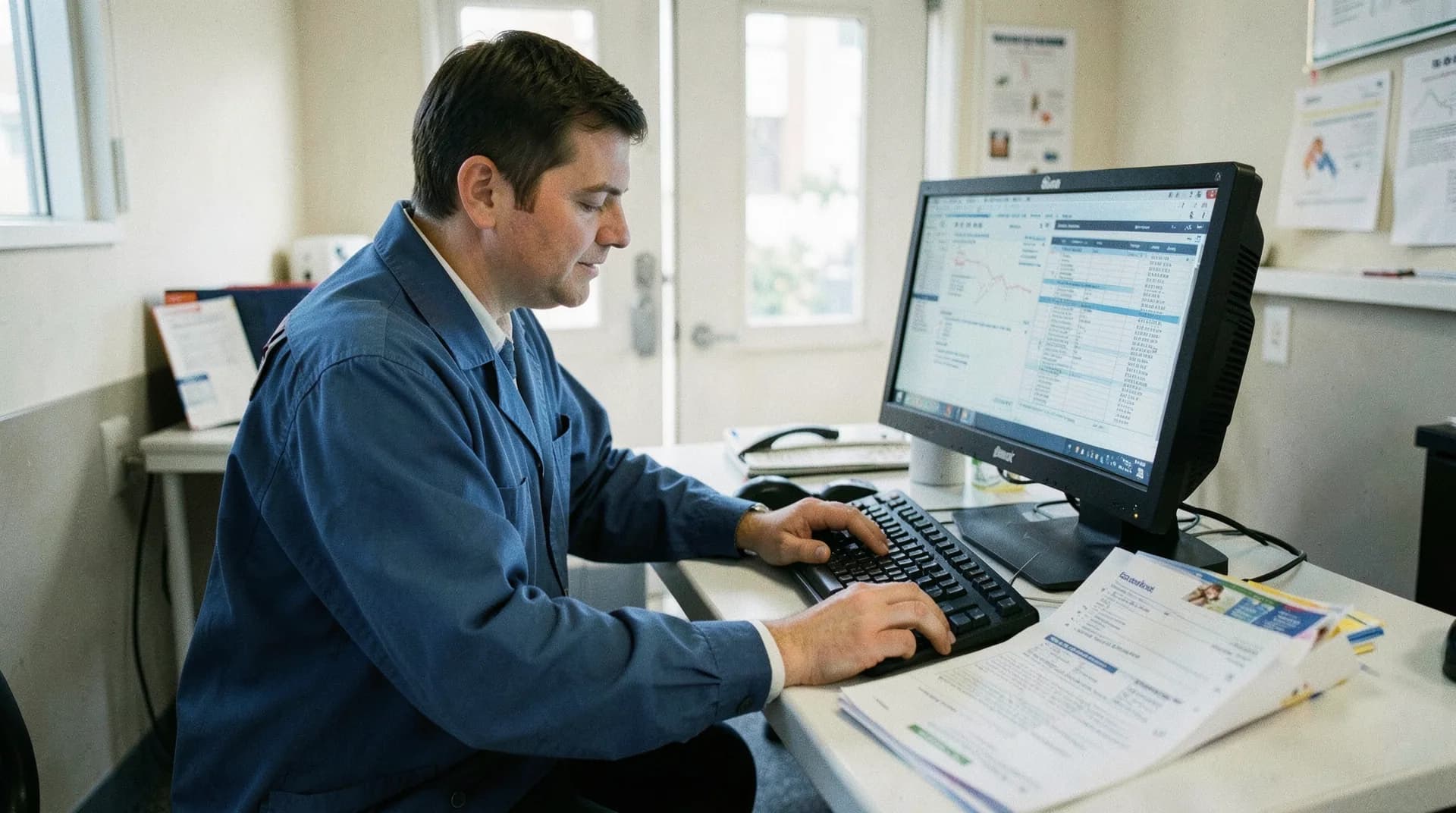
Patents Examiners examine patent applications for compliance with the Patents Act 1990 and the Patents Regulations 1991. The work is part technical analysis, part legal interpretation, and part precise drafting. Examiners search prior art across global patent databases, assess novelty and inventive step, draft examination reports, and decide whether to accept or refuse applications.
In Australia, the work is dominated by one employer: IP Australia, headquartered in Phillip, ACT. IP Australia is the federal statutory agency responsible for patents, trade marks, designs, and plant breeder's rights. It employs the overwhelming majority of practising patent examiners in the country. A small number of patent examiners work in defence (the Defence Patents and Trade Marks Office), and some examiners later move into private patent attorney firms in Sydney and Melbourne — but the analytical examination role itself is concentrated at IP Australia.
This single-employer reality shapes everything about the migration pathway. Roles are advertised on APS Jobs in cohort recruitment rounds (typically once a year). Most positions require Australian citizenship or eligibility for a baseline security clearance, which can be obtained as a permanent resident in some cases but not as a 482 holder. Pragmatic candidates often aim for PR first, then apply to IP Australia.
The skill mix is precise: a strong technical background in mechanical, biomedical, chemical, electrical, or software engineering; biotechnology, pharmacology, or chemistry; or law combined with one of those technical fields. IP Australia particularly recruits in the technical streams where applications are highest.
ANZSCO 224914 Explained
ANZSCO 224914 sits within Unit Group 2249 — Information and Organisation Professionals — and covers examiners who investigate patent applications and report on their compliance with patent law.
Typical tasks under 224914:
- Examining patent applications for compliance with the Patents Act
- Assessing whether applications provide an adequate technical description (sufficiency)
- Searching online and proprietary patent databases for prior art in Australia and overseas
- Determining novelty, inventive step, and patentability
- Drafting examination reports and responses
- Granting or refusing patent rights
ANZSCO 224914 should not be confused with 271399 Legal Professionals nec (which covers patent attorneys in private practice) or 271111 Barristers and 271311 Solicitors (which require Australian admission to practise).
Skills Assessment with VETASSESS
Requirements
224914 is a VETASSESS Group B occupation. You need a qualification assessed as comparable to an Australian Qualifications Framework (AQF) Bachelor degree or higher in a relevant technical, scientific, or legal field. VETASSESS lists acceptable backgrounds as mechanical engineering, biomedical engineering, chemical engineering, biotechnology, pharmacology, electronics, telecommunications, computer science, physics, or law.
The four standard pathways apply:
- Highly relevant Bachelor or higher plus 1 year of post-qualification highly relevant employment in the last five years
- Bachelor or higher plus an AQF Diploma in a highly relevant field plus 2 years of post-qualification employment
- Bachelor or higher without a highly relevant major plus 3 years of post-qualification highly relevant employment
- Any Bachelor or higher with 5 years of relevant employment with at least 1 year in the last five at the appropriate skill level
Pre-qualification experience may count if you have 5 years of relevant pre-qualification employment plus 1 year of highly relevant employment in the last five years.
Assessment Cost
VETASSESS Full Skills Assessment for Professional Occupations:
- Outside Australia: AUD $1,096 (excl. GST)
- Within Australia: AUD $1,205.60 (incl. GST)
- Priority Processing: +AUD $825-$907.50
Processing Time
VETASSESS publishes 7 weeks as the standard professional occupation processing time. Cases involving non-English technical documents or patent office work histories outside the major IP offices can run longer because the assessor needs to verify the role's technical depth.
Common Rejection Reasons
The two most common rejections for 224914:
- The role was patent attorney work, not examiner work. Drafting patent applications, prosecuting them, or arguing them in opposition proceedings is different from examining them. VETASSESS distinguishes patent agent / attorney work (which often maps to 271399) from examiner work.
- No formal patent examination experience. Many applicants come from R&D engineering or scientific research backgrounds and apply because they want to break into IP. Without prior examination experience at a national patent office (EPO, USPTO, JPO, KIPO, CNIPA, IPO India, IP Australia itself), VETASSESS may rule the employment "not highly relevant." Trainee or graduate examiner experience at any national IP office does qualify.
See the skills assessment bodies complete list.
Visa Pathways for Patents Examiners
Subclass 190 — Skilled Nominated Visa
Permanent residency with a state or territory nomination. The ACT government is the natural sponsor given IP Australia is the dominant employer.
- Visa fee: AUD $6,140 (primary applicant)
- Points boost: +5 from state nomination
- Processing: typically 6-12 months
- Reality: the ACT has historically nominated 224914 for applicants with a clear pathway to IP Australia employment, including current IP Australia trainees and post-graduate research candidates
Subclass 491 — Skilled Work Regional Visa
A 5-year provisional visa with a permanent pathway via the subclass 191. The ACT counts as designated regional for 491 purposes.
- Visa fee: AUD $6,140
- Points boost: +15 from regional nomination
- Residency obligation: live and work in a designated regional area for 3 years
- Best fit: patent examiners willing to commit to Canberra
Subclass 482 — Skills in Demand Visa
Employer-sponsored temporary visa. Practical only if you secure a graduate or experienced examiner role at IP Australia and the agency sponsors — federal agencies do sponsor under standard business sponsorship arrangements, but security clearance requirements can limit eligibility.
- Visa fee: AUD $4,015
- Salary thresholds (1 July 2026): Core Skills $79,423; Specialist Skills $146,576
- Reality: APS 6 patent examiner salaries clear the Core Skills threshold
Subclass 186 — Employer Nomination Scheme
Permanent residency through employer sponsorship.
- Visa fee: AUD $6,140
- Streams: Direct Entry (3+ years skilled experience, often a fit for experienced examiners moving from other national IP offices) or TRT (after 2 years on a 482)
Points Test Strategy
| Points Factor | Points | Notes |
|---|---|---|
| Age 25-32 | 30 | |
| Age 33-39 | 25 | |
| PhD | 20 | Common for biotech and pharma examiners |
| Master's | 15 | Common for engineering examiners |
| Bachelor's | 15 | Minimum for Skill Level 1 |
| Superior English | 20 | High-leverage |
| Proficient English | 10 | |
| Overseas experience 5-8 years | 10 | |
| Overseas experience 8+ years | 15 | |
| Australian experience 3 years | 10 | |
| State nomination (190) | 5 | |
| Regional nomination (491) | 15 | |
| Partner skilled | 10 | |
| Single | 10 |
Realistic Scenarios
Scenario A — Engineer from India, 30, Master's, 6 years prior art search at IP Office, Proficient English 30 (age) + 15 (Master's) + 10 (English) + 10 (experience) = 65 base With ACT 491: 80 points — strong for an ACT regional invitation With ACT 190: 70 points — needs strong state nomination case
Scenario B — Biotech PhD from UK, 34, 9 years EPO examiner experience, Superior English 25 (age) + 20 (PhD) + 20 (English) + 15 (experience) = 80 base With 190 nomination: 85 points — competitive for direct invitation Direct 186 Direct Entry also viable if a job offer is secured
State Nomination
The ACT is the natural focal point. IP Australia is in Phillip, ACT, and the ACT government's Skilled Migration program has historically been receptive to applicants with technical backgrounds aligned to federal employers in Canberra. The ACT 491 in particular is built for applicants planning to live and work in the Territory long-term.
NSW and Victoria occasionally include 224914 in their broader CSOL nominations for applicants with related work history (patent attorney firms in Sydney and Melbourne sometimes employ examiners in support roles). Smaller states rarely nominate this code.
Verify current state nomination eligibility on each state's portal at the time of EOI. Lists update annually.
Salary and Employment Outlook
Salary Ranges (2026)
| Role | Typical Salary |
|---|---|
| Graduate Patent Examiner (APS 4-5 entry) | AUD $73,000-$85,000 |
| Patent Examiner (APS 6 standard) | AUD $90,000-$110,000 |
| Senior Patent Examiner / Supervisor (EL1) | AUD $115,000-$135,000 |
| Hearing Officer / EL2 | AUD $140,000-$170,000 |
| Private sector patent attorney (post-qualification) | AUD $150,000-$300,000+ |
Glassdoor data for IP Australia shows a Patent Examiner base salary average of AUD $90,000 (range AUD $83,000-$100,000), with Senior Patent Examiner averaging AUD $110,158. Salary Expert reports an Australian Patent Examiner market average of AUD $134,780 across all sectors, weighted by private patent attorney roles.
APS employees also receive 15.4% superannuation (well above the 11.5% private sector rate), generous leave entitlements, salary packaging options, and structured promotion pathways. The total package premium of federal employment is meaningful.
Where the Work Is
- IP Australia, Phillip ACT — by far the largest single employer; runs annual graduate examiner cohorts and experienced-hire rounds
- Defence patents (DSTG / Defence Industry) — smaller, requires citizenship
- Private patent attorney firms — Sydney, Melbourne, Brisbane — examiners often move to private practice for higher salaries after gaining experience
Tips for a Successful Application
- Plan around the ACT. Almost all Patents Examiner work in Australia is in Canberra. ACT state nomination — 190 or 491 — is the natural visa route. Build your file with the ACT as the planned home.
- Time your application to IP Australia recruitment cycles. IP Australia recruits new examiners through APS Jobs roughly once a year, often advertising several technical streams at once (mechanical, electronics, chemistry, biotechnology, pharmaceuticals). Subscribe to APS Jobs alerts and the IP Australia careers page.
- Citizenship and clearance matter. Most federal positions require Australian citizenship or a security clearance. Permanent residents can hold baseline clearance for many roles; 482 holders cannot in most cases. Aim for PR before applying to IP Australia where possible.
- A second language is genuinely useful. Patent examination involves reading prior art in German, Japanese, Chinese, French, and Korean. IP Australia values examiners with reading proficiency in technical scientific literature in any major patent-filing language.
- Cite prior art experience explicitly. VETASSESS reads references for evidence of patent search and analysis work. Quote database experience (EPOQUE, PatentScope, STN, Derwent, Questel) and concrete examples — "conducted searches in EPOQUE for 30+ patent families per month, drafted novelty opinions in English" — beats vague references to "IP work."
Step-by-Step Migration Roadmap
- Confirm 224914 matches your background — review the ANZSCO code finder and compare against 271399 Legal Professionals nec
- Verify CSOL status — check the Core Skills Occupation List page
- Prepare technical qualification evidence — degree certificates, transcripts, professional registrations
- Draft employment references with concrete examiner duties and database experience
- Sit IELTS, PTE, or TOEFL — target Superior (IELTS 8.0+ / PTE 79+)
- Lodge VETASSESS Full Skills Assessment — AUD $1,096 outside Australia, allow 7 weeks
- Submit EOI in SkillSelect — for 190 or 491
- Apply for ACT state nomination (or NSW / VIC if applicable)
- Receive invitation and lodge visa — 60-day window
- Complete health and character checks
- Receive visa grant and relocate to the ACT
- Apply to IP Australia recruitment rounds — track APS Jobs and the IP Australia careers page
Frequently Asked Questions
Can I become a Patents Examiner in Australia without IP Australia experience?
Direct entry into IP Australia is possible for candidates with strong technical degrees and demonstrated analytical skill, even without prior examination experience. IP Australia runs annual graduate recruitment rounds for technical degree holders (mechanical, chemistry, biotech, electronics, software). For VETASSESS purposes, however, prior examination experience at any national IP office strengthens the application — without it, the skills assessment may be ruled "not highly relevant."
Do I need Australian citizenship to work at IP Australia?
Many roles do, but not all. Some examiner positions are open to permanent residents who can obtain or hold an Australian Government Security Vetting Agency baseline clearance. 482 visa holders generally cannot meet the clearance requirements for examiner roles. The practical migration sequence is: 190 or 491 visa → permanent residency → IP Australia application. Citizenship (available after 4 years of residence with 1 year as a PR) opens the broadest range of roles.
Is Patents Examiner on the MLTSSL?
No. ANZSCO 224914 is on the CSOL and the legacy STSOL but not on the MLTSSL. This means the subclass 189 is closed. Permanent residency runs through the 190 (state nomination), the 491 → 191 (regional), or the 482 → 186 (employer sponsored) routes.
What technical degree gives the best chance of being recruited as an examiner?
IP Australia recruits across mechanical and biomedical engineering, electronics and telecommunications, software and computer science, chemistry, biotechnology, pharmacology, and physics. The streams with consistent demand are mechanical engineering, electronics, chemistry, and biotechnology — reflecting the volume of patent applications in those fields. A PhD is not required but is helpful, especially in biotech, chemistry, and pharma streams. Law combined with a technical degree is highly valued for senior examiner and hearing officer roles.
Can I switch from Patents Examiner to private patent attorney work?
Yes, and this is a common career path in Australia. After several years of examiner experience, many Patents Examiners move to private patent attorney firms (Spruson & Ferguson, Davies Collison Cave, Griffith Hack, Phillips Ormonde Fitzpatrick, Wrays). To register as a patent attorney in Australia, you also need to complete the Trans-Tasman IP Attorneys Board exams. The income jump is significant — senior attorneys at top firms earn AUD $200,000-$400,000+ — but the work shifts from impartial examination to client advocacy.