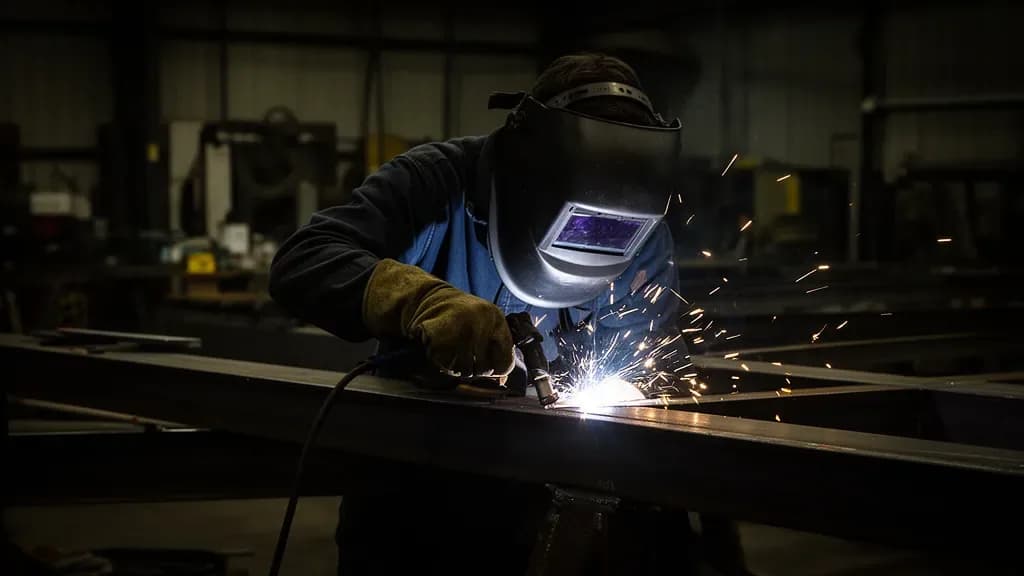
Pressure Welder Visa Pathway to Australia: Complete 2026 Guide
Updated: 16 August 2026
Australia classifies Pressure Welder under ANZSCO 322312. Trades Recognition Australia (TRA) conducts the skills assessment. The occupation sits on the CSOL and MLTSSL, unlocking subclasses 189, 190, 491, 482 and 186. Typical 2026 salaries range AUD $81,000-$130,000, with FIFO oil and gas roles paying above that band. Demand is strongest in WA, central Queensland and Northern Territory energy and resources projects.
Quick Facts: Pressure Welder Migration Pathway
| Detail | Information |
|---|---|
| ANZSCO Code | 322312 (Pressure Welder) |
| Skill Level | 3 (AQF Certificate III with two years on-the-job training, or Certificate IV) |
| Skills Assessment | TRA (Trades Recognition Australia) |
| Occupation List | CSOL + MLTSSL |
| Visa Options | 189, 190, 491, 482, 186 |
| Demand Level | Very high — pressure-coded welders are among Australia's scarcest trade specialists |
| Salary Range | AUD $81,000-$130,000 (SalaryExpert + SEEK Salary Hub, 2026) |
| Typical 189 Score | 70-80 points (small trade pool, lower threshold than ICT) |
| Key Challenge | Documenting current pressure-coded qualifications (AS 3992, ASME IX, EN ISO 9606 or equivalent) |
What a Pressure Welder Does in Australia
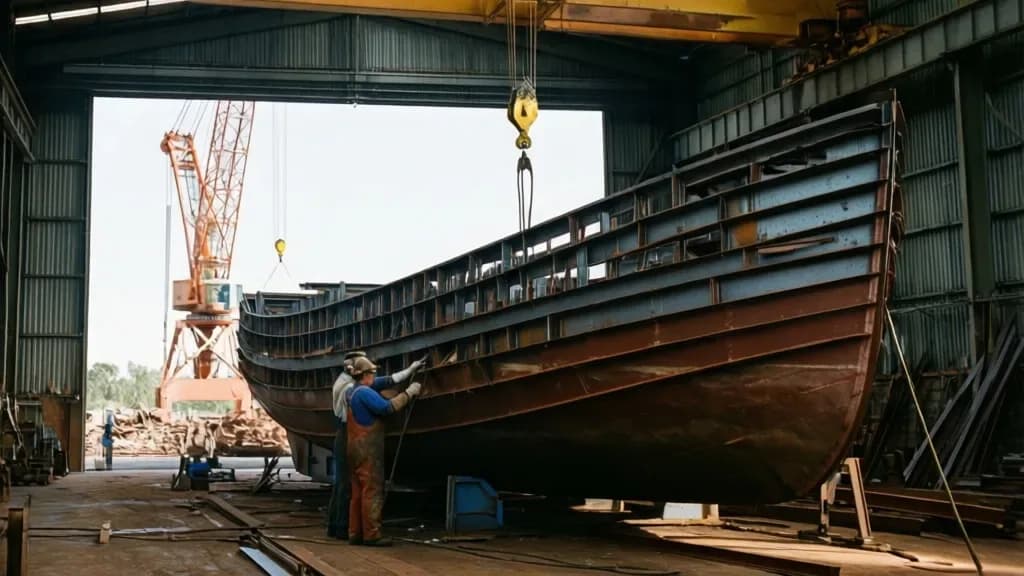
Pressure Welders fabricate, weld and repair pressure vessels and piping systems to code — vessels and pipework that carry steam, gas, refined hydrocarbons, refrigerants or process chemicals at elevated pressure or temperature. The work is safety-critical. A failed weld can fatally rupture under operating pressure, so pressure welders work under documented procedure qualifications and produce welds that are radiographically or ultrasonically inspected.
Demand is concentrated in heavy industry: LNG plants in WA and the NT, coal seam gas processing in central Queensland, oil refineries in Geelong and Kwinana, chemical plants on the Yarra and at Port Kembla, power stations across the Hunter and Latrobe Valley, and the broader pipeline construction industry. Major employers include Worley, Fluor, McConnell Dowell, Monadelphous, Civmec, UGL and the specialist subcontractor network that services major energy projects. Mining-services workshops also employ pressure welders for compressed air, hydraulic and process line work.
The trade is distinct from Welder First Class (322313) because pressure welders carry current code qualifications. Without active pressure tickets, the work is closed off — many Welder First Class applicants in Australia upgrade to pressure welding mid-career to access higher pay and longer-duration contracts.
ANZSCO 322312 — The Code and Tasks
ANZSCO 322312 covers tradespeople who assemble, weld and repair pressure vessels and pipes to relevant standards. The Australian Bureau of Statistics describes core tasks as: studying blueprints, drawings and specifications to determine job requirements; cutting marked-out metal sections and shapes using hand tools, flame cutting torches and metal cutting machines; shaping and bending metal sections and pipes using hand and machine tools, and by heating and hammering; aligning parts to be joined using hand tools and measuring instruments; joining metal sections using various welding techniques, bolting and riveting; and examining welds for width of bead, penetration and precision.
The defining feature of 322312 — versus 322313 Welder First Class — is the pressure-code qualification. Applicants must show current procedure qualification records (PQR) and welder qualification records (WQR) under recognised codes: AS 3992 (Australia), ASME IX (United States and international), EN ISO 9606 (Europe), or equivalent.
The unit group 3223 also contains Metal Fabricator (322311) and Welder First Class (322313). Applicants whose primary work is structural welding without pressure-vessel scope should consider Welder First Class instead.
Skills Assessment: TRA
Trades Recognition Australia (tradesrecognitionaustralia.gov.au) is the assessing authority. The pathway depends on whether you apply from offshore or onshore.
Offshore applicants — Migration Skills Assessment (MSA) or OSAP
Requirements:
- Qualification equivalent to AQF Certificate III with at least two years of on-the-job training, or AQF Certificate IV
- At least three years of paid full-time experience in pressure welding
- Current pressure-code qualifications — procedure qualification records and welder qualification records under AS 3992, ASME IX, EN ISO 9606 or equivalent
- Detailed identity, qualification and employment evidence — including payslips, tax records and project-level references
Assessment cost: Documentary stage from AUD $300; full MSA fees vary by stage. Refer to TRA's published fee schedule. Processing time: TRA targets 120 days (around 17 weeks) from a complete submission.
OSAP — the Offshore Skills Assessment Program — is available for applicants from countries with comparable training systems (UK, Ireland, several European countries). OSAP includes practical and technical assessment at an approved offshore centre, which is well-suited to a code-driven trade like pressure welding.
Common rejection reasons: Expired or absent code qualifications; references that describe general welding without pressure-vessel scope; missing PQR/WQR documentation; insufficient evidence of welding to current code (qualifications older than six months may need renewal for some employers, though TRA's bar is more lenient).
Onshore applicants — Job Ready Program (JRP)
Four stages: Provisional Skills Assessment, Job Ready Employment (12 months of paid Australian work in the trade), Job Ready Workplace Assessment, Final Assessment.
JRWA fee: AUD $2,845 per TRA's current schedule. Other stages priced separately. Processing time: 12-18 months end to end.
Pressure welders on student or working holiday visas can complete the JRP with a TRA-approved sponsoring workshop, though the 12-month employment requirement means the JRP is rarely faster than offshore MSA for this trade.
Visa Pathways for Pressure Welders
Subclass 482 — Skills in Demand
The dominant pathway. Major energy and resources contractors — Worley, Fluor, Monadelphous, Civmec, McConnell Dowell — regularly sponsor pressure welders for LNG, gas processing and refinery projects.
Visa fee: AUD $4,015 (primary applicant) Salary threshold: Core Skills stream income threshold around AUD $79,423 — pressure welder rates clear this comfortably, particularly on project rates and FIFO arrangements Processing time: 1-3 months for Core Skills stream nominations Quirk that matters: Many pressure welders work under labour agreement arrangements rather than standard sponsorship — these tend to process faster but constrain the welder to the specific labour agreement employer.
Subclass 491 — Skilled Work Regional (Provisional)
A strong route because most LNG, gas and resources project regions are designated regional areas.
Visa fee: AUD $6,140 (primary applicant) Eligibility constraint: Must live and work in a designated regional area for the visa duration Processing time: 7-12 months Quirk that matters: The Pilbara, NT (Darwin and remote areas), central Queensland resource hubs, and Kwinana (WA) are all in designated regional postcodes. Three years on a 491 plus income above threshold opens transition to subclass 191 permanent residency.
Subclass 190 — Skilled Nominated
Permanent residency through state nomination plus the points test.
Visa fee: AUD $6,140 (primary applicant) Points boost: +5 from state nomination Processing time: 6-10 months Quirk that matters: WA and SA are the most likely states to nominate Pressure Welder, reflecting energy and defence industry demand. Queensland sometimes nominates for central QLD resources projects.
Subclass 186 — Employer Nomination Scheme
Permanent residency via direct employer sponsorship.
Visa fee: AUD $6,140 (primary applicant) Processing time: 6-12 months (Direct Entry); shorter for Temporary Residence Transition stream Quirk that matters: Long-tenure pressure welders on labour agreement 482 visas commonly transition to 186 via Temporary Residence Transition after 2-3 years. Direct Entry is used by employers willing to sponsor immediately for hard-to-fill specialist roles.
Subclass 189 — Skilled Independent
The points-only permanent residency option for MLTSSL trades.
Visa fee: AUD $6,135 (primary applicant) Realistic points: 75-80 typically required for invitation Processing time: 8-12 months once invited Quirk that matters: Trade invitation rounds have been small in 2026. Most pressure welders reach PR faster via 482-to-186 or 491-to-191 transitions.
Points Test Strategy
| Points Factor | Points | Notes |
|---|---|---|
| Age (25-32) | 30 | Most favourable bracket |
| Age (33-39) | 25 | Still competitive |
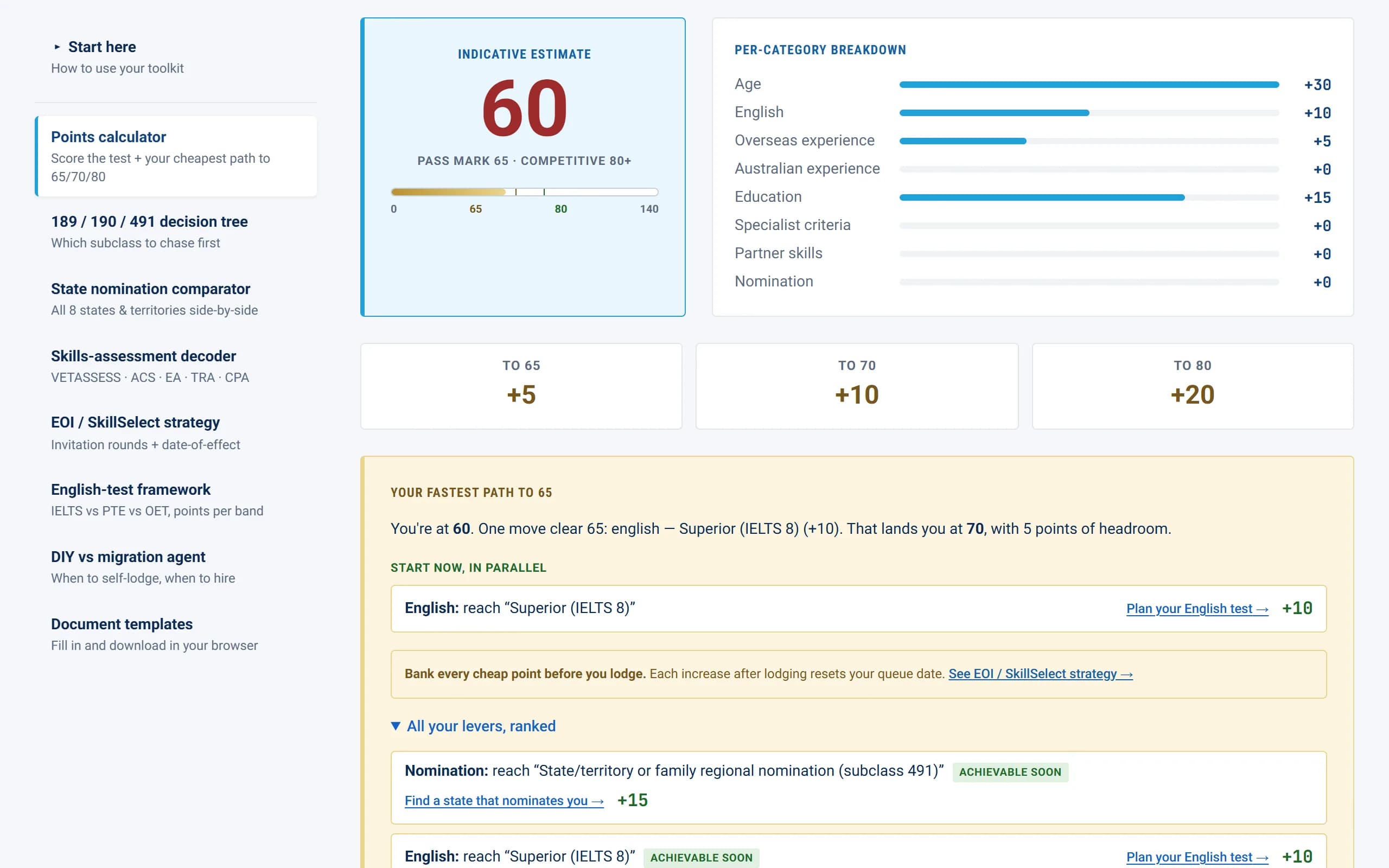
| Trade qualification (AQF III-IV) | 10 | Standard |
| English (Competent 6.0) | 0 | Mandatory minimum |
| English (Proficient 7.0) | 10 | Worth the test prep |
| English (Superior 8.0) | 20 | Strong differentiator |
| Overseas skilled experience (5-7 years) | 10 | Common |
| Overseas skilled experience (8+ years) | 15 | Common ceiling |
| Australian skilled work | 5-20 | Strong lever if available |
| State Nomination (190) | 5 | Modest but useful |
| Regional Nomination (491) | 15 | The decisive lever for resources roles |
| Partner skills | 5-10 | Often overlooked |
Realistic Scenarios
Scenario 1: Offshore pressure welder from the Philippines, age 30, eight years experience, current ASME IX tickets, Proficient English, WA 491 nomination
- Age 30: 30 + Trade qual: 10 + English Proficient: 10 + Experience 8+ years: 15 + 491: 15 = 80 points
- Comfortable for invitation in current trade rounds; pressure welder skill specificity strengthens state nomination prospects
Scenario 2: Onshore Indian fabricator who completed pressure welding training in Australia, age 32, four years experience, Competent English, SA 190 nomination
- Age 32: 30 + Trade qual: 10 + English Competent: 0 + Experience under 3 years counted: 5 + 190: 5 + Australian work: 5 = 55 points
- Below typical threshold — would need Proficient English or pivot to 491 for the +15 boost
State Nomination for Pressure Welders
Western Australia
WA is the most active state for pressure welder nomination, driven by LNG (Karratha, Onslow, Wheatstone), iron ore processing infrastructure in the Pilbara, and Henderson shipbuilding's pressure systems work. WA's 491 program covers all postcodes outside the Perth metro core, and the state regularly nominates pressure welders with current code qualifications for both 190 and 491 streams.
South Australia
SA nominates Pressure Welder on both 190 and 491 streams. Demand is driven by defence manufacturing (Osborne shipyard), the Olympic Dam mining operation, and oil and gas distribution infrastructure. SA's program is transparent — monthly invitation numbers are published — which helps applicants plan EOI strategy.
Queensland
Queensland's 491 program covers Pressure Welder in regional postcodes including Gladstone (LNG export), Mackay (resources support), Townsville and Toowoomba. Coal seam gas processing in the Surat and Bowen basins generates sustained demand for pressure welders with current tickets.
Northern Territory
The NT nominates Pressure Welder under its dedicated program for resources industry trades. Demand is driven by LNG processing at Darwin and Ichthys, and pipeline construction projects across the Territory. Applicants typically need genuine intent to settle in the NT, demonstrated by a job offer or substantial regional connection.
Salary and Employment Outlook
What Can You Expect to Earn?
| Role | Typical Salary Range |
|---|---|
| Qualified Pressure Welder (workshop) | AUD $81,000-$95,000 |
| Senior Pressure Welder (shop) | AUD $95,000-$115,000 |
| Site Pressure Welder (residential, regional) | AUD $100,000-$130,000 |
| FIFO Pressure Welder (Pilbara, NT, Gladstone) | AUD $130,000-$180,000+ (incl. allowances) |
| Shutdown Specialist (contract day rate) | AUD $750-$1,500/day |
| Welding Supervisor / Coordinator | AUD $130,000-$170,000 |
Source: SalaryExpert 2026 (Welder Pressure Vessels base ~AUD $81,318 / ~AUD $39 per hour), cross-checked with SEEK Salary Hub welder data and industry day rates for shutdown roles.
Total packages typically include 11.5% superannuation. FIFO and shutdown contracts add site allowances, travel, accommodation and meals — often increasing total package by 40-60% over base. Pressure welders on labour agreement 482 visas working oil and gas projects in the Pilbara or NT routinely clear AUD $200,000 packages including allowances.
Highest-Paying Sectors
- LNG and gas processing — Karratha, Onslow, Darwin, Gladstone
- Oil refineries — Kwinana (WA), Geelong (VIC)
- Mining-services shutdowns — Pilbara iron ore, Bowen Basin coal, Olympic Dam
- Defence shipbuilding — pressure systems on naval vessels (Henderson WA, Osborne SA)
- Power stations — boiler tube and steam piping work in the Hunter and Latrobe Valley
Tips for a Successful Application
1. Keep your code qualifications current
Pressure welder employers routinely require current code qualifications — and many will retest on arrival regardless of paperwork. Before lodging your TRA application, refresh your AS 3992, ASME IX or EN ISO 9606 qualifications so they cover at least the next 12 months. A lapsed qualification weakens your application materially.
2. Document specific pressure-vessel and pipework experience
Generic welder references do not establish pressure welder credentials. Your employment evidence should describe specific pressure-class work: pipe spool fabrication, vessel longitudinal and circumferential seams, branch connections, weld repair on existing pressure equipment, code class (AS 3978, ASME B31.3, ASME Section VIII). Specificity wins TRA and employer review.
3. Choose your visa pathway based on employer profile
If you have an offer from a major project contractor (Worley, Fluor, Monadelphous, Civmec), the 482 is typically fastest. If you have current tickets and no specific offer, the 491 with WA, SA or NT nomination is the strongest route. If you have ten-plus years experience and current tickets, employer sponsorship is realistic from day one.
4. Plan for radiographic and ultrasonic testing on arrival
Australian employers verify welder qualifications through practical tests on arrival — typically RT (radiographic testing) and UT (ultrasonic testing) on butt welds in carbon and stainless materials. Practising current code procedures before arrival reduces the risk of failed verification welds.
5. Get Proficient English even though Competent is the minimum
Trade migrations have lower English thresholds, but Proficient (IELTS 7.0) adds 10 points and is genuinely useful in safety-critical roles where written procedures, isolation permits and toolbox talks happen in English. State nomination committees see English clarity as a soft proxy for trainability.
Step-by-Step Migration Roadmap
- Confirm ANZSCO 322312 fits your duties — pressure-code welding work, not general welding — review the how to find your ANZSCO code guide
- Refresh your code qualifications — AS 3992, ASME IX, EN ISO 9606 or equivalent, current within 12 months
- Audit your qualification against AQF Certificate III — gather syllabus and hours evidence
- Compile project-level employment evidence — payslips, tax records, references describing pressure-vessel and pipework scope
- Sit your English test — Proficient (7.0) ideally, Competent (6.0) minimum
- Apply to TRA — MSA offshore, JRP onshore, OSAP if from a comparable-system country
- Receive your skills assessment outcome — 17 weeks typical for MSA
- Submit your EOI in SkillSelect — flag 482, 190 and 491 visa interest
- Apply for state nomination — WA, SA, NT and QLD are the priority states
- Or pursue employer sponsorship — major project contractors regularly sponsor pressure welders
- Receive your invitation to apply — lodge visa application within 60 days
- Complete health and character checks — police certificates from every country lived in 12+ months
- Receive grant and relocate — and prepare for on-arrival qualification testing
See the skills assessment hub and the subclass 482 page for deeper context.
Frequently Asked Questions
Is Pressure Welder in shortage in Australia in 2026?
Yes — acutely. Jobs and Skills Australia rates pressure welders as one of the scarcest specialist trades, with major project contractors routinely importing labour under labour agreement arrangements. The combination of safety-critical work, current code qualification requirements, and project-driven demand means shortages persist even in soft years for the broader trades market.
What's the difference between Pressure Welder (322312) and Welder First Class (322313)?
Both are MLTSSL trades assessed by TRA. The defining difference is code scope: Pressure Welder (322312) covers welding of pressure vessels and pressure piping under codes such as AS 3992, ASME IX or EN ISO 9606. Welder First Class (322313) covers structural and general welding to AS 1554 or equivalent. Many welders hold both qualifications. Nominate the code that matches the dominant share of your day-to-day work and that your employment evidence most strongly supports.
Do I need separate Australian welding qualifications after migration?
Possibly. The TRA assessment recognises your offshore qualifications for visa purposes, but Australian employers usually require verification welds on arrival — typically code-class butt welds inspected by RT or UT. If you fail the verification weld, your offer can be withdrawn even after visa grant. Bringing current international qualifications and practising before arrival are both important.
Which states pay pressure welders the most?
WA pays the highest rates on average, driven by LNG and iron ore project demand in the Pilbara and Pilbara-aligned shutdowns. The NT pays comparably for LNG and pipeline work around Darwin. Central Queensland LNG export at Gladstone is the next tier. FIFO arrangements with site allowances dramatically increase total earnings — many pressure welders on shutdown campaigns clear AUD $200,000+ packages.
Can I migrate as a pressure welder without a current qualification ticket?
Realistically, no. The trade is defined by code qualifications. Without current tickets you can attempt the assessment as a Welder First Class (322313) or Metal Fabricator (322311), then upgrade to pressure work after Australian retraining — but this is slower and less competitive than arriving with current code qualifications. Renew your tickets before lodging the TRA application.
How quickly can I get to Australia as a pressure welder?
With current code qualifications and an offer from an approved sponsor, the 482 pathway can run 3-6 months from offer to visa grant. Without a specific offer, the 491 pathway typically takes 12-18 months end to end (TRA assessment, then state nomination, then visa processing). Onshore JRP is the slowest because of the 12-month Australian employment requirement.