Technical Cable Jointer Visa Pathway to Australia: Complete 2026 Guide
Updated: 16 August 2026
Australia classifies Technical Cable Jointer under ANZSCO 342212. Trades Recognition Australia (TRA) conducts the skills assessment, and OSAP is mandatory for offshore applicants because cable jointing on the electrical network is licensed work. The role sits on the MLTSSL and CSOL, unlocking subclasses 189, 190, 491, 482 and 186. Typical 2026 salaries range AUD $90,000-$140,000.
Quick Facts: Technical Cable Jointer Migration Pathway
| Detail | Information |
|---|---|
| ANZSCO Code | 342212 (Technical Cable Jointer) |
| Skill Level | 3 (AQF Certificate III with at least two years on-the-job training, or AQF Certificate IV) |
| Skills Assessment | TRA via OSAP (mandatory offshore) — licensed electrical network occupation |
| Occupation List | MLTSSL and CSOL |
| Visa Options | 189, 190, 491, 482, 186, 494 |
| Demand Level | Very high — energy transition transmission build-out and distribution network upgrades drive multi-year shortages |
| Salary Range | AUD $90,000-$140,000 (SEEK Salary Hub, 2026; HV transmission jointing higher) |
| Typical 189 Score | 70-85 (trades clear at lower scores than ICT) |
| Key Challenge | Australia-specific high-voltage jointing competencies — particularly XLPE 33kV/66kV/132kV — drive offshore practical assessment outcomes |
What Technical Cable Jointers Do in Australia
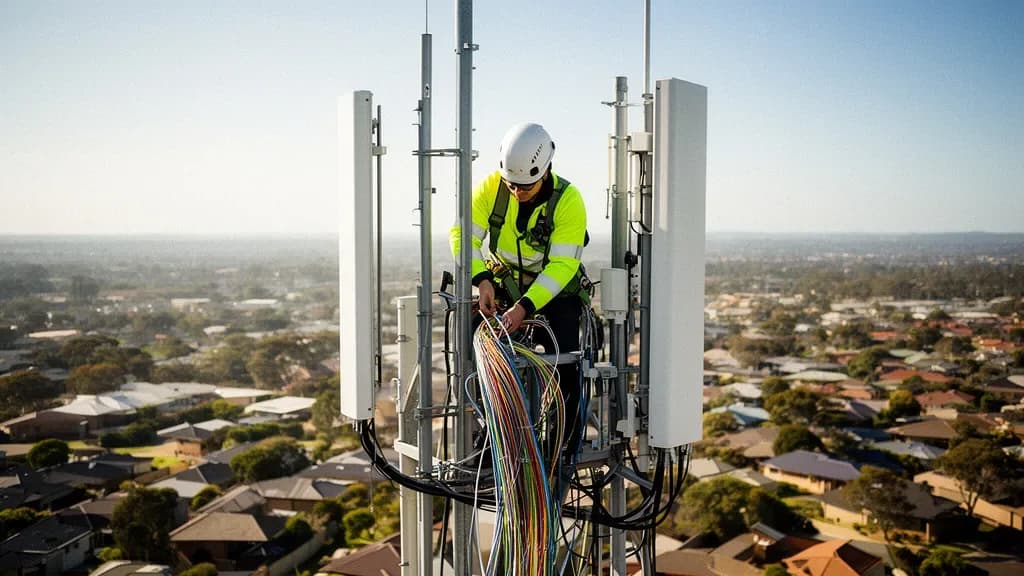
Technical Cable Jointers install, joint and terminate underground power cables on transmission and distribution networks. The work covers low voltage (LV) service connections, 11kV and 22kV distribution feeders, and high-voltage (HV) transmission jointing at 33kV, 66kV, 132kV and above. Day-to-day, the role mixes pit work — excavation, cable hauling, mechanical jointing kits, heat-shrink and cold-shrink terminations, oil-filled and gas-filled cable systems where they remain in service — with testing using VLF, partial discharge and tan delta equipment.
Demand is driven by Australia's energy transition. The national transmission build-out connecting renewable energy zones to demand centres — EnergyConnect, HumeLink, VNI West, Marinus Link, Western Renewables Link — is consuming HV cable jointing capacity faster than the domestic apprenticeship pipeline can replace it. Distribution network operators (Ausgrid, Endeavour Energy, Essential Energy in NSW; AusNet and CitiPower in Victoria; Energex/Ergon in Queensland; Western Power in WA; SA Power Networks; TasNetworks) all report jointing capacity as a structural constraint. Major contractors such as Downer, UGL, Ventia and Service Stream sponsor offshore jointers regularly.
ANZSCO 342212 — Code Mapping
ANZSCO 342212 covers technical cable jointers who join and terminate electric cables in transmission and distribution systems. Indicative tasks include reading network drawings, preparing cable ends, installing joints and terminations using approved kits, conducting electrical tests, and certifying joint integrity per Australian standards.
The role sits inside ANZSCO Unit Group 3422 — Electrical Distribution Trades Workers, alongside Electrical Linesworker (342211). Choose the code that matches the majority of your work — overhead line work is 342211; underground cable jointing is 342212. Many electrical network workers split time across both; the code should reflect the dominant duty set. Review the ANZSCO code finder and read the unit group description carefully.
Skills Assessment with TRA
Technical Cable Jointer is a licensed network electrical occupation. Offshore applicants must complete TRA's Offshore Skills Assessment Program (OSAP). The documentary-only MSA pathway is not available.
Offshore Skills Assessment Program (OSAP)
OSAP runs in three stages: documentary evidence assessment, technical interview, and practical demonstration through a TRA-approved Registered Training Organisation (RTO).
- Requirements: Recognised qualification equivalent to AQF Certificate III in Electrical Supply Industry (Cable Jointing) — UET30621 — plus three years post-qualification employment. Six years' on-the-job training accepted in place of formal qualification.
- Assessment cost: Fees vary by RTO and stage. Total OSAP costs typically range AUD $2,500-$4,500 (Section 2.1 of OSAP Applicant Guidelines, 2025).
- Processing time: 12-18 months end to end. RTO availability is often the bottleneck — only a handful of RTOs deliver cable jointing OSAP practical assessments.
- Common rejection reasons: Insufficient evidence of XLPE jointing on extruded cable systems (most modern Australian distribution and transmission cable is XLPE); employment references that describe general electrical work rather than network jointing; practical demonstration scored against Australian utility standards where overseas training has been on different cable types or voltage classes.
Post-Arrival Authorisation
A successful TRA assessment is the migration check. To work on a specific network in Australia, you must also be authorised by the network operator. Each Distribution Network Service Provider (DNSP) and Transmission Network Service Provider (TNSP) runs its own authorisation process covering safety, network procedures, and specific cable systems used on their network. Allow 2-8 weeks of network-specific training and authorisation after employment commences. State-level electrical licensing may also apply depending on the work performed.
Visa Pathways for Technical Cable Jointers
Subclass 482 — Skills in Demand Visa (Core Skills stream)
The 482 is the dominant pathway for offshore cable jointers. Major energy contractors and network operators sponsor offshore jointers as a default recruitment strategy.
- Visa fee: AUD $4,015 (primary applicant)
- Salary threshold: Core Skills Income Threshold (CSIT) AUD $79,423 from 1 July 2026 (AUD $76,515 until 30 June 2026)
- Processing time: Median 2-3 months for Core Skills stream
- Quirk: HV jointers on transmission contracts commonly earn AUD $120,000-$160,000 base, comfortably above CSIT. Specialist Skills stream (AUD $146,576 threshold, 7-day median processing) is available where the gazetted salary clears that threshold.
Subclass 491 — Skilled Work Regional (Provisional)
Transmission projects are concentrated in regional Australia — renewable energy zones in inland NSW, western Victoria, central Queensland, the Pilbara — so the 491 aligns directly with where the work is.
- Visa fee: AUD $6,140 (primary applicant)
- Points boost: +15 for regional nomination
- Processing time: 12-14 months
- Quirk: Regional NSW, regional Victoria, regional Queensland and Tasmania have all nominated cable jointers under their 491 streams in recent program years.
Subclass 190 — Skilled Nominated
Permanent residency via state nomination. ANZSCO 342212 has appeared on multiple state lists each year, driven by network capacity needs.
- Visa fee: AUD $6,140 (primary applicant)
- Points boost: +5 from state nomination
- Processing time: 8-15 months
- Quirk: NSW, Victoria and Queensland have consistently included Technical Cable Jointer in 190 streams. State streams typically require three or more years of relevant post-qualification experience.
Subclass 189 — Skilled Independent
Available because the occupation is on the MLTSSL. Trades clear at lower scores than ICT in invitation rounds.
- Visa fee: AUD $6,135 (primary applicant)
- Minimum points: 65 (cable jointers have historically cleared at 70-80)
- Processing time: 8-15 months
Subclass 186 — Employer Nomination Scheme
Permanent residency via employer sponsorship. Most cable jointers reach 186 via Temporary Residence Transition after a qualifying period on a 482.
- Visa fee: AUD $6,140 (primary applicant)
- Streams: Direct Entry (with TRA assessment) or Temporary Residence Transition
Subclass 494 — Skilled Employer Sponsored Regional
For regional energy contractors and network operators sponsoring offshore.
- Visa fee: AUD $4,910 (primary applicant)
- Processing time: 9-12 months
- Quirk: Direct PR pathway via subclass 191 after three years of regional work.
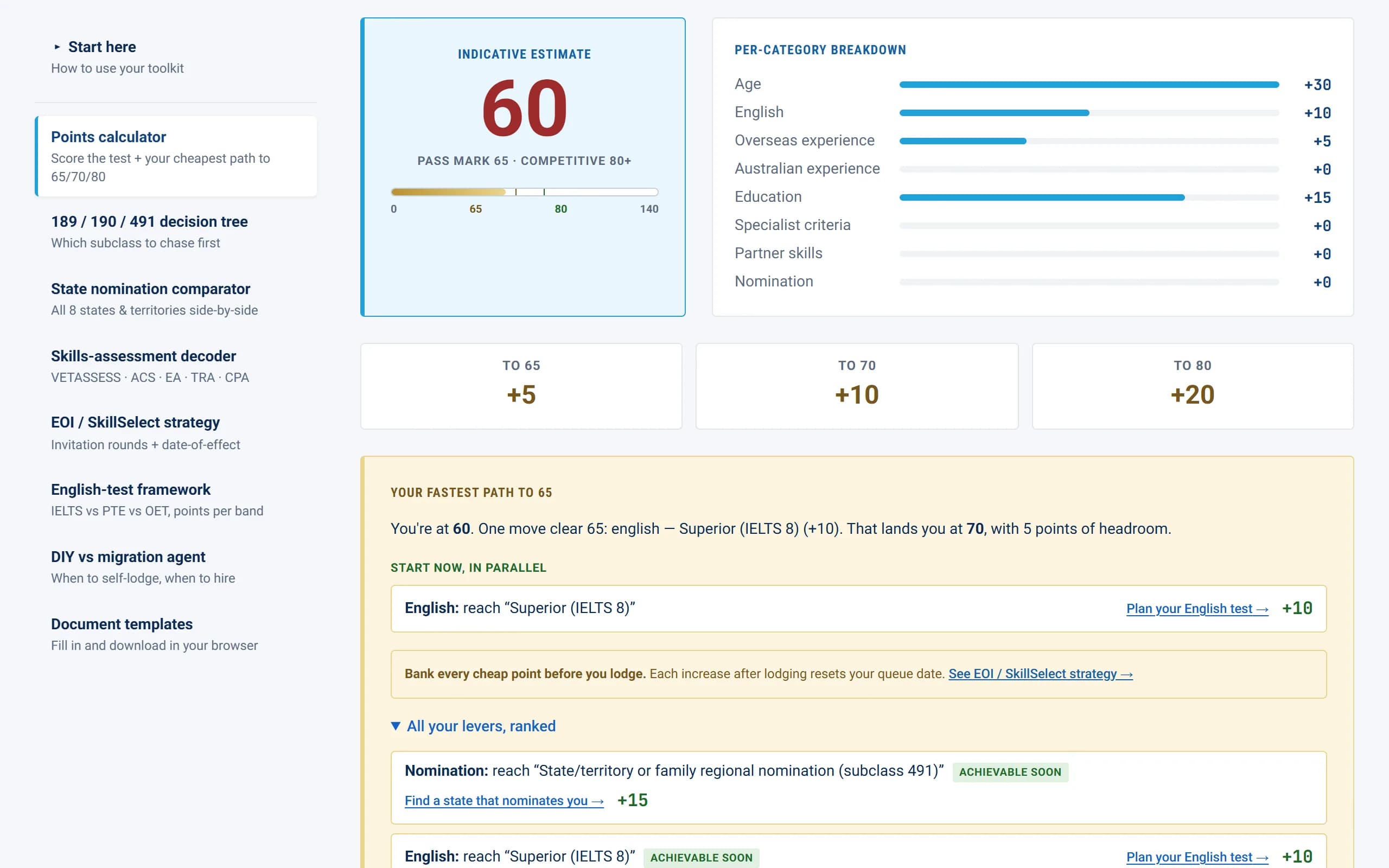
Points Test Strategy
| Points Factor | Points | Notes |
|---|---|---|
| Age (25-32) | 30 | Maximum bracket |
| Age (33-39) | 25 | Strong |
| English (Superior — 8.0+) | 20 | Stretches for many trades applicants |
| English (Proficient — 7.0) | 10 | More common target |
| Qualification (Trade certificate/Diploma) | 10 | AQF Certificate III equivalent |
| Overseas Experience (5-7 years) | 10 | After deductions |
| Overseas Experience (8+ years) | 15 | Top bracket |
| Australian Experience | 5-20 | If you have local work history |
| State Nomination (190) | 5 | |
| Regional (491) | 15 | |
| Partner Skills | 5-10 | If partner has skilled occupation |
Realistic Score Scenarios
Scenario 1: HV Distribution Jointer with 7 Years Experience
- Age 31 (30) + Trade qualification (10) + Proficient English (10) + 7 years overseas experience (10) = 60 points
- Add 491 nomination (+15) = 75 points — competitive, particularly with regional employer offer.
Scenario 2: Senior Transmission Jointer
- Age 37 (25) + Trade qualification (10) + Proficient English (10) + 12 years overseas experience (15) + Partner skilled (10) = 70 points
- Add 190 nomination (+5) = 75 points; consider 491 (+15) for stronger position or 482 sponsorship if employer is lined up.
State Nomination for Cable Jointers
New South Wales
NSW typically nominates Technical Cable Jointer under both 190 and 491 streams. The state's transmission build-out (HumeLink, EnergyConnect) and distribution network upgrades (Ausgrid, Endeavour Energy, Essential Energy) drive consistent demand.
Victoria
Victoria has consistently nominated cable jointers. Western Renewables Link, the Marinus Link onshore works, and AusNet's distribution upgrades anchor demand. Regional Victoria's 491 nominates strongly.
Queensland
Queensland nominates for 190 and 491, with Energex/Ergon Energy network upgrades and the Borumba Pumped Hydro project supporting jointing demand. Regional centres prioritise trades nomination.
Western Australia
WA's transmission build-out around the South West Interconnected System and the North West Interconnected System (Pilbara) creates strong demand. Western Power and major contractors sponsor regularly.
South Australia
South Australia nominates for 190 and 491. SA Power Networks distribution upgrades and the EnergyConnect interconnector both consume jointing capacity.
Tasmania
Tasmania nominates cable jointers for 491 and onshore 190. Marinus Link's Tasmanian onshore works and TasNetworks distribution renewal generate sustained demand.
Salary and Employment Outlook
What Technical Cable Jointers Earn in Australia
| Role | Typical Salary Range |
|---|---|
| LV Cable Jointer (1-3 years post-qualification) | AUD $85,000-$105,000 |
| HV Distribution Jointer (11kV/22kV) | AUD $100,000-$130,000 |
| HV Transmission Jointer (66kV+) | AUD $120,000-$160,000 |
| Senior Jointing Specialist / Lead | AUD $140,000-$180,000 |
| FIFO Mining / Remote Network Jointer | AUD $140,000-$200,000+ |
| Commissioning and Test Engineer | AUD $130,000-$170,000 |
SEEK Salary Hub 2026 reports an average band of AUD $90,000-$110,000 nationally for cable jointers, with HV transmission specialists higher. Total packages typically include 11.5% superannuation, site allowances, on-call uplift and overtime.
Where the Money Is
- Transmission projects — EnergyConnect, HumeLink, VNI West, Marinus Link, Western Renewables Link. Multi-year contracts; some elements run beyond 2030.
- Distribution network renewal — Ausgrid, Endeavour Energy, Essential Energy, AusNet, Energex/Ergon, Western Power, SA Power Networks, TasNetworks.
- Major energy contractors — Downer, UGL, Ventia, Service Stream, Quanta Services, NACAP.
- Mining electrical — Pilbara iron ore, central Queensland coal, Goldfields gold — site network jointing pays at the top of the salary band.
- Renewable energy zones — substation tie-ins for solar and wind farms across regional NSW, Victoria and Queensland.
The 2025 Occupation Shortage List confirms electrical network trades remain in acute shortage. Independent industry forecasts suggest the cable jointing workforce must expand sharply through 2030 to meet AEMO's Integrated System Plan delivery schedule.
Tips for a Successful Application
1. Document Voltage Classes and Cable Systems Specifically
TRA assessors weight evidence of jointing experience by voltage class (LV, 11kV, 22kV, 33kV, 66kV, 132kV+) and cable system type (XLPE extruded, paper-insulated lead-covered, oil-filled). Generic "joined electrical cables" descriptions are weak. Have referees specify voltage classes, cable types, joint kit manufacturers (3M, Raychem/TE, Pfisterer, Nexans) and project examples.
2. Lock In Your RTO Slot Early
Only a small number of TRA-approved RTOs deliver cable jointing practical assessments offshore. The wait list for some markets runs 6-9 months. Book the assessment as soon as your documentary stage is lodged.
3. Map Your Qualification Against UET30621
Australia's Certificate III in Electrical Supply Industry (Cable Jointing) covers jointing on extruded XLPE cable up to 33kV and includes mandatory units on partial discharge testing, VLF testing and emergency response. Document equivalent training where your overseas certificate covers different voltages or cable types.
4. Target 491 in a Renewable Energy Zone State
Regional NSW, regional Victoria, regional Queensland and Tasmania all have transmission projects under construction. A 491 visa with a regional employer offer combines the +15 points boost with the highest-volume project work.
5. Use 482 Sponsorship for Speed
If your points are below 75 or you want to start work within months, the 482 Skills in Demand visa via a major energy contractor is the fastest route. Specialist Skills stream applications at AUD $146,576+ salary process in a published 7-day median.
Step-by-Step Migration Roadmap
- Confirm ANZSCO 342212 fits your duties — review the ANZSCO code finder and distinguish from Electrical Linesworker (342211).
- Gather employment references documenting voltage classes, cable systems, and joint kit experience.
- Sit IELTS or PTE — Competent English (IELTS 6.0) minimum.
- Lodge TRA OSAP application through your country's approved RTO; book the practical assessment slot early.
- Complete documentary evidence stage — qualifications, employment evidence, project list.
- Attend technical interview and complete practical demonstration through the RTO.
- Receive successful TRA outcome — valid three years for migration.
- Submit EOI in SkillSelect for 189, 190 or 491.
- Apply for state nomination if pursuing 190 or 491.
- Receive invitation and lodge visa within 60 days via ImmiAccount.
- Complete health and character checks including AFP police check and HAP-ID medical.
- After grant, complete network authorisation training with the sponsoring DNSP/TNSP and obtain any state electrical endorsements before commencing on-network work.
Frequently Asked Questions
Is Technical Cable Jointer on the MLTSSL in 2026?
Yes. ANZSCO 342212 remains on the Medium and Long-Term Strategic Skills List in 2026, keeping subclass 189 access open. It is also on the Core Skills Occupation List used by the 482 visa and on most state nomination programs.
What is the difference between Technical Cable Jointer and Electrical Linesworker?
Cable Jointer (342212) covers underground cable jointing and terminations on transmission and distribution networks. Electrical Linesworker (342211) covers overhead line construction and maintenance. The two trades overlap on some networks but the ANZSCO codes are distinct. Choose the code that matches the majority of your day-to-day work — claiming jointing experience without supporting evidence is a common rejection driver.
Why does OSAP take so long for cable jointers?
The bottleneck is RTO availability for the practical demonstration. Only a small number of TRA-approved RTOs deliver cable jointing assessments offshore because the equipment, joint kits and qualified assessors are specialised. Booking 6-9 months ahead is normal in some markets. Once the practical is scheduled, the assessment outcome typically follows within weeks.
Will I need to retrain after arrival?
Most overseas-trained cable jointers complete a network-specific authorisation course with their first Australian employer. The course covers Australian utility safety procedures, the specific cable systems used on that network, and any gaps in Australian standards exposure (commonly partial discharge and tan delta testing). Allow 2-8 weeks of paid training before being authorised to joint independently.
Which networks sponsor offshore cable jointers most actively?
Major contractors deliver most of Australia's network jointing work and sponsor heavily: Downer, UGL, Ventia, Service Stream, Quanta Services, and NACAP. Direct DNSP/TNSP sponsorship occurs but is less common than contractor sponsorship. Transmission Network Service Providers (Transgrid, AusNet Services, Powerlink Queensland, ElectraNet, Western Power, TasNetworks) typically engage jointing through their contractor base.
How does the energy transition affect long-term demand?
AEMO's Integrated System Plan projects continued transmission build-out through 2050. Renewable energy zones, interconnectors and distribution upgrades will sustain jointing demand well beyond 2030. The 2025 Occupation Shortage List flagged electrical network trades as a structural shortage rather than a cyclical one — supply is constrained because apprenticeship completions cannot match required workforce expansion.