Telecommunications Field Engineer Visa Pathway to Australia: Complete 2026 Guide
Updated: 16 August 2026
Australia classifies Telecommunications Field Engineers under ANZSCO 313212. Engineers Australia conducts the skills assessment under the Engineering Associate category. The occupation sits on the MLTSSL and CSOL, unlocking subclasses 189, 190, 491, 482 and 186. Typical 2026 salaries range AUD $85,000-$130,000. The 5G densification programme and regional connectivity rollouts sustain employer-sponsored demand.
Quick Facts: Telecommunications Field Engineer Migration Pathway
| Detail | Information |
|---|---|
| ANZSCO Code | 313212 (Telecommunications Field Engineer) |
| Skill Level | 2 (Associate degree, advanced diploma, or diploma, plus relevant experience) |
| Skills Assessment | Engineers Australia (Migration Skills Assessment, Engineering Associate category) |
| Occupation List | MLTSSL and CSOL |
| Visa Options | 189, 190, 491, 482, 186 |
| Demand Level | Moderate to high — 5G densification, regional Mobile Black Spot rollouts, and submarine cable terrestrial work sustain demand |
| Salary Range | AUD $85,000-$130,000 (SEEK Salary Hub, Talent.com Australia, 2026) |
| Typical 189 Score | 80-90 points (less crowded than ICT professional codes) |
| Key Challenge | Distinguishing field engineering from technician work — the field engineer applies engineering judgement on site, not just installation |
What This Occupation Covers in Australia
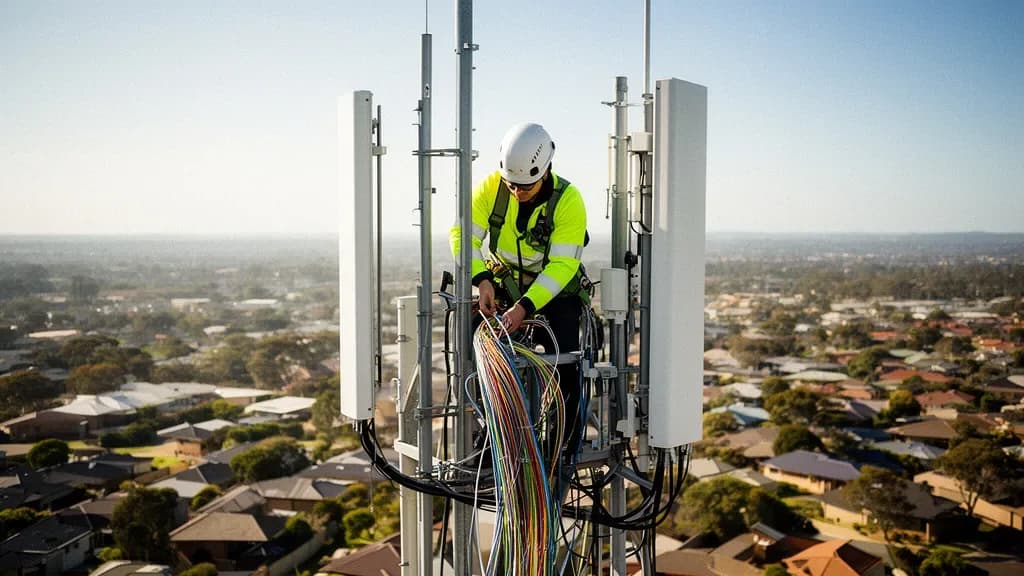
ANZSCO 313212 covers the engineers who take a network design from drawings into operational reality on site. They commission new cell sites, troubleshoot transmission faults in the field, oversee splicing teams on fibre builds, coordinate with civil contractors on tower and cable construction, and resolve complex multi-vendor integration issues that desk-bound engineers cannot diagnose remotely.
The work in 2026 is driven by several active pipelines. 5G densification continues across the major urban areas, with small-cell deployments on street furniture and inside buildings requiring field engineering coordination. The Mobile Black Spot Program ($1.1 billion total commitment) is still rolling out base stations in regional and remote Australia. Submarine cable landings and the terrestrial connectivity behind them generate concentrated field engineering work, particularly in WA and along the east coast. Defence and government networks (the Optus Business and Telstra Purple government divisions) hire field engineers for secure deployments.
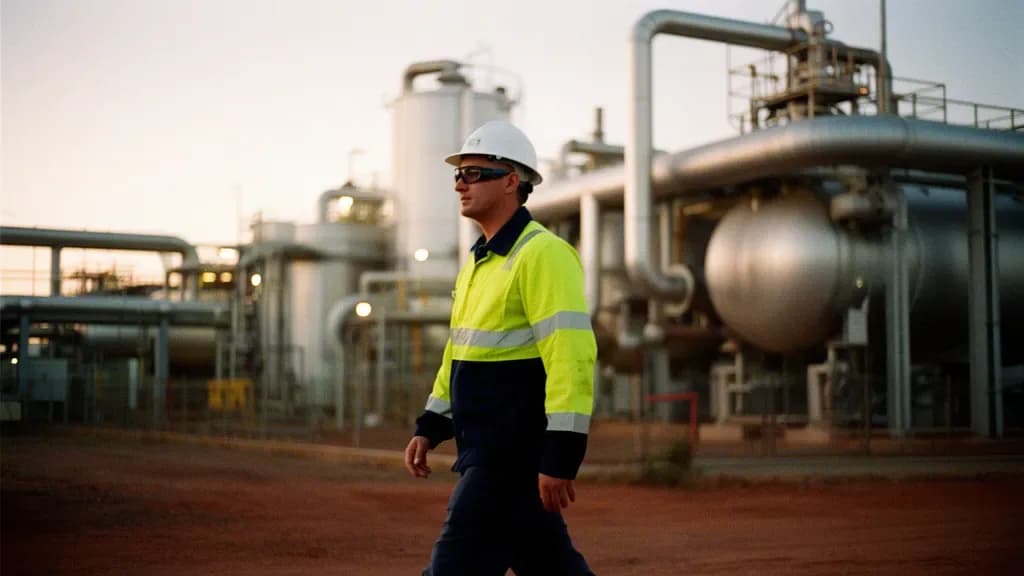
Geographic distribution is broader than for desk-based telecommunications occupations. Field engineers are needed wherever networks exist or are being built — meaning regional Queensland, regional NSW, regional Victoria, the Pilbara, the Northern Territory, and the major capitals all hire. Rotation rosters and fly-in-fly-out arrangements are common for resources-sector telecom and remote government deployments.
ANZSCO 313212 — Code Mapping
The official ANZSCO description for 313212 covers technicians and engineers who provide engineering support for the construction, installation, configuration, testing, and maintenance of complex telecommunications networks and equipment. Specialisations include Cellular Mobile Radio Technician (where engineering tasks dominate), Telecommunications Cable Plant Engineer, Telecommunications Field Operations Engineer, and PABX Installation Engineer.
The skill level is 2 — below the professional engineering codes (263311 Telecommunications Engineer, 263312 Telecommunications Network Engineer) and above the trade-level technician codes. The distinction from 263312 is substantive: 263312 covers desk-based network design and architecture; 313212 covers applied field engineering. The two often work together on the same project.
Adjacent codes that sometimes apply:
- 313211 Radiocommunications Technician — radio-specific technical work, narrower in scope
- 342414 Telecommunications Technician — installer and technician work, Skill Level 4
- 263312 Telecommunications Network Engineer — desk-based design, Skill Level 1
For closely related occupations, see Telecommunications Network Engineer and Electrical Engineering Draftsperson.
Skills Assessment — Engineers Australia
Engineers Australia assesses 313212 under the Engineering Associate occupational category. The competency framework focuses on applied technical work, supervised engineering contribution, and the application of standards rather than independent engineering design judgement.
Engineering Associate Pathway via CDR
Requirements:
- A relevant qualification at Australian Qualifications Framework Level 5 or higher (associate degree, advanced diploma, or diploma in telecommunications engineering, electrical engineering, or electronics)
- Three Career Episodes (1,000-2,500 words each) demonstrating Engineering Associate-level work
- A Summary Statement mapping the career episodes to the Engineering Associate Stage 1 Competencies
- A Continuing Professional Development record
- Resume and employment evidence including site project examples
Assessment Cost: AUD $1,034 (incl. GST) for the standard CDR pathway, effective 1 July 2026 Processing Time: 10-16 weeks after submission of a complete application Fast Track: Additional AUD $396 for assignment to an assessor within 20 business days
Sydney Accord and Dublin Accord Pathway
If your qualification is from a Sydney Accord or Dublin Accord signatory programme, you can use the accord pathway in place of a full CDR.
Assessment Cost: AUD $555.50 (incl. GST) Processing Time: 8-12 weeks
Common rejection reasons: Career Episodes that describe installation or repair tasks without demonstrating engineering judgement; qualifications below AQF Level 5 (some overseas vocational telecom courses fall short); and employment evidence that reads as installer or technician work rather than field engineering. NSW state nomination for 313212 has historically required at least seven years of telecommunications engineering experience.
For wider assessing-body context, see the skills assessment bodies reference.
Visa Pathways
Subclass 482 — Skills in Demand (Core Skills stream)
A common pathway for offshore field engineers, particularly with major systems integrators and contractors.
- Visa fee: AUD $3,210
- Salary threshold: Core Skills Income Threshold $76,515 (rising to $79,499 from 1 July 2026). Senior field engineers and FIFO roles typically clear this; junior metropolitan roles can sit close to the threshold
- Processing time: Up to 8 months for 90% of Core Skills applications (Home Affairs, April 2026)
- Quirk: Major contractors (Ventia, Downer, Service Stream, Visionstream) and systems integrators (Nokia, Ericsson, Huawei where commercially permitted) sponsor field engineers regularly
Subclass 186 — Employer Nomination Scheme
- Visa fee: AUD $6,140
- Streams: Direct Entry or TRT (after two years on 482)
- Quirk: Service contractors with FIFO rotations often favour the TRT pathway because retention through the 482 period demonstrates fit for demanding deployment patterns
Subclass 189 — Skilled Independent
- Visa fee: AUD $6,135
- Points needed: Realistically 80-90 in 2026 invitation rounds — less competitive than professional engineering codes
- Processing time: 6-9 months median, following the March 2026 processing overhaul
Subclass 190 — Skilled Nominated
- Visa fee: AUD $6,140
- Best states: Queensland (regional connectivity, FIFO from Brisbane), WA (resources telecom), Victoria (urban densification)
- Quirk: NSW state nomination requirements for 313212 have historically demanded extensive experience (around seven years of telecommunications engineering work); other states are more accessible
Subclass 491 — Skilled Work Regional
- Visa fee: AUD $6,140
- Points boost: +15 from regional nomination
- Quirk: Regional 491 is highly viable for 313212 because much of the work is structurally regional — Mobile Black Spot deployments, mining-sector private networks, and regional fibre rollouts
Points Test Strategy
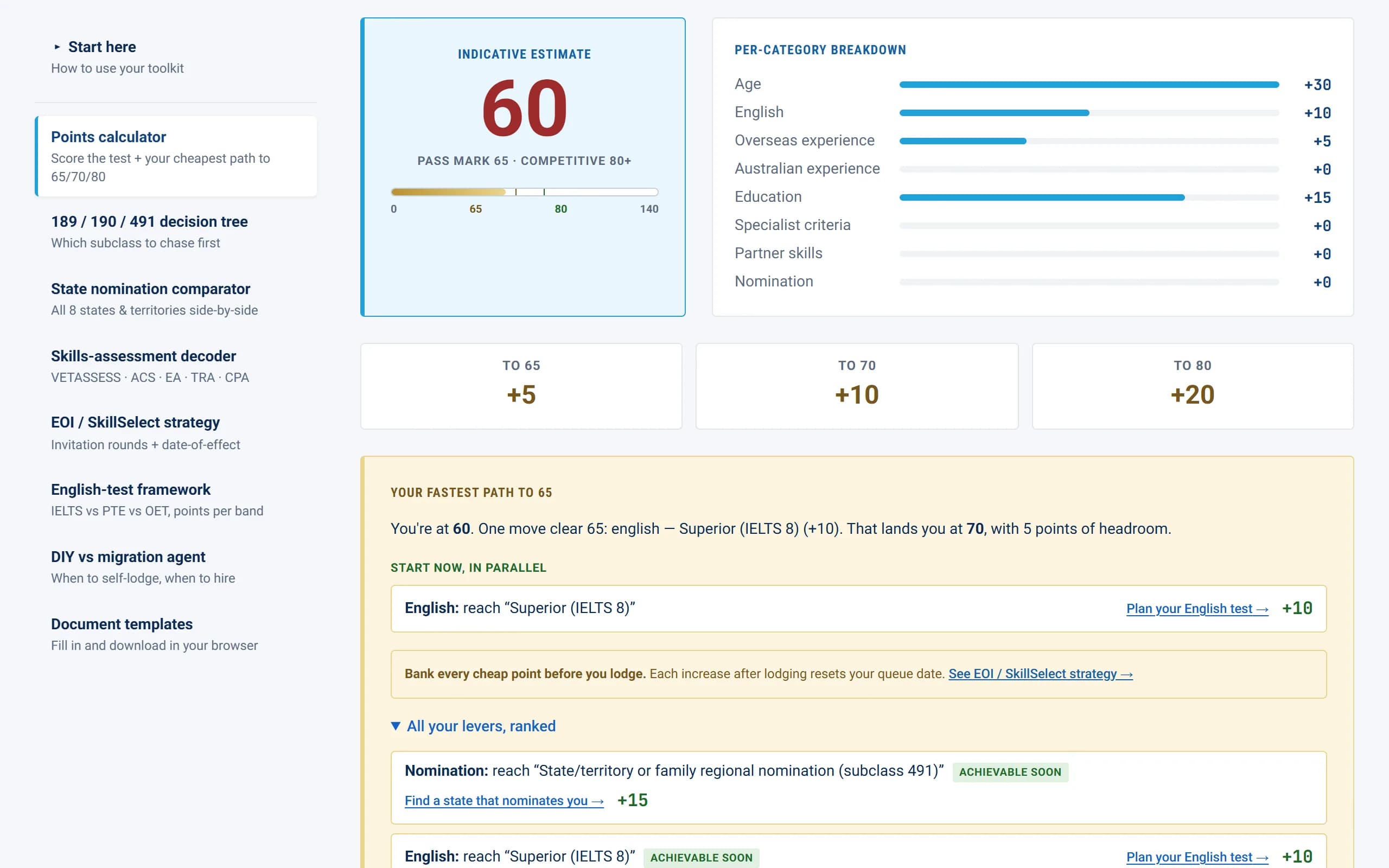
| Points Factor | Points | Notes |
|---|---|---|
| Age 25-32 | 30 | Maximum |
| Age 33-39 | 25 | |
| Qualification (Bachelor's or higher) | 15 | Some field engineers hold engineering degrees |
| Qualification (Diploma/Trade) | 10 | The typical field engineer qualification |
| English (Superior 8.0+) | 20 | The biggest single lever |
| English (Proficient 7.0) | 10 | Realistic for many applicants |
| Overseas Experience | 5-15 | No assessing-body deduction equivalent to ACS |
| Australian Experience | 5-20 | |
| State Nomination (190) | 5 | |
| Regional (491) | 15 | |
| Partner Skills | 5-10 | |
| Professional Year | 5 | If completed in Australia |
| NAATI/CCL | 5 |
Realistic Scenarios
Scenario 1: Mid-career offshore field engineer
Age 30, AQF Level 6 advanced diploma in telecommunications, Proficient English (PTE 65), 8 years experience, no Australian experience.
30 + 10 + 10 + 15 = 65 points. Below the 189 threshold. Add 491 regional nomination from Queensland or Tasmania: 80 points. Workable for 491 in less-competitive rounds.
Scenario 2: Senior FIFO field engineer
Age 33, Bachelor's in electronics, Superior English (PTE 79), 10 years experience, partner has a skilled occupation.
25 + 15 + 20 + 15 + 10 = 85 points. Add 190 nomination from WA or QLD: 90 points. Competitive.
State Nomination
Queensland
Queensland's 2025-26 allocation is 2,600 places (1,850 subclass 190 and 750 subclass 491). The state's geography supports sustained field engineering demand — regional Mobile Black Spot deployments, the mining and resources telecom market in the Bowen Basin and far north, and the 2032 Olympics infrastructure pipeline.
Western Australia
WA's resources sector hires field engineers for private LTE networks, mine-site telecommunications, and the Pilbara cellular rollouts. WA's 2025-26 nomination program has steady allocations for engineering associate occupations. FIFO from Perth is the dominant model.
Victoria
Victoria's 2025-26 allocation includes 313212 in support of Melbourne's urban densification and regional 5G rollout. The state tends to favour onshore applicants with Victorian employment.
South Australia
South Australia accepts 313212 nominations for both subclass 190 and 491. Defence telecom work (the Edinburgh Defence Precinct, Osborne shipyards) and regional connectivity programmes drive demand.
Tasmania
Tasmania remains the most accessible state for offshore applicants prepared to commit to two years' residence. The Marinus Link project and statewide 5G rollout have created sustained field engineering demand.
Salary and Employment Outlook
| Role | Typical Salary Range (2026) |
|---|---|
| Junior Field Engineer (0-2 yrs) | AUD $70,000-$90,000 |
| Mid-Level Field Engineer | AUD $85,000-$110,000 |
| Senior Field Engineer | AUD $105,000-$135,000 |
| FIFO Field Engineer (resources) | AUD $130,000-$185,000 |
| 5G Commissioning Engineer | AUD $115,000-$155,000 |
| Field Operations Manager | AUD $130,000-$170,000 |
| Contractor (day rate) | AUD $650-$1,100/day |
Sources: SEEK Salary Hub 2026, Talent.com Australia 2026, Hays Salary Guide 2026. Superannuation at 11.5% sits on top. FIFO roles add site allowances and travel; major contractors add overtime and on-call structures rather than bonuses.
Highest-paying sectors
- Resources sector telecom (Pilbara mining, Bowen Basin coal, gas operations)
- Defence and critical infrastructure (Optus Business, Telstra Purple government division)
- Submarine cable terrestrial works and landings
- Major contractors (Ventia, Downer, Service Stream)
- Systems integrators (Nokia, Ericsson, Ciena)
Tips for a Successful Application
1. Distinguish your work from installer or technician duties
The Engineers Australia distinction between Engineering Associate (313212) and Telecommunications Technician (342414) is sharp. Field engineers exercise engineering judgement on site, coordinate multi-disciplinary work, and resolve complex faults using analytical methods. Technicians follow procedures. Career Episodes that describe procedural installation work get pushed down to the technician code.
2. Name the vendor systems you commission
Nokia, Ericsson, Cisco, Juniper, Huawei, Corning, Commscope, CommScope-Ruckus, Cambium — naming specific vendors and the equipment families you work on demonstrates the technical depth that Engineers Australia assessors look for. Generic "RAN equipment" descriptions invite further-evidence requests.
3. Hold safety and trade tickets where applicable
EWP, working at heights, confined space, RIIWHS204, white card, ASA RIO, and electrical licensing where you cross into electrical work — these are standard expectations of Australian field engineers and credible additions to your application. They also strengthen 482 sponsorship applications because employers screen for them before offering.
4. Position FIFO and remote-site experience clearly
Resources-sector telecom and remote government deployments are among the highest-paying field engineering opportunities in Australia. If you have offshore equivalent experience (Middle East oil and gas, African mining sites, remote Indian or Indonesian telecom rollouts), name it prominently. The pay differential is meaningful.
5. Use Sydney or Dublin Accord if your programme qualifies
If your diploma or advanced diploma is from a Sydney Accord or Dublin Accord signatory programme, use the accord pathway. The fee is roughly half and the processing is faster than the full CDR.
Step-by-Step Migration Roadmap
- Confirm 313212 fits your duties — check against the official ANZSCO description and compare against 263312, 313211, and 342414 via the ANZSCO code finder
- Audit your qualifications — AQF Level 5 equivalent or higher
- Decide the EA pathway — accord if accredited, otherwise CDR
- Sit an English test — aim for Superior (PTE 79+ / IELTS 8.0+)
- Write the CDR — three Career Episodes against the Engineering Associate competencies, with site engineering examples
- Lodge the Engineers Australia assessment ($555.50 or $1,034, 10-16 weeks)
- Calculate points — see the skilled occupation list reference
- Submit an EOI in SkillSelect for 189, 190 or 491
- Apply for state nomination — QLD, WA, SA, or Tasmania
- In parallel, target 482 sponsorship with major contractors or systems integrators
- Receive invitation, lodge visa within 60 days
- Complete health and character checks, receive grant
Frequently Asked Questions
Is Telecommunications Field Engineer the same as Telecommunications Technician?
No. ANZSCO 313212 (Field Engineer) is Skill Level 2 — Engineering Associate work involving engineering judgement, coordination of multi-disciplinary site work, and complex fault resolution. ANZSCO 342414 (Telecommunications Technician) is Skill Level 4 — vocational technical work focused on installation, configuration, and procedural maintenance. The visa pathways and migration outcomes differ substantially.
Do I need a Sydney or Dublin Accord qualification to apply?
No. If your qualification is from an accord-signatory programme, you can use the simpler accord pathway. If not, the standard CDR pathway is available — three Career Episodes, a Summary Statement, a CPD record, and employment evidence. The fee difference is roughly $480; the processing time difference is around four weeks.
Are field engineering roles always FIFO?
No, though many of the highest-paying roles are. Urban densification work (5G small cells in Sydney, Melbourne, Brisbane), submarine cable landings, and major contractor metropolitan operations are typically day-shift work from a fixed location. FIFO is concentrated in resources-sector telecom (Pilbara, NT, remote QLD) and some defence and government deployments.
Can I work as a field engineer in Australia on a Working Holiday visa?
The Working Holiday programme (subclass 417 or 462) carries a six-month limit per employer, which deters most field engineering employers. The cleaner path is to secure a 482 sponsorship offer before relocating. Some Working Holiday makers do convert to 482 with a sponsor, but the path is harder than for office-based ICT roles because field engineering employers value continuity for site safety reasons.
How does my Middle East or Indian telecom site experience translate?
Well, in most cases. Australian employers recognise experience from Etisalat, Saudi Telecom, Reliance Jio, Airtel, Singtel, and major systems integrators in those markets. The hiring filter is technical depth (5G commissioning, multi-vendor integration, fault diagnostics) and safety culture. Be ready to document safety training and incident-free site work — Australian site safety standards are exacting.
Is the 5G densification pipeline still creating field engineering demand in 2026?
Yes. The major carriers (Telstra, Optus, TPG/Vodafone) continue mid-band 5G rollouts, with small-cell densification in dense urban areas and 5G standalone core upgrades creating sustained field engineering work. The pipeline is slower than the 2022-23 peak but structurally durable through at least 2027. The Mobile Black Spot Program adds regional demand on top of the metropolitan rollout.