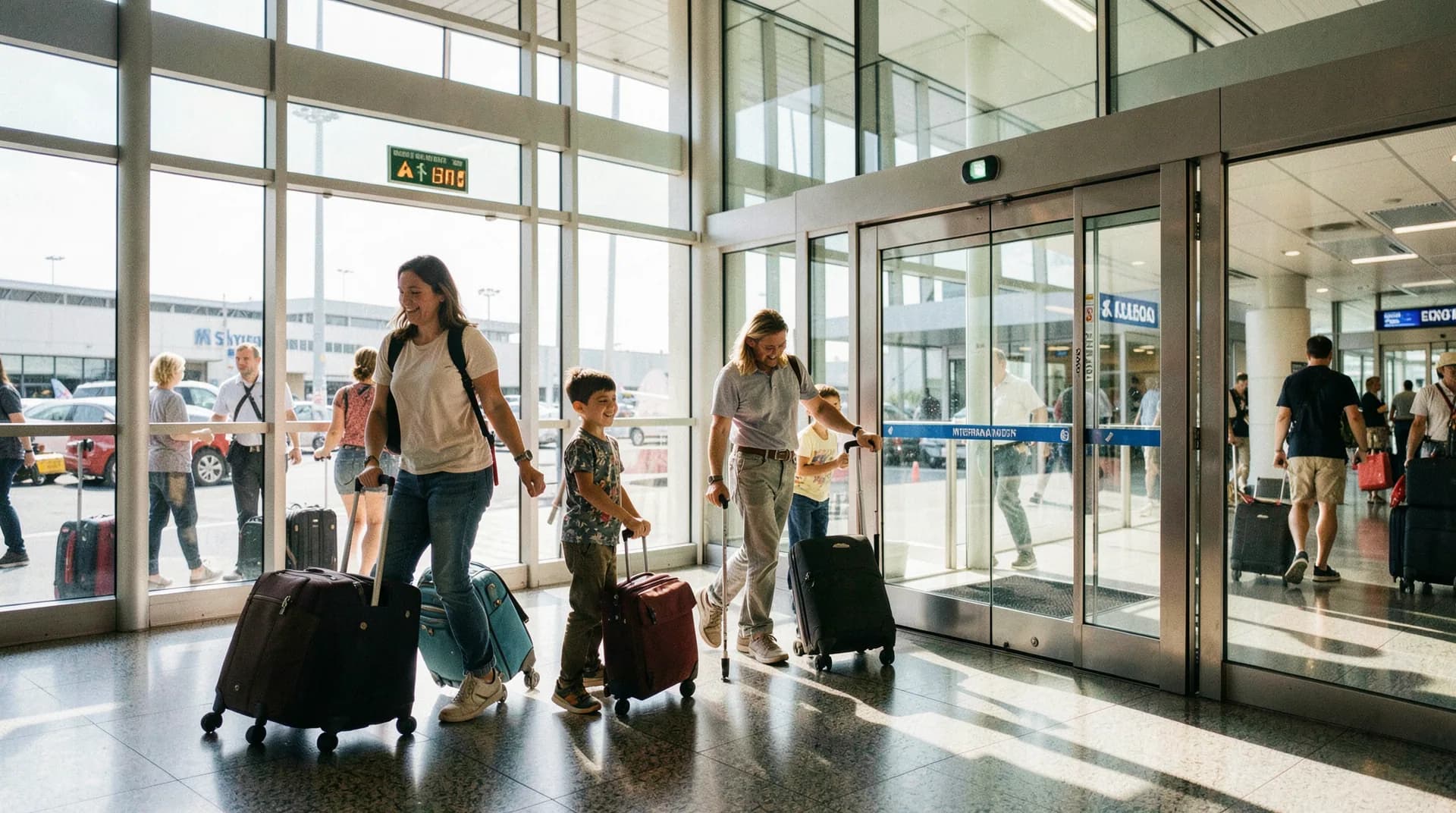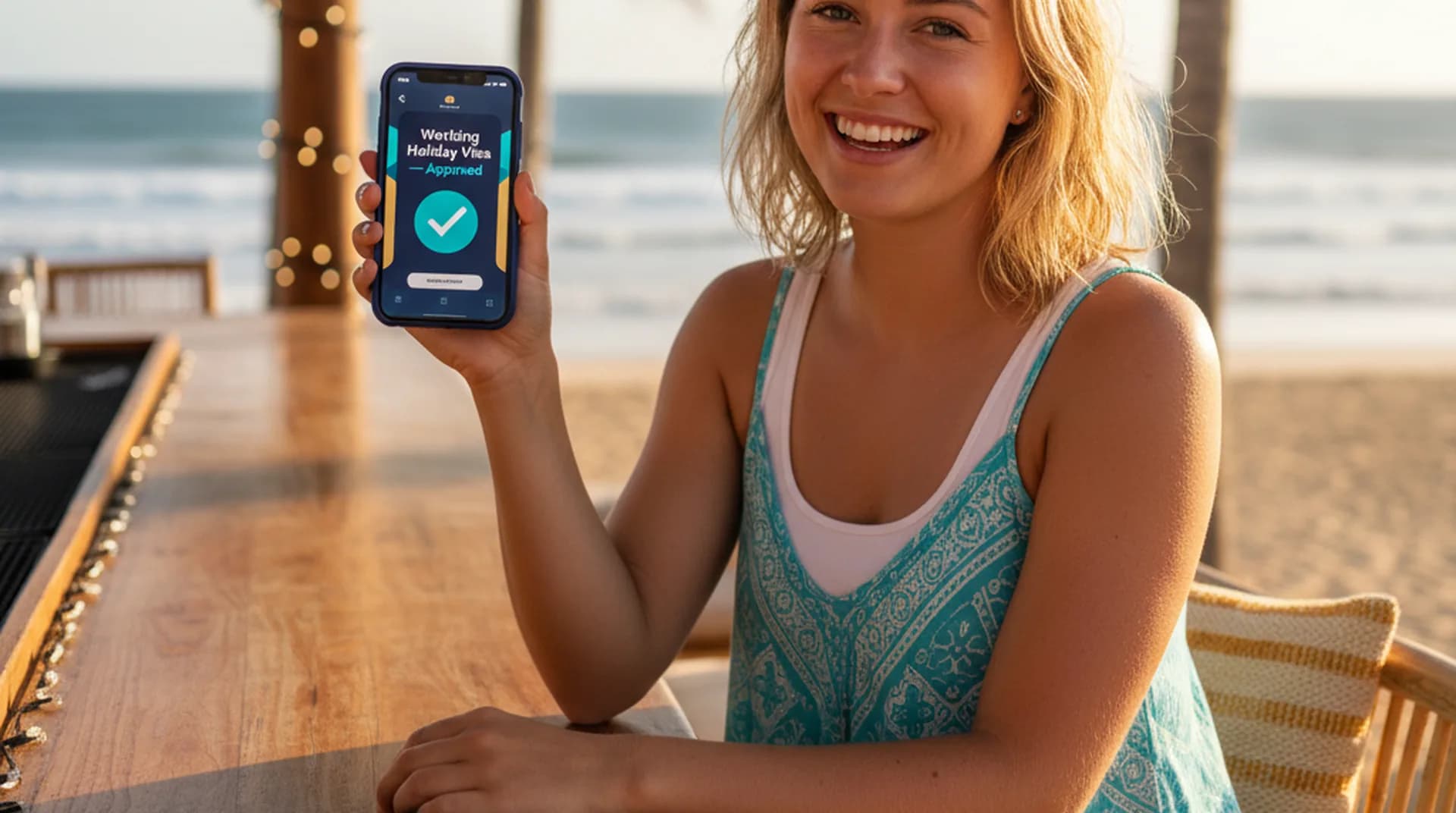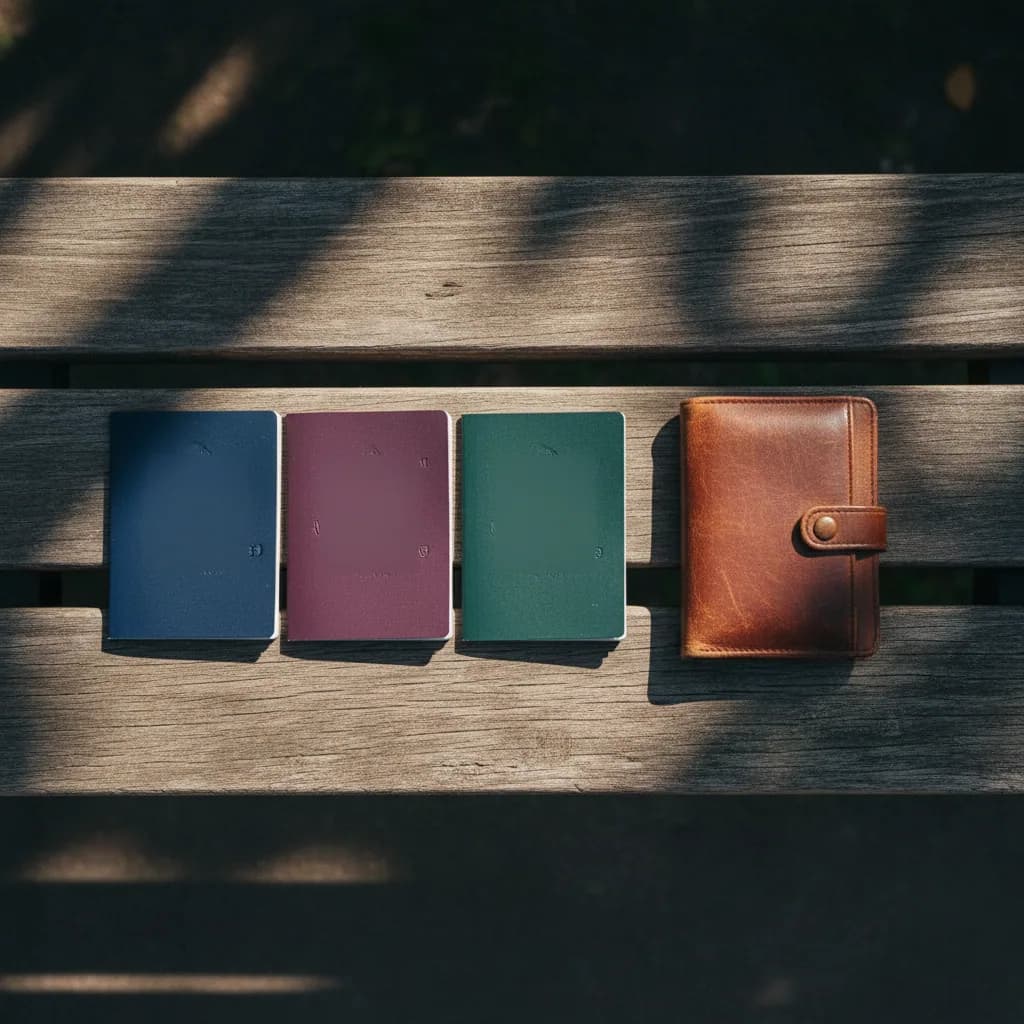
Visiting Australia as an American Family: Kids, Partners and Mixed Passports
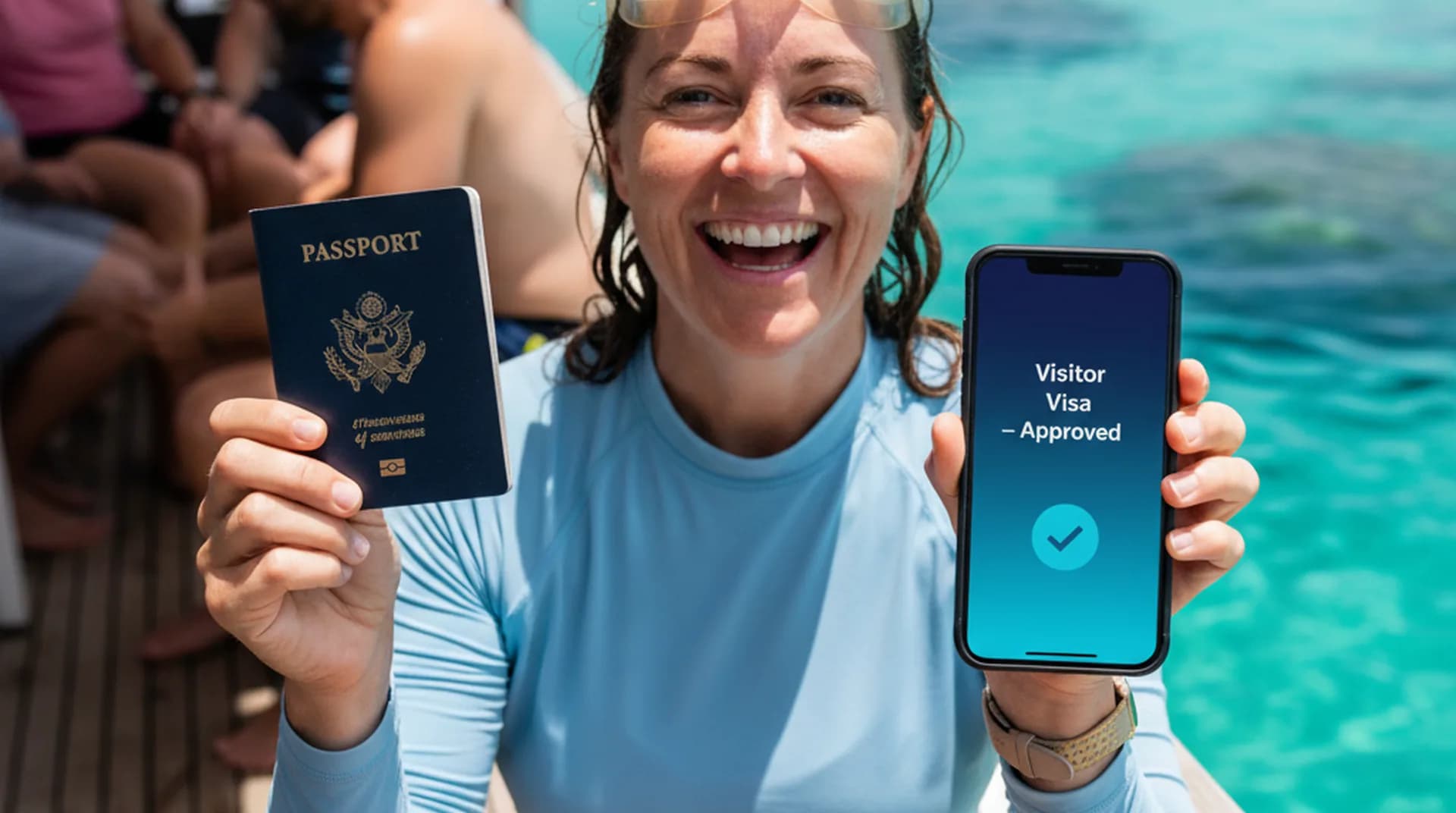
Every member of an American family applies for their own Australian visa, babies included (Australian and New Zealand citizens aside). US passport holders each get an ETA in the official app, and one phone can submit and pay for all of them. A relative whose passport isn't on the ETA or eVisitor lists may need a Visitor visa (subclass 600), which takes weeks, so lodge that first.
Independent guide — not a government service. Australian Visa Online is an independent information resource. We are not affiliated with the Australian Government or the Department of Home Affairs, and we do not lodge applications on your behalf.
The rule behind all of this is simple: your visa depends on your passport, not on where you live or who you're married to. For how the ETA works for US passport holders, see our ETA guide for US citizens. For the step-by-step trip checklist, see traveling to Australia from the USA.
Which visa each family member needs
| Traveler's passport | Visa for a visit | Where to apply | Government charge |
|---|---|---|---|
| United States | ETA (subclass 601) | Australian ETA app | AUD 20 |
| Canada, Japan, South Korea, Singapore, Malaysia and other ETA-list passports | ETA (subclass 601) | Australian ETA app | AUD 20 |
| UK (British Citizen), Ireland and other passports on the eVisitor list | eVisitor (subclass 651). Many can also use the ETA | Online, through ImmiAccount | eVisitor is free |
| Mexico, India, the Philippines, mainland China and other passports not on either list | May be eligible for a Visitor visa (subclass 600) | Online, through ImmiAccount | From AUD 250 (Tourist stream, outside Australia) |
| New Zealand | No visa needed in advance. Special Category visa (subclass 444) on arrival | At the border | None to apply in advance |
| Australian citizen (including dual US–Australian citizens) | No visa. Should travel on an Australian passport | Not applicable | None |
Green Card holders: a Green Card isn't a passport, so it doesn't decide anything here. Your spouse's or relative's passport does. The ETA also can't be used with "a non-citizen passport, certificate of identity or other travel document," so a US re-entry permit or refugee travel document won't work for it.
Every traveler needs their own visa, babies included
Home Affairs is clear: "You can't include family members in your application. Each family member, including those listed on your passport, must submit a separate application." That applies to the ETA, the eVisitor and the Visitor visa.
For US family members on the ETA, three things make it easier:
- One phone, one payment. "If all family members apply using the same mobile device, you can submit and pay for the applications at the same time." A family of four pays AUD 20 each, AUD 80 in total.
- Each person must be there. A family member can help, "but you must be physically with them when you apply." You can't do a teenager's ETA for them while they're away.
- Photograph each child alone. The app takes a live photo, and Home Affairs' video guide says "there are no people other than yourself in the photo." Take each child's photo on its own.
Check each child's passport expiry date too. An ETA lasts 12 months or until the passport expires, whichever is shorter. A child whose passport runs out before the trip ends needs a new passport first, then a new ETA.
Home Affairs also says it "might not grant this visa if it is not in the best interests of an applicant under 18."
A spouse or partner on a non-US passport
If your spouse holds a passport that's on the ETA list, such as a Canadian or Japanese passport, they apply in the app like you. If they hold a UK British Citizen or Irish passport, they can use the free eVisitor instead.
If their passport isn't on either list, the official wording is that they "may be eligible for a Visitor (subclass 600) visa." That includes Mexican, Indian, Filipino and mainland Chinese passports. Here's what the Visitor visa involves:
- Cost: from AUD 250 per applicant for the Tourist stream, applied for outside Australia.
- Processing: Home Affairs' tool shows the Tourist stream at 50% processed in 18 days and 90% in 38 days. It "does not guarantee" those times.
- Stay: "Generally, we grant a stay period of 3 months. We might grant a stay of up to 12 months in certain circumstances."
- Documents: Home Affairs asks for proof of funds (such as "itemised personal bank statements for a 3 month period") and proof of reasons to return home (such as "a letter from your employer stating you plan to return to your job"). If you're visiting relatives in Australia, "a letter from your relative or friend in Australia, inviting you to visit" is on the list too.
- Health checks: for a visit under 6 months, Home Affairs' health table says no exams are needed "unless special circumstances apply." The exception is Visitor visa applicants aged 75 or older, who need a medical examination and a serum creatinine/eGFR test. Keep that in mind if a grandparent is joining you.
Our Visitor visa (subclass 600) guide has the full document list.
Dual US–Australian citizens
If anyone in your family is an Australian citizen as well as a US citizen, they can't get an ETA. Home Affairs says: "If you hold an ETA eligible passport, but you are also an Australian citizen, you cannot apply for an ETA. Australian citizens have an automatic right of entry and do not need a visa to enter Australia."
Home Affairs says Australian citizens "should use their Australian passport to enter and leave Australia." Without one, entry "will be more difficult," and "the airline might also stop you from boarding a plane to Australia." If a child is an Australian citizen too, the same applies to them. Keep the US passport for the US side of the trip, and check US rules for leaving and returning to the US. Our dual citizenship guide covers the Australian side in more depth.
Dual citizens of two other countries
Some American families have a parent or child who is also Irish, British or another nationality. Two rules apply:
- Declare the other passport. "If you hold more than one passport, you must declare this in your ETA application and provide details of your other passports."
- Travel on the passport you applied with. "You must use the passport you used when applying for your visa for both entering and leaving Australia." Present a different one and you "may be refused boarding."
A US–Irish or US–British (British Citizen) dual national can choose the free eVisitor on their Irish or UK passport. If they do, that's the passport they must use to enter and leave Australia.
New Zealand family members
A New Zealander in your family doesn't apply for anything in advance. "New Zealand citizens with a valid New Zealand passport do not need to apply for a visa before coming to Australia." The Australian Border Force says it grants "most New Zealand citizens" a Special Category visa (subclass 444) on arrival, "subject to meeting health and character requirements." The Australian Border Force notes that "New Zealand citizens with criminal convictions might not be eligible."
Children traveling with one parent
On an ETA or eVisitor, Form 1229 isn't part of the application. The form itself says it "is not for the use of … Electronic Travel Authority (ETA) or eVisitor applicants who are under 18 years of age."
On a Visitor visa, it is. If your child needs a 600 and a parent with a legal right to decide where they live isn't traveling with them, that parent "must complete either: Form 1229 … a statutory declaration giving their consent." If the child won't be staying with a relative or legal guardian, you'll also need Form 1257. Under-18s "should provide a copy of your birth certificate showing the names of both parents."
At the airport: a parent can fill in the Incoming Passenger Card for their children. Children with an ePassport who are 7 or older and at least 1.1 m tall may be able to use SmartGate with a parent or guardian. Under-7s can't use SmartGate, and children under 16 can't use it without a parent or guardian.
Timing a mixed-passport trip
The rule is to start with the slowest application.
- Lodge any Visitor visa (600) applications first. Home Affairs says: "Do not arrange to travel to Australia until we let you know, in writing, that we have granted you the visa."
- Check the grant. A 600 can be granted "with a single entry or multiple entry," and the stay length is decided "case by case." Make sure it fits your dates.
- Then do the ETAs. Most are decided immediately, and each lasts 12 months, so there's no rush once the trip is inside that window. See how long the ETA takes for Americans.
- Book the non-refundable parts last.
If anyone in the family has a criminal conviction, Home Affairs' advice is that they apply for a Visitor visa (subclass 600) too, even on a US passport. See our guide to visiting Australia with a DUI or criminal record.
Worked example: one family, three visa types
Say you're the Riveras from Phoenix. Daniel has a US passport. His wife Priya has an Indian passport and a US Green Card. Their kids, Maya (9) and Leo (4), have US passports. Priya's mother, Asha, is 77 and will fly from India on her Indian passport to meet them in Sydney. This family is hypothetical.
- Priya and Asha each lodge their own Visitor visa (600) application in ImmiAccount. That's from AUD 250 each. Priya's Green Card doesn't change which visa she needs.
- Asha is over 75, so she needs a medical examination and a serum creatinine/eGFR test. Home Affairs says you "can complete your health examinations before you apply or you can wait until we tell you to have them."
- The family waits for both grants in writing before booking.
- Daniel then does ETAs for himself, Maya and Leo on one phone, with each child photographed alone and physically present. That's AUD 60, paid in one go.
- At Sydney airport, Maya may be able to use SmartGate with a parent. Leo is under 7, so he can't.
Government charges come to AUD 60 for the ETAs, plus "from AUD 250" for each Visitor visa. Health checks cost extra.
Frequently Asked Questions
Do children need their own ETA to visit Australia?
Yes. Every family member must submit a separate application, including babies and children. For US passport holders that means a separate ETA for each child, at AUD 20 each. If everyone applies on the same phone, you can submit and pay for all of them together.
Can a Green Card holder get an Australian ETA?
Not because of the Green Card. Eligibility depends on the passport. If a Green Card holder's passport is on the ETA list, they can apply in the app. If not, they may need an eVisitor (for eligible European passports) or a Visitor visa (subclass 600).
Do dual US–Australian citizens need an ETA for Australia?
No, and they can't get one. Australian citizens don't need a visa. Home Affairs says they should use an Australian passport to enter and leave Australia, and without one, the airline might stop them from boarding.
Does my child need Form 1229 to travel to Australia with one parent?
Not for an ETA or eVisitor. Form 1229 says it isn't for ETA or eVisitor applicants. It is used for a child applying for a Visitor visa (subclass 600) when someone with a legal right to decide where the child lives isn't traveling with them.
Can a New Zealand family member travel with us without a visa?
Yes. New Zealand citizens with a valid New Zealand passport don't apply for a visa in advance. They're granted a Special Category visa (subclass 444) on arrival if they meet the criteria, including character requirements.
Which family member's application should we lodge first?
The slowest one, which is usually a Visitor visa (subclass 600). The Tourist stream shows 90% processed in 38 days, while most ETAs are decided immediately. Don't book non-refundable travel until every visa in the family is granted.