Aquaculture or Fisheries Technician Visa Pathway to Australia: Complete 2026 Guide
Updated: 16 August 2026
Australia classifies an Aquaculture or Fisheries Technician under ANZSCO 311114, a Skill Level 2 occupation. VETASSESS conducts the skills assessment. The occupation sits on the Core Skills Occupation List (CSOL) but not the MLTSSL, so the eligible visas are the employer-sponsored 482 and 186. Typical 2026 salaries run AUD $58,000 to $75,000. Demand concentrates in Tasmania, South Australia and coastal aquaculture regions.
Quick Facts: Aquaculture or Fisheries Technician Migration Pathway
| Detail | Information |
|---|---|
| ANZSCO Code | 311114 (Aquaculture or Fisheries Technician) |
| Skill Level | 2 (AQF Associate Degree, Advanced Diploma or Diploma; or three years' relevant experience) |
| Skills Assessment | VETASSESS (Vocational Education and Training Assessment Services) |
| Occupation List | CSOL |
| Visa Options | 482, 186 |
| Demand Level | Moderate — tied to the growth of salmon, oyster and barramundi farming |
| Salary Range | AUD $58,000-$75,000 (SEEK / Jora, 2026) |
| Typical 189 Score | Not applicable — 311114 is not on the MLTSSL, so no subclass 189 |
| Key Challenge | Roles cluster in a few coastal regions, so location flexibility matters |
What an Aquaculture or Fisheries Technician Does in Australia
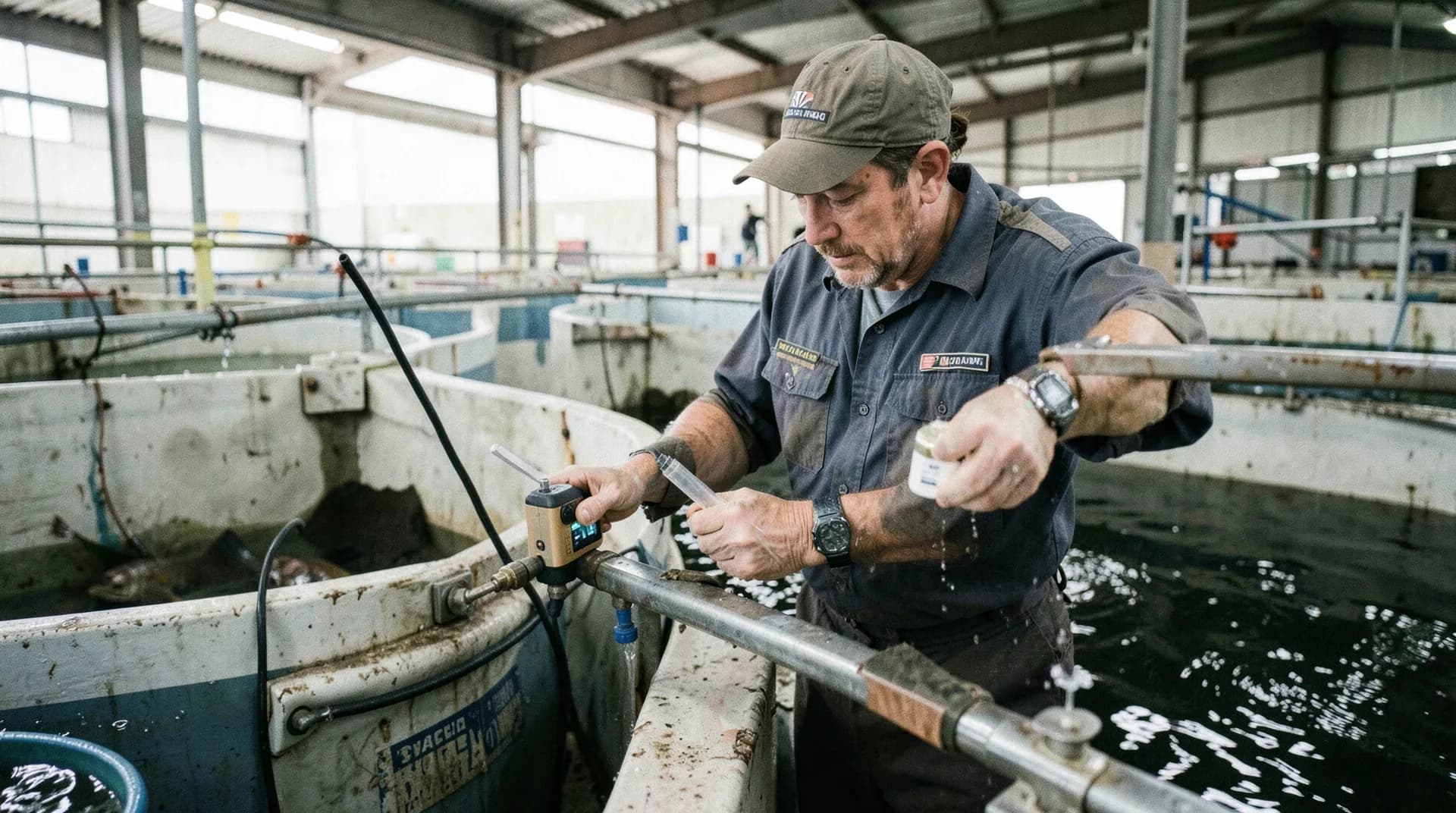
An Aquaculture or Fisheries Technician supports aquaculture farmers and fisheries scientists in raising and managing aquatic stock. The work includes onshore and offshore fish husbandry, sampling water, analysing data from ponds, pens and tanks, identifying common diseases and pests, and running tests that support research, production and stock health. It is a technical role that bridges practical farm operations and scientific monitoring.
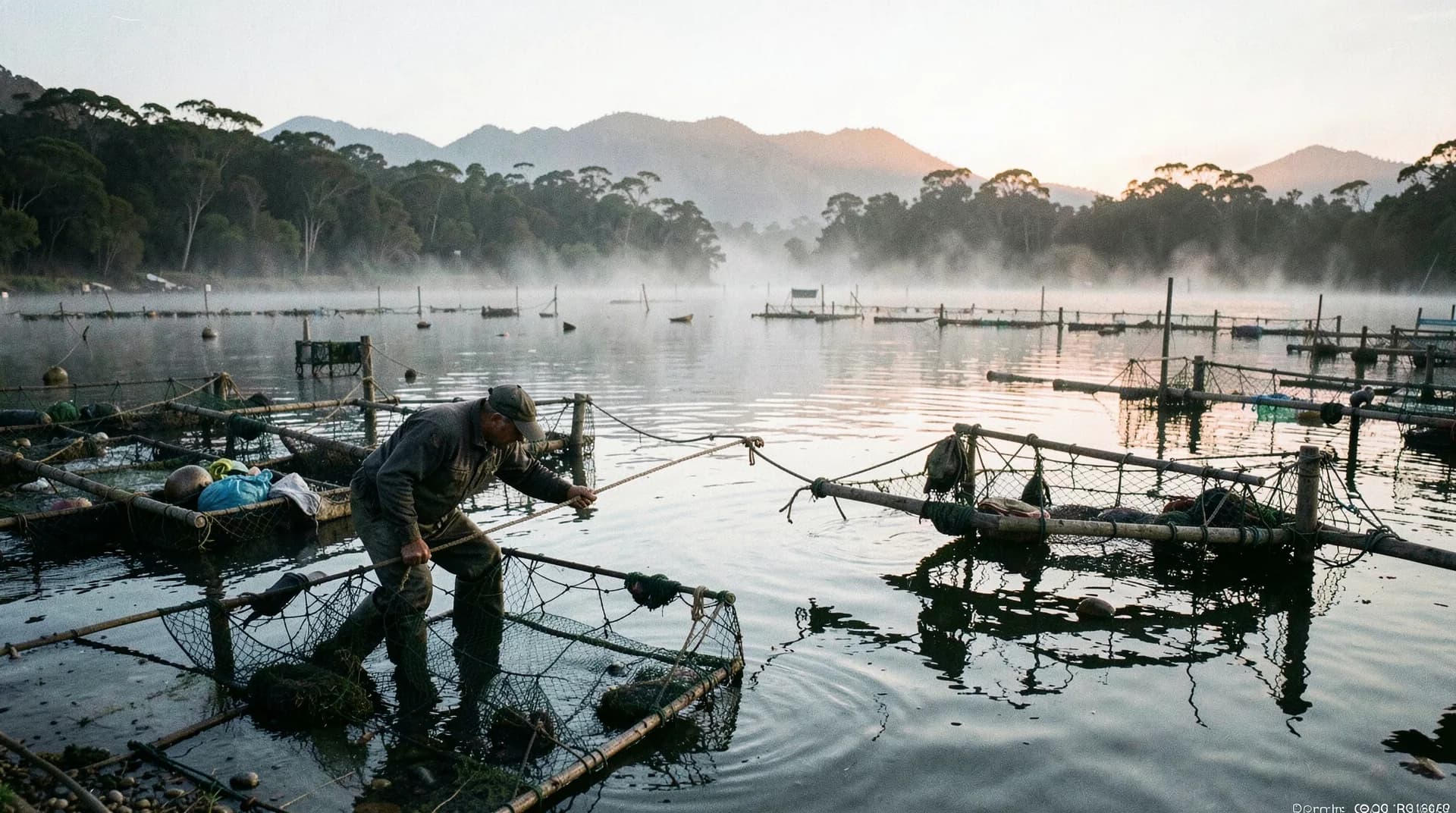
Australia's aquaculture sector has expanded steadily, and that growth drives demand. Tasmania is the centre of Atlantic salmon farming. South Australia supports tuna ranching and oyster operations. Queensland and the Northern Territory grow barramundi and prawns, while oyster and mussel farms operate along the New South Wales and Victorian coasts. Fisheries roles also appear in government monitoring, research institutes and commercial fishing support.
Most positions are based at coastal or near-coastal sites rather than in capital cities. Shift work, vessel work and exposure to weather are normal parts of the job. That regional and operational nature shapes both the demand and the visa route.
Aquaculture has been one of the faster-growing parts of Australian primary production, and the technical roles have grown with it. A salmon producer in Tasmania runs continuous water-quality monitoring, disease surveillance and feed management across multiple sea-pen sites. An oyster operation tracks growth rates, water conditions and biosecurity risks across leases. The technician sits at the centre of this data collection and stock-health work. As farms scale up and biosecurity expectations rise, producers need people who can sample, test and interpret results reliably rather than simply carry out manual tasks. That demand for genuine technical capability is what keeps 311114 on the Core Skills Occupation List.
ANZSCO Code 311114 Explained
ANZSCO 311114 sits within Unit Group 3111, Agricultural, Agritech and Aquaculture Technicians. The official duties cover assisting aquaculture farmers and fisheries scientists by sampling water and analysing data from ponds, pens and tanks, identifying common diseases and pests, and performing tests and experiments that support research, production, servicing and marketing.
The code covers two strands: aquaculture (farming aquatic stock) and fisheries (managing wild stock and supporting fisheries science). If your work is plant or land-based agriculture, the Agricultural and Agritech Technician code (311111) fits instead. If you manage a farm rather than provide technical support, the Aquaculture Farmer pathway may be the better match. Read the full task list on the ANZSCO code finder and align your duties carefully.
Skills Assessment
VETASSESS (Group C Technical Occupation)
VETASSESS assesses Aquaculture or Fisheries Technician as a Skill Level 2 occupation. Confirm current requirements on the VETASSESS occupation page.
Requirements:
- A qualification assessed as comparable to an AQF Associate Degree, Advanced Diploma or Diploma in a highly relevant field such as aquaculture, marine science, fisheries or applied biology
- Post-qualification employment at an appropriate skill level, with more employment required where the qualification is less related
- Where you hold no formal qualification, at least three years of relevant experience may be considered, though a qualified pathway is stronger
Assessment cost: AUD $1,096 offshore or AUD $1,205.60 onshore, including GST (effective 22 October 2025).
Processing time: Around 7 weeks standard, or roughly 10 business days with Priority Processing for an additional AUD $825 offshore.
Common rejection reasons: A general science or environmental qualification with no aquaculture or fisheries specialisation is the common failure, especially when paired with references that describe deckhand or general labour duties rather than water sampling, disease monitoring and stock-health work. References that show technical monitoring and data work assess far more strongly.
Visa Pathways for Aquaculture or Fisheries Technicians
ANZSCO 311114 is on the CSOL but not the MLTSSL. The points-only 189, 190 and 491 visas are not available. The realistic routes are employer-sponsored.
Subclass 482 — Skills in Demand Visa
This is the primary pathway. An approved aquaculture or fisheries employer sponsors you for a genuine technical role.
- Visa fee: AUD $1,895 (primary applicant, Core Skills stream, 2026)
- Constraint: The sponsoring company must hold sponsor approval and pay at or above the relevant income threshold
- Processing: Home Affairs published timeframes vary by stream and sponsor accreditation
- Quirk: The large salmon producers in Tasmania and established prawn, barramundi and oyster operators are the realistic sponsors, since they have the scale and the compliance systems to support visa workers.
Subclass 186 — Employer Nomination Scheme
Permanent residency through employer sponsorship, via the Direct Entry stream or the Temporary Residence Transition stream after time on a 482.
- Visa fee: AUD $6,140 (primary applicant, 2026)
- Constraint: Direct Entry requires a positive skills assessment and at least three years of relevant experience
- Quirk: Technicians commonly move from a 482 to a 186 once they have proven themselves at a single producer, which suits the long production cycles in the industry.
There is no points-tested pathway for this code, so a points strategy section does not apply. Your preparation centres on the skills assessment and on securing a sponsoring employer in an aquaculture region.
State Nomination
State and territory nomination through subclasses 190 and 491 is not available for Aquaculture or Fisheries Technician, because the occupation is off the MLTSSL and those visas need a points-tested occupation. Tasmania and South Australia, the two states with the largest aquaculture industries, do run skilled and regional programs, and some aquaculture employers participate in designated area migration agreements. If you are targeting a salmon or oyster region, ask prospective employers whether such an agreement applies, since it can broaden sponsorship options beyond the standard skilled program.
Salary and Employment Outlook
| Role | Typical Salary Range |
|---|---|
| Aquaculture or Fisheries Technician (entry) | AUD $58,000-$65,000 |
| Aquaculture or Fisheries Technician (experienced) | AUD $68,000-$75,000 |
| Senior / Site Technician | AUD $75,000-$85,000 |
SEEK's 2026 data places the typical range between roughly AUD $70,000 and $75,000, while Jora reports a lower average near $57,500 across all listings. The spread reflects entry roles versus experienced site technicians. Salaries usually include compulsory superannuation at 11.5 per cent. Remote-site roles often add accommodation, vessel allowances or shift loadings, which raise the effective package above the base figure.
The strongest employers are Tasmanian salmon producers, South Australian tuna and oyster operations, Queensland and Northern Territory prawn and barramundi farms, and research institutes and government fisheries agencies. Pay is broadly consistent nationally, with the most isolated sites offering allowances that make total packages competitive.
Tips for a Successful Application
- Lock in the employer first. With no points pathway, the sponsoring job offer is the entry point. Concentrate on large, accredited producers in Tasmania, South Australia and the northern prawn and barramundi regions.
- Frame references around technical monitoring. Water sampling, disease identification, stock-health data and husbandry tasks carry your assessment. Deckhand or general labour wording weakens it.
- Hold a specialised qualification. An aquaculture, marine science or fisheries Diploma or Associate Degree assesses more cleanly than a general science certificate.
- Be flexible on location. Roles cluster in a handful of coastal regions. Willingness to relocate to Tasmania or regional South Australia widens your sponsor options considerably.
- Treat the 482 as the first step to 186. Long production cycles mean employers value workers who stay. Document your contribution from the start so the later permanent nomination is straightforward.
Step-by-Step Migration Roadmap
- Confirm your duties match ANZSCO 311114
- Check 311114 on the Core Skills Occupation List
- Confirm VETASSESS is your assessor on the skills assessment bodies list
- Gather qualification documents and technical employment references
- Lodge your VETASSESS skills assessment
- Search for an approved-sponsor aquaculture or fisheries employer
- Have the employer nominate you for a subclass 482
- Sit an English test to meet the visa requirement
- Lodge the 482 visa application
- After qualifying time, pursue the subclass 186 for permanent residency
- Complete health and character checks
- Receive the grant and relocate
Frequently Asked Questions
Can an Aquaculture or Fisheries Technician apply for the subclass 189 visa?
No. ANZSCO 311114 is on the Core Skills Occupation List but not the MLTSSL, so the points-only independent 189 visa is closed. The route to permanent residency runs through the employer-sponsored 186, usually after a period on a 482. The Skilled Occupation List 2026 explains how list status determines visa access.
Where in Australia are the most aquaculture jobs?
Tasmania leads on Atlantic salmon, South Australia supports tuna and oysters, and Queensland and the Northern Territory grow prawns and barramundi. Oyster and mussel farms also operate along the New South Wales and Victorian coasts. Location flexibility strongly improves your sponsorship prospects.
How does this role differ from an aquaculture farmer?
A technician provides technical support such as water sampling, disease monitoring and stock-health analysis. An aquaculture farmer runs the operation and carries commercial responsibility. The two have different ANZSCO codes and different assessment expectations, so match your real duties before choosing.
Do I need a degree, or is a diploma enough?
A relevant Diploma or Associate Degree in aquaculture, marine science or fisheries gives a clean assessment at Skill Level 2. A full degree is not required. Where you hold no formal qualification, VETASSESS may consider at least three years of relevant experience, though a qualified application is more reliable.
What is the demand outlook for this occupation in 2026?
Moderate and tied to the continued growth of salmon, oyster, prawn and barramundi farming. As production expands, technical roles in stock health and monitoring grow with it. For a broader view of demand, see the most in-demand occupations list.