Marine Biologist Visa Pathway to Australia: Complete 2026 Guide
Updated: 16 August 2026
Australia classifies Marine Biologist under ANZSCO 234516. VETASSESS conducts the skills assessment under Group A. The occupation is on the MLTSSL and the Core Skills Occupation List, unlocking subclasses 189, 190, 491, 482, and 186. Typical 2026 salaries range AUD $65,000-$115,000. With no state nomination pathway and a tightly clustered employment base around AIMS Townsville and reef-science institutions, employer sponsorship is the working route.
Quick Facts: Marine Biologist Migration Pathway
| Detail | Information |
|---|---|
| ANZSCO Code | 234516 (Marine Biologist) |
| Skill Level | 1 (Bachelor degree or higher) |
| Skills Assessment | VETASSESS — Group A |
| Occupation List | MLTSSL and CSOL |
| Visa Options | 189, 190, 491, 482, 186 |
| Demand Level | Moderate future demand — OSL 2025 records "No Shortage" nationally; reef science and aquaculture drive concentrated sector demand |
| Salary Range | AUD $65,000-$115,000 (SEEK Salary Hub, May 2026; senior research roles higher) |
| Typical 189 Score | 85+ given the small occupation ceiling |
| Key Challenge | Very small employment base — sponsorship is the realistic path |
What a Marine Biologist Does in Australia
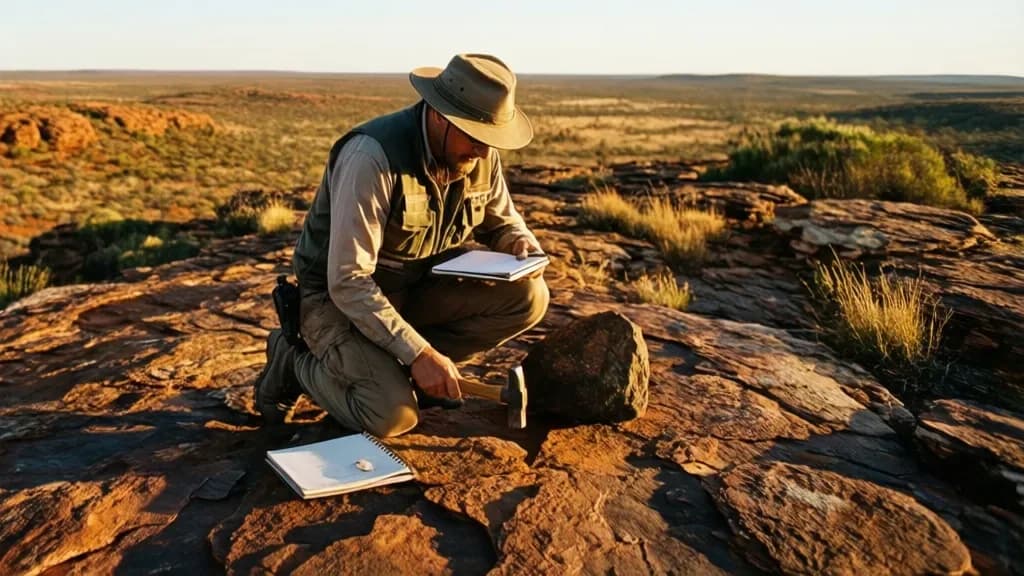
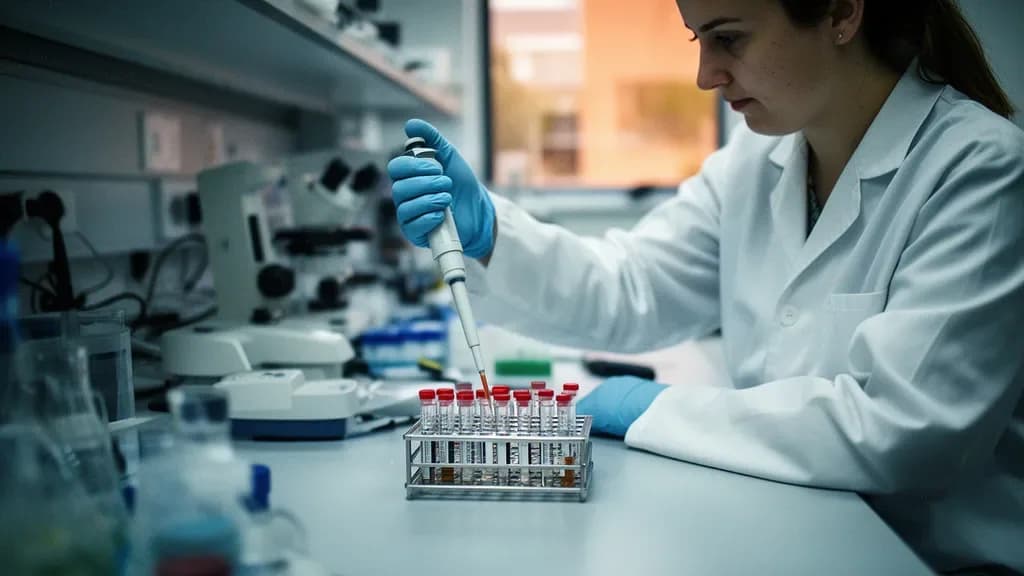
Marine biologists study the anatomy, physiology, behaviour, and ecology of marine organisms and their environments. Work spans coral biology, fish biology, marine mammal research, marine invertebrate science, oceanographic biology, and applied marine science (fisheries assessment, aquaculture science, marine spatial planning). Australia's marine estate — the world's third largest — and the Great Barrier Reef create research demand that draws international marine scientists.
Demand is concentrated around five employer clusters. The Australian Institute of Marine Science (AIMS), headquartered in Townsville with operations in Darwin and Perth, is Australia's flagship marine research institution. The Great Barrier Reef Marine Park Authority and the Reef and Rainforest Research Centre coordinate reef science across Queensland. CSIRO Environment and Oceans and Atmosphere run marine research lines in Hobart and Brisbane. Universities — James Cook University, University of Tasmania (IMAS), University of Queensland (CRC programs), Curtin, Murdoch, Flinders — anchor marine biology teaching and research. State fisheries agencies (DPI NSW, Agriculture Victoria, Department of Primary Industries QLD, DPIRD WA) employ marine biologists in stock assessment and fisheries science.
ANZSCO 234516 — Code Mapping
234516 sits within the 2345 Life Scientists unit group. Adjacent codes that may fit better for some applicants:
- 234511 Life Scientist (General) — if work spans marine and freshwater or marine plus other systems
- 234518 Zoologist — if focus is specifically marine animal biology, behaviour, or conservation
- 234112 Agricultural Scientist (Aquaculture) — if work is specifically aquaculture science
- 234399 Environmental Scientists nec — for marine ecologists doing primarily environmental impact assessment
Pure reef science, fish biology, and marine ecology roles use 234516. Aquaculture science specialists may also use the dedicated Aquaculture or Fisheries Scientist pathway where applicable.
Skills Assessment — VETASSESS Group A
Marine Biologist is assessed by VETASSESS under Group A criteria.
Qualification requirements:
- Australian Bachelor degree or higher equivalent
- Highly relevant field of study — Marine Biology, Marine Science, Biology with substantial marine specialisation, or related natural sciences with a marine major
Employment requirements:
- At least one year of post-qualification employment in the last five years
- Minimum 20 hours per week
- Duties highly relevant to the nominated occupation
Assessment cost:
- Offshore applicants: AUD $1,096
- Onshore applicants (incl. GST): AUD $1,205.60
- Priority processing surcharge: AUD $825 / AUD $907.50
Processing time: 12-14 weeks standard. Priority processing aims for 10 business days.
Common rejection reasons: Tour-operator naturalists and dive-guide marine biologists with duties that read as guiding rather than scientific work; general biology degrees without substantial marine content; duties that fit aquaculture (234112) or fisheries science more cleanly than marine biology; field-survey roles at consultancies that lack scientific output evidence.
Visa Pathways for Marine Biologists
Subclass 482 — Skills in Demand Visa
Employer sponsorship is the dominant route in 2026 given the absence of state nomination. AIMS, CSIRO, and the major reef-science universities are experienced 482 sponsors.
- Visa fee: AUD $4,015 (Core Skills stream, primary applicant)
- Salary threshold: Core Skills Income Threshold applies; Specialist Skills stream above AUD $146,576
- Duration: Up to 4 years
- Reality: Research positions typically clear the Core Skills threshold; Specialist Skills is reached at senior fellow / group leader levels
Subclass 186 — Employer Nomination Scheme
Permanent residency through Direct Entry or TRT after two years on a 482.
- Visa fee: AUD $6,140
- Streams: Direct Entry or TRT
- Reality: AIMS, CSIRO, and university sponsors typically prefer TRT after a 482 probation period
Subclass 189 — Skilled Independent Visa
Open in principle but capacity-constrained in 2026.
- Visa fee: AUD $6,135
- Processing time: 3-12 months when invitations issue
- Realistic points target: 85+ to be competitive
Subclass 491 — Skilled Work Regional Visa
Particularly relevant for marine biologists because most marine science employment sits in regional Australia — Townsville, Cairns, Darwin, Hobart, Perth's outer suburbs. Available via regional employer sponsorship or family sponsorship.
- Visa fee: AUD $6,140
- Points boost: +15 from regional nomination
- Pathway: 5-year provisional visa converting to subclass 191 PR after 3 years of regional residence
Subclass 190 — State Nominated Visa
234516 Marine Biologist is not on any state's 2025-26 skilled occupation list for 190 nomination.
- Visa fee: AUD $6,140
Points Test Strategy
| Points Factor | Points | Notes |
|---|---|---|
| Age (25-32) | 30 | Maximum bracket |
| Age (33-39) | 25 | Strong but not max |
| Qualification (PhD) | 20 | Standard for AIMS and academic roles |
| Qualification (Master's) | 15 | Common in industry and government roles |
| Qualification (Bachelor's) | 15 | Skill Level 1 minimum |
| English (Superior — 8.0+) | 20 | Often decisive at this ceiling |
| English (Proficient — 7.0) | 10 | Realistic for many applicants |
| Overseas Experience (5-7 years) | 10 | After VETASSESS confirms relevance |
| Australian Experience (3 years) | 10 | Postdoc time counts |
| Family-sponsored Regional (491) | 15 | Where applicable |
| Partner Skills (skilled) | 10 | If partner has positive assessment |
Scenario 1 — Reef science PhD with 3-year AIMS postdoc, 33, Superior English
25 (age) + 20 (PhD) + 20 (English) + 10 (Australian experience) + 5 (overseas) = 80. Adding partner skills (+10) or family-sponsored regional (+15 via 491) lifts this above 85.
Scenario 2 — Mid-career fisheries scientist, 35, Proficient English, 8 years experience
25 (age) + 15 (Master's) + 10 (English) + 15 (overseas experience 8+) = 65. Realistic route: 482 sponsorship through a state fisheries agency or research institute, then 186 TRT.
State Nomination
No Australian state or territory currently nominates ANZSCO 234516 for the 190 or 491 program in 2025-26. This is consistent with the OSL 2025 "No Shortage" designation and reflects marine biology's small employment ceiling.
Queensland has historically expressed sectoral interest in reef science capability, and Northern Territory has interest in tropical aquaculture and marine ecology, but these typically channel through DAMA arrangements (Townsville City Deal, NT DAMA) rather than direct 190 listing. Check the relevant state migration pages for current DAMA occupation lists.
Salary and Employment Outlook
What Marine Biologists Earn in 2026
| Role | Typical Salary Range |
|---|---|
| Graduate Marine Biologist / Research Assistant | AUD $60,000-$75,000 |
| Marine Biologist (Mid-Level) | AUD $80,000-$105,000 |
| Senior Research Scientist / Lab Head | AUD $110,000-$140,000 |
| Principal Scientist / AIMS Senior Researcher | AUD $145,000-$190,000+ |
| Fisheries Science Manager | AUD $130,000-$170,000 |
SEEK Salary Hub shows median marine biologist salaries in the $65,000-$75,000 band as of May 2026, reflecting the entry-to-mid-level concentration of advertised roles. SalaryExpert reports an average closer to $112,000 capturing more senior research positions. Sydney pays around $70,000 average; Melbourne, Perth, and Adelaide cluster between $106,000 and $115,000 for mid-career roles. Total packages typically include 11.5% superannuation; AIMS, CSIRO, and university positions offer competitive accumulation superannuation arrangements.
Highest-Paying Sectors
- AIMS (Australian Institute of Marine Science) — Townsville HQ, with Darwin and Perth nodes — competitive base, strong superannuation, structured progression
- CSIRO Environment and Oceans and Atmosphere — Hobart and Brisbane — strong on conditions
- Universities — JCU, UTAS (IMAS), UQ, Curtin, Murdoch — top of academic scale at senior research fellow level
- State fisheries agencies — DPI NSW, Agriculture Victoria, DAFF QLD, DPIRD WA — solid public-sector packages
- Mining and infrastructure consultancies — environmental impact work for offshore developments pays mid-to-strong day rates
Geographic Concentration
Townsville is Australia's marine science capital — AIMS HQ, James Cook University's marine biology and aquaculture school, GBRMPA presence. Hobart concentrates oceanographic and Southern Ocean research through CSIRO and IMAS. Cairns and Townsville share reef-science capacity. Perth has marine science capability at AIMS WA, Murdoch, Curtin, and UWA. Darwin hosts AIMS NT and Charles Darwin University. Sydney and Melbourne have smaller but specialised marine research capacity.
Tips for a Successful Application
1. Demonstrate scientific output, not field experience alone
VETASSESS Group A assessments distinguish marine scientists from marine technicians or dive-guide naturalists by scientific output — publications, data analysis, experimental design, supervision of more junior researchers. Field experience alone, no matter how extensive, does not establish scientist-level skill.
2. Choose 234516 over 234511 when work is marine-specific
If your degree and employment are clearly marine-focused, use 234516. Marine biologists who default to 234511 Life Scientist (General) face an immediate VETASSESS query about why the specific code does not fit. The named code yields a faster, cleaner assessment.
3. Target AIMS and reef-science institutions for sponsorship
The most reliable sponsorship pipeline for marine biologists runs through AIMS (Townsville, Darwin, Perth), CSIRO Hobart, IMAS Tasmania, and James Cook University. Build connections through international reef and marine science conferences, co-authored publications with Australian groups, and direct outreach to Group Leaders.
4. Consider the 491 regional pathway in Townsville and Cairns
Most marine biology employment is regional. If you secure a job offer in Townsville, Cairns, Darwin, Hobart, or similar regional centres, the 491 with family sponsorship may be faster than the 482 route, particularly if you have family in Australia who can act as sponsor.
5. Document research independence beyond the PhD
VETASSESS expects post-PhD evidence of research independence — first-author publications without your supervisor, grants awarded in your name, supervision of Honours or PhD students. Without these, an assessment based solely on PhD-period work may face questions about whether you're operating at scientist or research-assistant level.
Step-by-Step Migration Roadmap
- Confirm the correct ANZSCO code — verify 234516 fits via how to find your ANZSCO code
- Confirm list assignment — Core Skills Occupation List and Skilled Occupation List 2026
- Gather qualification documents — transcripts, completion letters, publication list
- Prepare employment references — duties statements on letterhead, dated, signed by supervisor
- Sit your English test — aim for Superior 8.0
- Apply to VETASSESS — Group A full skills assessment
- Secure an Australian sponsorship offer — AIMS, CSIRO, university postdoc, or state fisheries agency
- Lodge 482 visa application — sponsor nominates, employee applies
- Work on 482 for 2 years — accrue Australian experience
- Lodge 186 TRT application — through sponsoring employer
- Complete health and character checks
- Receive permanent visa grant
Frequently Asked Questions
Is Marine Biology a viable migration occupation given the small employment base?
Yes, but the realistic pathway is narrow. The 189 invitation ceiling is small, and no state nominates 234516 directly. Sponsored research positions through AIMS, CSIRO, the major reef-science universities, and state fisheries agencies are the working route. International applicants with strong reef, fish, or marine mammal science profiles continue to receive sponsorship offers each year.
Should I use 234516 Marine Biologist or 234112 Aquaculture/Fisheries Scientist?
Use 234516 if your work focuses on marine biology for understanding — coral biology, fish behaviour, marine mammal research, marine ecology. Use the Aquaculture or Fisheries Scientist pathway if your work centres on applied aquaculture production or fisheries stock assessment for commercial management. VETASSESS scrutinises this distinction carefully.
Can I work as a marine biologist in tourism (e.g. dive operations) on this code?
Generally no. Tourism-sector marine biologists working primarily as dive guides, naturalist interpreters, or eco-tour guides have duties that read as tourism rather than scientific research. VETASSESS will likely return an unfavourable outcome unless the role involves substantial scientific data collection and analysis — for example, citizen-science programs with publication output.
How long is a typical AIMS or CSIRO postdoctoral contract?
AIMS and CSIRO postdoctoral positions typically run 2-3 years initially, with extension or conversion to ongoing positions depending on funding and performance. The two-year minimum is well-aligned with the 482 → 186 TRT sequence, allowing applicants to transition to permanent residency through the same employer.
What's the realistic timeline from offshore application to permanent residency?
Realistic timeline: 3-4 months for VETASSESS; 6-9 months from sponsorship offer to 482 grant; 24 months on the 482 with employer; 6-12 months for 186 TRT processing. Total: approximately 3.5-4.5 years from initial assessment to permanent visa grant.