Agricultural and Agritech Technician Visa Pathway to Australia: Complete 2026 Guide
Updated: 16 August 2026
Australia classifies the Agricultural and Agritech Technician role under ANZSCO 311112. VETASSESS conducts the skills assessment. The occupation is on the Core Skills Occupation List (CSOL), unlocking subclasses 482 (Skills in Demand) and 186 (Employer Nomination Scheme). Typical 2026 salaries range AUD $65,000-$95,000. The code is new — it was added in the December 2024 CSOL update specifically to recognise precision agriculture, virtual fencing and automated milking specialists.
Quick Facts: Agricultural and Agritech Technician Migration Pathway
| Detail | Information |
|---|---|
| ANZSCO Code | 311112 (Agricultural and Agritech Technician) |
| Skill Level | 2 (AQF Diploma or higher; 3+ years experience can substitute) |
| Skills Assessment | VETASSESS (Vocational Education and Training Assessment Services) |
| Occupation List | CSOL only |
| Visa Options | 482 (Skills in Demand), 186 (Employer Nomination Scheme) |
| Demand Level | High — flagged in JSA's agritech workforce reporting; rural employer shortages |
| Salary Range | AUD $65,000-$95,000 (SEEK April 2026; senior $80,000-$110,000) |
| Typical 482 Score | N/A — employer sponsored, no points test |
| Key Challenge | Many applicants confuse this code with 311111 Agricultural Technician |
What This Occupation Covers in Australia
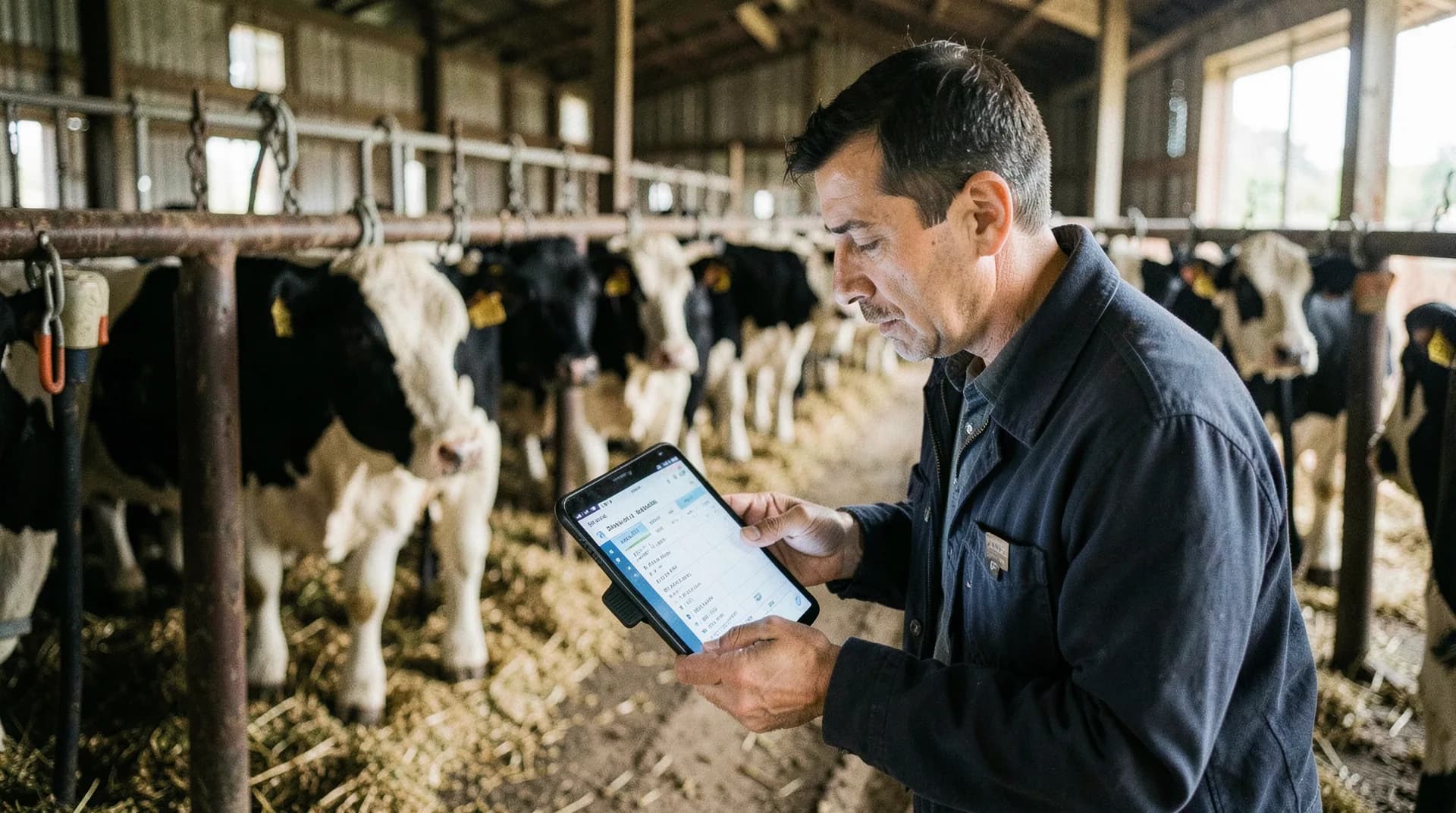
Agricultural and Agritech Technicians provide hands-on technical support across Australian farms, research stations and agritech vendors. The role splits into two streams. The first is traditional technician work — soil sampling, crop trial measurement, livestock data collection, laboratory preparation for Agricultural Research Scientists and Agronomists. The second, faster-growing, stream is agritech: installing and servicing precision agriculture hardware (variable-rate seeders, GPS guidance, soil moisture sensors), commissioning virtual fencing collars, and maintaining automatic milking systems on dairy farms.
The work is concentrated in regional Australia. Major hubs include the Riverina (NSW), the Goulburn Valley and Western Districts (VIC), the Darling Downs and Lockyer Valley (QLD), the Riverland (SA), the Wheatbelt (WA) and Tasmania's dairy belt. Employers split into three groups: large agribusiness corporates (Costa Group, GrainCorp, Tasmanian Land Company, Sundrop Farms), state and federal research bodies (CSIRO Agriculture & Food, state DPIs), and agritech vendors and resellers (DeLaval, Halter, Agrible, AgriDigital).
Australia's labour market for agritech is structurally short. Jobs and Skills Australia has flagged ongoing recruitment difficulties in the Unit Group 3111 across most states for several reporting cycles. The shortage is driven by rural geography, the rapid uptake of precision agriculture systems and a domestic VET pipeline that has not scaled with demand.
ANZSCO Code Mapping: 311112 vs 311111
The ABS introduced a clear split in ANZSCO 2022:
311111 — Agricultural Technician covers traditional technical support to Agricultural Research Scientists, Agronomists and Aquaculture or Fisheries Scientists. Field trials, sample collection, basic lab work, livestock data.
311112 — Agricultural and Agritech Technician covers the same scope plus the agritech work: installing, servicing and advising on advanced agriculture technology. Precision agricultural solutions, virtual fencing, automatic milking machines, drone-based monitoring, GPS-guided machinery.
If your day-to-day work is at least 30% agritech installation, servicing or advisory, 311112 is the correct choice. If it is purely lab and trial support, 311111 fits better. Picking the wrong code triggers a VETASSESS refusal — they apply the ABS task lists strictly. See the ANZSCO code finder for a side-by-side comparison.
Indicative tasks summarised from the ABS classification:
- Collecting and preparing biological, chemical and physical samples for laboratory analysis
- Setting up and monitoring crop and pasture trials
- Operating, calibrating and maintaining precision agriculture equipment
- Installing and servicing automatic milking systems and virtual fencing infrastructure
- Training farmer operators on new agritech platforms
- Compiling field data into reports for Agronomists and Agricultural Scientists
Skills Assessment: VETASSESS
VETASSESS is the assessing authority. The occupation sits in Skill Level 2 — AQF Diploma or higher.
Qualification requirement: A qualification assessed as comparable to an AQF Diploma or higher in a highly relevant field (agriculture, agricultural science, agritech, horticulture, agricultural engineering, mechanical or electrical engineering applied to agricultural systems). Three years of relevant employment can substitute for the formal qualification at the employer's risk.
Employment requirement (one of):
- Diploma or higher in a highly relevant field plus one year of post-qualification highly relevant employment in the last five years, or
- Diploma or higher in a less-relevant field plus two years of relevant post-qualification employment, or
- No qualification but at least three years of highly relevant employment in the last five years
Assessment cost: AUD $1,205.60 (Australian resident, GST inclusive) or AUD $1,096 (offshore, no GST). Priority processing adds approximately AUD $825-$907.
Processing time: 8-10 weeks for a standard assessment from full submission.
Common rejection reasons: Duties described in employment references that match general farmhand or production worker roles (which would map to ANZSCO 841 codes), not technician-level work. Insufficient evidence of independent technical judgement. Employer letters that lack specific equipment names, project outcomes or data examples.
Visa Pathways for 311112
Because Agricultural and Agritech Technician is on the CSOL only and not the MLTSSL or STSOL, the points-based 189 and 190 visas are not available. Two employer-sponsored pathways apply.
Subclass 482 — Skills in Demand Visa (Core Skills Stream)
The dominant pathway in 2026.
- Visa application charge (primary): AUD $4,015
- Stream: Core Skills (CSOL-aligned)
- Salary threshold: Core Skills Income Threshold (CSIT) AUD $79,423 from 1 July 2026
- Duration: Up to 4 years
- Processing time: Core Skills median 51 days; 90% within 3 months
- Pathway to PR: Subclass 186 (TRT stream) after 2 years on a 482
The CSIT can be a sticking point. Junior agricultural technician salaries advertised on SEEK often start at AUD $60,000-$70,000 plus super, which sits below the threshold. Senior agritech specialists, dairy automation engineers and broadacre precision agriculture specialists typically clear it. Regional concessional thresholds via DAMAs can fill the gap (see below).
Subclass 186 — Employer Nomination Scheme
Permanent residency through employer sponsorship.
- Visa application charge (primary): AUD $6,140
- Direct Entry: Possible for applicants with 3+ years of relevant experience and an AQF Diploma equivalent
- Temporary Residence Transition (TRT): For 482 holders with 2+ years' service with the nominating employer
- Processing time: Direct Entry median 12 months, 90th percentile 19 months; TRT median 13 months, 90th percentile 18 months
Large agribusiness corporates (Costa, Sundrop, Tasmanian Land Company) and dairy automation vendors (DeLaval, Halter) maintain steady 482 and 186 sponsorship pipelines. Smaller family-run farms can also sponsor but the administrative load deters many — most use a labour-hire intermediary.
Designated Area Migration Agreements
This is the strategic pathway worth knowing about. Multiple DAMAs cover regions where Agricultural and Agritech Technicians can be sponsored at concessional salary thresholds:
- Far North Queensland DAMA — includes agritech-aligned occupations with salary concessions
- Goldfields (WA) DAMA — niche but applicable
- Northern Territory DAMA — strong horticulture sector concessions
- South West WA DAMA — viticulture and broadacre concessions
- Victorian Great South Coast DAMA — dairy and beef concessions
Concessional thresholds typically sit AUD $10,000-$15,000 below the standard CSIT, making 482 viable for technician-level salaries. Each DAMA has its own occupation schedule and concession structure — verify the current schedule with the relevant Designated Area Representative before lodging.
Salary and Employment Outlook
| Role | Typical Salary Range (AUD) |
|---|---|
| Agricultural Technician (entry) | $60,000-$70,000 |
| Agricultural Technician (experienced) | $75,000-$85,000 |
| Precision Agriculture Specialist | $80,000-$110,000 |
| Dairy Automation Technician | $85,000-$105,000 |
| Virtual Fencing Field Engineer | $90,000-$115,000 |
| Agritech Field Service Manager | $110,000-$140,000 |
Source: SEEK Career Advice April 2026, Jora 2026 listings, agritech vendor remuneration disclosures.
The average advertised salary on SEEK in April 2026 sits between AUD $75,000 and $80,000 for "Agricultural Technician" job titles. Agritech-specific roles consistently advertise higher because the candidate pool is narrower.
Super at 11.5% applies. Many rural employers add a vehicle, fuel card, on-call allowance and remote-area housing or rental contribution that materially increases total package value — adjust your CSIT calculation accordingly with your migration agent.
Where the Work Is
- Goulburn Valley and Western Districts (VIC) — dairy automation, broadacre, horticulture
- Riverina and Murray (NSW) — irrigation, cotton, viticulture
- Darling Downs and Lockyer Valley (QLD) — broadacre, horticulture
- Riverland (SA) — viticulture, citrus, almonds
- Wheatbelt (WA) — broadacre cropping, precision agriculture
- Tasmania north-west — dairy automation hotspot
Tips for a Successful Application
-
Use agritech-specific evidence in your assessment. VETASSESS wants concrete examples — "installed and commissioned 240 Halter virtual fencing collars across two herds" beats "managed livestock technology". Bring product names, project metrics and outcomes to the assessment letter.
-
Get the qualification recognition done early. Many overseas vocational qualifications in agriculture map to AQF Certificate IV rather than Diploma. If you fall short, an AQF Diploma in Agriculture or Agribusiness from an Australian RTO (12-18 months online) can lift you across the threshold and unlock the assessment.
-
Target DAMA-eligible employers. A concessional CSIT can make the difference between a 482 grant and a refusal at a junior salary band. Identify employers in Goldfields, Far North Queensland, Great South Coast, NT and South West WA DAMA regions before applying broadly.
-
Apply through agritech vendor networks rather than open job boards. DeLaval, Halter, GPS-Ag, Trimble Ag, Topcon Agriculture, Case IH dealers, John Deere dealers and dairy automation specialists run their own international recruitment programmes for field technicians. These employers are familiar with the 482 process.
-
Build evidence of independent technical judgement. The line between Agricultural Technician (311112) and General Farm Worker (841513) is the level of autonomous decision-making. References must show you diagnose, calibrate and remediate — not just operate equipment under instruction.
Step-by-Step Migration Roadmap
- Confirm your role fits 311112 rather than 311111 (traditional technician) or a farmhand code, using the ANZSCO code finder
- Verify 311112 is on the Core Skills Occupation List
- Confirm your overseas qualification maps to AQF Diploma — pay for a preliminary VETASSESS check if uncertain
- Sit IELTS, PTE or OET — Competent English minimum (IELTS 5.0/5.0 each band) for 482 Core Skills
- Apply to VETASSESS for skills assessment — AUD $1,205, 8-10 weeks
- Identify employers in DAMA regions or large agribusiness with active 482 programmes
- Secure a job offer at or above CSIT (AUD $79,423) or DAMA concessional rate
- Employer lodges 482 nomination and SAF levy
- Lodge 482 visa application within 60 days of nomination approval
- Receive grant and relocate to the regional location
- After 2 years of 482 employment, transition to subclass 186 (TRT stream)
- Lodge subclass 186 — typically 13-19 months to PR grant
Frequently Asked Questions
Why is there a separate code for "Agritech Technician"?
ANZSCO 2022 split the previous single Agricultural Technician code into two to recognise the distinct agritech skill set. Precision agriculture, virtual fencing, automated milking and drone-based monitoring all require specialist training that traditional technicians often don't hold. The new code lets employers sponsor agritech specialists without arguing they are a separate occupation.
Can a general farmhand qualify under 311112?
No. ANZSCO Skill Level 2 requires AQF Diploma-equivalent training or three years of demonstrably technician-level experience. General farm workers, fruit pickers, station hands and harvest workers fall under different codes (mostly Unit Group 8413, Skill Level 5) and are not on the CSOL. Misclassifying farmhand work as technician work is a common refusal reason at VETASSESS.
Is the demand outlook strong in 2026?
Yes. Jobs and Skills Australia has consistently flagged the broader Agricultural Technicians Unit Group 3111 as shortage-prone across most states. The agritech segment in particular is growing — dairy automation rollouts, virtual fencing adoption and precision broadacre uptake are all expanding the addressable role count while domestic VET pipelines remain undersized. See the most in-demand occupations hub for the broader skills shortage picture.
Can a New Zealand qualification be assessed by VETASSESS?
Yes. VETASSESS routinely assesses qualifications from Lincoln University, Massey University, NMIT and Otago Polytechnic against AQF benchmarks. New Zealand citizens generally won't go through the 482 pathway because the Subclass 444 special category visa applies, but qualified non-NZ citizens with NZ-issued diplomas can use the standard VETASSESS-and-482 route.
How long do most agricultural technicians wait between job offer and visa grant?
Plan for 5-8 months from offer to grant. Allow 8-10 weeks for VETASSESS, then 4-8 weeks for the employer to complete sponsorship and nomination, then a median 51 days for the 482 Core Skills decision. Total elapsed time depends most on how complete and accurate the employer's nomination filing is — established sponsors move significantly faster than first-time sponsors.