Artistic Director Visa Pathway to Australia: Complete 2026 Guide
Updated: 16 August 2026
Australia classifies Artistic Director under ANZSCO 212111. VETASSESS conducts the skills assessment as a Group B occupation. The role sits on both the MLTSSL and the Core Skills Occupation List, unlocking subclasses 189, 190, 491, 482 and 186. Typical 2026 salaries range AUD $95,000-$160,000 (SEEK, May 2026), with senior positions at major performing arts companies reaching considerably higher.
Quick Facts: Artistic Director Migration Pathway
| Detail | Information |
|---|---|
| ANZSCO Code | 212111 (Artistic Director) |
| Skill Level | 1 (Bachelor degree or higher with relevant experience) |
| Skills Assessment | VETASSESS (Group B) |
| Occupation List | MLTSSL and CSOL |
| Visa Options | 189, 190, 491, 482, 186 |
| Demand Level | Moderate — niche professional role concentrated in major arts hubs |
| Salary Range | AUD $95,000-$160,000 (SEEK Salary Hub, May 2026) |
| Typical 189 Score | 80-90 (very small allocation, applicants need strong points) |
| Key Challenge | Demonstrating leadership of significant artistic productions and matching tasks to the ANZSCO description |
What Artistic Directors Do in Australia
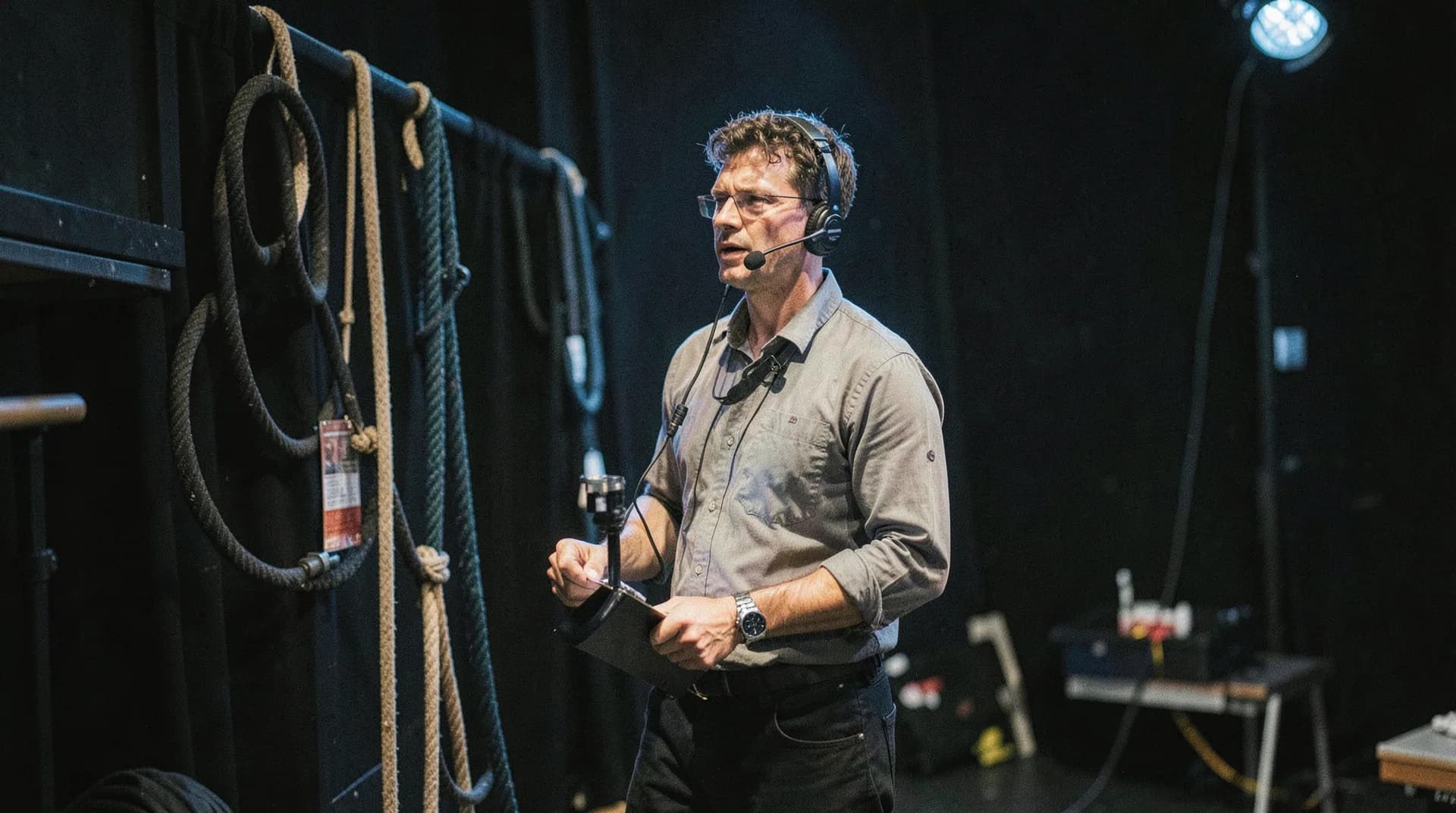
An Artistic Director plans and directs the artistic policy and creative direction of a theatre, dance, opera, music, festival or multi-arts organisation. The role is senior and outward-facing: setting the company's repertoire, selecting works, casting or commissioning collaborators, leading creative teams, and representing the organisation publicly. Most Artistic Directors come from a deep performing-arts background as directors, choreographers, conductors or curators before stepping into the executive role.
Australia's professional performing-arts sector is geographically concentrated. Sydney and Melbourne host the largest cluster of organisations: Sydney Theatre Company, Belvoir St Theatre, Bell Shakespeare, Sydney Dance Company, Bangarra Dance Theatre, Australian Chamber Orchestra, Opera Australia, Malthouse Theatre, Melbourne Theatre Company, Australian Ballet, Australian String Quartet and the major state symphony orchestras. Adelaide, Brisbane, Perth and Hobart sustain their own significant companies and festivals. The major arts festivals — Adelaide Festival, Sydney Festival, Melbourne International Arts Festival, RISING, Dark Mofo, Perth Festival — are typically led by an Artistic Director on multi-year contracts. State and regional festivals, contemporary music ensembles, and arts-led organisations such as Carriageworks, Arts Centre Melbourne and QPAC also employ Artistic Directors.
Demand is steady but the talent pool is small. Most vacancies are filled through search processes that consider both international and domestic candidates, and overseas-trained applicants with strong credits at internationally recognised companies are well placed.
ANZSCO 212111 Mapping
ANZSCO 212111 sits within the 2121 Visual Arts and Crafts Professionals sub-group but covers the performing arts as well. The code applies to the senior creative leader of a producing arts organisation — the person who decides what work is made and how it is presented. The Skill Level is 1, requiring a bachelor degree or higher in a performing-arts discipline (drama, dance, music, opera or related field) plus substantial professional experience.
Closely related codes that some applicants confuse with 212111:
- 212112 — Director (Film, Television, Radio or Stage): This code applies to working directors of individual productions, not to the senior executive leading an entire company's artistic programme. If your role is project-by-project rather than organisation-wide, 212112 may be the better fit.
- 139911 — Arts Administrator or Manager: Administrative leadership of an arts organisation without the artistic-direction component sits under this code. Many smaller organisations combine the two roles, in which case the dominant set of tasks determines the correct ANZSCO.
- 211212 — Music Director: Music-specific leadership of an orchestra, opera company or musical ensemble can map here when the role is predominantly musical. Some applicants choose 211212 over 212111 where the artistic remit is strictly musical.
Tasks recognised under 212111 include developing the artistic programme, leading auditions and casting, commissioning new works, supervising directors and choreographers, contributing to season planning and budgeting, and representing the organisation to funders, media and audiences. Productions you have led must be documented with programmes, reviews and references.
Skills Assessment
VETASSESS Group B Assessment
VETASSESS assesses Artistic Director (212111) as a Group B occupation. The applicant's qualifications must be highly relevant to the nominated occupation; if the qualification is in an unrelated field, VETASSESS allows extra employment experience to compensate.
Requirements:
- A qualification assessed as comparable to AQF Bachelor degree or higher, in a field highly relevant to the nominated occupation (drama, dance, music, opera, performing arts or related)
- At least one year of post-qualification employment at an appropriate skill level, completed in the last five years
- If the qualification is at a lower level or less relevant, additional pre- or post-qualification employment is required as outlined in the Group B criteria
- Detailed employment documentation: position descriptions, programmes, season brochures, performance credits, and reference letters from board chairs or general managers
Assessment Cost: AUD $1,096 (offshore, excl. GST) or AUD $1,205.60 (onshore, incl. GST), as of 22 October 2025. Priority Processing is an additional AUD $825-$907.50.
Processing Time: Approximately 8-12 weeks for standard processing; priority processing within 10 business days.
Common rejection reasons: Insufficient evidence of organisation-wide artistic leadership (rather than project-by-project directing), qualifications in unrelated fields without compensating experience, and employment references that describe administrative rather than artistic functions. Self-produced or pre-professional credits rarely satisfy the "appropriate skill level" requirement.
VETASSESS also offers a Skills Assessment Support service for complex cases. Given the small applicant pool for 212111 and the case-by-case nature of arts-sector careers, a Skills Assessment Support session before lodging the full application can save the assessment fee on a marginal case.
Visa Pathways
Subclass 482 — Skills in Demand Visa
Employer-sponsored temporary visa, most often used by Australian arts organisations recruiting an Artistic Director from overseas. The recruitment process for senior arts leaders is normally executive search, and the engaging organisation typically funds and manages the sponsorship.
- Visa fee (primary applicant): AUD $4,015 (Core Skills stream)
- Core Skills Income Threshold (CSIT): AUD $79,423 from 1 July 2026 (AUD $76,515 from 1 July 2025)
- Specialist Skills Income Threshold: AUD $146,576 — most Artistic Director appointments at major companies clear this
- Processing time: Median 50% Core Skills 51 days, 90% three months; Specialist Skills 8 days for 50% of applications
- Quirk: Multi-year fixed-term contracts at major Australian arts companies typically run three to five years, aligning well with 482 visa duration
Subclass 186 — Employer Nomination Scheme
Permanent residency through the same employer, available either through Direct Entry or through the Temporary Residence Transition stream after two years on a 482.
- Visa fee: AUD $6,140
- Processing time: Direct Entry 12-20+ months in 2026
- Quirk: Several state-funded arts organisations sponsor incoming Artistic Directors directly onto 186 where the appointment is permanent rather than fixed-term
Subclass 189 — Skilled Independent
Points-tested permanent residency without sponsorship. Available because 212111 is on the MLTSSL.
- Visa fee: AUD $6,135
- Minimum points: 65, with practical thresholds for arts-sector occupations typically 80-90 in 2026 due to small invitation allocations
- Processing time: 8-12 months after invitation
- Quirk: The annual SkillSelect ceiling for 212111 is very small, so even highly qualified candidates often pursue state nomination or employer sponsorship rather than wait for a 189 invitation
Subclass 190 — Skilled Nominated
State nomination adds 5 points and a two-year residence obligation in the nominating state.
- Visa fee: AUD $6,140
- Processing time: 6-12 months after invitation
- Quirk: Nomination programmes typically prioritise applicants with a current Australian employment offer or proven sector connections
Subclass 491 — Skilled Work Regional
Regional provisional visa worth 15 points, with a pathway to permanent residency through subclass 191.
- Visa fee: AUD $6,140
- Processing time: 12-15+ months for 90% of applicants
- Quirk: Regional festivals and regional arts companies (Hobart, Cairns, Newcastle, regional Victoria) periodically lead recruitment of overseas Artistic Directors and can support 491 nominations
Points Test Strategy
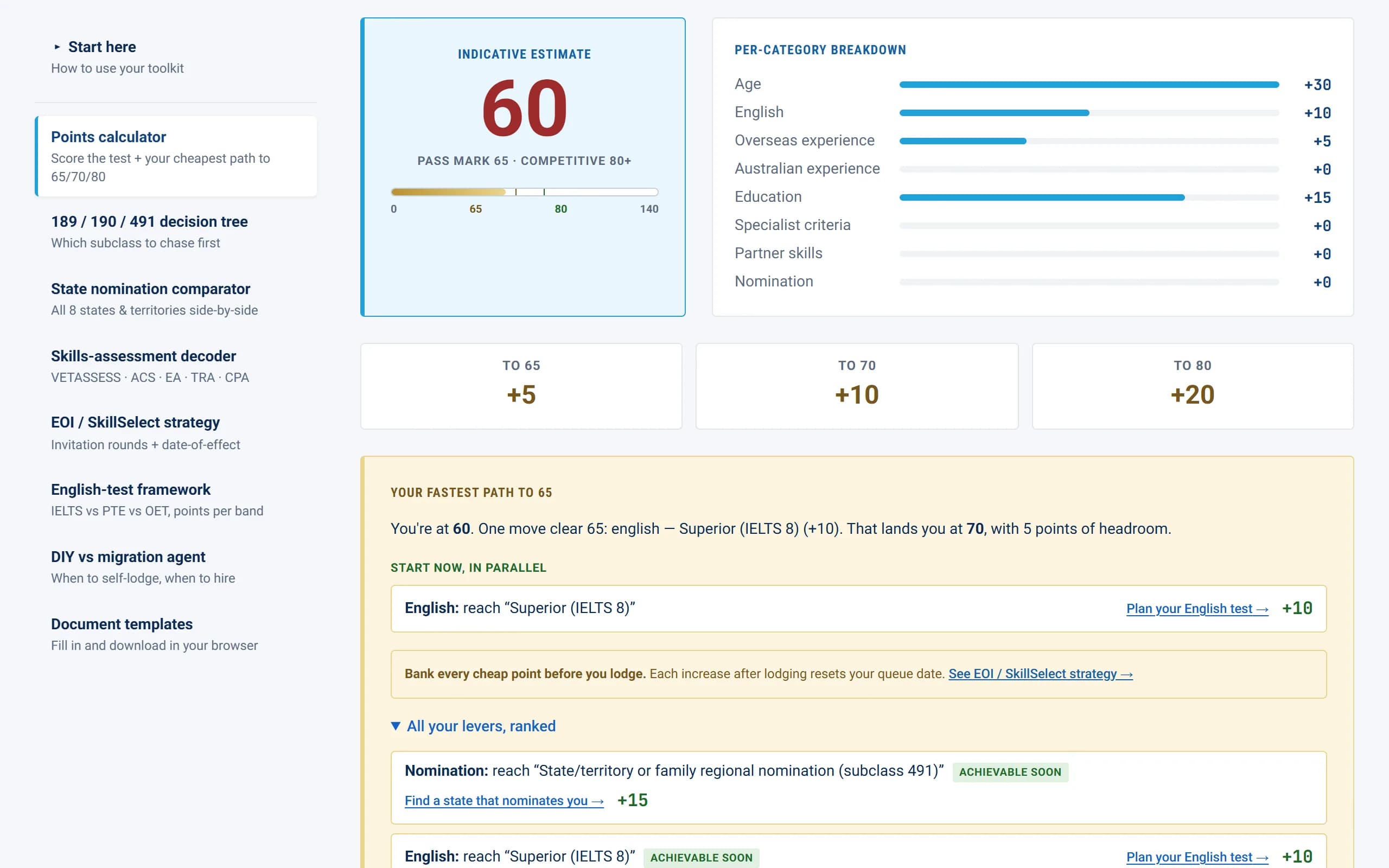
Artistic Director invitations are rare and competitive. Strong points scores are needed, particularly age and English.
| Points Factor | Points | Notes |
|---|---|---|
| Age 25-32 | 30 | Maximum bracket |
| Age 33-39 | 25 | Common for established Artistic Directors |
| Bachelor degree | 15 | Minimum for Skill Level 1 |
| Master's degree | 15 | Same as bachelor unless research-based |
| PhD | 20 | Uncommon in arts leadership but advantageous |
| Superior English (IELTS 8.0) | 20 | High-impact for arts-sector applicants |
| Proficient English (IELTS 7.0) | 10 | Standard threshold |
| 8+ years skilled experience overseas | 15 | Typical for senior arts leaders |
| Australian work experience (3-4 years) | 10 | Many international applicants build this through visiting director engagements |
| State nomination (190) | 5 | Useful where state lists include 212111 |
| Regional nomination (491) | 15 | For regional festival or arts-company appointments |
| Partner skills | 5-10 | Where partner holds a skilled assessment |
Realistic Score Scenarios
Scenario 1: Established Artistic Director, 38, Superior English, 10 years experience Age 25 + Bachelor 15 + English 20 + Experience 15 = 75. With 190 nomination (+5) reaches 80, competitive at the upper end of typical 212111 invitation rounds.
Scenario 2: Mid-career Artistic Director, 32, Proficient English, 6 years experience Age 30 + Master's 15 + English 10 + Experience 10 = 65. Realistically requires employer sponsorship (482) or regional nomination (491, +15) to convert into an invitation.
State Nomination
State nomination for 212111 is small in scale. Where states do open invitations, having an Australian employment offer or evidence of sector connections is usually decisive.
New South Wales
Sydney concentrates the majority of Australia's flagship performing-arts companies. NSW has historically nominated 212111 within targeted creative-industry pathways, generally requiring a confirmed appointment or strong evidence of imminent engagement.
Victoria
Victoria's nomination programme has a longstanding focus on creative industries given Melbourne's depth in theatre, dance and music. The state's 2025-26 allocation totals 3,400 places across 190 and 491. Confirmed employment by a Victorian arts organisation strengthens an Artistic Director application substantially. Victoria charges no nomination fee.
South Australia
Adelaide's festival economy — Adelaide Festival, Adelaide Cabaret Festival, OzAsia, WOMADelaide, Adelaide Fringe — supports several Artistic Director positions. South Australia issued 295 subclass 190 invitations and 214 subclass 491 invitations in May 2026 across all occupations, with arts roles included where a relevant Adelaide engagement exists.
Tasmania
Hobart's cultural sector punches well above its population: MONA, Dark Mofo, Tasmania Performs and Theatre Royal lead a year-round programme. The Tasmanian Onshore Skilled Occupation List (TOSOL) supports nomination for confirmed Tasmanian arts appointments after a qualifying period of state employment.
Western Australia, Queensland, the ACT and the Northern Territory all run nomination programmes but currently include 212111 only on a case-by-case basis tied to a specific role.
Salary and Employment Outlook
Salary by Organisation Type
| Role | Typical Salary Range |
|---|---|
| Small-to-Mid Theatre/Dance Company Artistic Director | AUD $95,000-$130,000 |
| State Theatre/Dance/Opera Company Artistic Director | AUD $140,000-$220,000 |
| Major Symphony Orchestra Chief Conductor / Music Director | AUD $180,000-$350,000+ |
| Major Festival Artistic Director | AUD $180,000-$280,000 |
| National Flagship Company Artistic Director (Opera/Ballet) | AUD $250,000-$400,000+ |
| Regional Arts Company Artistic Director | AUD $90,000-$130,000 |
| Multi-arts Centre Artistic Director | AUD $130,000-$180,000 |
Source: SEEK Salary Hub (May 2026), arts-sector public salary disclosures from major company annual reports, Australia Council and Creative Australia published salary surveys.
Total packages frequently include performance fees on individual productions where the Artistic Director also directs, conducts or choreographs. Superannuation is paid at the legislated rate of 12% (from 1 July 2025). Major festivals routinely include international travel allowances and relocation packages.
Highest-Paying Settings
- National flagship companies — Australian Ballet, Opera Australia, Sydney Theatre Company offer the largest packages, generally on three-to-five-year contracts
- State symphony orchestras — Chief conductor appointments are remunerated at the senior end and often combine Australian residency with international guest engagements
- Major international festivals — Sydney Festival, Adelaide Festival, RISING and Perth Festival pay competitively for multi-year leadership
- State theatre companies — Strong package with state arts-funding support
- Multi-arts venues — Arts Centre Melbourne, QPAC, Sydney Opera House producing programmes
Demand Outlook
Australia's performing-arts sector is small but stable, with steady churn at the Artistic Director level — most appointments are three- to five-year terms. The 2025 Occupation Shortage List from Jobs and Skills Australia does not list 212111 as a national shortage, but the role's specialist nature and the established practice of international search recruitment means that genuinely qualified overseas candidates remain in demand. Federal cultural policy direction (Revive: a national cultural policy) has stabilised funding for the sector, supporting continued recruitment to senior creative-leadership roles.
Tips for a Successful Application
-
Anchor your assessment evidence in organisation-wide leadership. VETASSESS expects to see evidence that you led an artistic programme, not just individual productions. Programme brochures, season announcements, board minutes and media coverage of your seasons all support a 212111 case. A portfolio of guest director credits is much weaker than a curated season under your name.
-
Decide between 212111, 212112 and 139911 carefully. Many arts-sector applicants are eligible for more than one code. If your work is dominated by directing individual shows, 212112 may match more closely. If the role is administrative leadership without artistic-policy authority, 139911 is the better fit. Choosing the wrong code is the most common reason senior arts applicants fail at skills assessment.
-
Use VETASSESS Skills Assessment Support before lodging. The Group B criteria allow flexibility around qualification-occupation fit, but applying that flexibility correctly is harder than it looks. A pre-lodgement consult costs a fraction of the full assessment fee and frequently identifies how to strengthen the case before submission.
-
Build evidence of internationally recognised credits. Australian arts organisations recruit at the senior level through international search. Awards, festival premieres, international touring credits and reviews in publications of record carry significant weight for both the visa application and any subsequent recruitment process.
-
Run English testing early. Superior English (IELTS 8.0 or equivalent) is worth 20 points. For 212111 applicants the practical threshold for a 189 invitation can sit at 80+, which is very difficult to reach without Superior English. OET is not available for arts-sector applicants — IELTS Academic or PTE Academic is the standard route.
Step-by-Step Migration Roadmap
- Confirm ANZSCO 212111 fits your role — review the ANZSCO code finder and compare against 212112 and 139911
- Verify list status — 212111 is on both the MLTSSL and CSOL
- Sit IELTS Academic or PTE Academic — target Superior (IELTS 8.0 across all bands)
- Compile artistic leadership evidence — programmes, brochures, board references, reviews, awards
- Consider a VETASSESS Skills Assessment Support session — particularly useful for arts-sector applicants
- Lodge the VETASSESS skills assessment — AUD $1,096-$1,205.60, 8-12 weeks
- Choose your visa route — employer-sponsored (482/186) or skilled (189/190/491)
- For sponsored routes — engage with executive-search firms working in Australian arts, or apply directly to advertised Artistic Director positions
- For skilled routes — submit an Expression of Interest in SkillSelect and apply for state nomination where eligible
- Receive invitation or nomination — lodge the visa application within 60 days
- Complete health and character checks — Bupa medicals, AFP and overseas police clearances
- Receive grant and relocate — most arts appointments include negotiated relocation support
Frequently Asked Questions
Is Artistic Director on the Australian shortage list in 2026?
No — Jobs and Skills Australia's 2025 Occupation Shortage List does not flag 212111 as a national shortage. The role is on the MLTSSL and CSOL for skilled migration purposes, which determines visa eligibility, but the sector simply does not produce the kind of volume vacancies that drive shortage classifications. Demand is real but small in absolute terms, and recruitment is mostly through executive search.
Should I use 212111 or 212112 for my application?
212111 (Artistic Director) is for the senior creative leader of an arts organisation responsible for its overall artistic programme. 212112 (Director — Film, Television, Radio or Stage) is for a working director of individual productions. If your career is built on directing specific shows, films or productions, 212112 is the correct code. If you are the artistic leader of an entire company or festival, 212111 applies. Choosing wrong is the most common reason senior arts applications fail VETASSESS.
Can a freelance director qualify under ANZSCO 212111?
Usually not. The Artistic Director role is defined by organisational leadership of a producing arts company, festival or venue. A freelance career consisting of guest directing engagements — however prestigious — typically maps to 212112 (Director) rather than 212111. If your career mixes freelance directing with a current or recent Artistic Director appointment, VETASSESS will weight the evidence accordingly.
How small is the annual SkillSelect allocation for Artistic Directors?
Very small. The Department of Home Affairs publishes occupation ceilings annually, and 212111 sits within a small unit-group ceiling alongside related visual-arts and performing-arts roles. Practical experience from 2024-25 invitation rounds shows that 189 invitations for 212111 cleared only at the top of the points distribution. Most successful migrants in this occupation enter via employer sponsorship (482) or state nomination (190).
Do I need to be admitted as an Australian theatre, opera or dance professional to lead a company here?
No. There is no professional registration requirement for Artistic Directors in Australia — the role is not regulated by an external accreditation body. The skills assessment from VETASSESS is what migration requires. Australian companies recruit on artistic credentials, not domestic licensing.
Where can I find adjacent occupation pages on this site?
For working theatre, film or stage directors see related roles such as how to find your ANZSCO code. For the wider list of skilled migration occupations see the most-in-demand occupations hub and the complete list of skills assessment bodies.