Geophysicist Visa Pathway to Australia: Complete 2026 Guide
Updated: 16 August 2026
Australia classifies Geophysicists under ANZSCO 234412. VETASSESS conducts the skills assessment. The occupation appears on both the MLTSSL and the Core Skills Occupation List (CSOL), unlocking subclasses 189, 190, 491, 482, and 186. Typical 2026 salaries range AUD $90,000-$200,000+. Western Australia and Queensland drive most of the demand.
Quick Facts: Geophysicist Migration Pathway
| Detail | Information |
|---|---|
| ANZSCO Code | 234412 (Geophysicist) |
| Skill Level | 1 (Bachelor degree or higher in a highly relevant geoscience field) |
| Skills Assessment | VETASSESS (Vocational Education and Training Assessment Services) |
| Occupation List | MLTSSL and CSOL |
| Visa Options | 189, 190, 491, 482, 186 |
| Demand Level | High — Jobs and Skills Australia classifies geoscience roles as a national shortage; critical to the resources sector |
| Salary Range | AUD $90,000-$200,000+ (SEEK 2026, PayScale 2026, mining industry data) |
| Typical 189 Score | 80-90 points |
| Key Challenge | Demonstrating "highly relevant" employment — pure GIS or environmental modelling roles can fail without seismic, magnetic, gravity, or electromagnetic survey duties |
What a Geophysicist Does in Australia
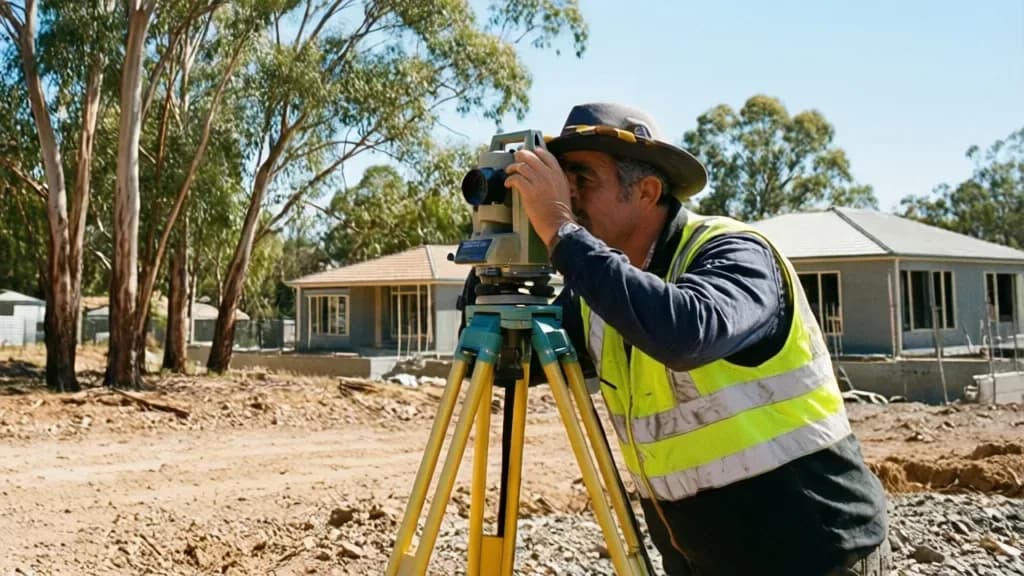
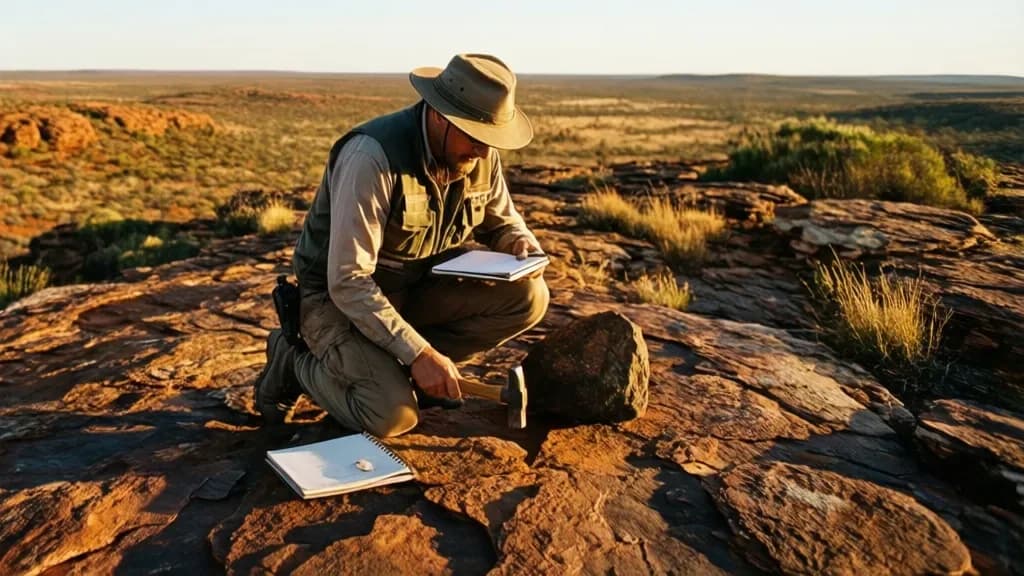
Geophysicists study the physical properties of the Earth's subsurface to locate minerals, hydrocarbons, groundwater, and geothermal resources, and to monitor seismic and geomagnetic activity. The Australian market is unusual globally: exploration geophysicists working in mineral and petroleum exploration form the majority of the workforce, with smaller cohorts in academic research, government surveys, and engineering geophysics.
Work is concentrated in the resources states. Perth is the dominant base for senior exploration and consulting roles servicing the Pilbara iron ore province, gold belts in the Goldfields-Esperance region, and lithium projects. Brisbane services Queensland coal, base metals, and the Bowen and Surat basins. Adelaide is the hub for the Olympic Dam copper-uranium-gold province and the Stuart Shelf. Government employers include Geoscience Australia in Canberra and the state geological surveys.
Demand in 2026 is being driven by the critical minerals strategy (lithium, rare earths, nickel, cobalt, vanadium), continued iron ore production, and the carbon capture and storage programmes which require detailed subsurface characterisation. The geoscience workforce is also ageing, which compounds the shortage.
ANZSCO Code 234412
The ANZSCO description for Geophysicist covers studying the composition, structure, and physical attributes of the Earth; locating minerals, petroleum, and groundwater; and monitoring and forecasting seismic, magnetic, electrical, geothermal, and oceanographic activity. Typical tasks include planning and managing geophysical surveys, interpreting data from seismic, gravity, magnetic, electromagnetic, and well-logging methods, building subsurface models, and producing reports for exploration and engineering clients.
Adjacent codes include 234411 Geologist (focused on rock and structural geology rather than physical surveys) and 234413 Hydrogeologist (focused on groundwater). VETASSESS expects clear differentiation. If most days involve seismic acquisition, magnetic processing, or potential-fields modelling, 234412 is the correct fit. Geophysicists with hybrid duties should match their nomination to the code most evident in their employment references.
Skills Assessment — VETASSESS
VETASSESS is the sole assessing authority for ANZSCO 234412.
Qualification requirement. A qualification assessed as comparable to an AQF Bachelor degree or higher, in a field highly relevant to the nominated occupation. Geophysics, Applied Geophysics, Exploration Geophysics, and Geoscience with a clear geophysical major are accepted directly. Physics, Applied Mathematics, and Geology degrees are assessed case by case and succeed only when the transcript shows substantial geophysical method coursework (seismic, gravity, magnetic, electromagnetic, well-logging).
Employment requirement. At least one year of post-qualification employment at the appropriate skill level, in the last five years, working 20 or more hours per week, performing duties highly relevant to 234412.
Cost. AUD $1,205.60 for a standard professional assessment (online application, includes GST for Australian residents; non-residents at AUD $1,096). Priority processing adds approximately AUD $825-$907.50.
Processing time. 12-14 weeks for standard processing. Priority is 10 business days from confirmation.
Common rejection reasons. Applicants from oil-and-gas service company roles sometimes have job titles like "Geoscientist" or "Petrophysicist" without enough survey-acquisition or interpretation work to satisfy the 234412 task list. Applicants with Physics or Mathematics degrees often underestimate how strictly VETASSESS reads the "highly relevant" qualification clause.
Visa Pathways
Subclass 482 — Skills in Demand
Lead pathway for exploration geophysicists hired by majors and mid-tiers. BHP, Rio Tinto, Fortescue, Newmont, South32, IGO, and a long list of juniors hire offshore through the 482.
- Visa fee: AUD $4,015 primary applicant
- Duration: up to 4 years on the Specialist stream; salary thresholds easily met for senior geophysicists
- Processing time: typically 1-3 months; faster under accredited sponsorship
- Quirk: the Specialist stream salary threshold is well below typical senior geophysicist packages, which keeps the 482 administratively simple
Subclass 186 — Employer Nomination Scheme
Permanent residency through employer sponsorship via Direct Entry (offshore, with VETASSESS positive outcome and three years experience) or Temporary Residence Transition (after time on a 482).
- Visa fee: AUD $6,140 primary applicant
- Quirk: majors routinely move long-serving 482 geophysicists to the 186 TRT stream once eligibility is met
Subclass 189 — Skilled Independent
Permanent residency through SkillSelect. Available because 234412 is on the MLTSSL.
- Visa fee: AUD $6,135 primary applicant
- Realistic points: 85-95 for invitation in 2026 rounds
- Processing time: 8-14 months on the published global processing-times page
- Quirk: Geophysicist rounds clear at lower scores than ICT but higher than many other VETASSESS occupations because the experienced offshore pool is sizeable
Subclass 190 — Skilled Nominated
State nomination adds 5 points and grants permanent residency. WA and Queensland are the most receptive states for this code. SA also nominates within mining-priority lists.
- Visa fee: AUD $6,140 primary applicant
- Obligation: two-year live-and-work commitment in the nominating state
Subclass 491 — Skilled Work Regional (Provisional)
Adds 15 points. Most mining work in WA outside Perth is in regional postcodes (Pilbara, Goldfields-Esperance, Mid West), so the 491 fits the actual job geography.
- Visa fee: AUD $6,140 primary applicant
Points Test Strategy
| Points Factor | Points | Notes |
|---|---|---|
| Age (25-32) | 30 | Maximum |
| Age (33-39) | 25 | Common for mid-career |
| English (Superior 8.0+) | 20 | Worth pursuing |
| English (Proficient 7.0) | 10 | Typical for non-native speakers |
| PhD | 20 | Common among research geophysicists |
| Master's | 15 | Most common qualification |
| Bachelor | 15 | Minimum |
| Overseas experience (8+ yrs) | 15 | Many senior candidates have this |
| Australian work experience | 5-20 | Significant boost when present |
| State Nomination (190) | 5 | |
| Regional (491) | 15 | Strong leverage |
| Partner skills | 5-10 | If partner has a skilled occupation |
Scenario 1: 31-year-old exploration geophysicist from South Africa
Master's in Exploration Geophysics, 6 years post-Master's at a junior gold company, Proficient English. Age 30 + Master's 15 + English 10 + Experience 15 = 70 points. Add 491 nomination = 85 points — competitive in 2026 WA rounds.
Scenario 2: 35-year-old petroleum geophysicist from Brazil
PhD in Geophysics, 9 years at Petrobras and contractors, Superior English. Age 25 + PhD 20 + English 20 + Experience 15 = 80 points. Add 190 NSW or WA = 85 points; add 491 = 95 points. Invitation-grade.
State Nomination for Geophysicists
Western Australia
WA is the dominant destination for exploration geophysicists. Migration WA lists 234412 in its priority occupation pool with consistent invitations across both 190 (Perth metropolitan) and 491 (regional WA). Points thresholds in 2026 rounds have sat at 70-85 for 190 and 65-75 for 491 regional, depending on occupation pressure. WA's regional zones include the entire state outside the Perth metropolitan area, which captures every iron ore, gold, and lithium operation.
Queensland
Queensland nominates Geophysicists for 190 and 491 streams, prioritising candidates with confirmed Queensland employment or strong commitment to the resources sector in the Bowen and Surat basins or the north Queensland base-metals belts.
South Australia
SA lists Geophysicist with focus on the Olympic Dam province and the Stuart Shelf copper play. The state's offshore Skilled Visitor pathway has historically been the most accessible route for geophysicists without Australian employment.
Northern Territory
NT nominates geoscience occupations as part of its critical-minerals strategy, with strong demand around the McArthur River zinc-lead district and the Tennant Creek region. NT's nomination program runs both 190 and 491 streams.
NSW and Victoria list 234412 but invite less frequently — both states are less resources-driven.
Salary and Employment Outlook
| Role | Typical Salary Range (AUD, 2026) |
|---|---|
| Junior Geophysicist (0-3 yrs) | $90,000-$120,000 |
| Mid-level Geophysicist | $120,000-$160,000 |
| Senior Geophysicist | $150,000-$200,000 |
| Principal / Consulting Geophysicist | $190,000-$260,000+ |
| Contract Day Rate (FIFO) | $1,200-$1,800/day |
| Government / Academic | $95,000-$150,000 |
Sources: SEEK Salary Hub 2026, PayScale 2026, Talent.com 2026, and published mining-sector salary reports. SEEK Australia lists the typical full-time disclosed range around AUD $80,000-$100,000 for advertised roles, though senior and FIFO packages sit well above the advertised median because the most senior roles are filled through executive search rather than job boards. PayScale shows an average around AUD $91,000 across all levels, weighted toward earlier-career entries.
Total packages in the resources sector add 11.5% superannuation, FIFO travel allowances, completion bonuses, and project-based equity in juniors. WA roles typically pay 10-20% above east-coast roles for equivalent experience.
Highest-paying sub-sectors:
- Iron ore majors in the Pilbara
- Critical minerals juniors and mid-tiers (lithium, rare earths)
- Petroleum exploration (offshore Northwest Shelf)
- Specialist consulting (CGG, Fugro, SLB, Wireline service companies)
- Carbon capture and geothermal site characterisation
Tips for a Successful Application
- Order your employment references to lead with surveys, not software. VETASSESS reads for survey acquisition, processing, and interpretation. If you spent three years processing 3D seismic and one year doing GIS, lead the bullet points with the seismic work. Detail builds confidence.
- Convert international degree titles using the AQF mapping early. A four-year specialist Russian, Indian, or Brazilian "Specialist" or "Engineer" qualification often maps to AQF Bachelor Honours or Master's, which earns more points. Get the right mapping before submitting an EOI.
- Target 491 in WA if Perth-based work isn't certain. Most mining geophysics in WA is regional under Home Affairs postcodes. The 491 adds 15 points; the geography matches the work.
- Sit your English test before VETASSESS lodgement. While VETASSESS itself doesn't require English evidence, lodging in parallel saves 4-6 weeks of total processing time.
- Keep all field notes, survey reports, and conference presentations. VETASSESS occasionally requests work samples, and a portfolio of survey reports is the cleanest way to demonstrate skill-level work for the past five years.
Step-by-Step Migration Roadmap
- Confirm your duties match the ANZSCO 234412 description rather than 234411 Geologist or 234413 Hydrogeologist — review the ANZSCO code finder.
- Verify 234412 on the Skilled Occupation List 2026 and the CSOL.
- Gather degree certificates, transcripts, and any conversion documentation.
- Build employment references that explicitly cover the past five years of skill-level work.
- Sit IELTS, PTE, TOEFL, or OET, targeting Superior where possible.
- Lodge the VETASSESS Full Skills Assessment.
- Submit a SkillSelect EOI for 189/190/491.
- Apply for state nomination if pursuing 190 or 491.
- If seeking 482/186, secure an offer from an approved sponsor — WA majors and consultancies are the most experienced sponsors.
- Receive invitation and lodge the visa within 60 days.
- Complete health and character checks.
- Receive grant and relocate. Check the Skills Assessment Bodies Complete List for any continuing-membership considerations with the Australian Society of Exploration Geophysicists.
Frequently Asked Questions
Is the 482 employer-sponsored visa quicker than the 189 for geophysicists?
In practice, yes. The 482 typically completes within 1-3 months of lodgement for accredited sponsors, while the 189 currently sits in the 8-14 month band on the published Home Affairs global processing-times page. Majors and large consultancies routinely move offshore geophysicists to Australia on a 482 then convert to a permanent 186 later.
Can a Russian or Chinese five-year Specialist diploma in Geophysics be accepted?
Yes, in most cases. VETASSESS regularly maps five-year Specialist diplomas from Russia, Ukraine, China, and the post-Soviet states to an AQF Bachelor (Honours) or Master's level, depending on the curriculum and final-year research project. A degree from a recognised university with a clear geophysical major is the strongest profile.
What's the demand outlook for Geophysicists in 2026?
Strong. Jobs and Skills Australia classifies geoscience roles as a national shortage, the resources sector is in a critical-minerals expansion phase, and the existing workforce is ageing. WA, Queensland, and SA all carry persistent demand. See the most in-demand occupations page.
Should I nominate Geophysicist or Geologist if my work crosses both?
Nominate the code that matches the majority of your last five years of duties. VETASSESS reads the reference letters far more strictly than the job title. If you spent most of your time on seismic, gravity, or magnetic surveys, 234412 fits. If most of your time was core logging, mapping, and resource estimation, 234411 fits. A mismatched nomination is the leading rejection reason for both codes.
Can I work for Geoscience Australia or a state geological survey on a visa?
Yes. Geoscience Australia and the state surveys hire skilled-migration applicants for technical roles, particularly in critical minerals mapping, hydrogeological assessment, and offshore acreage release work. Most government roles require permanent residency or Australian citizenship for security-clearance reasons, which means the standard pathway is 189/190/491 followed by an application after grant.