Conservator Visa Pathway to Australia: Complete 2026 Guide
Updated: 16 August 2026
Australia classifies Conservators under ANZSCO 234911. VETASSESS conducts the skills assessment. The occupation appears on both the MLTSSL and the Core Skills Occupation List (CSOL), unlocking subclasses 189, 190, 491, 482, and 186. Typical 2026 salaries range AUD $75,000-$110,000. The labour market is small and concentrated around national institutions in Canberra, Melbourne, and Sydney.
Quick Facts: Conservator Migration Pathway
| Detail | Information |
|---|---|
| ANZSCO Code | 234911 (Conservator) |
| Skill Level | 1 (Bachelor degree or higher in a highly relevant cultural materials conservation field) |
| Skills Assessment | VETASSESS (Vocational Education and Training Assessment Services) |
| Occupation List | MLTSSL and CSOL |
| Visa Options | 189, 190, 491, 482, 186 |
| Demand Level | Moderate — niche specialist field with small numbers but stable government and gallery employment |
| Salary Range | AUD $75,000-$110,000 (SEEK 2026, ERI SalaryExpert 2026) |
| Typical 189 Score | 85-95 points |
| Key Challenge | Demonstrating two years of post-qualification employment in conservation rather than collection management, registration, or curatorial work |
What a Conservator Does in Australia
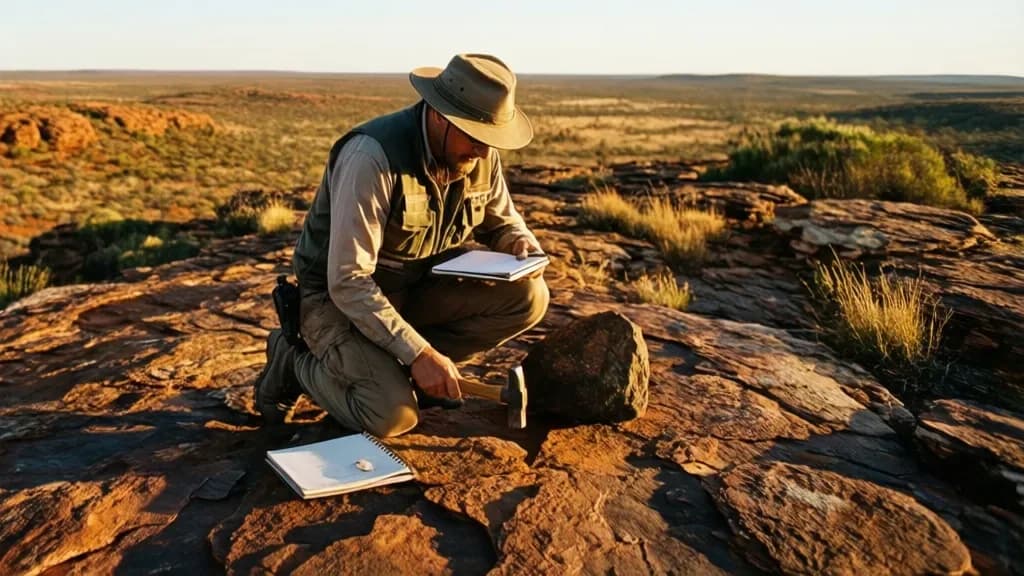
Conservators preserve and restore cultural materials — paintings, paper and books, photographs, textiles, objects, sculpture, and time-based media. The work blends materials science, chemistry, and craft. Day-to-day duties cover condition reporting, environmental monitoring, treatment proposals, hands-on preservation and restoration, and writing technical documentation. Specialisations include paintings conservation, paper conservation, objects conservation, textile conservation, photographic materials, and increasingly digital and time-based media.
The Australian workforce sits mainly in national collecting institutions. The National Gallery of Australia, National Museum of Australia, National Library of Australia, and the Australian War Memorial cluster in Canberra. The National Archives, the Australian Institute of Aboriginal and Torres Strait Islander Studies, and several Commonwealth heritage agencies also employ teams there. State institutions — Art Gallery of New South Wales, National Gallery of Victoria, Queensland Art Gallery and Gallery of Modern Art, Art Gallery of South Australia — provide most of the remaining positions. Private studios and conservation consultancies serve regional galleries, faith institutions, and corporate collections.
Demand in 2026 is steady rather than acute. Capital works programs at major galleries, expanding digital collection projects, and ongoing returns of cultural materials drive recruitment. Funded positions remain modest, and openings often require relocation to Canberra or one of the capital cities.
ANZSCO Code 234911
ANZSCO 234911 covers professionals who restore and preserve artefacts and the original condition of materials in galleries, libraries, museums, archives, historic sites, and similar institutions. Typical tasks include examining items to determine condition, planning preservation strategies, conducting chemical analysis and condition reports, performing restoration treatments, and overseeing environmental controls in storage and display.
Adjacent occupations that should not be conflated with 234911 include 224412 Gallery or Museum Curator (collections interpretation and curation), 224411 Archivist (records management), and 224413 Gallery, Library and Museum Technician (collections handling at non-degree level). Conservators perform the physical and chemical treatment work; curators and registrars do not. References must reflect this distinction.
Skills Assessment — VETASSESS
VETASSESS is the sole assessing authority for ANZSCO 234911. The occupation sits in VETASSESS Group A.
Qualification requirement. A qualification assessed as comparable to an AQF Bachelor degree or higher, in a field highly relevant to conservation — typically a Master of Cultural Materials Conservation or equivalent specialist degree. Bachelor degrees in chemistry, art history, or fine arts may succeed when paired with a postgraduate conservation qualification.
Employment requirement. At least two years of post-qualification employment at the appropriate skill level, undertaken in the last five years. This is a longer employment requirement than most VETASSESS occupations, which typically need only one year. Alternative pathways exist for applicants without a directly relevant degree, including the experience-substitution route — five years of relevant employment may substitute for the formal qualification — but these add documentation complexity.
Cost. AUD $1,205.60 for a standard professional assessment (online lodgement, includes GST for Australian residents; non-residents pay AUD $1,096). Priority processing adds AUD $825 and returns an outcome in 10 business days.
Processing time. 12-14 weeks for standard processing.
Common rejection reasons. Applicants whose roles are primarily collection management, registration, exhibition installation, or curatorial fail because the duties do not include hands-on conservation treatment. Applicants from craft backgrounds (bookbinding, picture framing, frame restoration) without academic conservation training are typically rejected unless they meet the alternative experience pathway in full.
Visa Pathways for Conservators
Subclass 189 — Skilled Independent
Permanent residency through the points-based system.
- Visa fee: AUD $6,135 (primary applicant)
- Realistic points threshold: 85-95 in 2026. Conservation is not a priority invitation category, so cut-offs match the general MLTSSL pool
- Processing time: Approximately 8-9 months
- Quirk: Invitation rounds are quarterly in 2026, and low-volume occupations may need several cycles before reaching the cut-off
Subclass 190 — Skilled Nominated
Permanent residency via state nomination.
- Visa fee: AUD $6,140
- Points boost: +5
- Obligation: Reside and work in the nominating state or territory for two years
- Quirk: The ACT consistently ranks among the more accessible nominators for conservators because of its concentration of national collecting institutions
Subclass 491 — Skilled Work Regional
Five-year provisional visa with a permanent residency pathway via subclass 191.
- Visa fee: AUD $6,140
- Points boost: +15
- Quirk: Most conservation roles sit in major cities, which limits the natural fit for regional 491 unless the role is at a regional gallery (Bendigo, Geelong, Newcastle, Wollongong, Toowoomba)
Subclass 482 — Skills in Demand
Employer-sponsored temporary visa.
- Visa fee: AUD $4,015 (Core Skills stream)
- Salary threshold: Core Skills AUD $79,423; Specialist Skills AUD $146,576
- Reality: Most conservator salaries fall into the Core Skills bracket, where processing in 2026 sits at a 51-day median and stretches to roughly 8 months at the 90th percentile. Senior or principal conservator roles in private practice can reach the Specialist Skills threshold
Subclass 186 — Employer Nomination Scheme
Permanent residency through employer sponsorship — typical pathway after two years on a 482.
- Visa fee: AUD $6,140
- Streams: Direct Entry or Temporary Residence Transition
Points Test Strategy
Conservators typically score well on qualifications (most hold Master's degrees) and English (the literature is English-dominant) but moderately on experience because the field has long apprentice-style training paths.
| Points Factor | Points | Notes |
|---|---|---|
| Age (25-32) | 30 | Maximum bracket |
| Master's degree | 15 | The standard entry qualification |
| PhD | 20 | Common in research conservation |
| Superior English (8.0+) | 20 | Achievable for English-medium graduates |
| Proficient English (7.0) | 10 | |
| Overseas experience (5-8 years) | 10-15 | |
| Australian study (2 years) | 5 | |
| State nomination (190) | 5 | |
| Regional (491) | 15 | |
| Partner skills | 5-10 |
Scenario 1: paintings conservator with overseas career
A 34-year-old paintings conservator with a Master's degree, six years of post-qualification gallery experience overseas, and IELTS 8.0: Age 25 + Master's 15 + English 20 + Experience 10 = 70 points. State nomination via the ACT or NSW would lift this to 75; regional 491 would lift it to 85.
Scenario 2: recent graduate with Australian study
A 28-year-old objects conservator who completed a Master of Cultural Materials Conservation at the University of Melbourne and worked two years at a Melbourne gallery: Age 30 + Master's 15 + Australian study 5 + Australian experience 5 + English 20 = 75 points. Victorian nomination lifts this to 80.
State Nomination for Conservators
State nomination for 234911 favours applicants with confirmed offers at state collecting institutions or completed Australian conservation degrees.
Australian Capital Territory
The ACT hosts the highest concentration of national collecting institutions in Australia, including the National Gallery, National Museum, National Library, National Archives, and Australian War Memorial. The Canberra Matrix nomination model selects on a points-and-residency basis, and applicants with confirmed offers at any of these employers have strong nomination prospects. The ACT also assesses small-business pathways for private conservation studios.
New South Wales
NSW nominates conservators where there is clear contribution to the state's collecting institutions or private studios. The Art Gallery of NSW, Australian Museum, MAAS (Powerhouse), and State Library of NSW employ the largest cohorts.
Victoria
Victoria's program nominates conservators with confirmed Victorian offers or recent Victorian study. The Grimwade Centre for Cultural Materials Conservation at the University of Melbourne is Australia's largest conservation training institution, which channels graduates into NGV, Museums Victoria, and State Library Victoria.
Queensland
Queensland nominates a smaller cohort, with most roles attached to QAGOMA, Queensland Museum, and Queensland State Archives. Offshore applicants typically need a confirmed Queensland offer.
Salary and Employment Outlook
Typical 2026 salaries
| Role | Typical Salary Range |
|---|---|
| Conservation Intern / Graduate | AUD $65,000-$78,000 |
| Assistant Conservator | AUD $75,000-$90,000 |
| Conservator (mid-career) | AUD $85,000-$110,000 |
| Senior Conservator | AUD $100,000-$125,000 |
| Principal / Head of Conservation | AUD $130,000-$170,000 |
| Private studio (paintings / objects) | AUD $80,000-$120,000 + project fees |
SEEK and ERI SalaryExpert 2026 data place general conservators around AUD $83,000-$97,000, with art conservators averaging AUD $91,000-$110,000 and senior specialists reaching AUD $110,000+. Conservator-artifacts roles average AUD $97,000 with senior salaries above AUD $110,000.
Highest-paying employer types
- National collecting institutions — National Gallery of Australia, National Museum, NLA, Australian War Memorial, National Archives
- State galleries and museums — Art Gallery of NSW, NGV, QAGOMA, AGSA
- Universities with collection responsibilities — Melbourne, Sydney, ANU
- Private conservation studios servicing corporate, faith, and regional clients
- Heritage architecture firms for built-heritage conservation work
Total packages typically include the standard 11.5% superannuation guarantee. Public-sector institutions also offer salary packaging, study leave, and structured career progression that compensate for the modest base.
Tips for a Successful Application
1. Document hands-on treatment work explicitly
VETASSESS distinguishes conservators from registrars, collection managers, and curators. Employment references must list specific treatments — consolidation, inpainting, deacidification, humidity controlling, structural repair — not generic phrases like "collection care".
2. Verify the two-year employment minimum
234911 requires two years of post-qualification employment, not the more common one-year minimum. Plan the timing carefully: applicants who lodge with only 18 months of post-Master's work will be assessed negatively.
3. Choose your specialty before lodging
VETASSESS expects evidence of a defined conservation specialty. Generalist career narratives ("paintings, paper, and objects") raise questions about depth. Lead the cover letter with one specialty and supplement with related work.
4. Cross-check the curator and archivist codes
Some career paths drift between conservation, curation, and archival work. If more than half of the recent five years was curatorial or registration work, 234911 will fail. Consider 224412 (Curator) or 224411 (Archivist) instead, and verify whether each sits on the relevant migration list.
5. Build a portfolio that complements the references
A treatment portfolio with before-and-after documentation, AICCM (Australian Institute for the Conservation of Cultural Material) membership, and published treatment reports strengthen the application beyond the formal references VETASSESS requires.
Step-by-Step Migration Roadmap
- Confirm the duties fit 234911 rather than curator, archivist, or technician — review the ANZSCO code finder.
- Confirm 234911 appears on the MLTSSL and CSOL for 2026.
- Assemble two years of post-qualification employment evidence — contracts, position descriptions, treatment reports, supervisor statements.
- Sit IELTS, PTE, or TOEFL — target Superior English (IELTS 8.0+).
- Lodge the VETASSESS skills assessment (AUD $1,205.60) with treatment-specific evidence.
- Calculate points after VETASSESS confirms post-qualification experience.
- Lodge an EOI in SkillSelect for 189, 190, or 491.
- Approach state nomination programs, prioritising the ACT and Victoria.
- Pursue parallel employer sponsorship by contacting national collecting institutions and private studios directly.
- Receive invitation and lodge the visa via ImmiAccount within 60 days.
- Complete health and police checks.
- Receive grant and relocate.
Frequently Asked Questions
Can a picture restorer or bookbinder nominate as a Conservator?
VETASSESS distinguishes craft restoration from professional conservation. Picture framers, restorers, and binders without an academic conservation qualification rarely succeed under 234911 unless they meet the experience-substitution pathway — at least five years of relevant employment compensating for the missing formal qualification, with the duties matching the conservator task list. Most applicants in this position do better mapping to a different code.
Why is the employment requirement two years rather than one?
VETASSESS sets occupation-specific employment minimums based on the typical training pathway. Conservation has a long apprenticeship tradition globally — entry-level roles are research-intensive and supervised. Two years of post-qualification work provides VETASSESS with enough evidence that the applicant practises independently rather than as a student or intern.
Is the ACT really easier for conservator nomination?
The ACT's concentration of national collecting institutions means more employer-led pathways, more sponsorship opportunities, and more confirmed offers in this niche. The state nomination criteria do not formally favour conservators, but the local job market does. Conservators with no NSW or Victoria connection sometimes find the ACT route the most realistic.
Will my European conservation degree be recognised?
VETASSESS recognises degrees from major European conservation schools (ICCROM-affiliated programs, the Courtauld Institute, the University of Northumbria, ENSP Paris, the University of Amsterdam, and similar) when the qualification is assessed as comparable to an AQF Bachelor or Master's degree. Vocational craft qualifications are assessed separately and usually require supplementary academic credentials.
What's the demand outlook for Conservators in Australia in 2026?
Jobs and Skills Australia classifies the broader collecting-institution workforce as stable rather than acute shortage. Demand is concentrated in Canberra and the capital cities, with modest growth from regional gallery expansion and digital collection projects. The market is small enough that an Australian connection — completed Australian study, confirmed offer, or established collaboration with a national institution — materially shortens the migration timeline. See the most in-demand occupations list for broader context.