Panelbeater Visa Pathway to Australia: Complete 2026 Guide
Updated: 16 August 2026
Australia classifies Panelbeater under ANZSCO 324111. Trades Recognition Australia (TRA) conducts the skills assessment through the Migration Skills Assessment (MSA) or Offshore Skills Assessment Program (OSAP), depending on country of citizenship. The occupation sits on the MLTSSL, unlocking subclasses 189, 190, 491, 482 and 186. Typical 2026 salaries range AUD $65,000-$100,000.
Quick Facts: Panelbeater Migration Pathway
| Detail | Information |
|---|---|
| ANZSCO Code | 324111 (Panelbeater) |
| Skill Level | 3 (AQF Certificate III with on-the-job training, or AQF Certificate IV) |
| Skills Assessment | TRA (Trades Recognition Australia) — MSA or OSAP pathway |
| Occupation List | MLTSSL and CSOL |
| Visa Options | 189, 190, 491, 482, 186 |
| Demand Level | Moderate to high — automotive repair sector reports ongoing trade shortages, especially in regional centres |
| Salary Range | AUD $65,000-$100,000 (SEEK Salary Hub, 2026) |
| Typical 189 Score | 75-85 (trades clear at lower scores than ICT, but invitation timing varies) |
| Key Challenge | TRA's Job Ready Program (offshore applicants) adds 12+ months and a workplace assessment in Australia |
What Panelbeaters Do in Australia
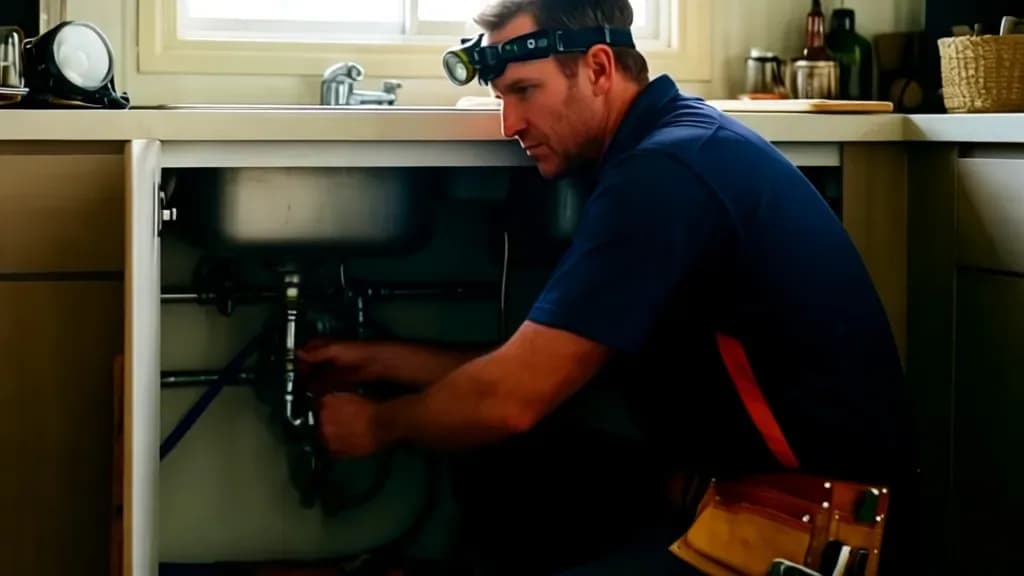
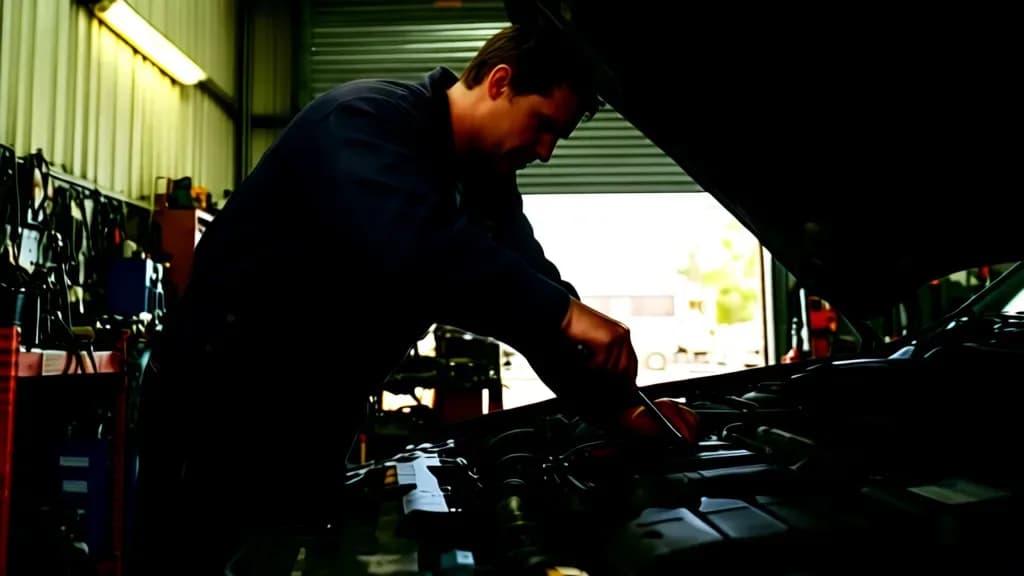
Panelbeaters repair damaged vehicle bodywork after collisions, restore older vehicles, and prepare panels for spray painting. Daily work mixes structural straightening, welding (MIG, MAG, spot), filler application, and panel replacement using both traditional dolly-and-hammer methods and modern frame-alignment rigs. Most panelbeaters in Australia work in collision repair workshops attached to insurer networks (Suncorp, IAG, Allianz preferred-repairer programs) or in independent body shops servicing local trade.
The industry is concentrated around the urban automotive belts of Sydney, Melbourne, Brisbane, Perth and Adelaide, with regional centres in mining states (Karratha, Mackay, Kalgoorlie) paying premiums for experienced tradespeople. The shift to modern vehicle construction — high-strength steel, aluminium, ADAS calibration after panel repair — has narrowed the talent pool for shops that handle late-model collisions. Workshops that invest in aluminium-certified bays and OEM training are the strongest sponsors of skilled migrants.
ANZSCO 324111 — Code Mapping
The official ANZSCO description for Panelbeater (324111) covers repairing and replacing damaged body panels and components of motor vehicles. Indicative tasks include examining damaged vehicles and estimating repair work, removing damaged panels, hammering out dents and buckles, filling depressions with solder or filler, smoothing surfaces, and fitting and aligning replacement panels.
The role sits inside ANZSCO Unit Group 3241 — Panelbeaters. There is no separate code for collision technicians, body builders or smash-repair specialists. Spray painters fall under a different code (399211 Vehicle Painter), and trim fitters under 899415 (Motor Vehicle Parts and Accessories Fitter). If your work is mostly painting or trim, the wrong code will fail at assessment — match your duties carefully and review the ANZSCO code finder.
Skills Assessment with TRA
Trades Recognition Australia is the sole assessing authority for Panelbeater. Two assessment programs run in parallel; the right one depends on where you trained and your passport.
Migration Skills Assessment (MSA)
The MSA is the documentary-evidence-only pathway. Since June 2024, TRA has opened MSA assessment for selected automotive trades — including Panelbeater — for applicants from Ireland, Sri Lanka and the United Kingdom. If you qualify, MSA is faster and cheaper than OSAP because it skips the practical demonstration.
- Requirements: Recognised qualification equivalent to AQF Certificate III, plus three years of post-qualification employment as a panelbeater (or six years total if you trained on the job).
- Assessment cost: From AUD $300 for the documentary evidence stage (current TRA Applicant Guidelines, 2025).
- Processing time: Approximately 15 weeks from submission of complete documentary evidence.
- Common rejection reasons: Employment references that describe automotive mechanical repair rather than panel repair; gaps in the qualification mapping where overseas training does not cover MIG welding or measuring/straightening procedures required by ANZSCO 324111.
Offshore Skills Assessment Program (OSAP)
OSAP applies to applicants from countries outside the MSA-eligible list. It involves a documentary evidence stage followed by a technical interview and a practical demonstration conducted by a TRA-approved Registered Training Organisation (RTO) in your country of residence.
- Requirements: Trade qualification plus three years post-qualification employment, or six years' on-the-job training. Documentary evidence including employment references, qualification certificates, and pay records.
- Assessment cost: Fees vary by RTO and program stage. Total OSAP costs typically range AUD $2,500-$4,500 depending on whether the practical demonstration is delivered offshore. Current fees are published in Section 2.1 of the OSAP Applicant Guidelines.
- Processing time: 12-18 months end to end, including technical interview scheduling and RTO availability.
- Common rejection reasons: Practical demonstration scored as not yet meeting Australian standards (particularly on welding tolerance, measuring-system use and structural repair sequencing); insufficient hands-on hours on late-model vehicles with high-strength steel.
If you are an offshore panelbeater without an Australian apprenticeship, you may be directed to the Temporary Skills Shortage (TSS) pathway, which can lead into TRA's Job Ready Program after arrival on a 482 visa. See the Skills Assessment Bodies Complete List for the full TRA program map.
Visa Pathways for Panelbeaters
Subclass 482 — Skills in Demand Visa (Core Skills stream)
The 482 is the dominant pathway for offshore panelbeaters with a job offer. Panelbeater sits on the CSOL, so the Core Skills stream applies.
- Visa fee: AUD $3,210 (primary applicant)
- Salary threshold: Core Skills Income Threshold (CSIT) AUD $76,515 until 30 June 2026, rising to AUD $79,499 from 1 July 2026
- Processing time: Median 2-3 months for the Core Skills stream
- Quirk: Many regional smash-repair employers pay above CSIT once shift loading and tool allowances are factored in, even when the base rate sits below it. Confirm the gazetted salary the employer will nominate.
Subclass 491 — Skilled Work Regional (Provisional)
Strong choice for panelbeaters willing to live in regional Australia for five years. Regional nomination adds 15 points and there is a pathway to permanent residency via subclass 191.
- Visa fee: AUD $6,140 (primary applicant)
- Points boost: +15 for state or family-sponsored regional nomination
- Processing time: 12-14 months (Home Affairs published median)
- Quirk: Tasmania and South Australia have nominated panelbeaters at lower points scores when applicants commit to regional towns with documented workshop shortages.
Subclass 190 — Skilled Nominated
Permanent residency via state nomination. Useful where a state currently lists Panelbeater in its program.
- Visa fee: AUD $6,140 (primary applicant)
- Points boost: +5 from state nomination
- Processing time: Varies by state allocation; expect 8-15 months from EOI to grant
- Quirk: State nomination eligibility for 324111 changes year to year. Verify the current state lists directly before lodging an EOI for 190.
Subclass 189 — Skilled Independent
Available because Panelbeater is on the MLTSSL, but invitations are issued in small numbers each round.
- Visa fee: AUD $6,135 (primary applicant)
- Minimum points: 65 (trades typically clear at 75-85)
- Processing time: 8-15 months depending on invitation timing and documentation
Subclass 186 — Employer Nomination Scheme
Permanent residency through employer sponsorship. Most panelbeaters reach 186 via the Temporary Residence Transition stream after working on a 482 for the required period.
- Visa fee: AUD $6,140 (primary applicant)
- Streams: Direct Entry (with TRA assessment) or Temporary Residence Transition (after qualifying period on 482)
State Nomination for Panelbeaters
Panelbeater state nomination availability is uneven and updated each program year. Verify the current state lists before committing.
Tasmania
Tasmania's regional smash-repair shops face persistent recruitment difficulty, and Panelbeater has appeared on the Tasmanian Skilled Occupation List under category 1 or 2 in recent program years for applicants with a Tasmanian job offer or close family ties. Hobart and Launceston employers actively sponsor.
South Australia
South Australia's Skilled Migration program includes a Trade-focused stream for regional applicants. Panelbeaters with offers in country South Australia (Mount Gambier, Port Pirie, Whyalla) have been nominated for 491 in past program years when supporting an employer recruitment case.
Australian Capital Territory
The ACT has periodically included Panelbeater on the Critical Skills List. Eligibility usually requires ACT residence, an ACT employer offer, or a strong demonstrated commitment to settling in Canberra.
Northern Territory
The NT's Designated Area Migration Agreement (DAMA) covers a broad range of trades including automotive body repair. Concessions on age, English and salary can apply under DAMA — see the DAMA labour agreements glossary.
State and territory lists for 2026-27 are typically published in July. Check NSW, Victoria and Queensland program pages closer to your EOI date.
Salary and Employment Outlook
What Panelbeaters Earn in Australia
| Role | Typical Salary Range |
|---|---|
| Apprentice Panelbeater | AUD $40,000-$55,000 |
| Qualified Panelbeater (1-3 years) | AUD $65,000-$80,000 |
| Experienced Panelbeater (5+ years) | AUD $80,000-$95,000 |
| Senior Panelbeater / Workshop Lead | AUD $95,000-$115,000 |
| Estimator / Assessor | AUD $90,000-$120,000 |
| FIFO / Mining-region Panelbeater | AUD $110,000-$150,000+ |
SEEK Salary Hub 2026 reports a national average band of AUD $80,000-$100,000 for full-time panelbeaters. Total packages typically include superannuation at 11.5%, tool allowances, and overtime loading for insurer-deadline work.
Where the Money Is
- Mining regions — Karratha, Kalgoorlie, Mount Isa and Mackay pay 30-50% above metro rates for panel work on light vehicles and mining utes.
- Insurer preferred-repairer networks — IAG (NRMA), Suncorp (AAMI) and Allianz partner shops offer steady volume and structured pay grades.
- Specialist shops — Aluminium-certified and prestige-vehicle workshops (BMW, Mercedes, Audi certified) pay premiums to technicians trained on those programs.
- Heavy vehicle and truck body — Truck repair workshops report shortages and can pay above standard light-vehicle rates.
Australia's collision-repair industry is consolidating around insurer networks, which has tightened margins for independents but stabilised employment in larger MSO (multi-shop operator) groups such as Capital SMART, Repairhub and AMA Group.
Tips for a Successful Application
1. Confirm Your Assessment Pathway Before Spending Money
If you hold an Irish, Sri Lankan or UK passport and qualified locally, push for MSA over OSAP. The cost difference is several thousand dollars and the time saving is six to twelve months. Applicants from other countries must use OSAP and should budget accordingly.
2. Document Welding and Structural Repair Hours Explicitly
TRA assessors weight evidence of MIG/MAG welding, structural straightening using measuring systems (Car-O-Liner, Celette), and sectional panel replacement. Generic "repair vehicle bodies" descriptions in employment letters are weak. Ask referees to specify weld types, equipment used and repair categories handled.
3. Have Your Qualification Mapped Before You Lodge
Send your trade certificate transcripts to a registered migration agent or directly to TRA for preliminary mapping against AQF Certificate III in Automotive Body Repair Technology (AUR32116). Missing competencies (typically structural repair or measuring systems) are the most common rejection driver.
4. Target Regional 491 If Your Points Are Below 80
Metro state nomination for trades has become competitive. Regional 491 invitations clear at lower scores, especially in Tasmania, South Australia and regional Victoria. The five-year regional residency obligation is real, but the 191 transition to PR is well established.
5. Line Up a Sponsor Before Quoting an Australian Salary
If you intend to apply via 482, the employer must demonstrate the position meets the Core Skills Income Threshold. Cross-check the award rate for Vehicle Repair, Services and Retail under the Vehicle Manufacturing, Repair, Services and Retail Award 2020 to confirm the nominated salary clears CSIT without manipulation.
Step-by-Step Migration Roadmap
- Confirm ANZSCO 324111 fits your duties — review the ANZSCO code finder and discount adjacent codes (mechanic, painter).
- Identify your TRA pathway — MSA if eligible by passport, otherwise OSAP. See TRA's program page.
- Gather employment references specifying weld types, equipment and repair categories.
- Sit IELTS or PTE — Competent English (IELTS 6.0 or equivalent) is the minimum; higher scores earn points later.
- Lodge TRA application — pay the relevant fee and upload documents.
- Complete practical demonstration if on OSAP — through a TRA-approved RTO.
- Receive successful TRA outcome — valid for three years for migration purposes.
- Submit EOI in SkillSelect for 189, 190 or 491.
- Apply for state or territory nomination if pursuing 190 or 491.
- Receive invitation and lodge visa within 60 days via ImmiAccount.
- Complete health and character checks including AFP police check and HAP-ID medical.
- Receive visa grant and relocate — most regional workshops will assist with relocation logistics.
Frequently Asked Questions
Is Panelbeater on the MLTSSL in 2026?
Yes. Panelbeater (ANZSCO 324111) remains on the Medium and Long-Term Strategic Skills List in 2026, which keeps subclass 189 access open. It also appears on the Core Skills Occupation List used by the 482 visa.
What is the difference between MSA and OSAP for Panelbeaters?
MSA is documentary-evidence-only and is open to panelbeaters from Ireland, Sri Lanka and the United Kingdom. OSAP requires a documentary stage plus a practical demonstration delivered by an approved RTO and is used by applicants from other countries. MSA is faster and cheaper; OSAP is more thorough and applies where TRA cannot verify training through document review alone.
Can I migrate as a Panelbeater without an Australian employer sponsor?
Yes — through 189 or state-nominated 190 and 491. These points-based subclasses do not require an employer. They do require a positive TRA assessment, a valid EOI in SkillSelect, and either an independent invitation (189) or a state nomination (190/491). Many panelbeaters find that an employer offer arrives during the process and the file converts to a 482 or 186 pathway.
Will my overseas trade certificate be recognised?
A successful TRA assessment confirms your overseas qualification and experience meet the Australian standard for ANZSCO 324111. It does not automatically grant trade licensing — automotive body repair is not licensed federally, but some states require trade registration before independent work. Confirm requirements with the relevant state authority after arrival.
Why do Panelbeater applications get rejected by TRA?
The three most common rejection drivers are: employment references that describe automotive mechanical work rather than body repair; insufficient evidence of structural welding and measuring-system use; and qualification gaps where overseas training does not cover competencies required by Australian Certificate III in Automotive Body Repair Technology. Most rejections are fixable on appeal or resubmission with stronger evidence.
Which states currently nominate Panelbeaters in 2026?
State and territory lists update annually in July. Tasmania, South Australia, Northern Territory and the ACT have included Panelbeater on their lists in recent program years, generally for applicants with regional offers or strong settlement intent. NSW, Victoria and Queensland are inconsistent year to year — verify the current state program page before lodging an EOI.