Regulatory Affairs Manager Visa Pathway to Australia: Complete 2026 Guide
Updated: 16 August 2026
Australia classifies Regulatory Affairs Manager under ANZSCO 139917. VETASSESS conducts the skills assessment. The occupation sits on the CSOL Core Skills stream, unlocking subclasses 482 and 186 only — no 189, 190 or 491 route. Typical 2026 salaries range AUD $130,000-$185,000. The pharmaceutical, biotech, medical devices and agritech sectors drive almost all senior demand, with experienced TGA, FDA and EMA practitioners particularly sought after.
Quick Facts: Regulatory Affairs Manager Migration Pathway
| Detail | Information |
|---|---|
| ANZSCO Code | 139917 (Regulatory Affairs Manager) |
| Skill Level | 1 (Bachelor degree or higher) |
| Skills Assessment | VETASSESS (Group B occupation) |
| Occupation List | CSOL Core Skills only — not on MLTSSL, STSOL or ROL |
| Visa Options | 482, 186 |
| Demand Level | Very high in pharma, biotech and medical devices |
| Salary Range | AUD $130,000-$185,000 (PayScale, SEEK, OnQ Recruitment 2026) |
| Typical Pathway | Employer-sponsored (no state nomination available) |
| Key Challenge | No points-tested route — Australian employer offer is essential |
Why Regulatory Affairs Managers Migrate to Australia
Regulatory affairs is one of the smaller but most internationally portable disciplines in life sciences. The discipline runs on regulatory frameworks that travel: ICH guidelines, common technical document structures, similar safety and efficacy data requirements, and the same essential evidence trail across the FDA, EMA, PMDA, MHRA and TGA. A pharmaceutical regulatory affairs manager who has run submissions in the EU or US can move to Australia and reskill on TGA-specific procedures inside three to six months.
The Australian regulatory affairs hiring market is small but persistently undersupplied. CSL leads volume hiring, with consistent demand for pharma, biotech and plasma-products RA managers. Pfizer Australia, AstraZeneca Australia, Novartis, Roche, Johnson & Johnson and the mid-cap biotechs (Mesoblast, Telix, Clinuvel, Neuren) all run RA functions in Melbourne or Sydney. The medical devices sector — Cochlear, ResMed, Compumedics, Nanosonics — needs RA managers familiar with TGA medical device frameworks and EU MDR. Agricultural chemicals and veterinary pharmaceuticals form a second cluster around the APVMA framework.
Geographic concentration is heavily Melbourne (CSL and biotech), Sydney (medical devices, multinationals), and increasingly Brisbane (biotech start-ups).
ANZSCO 139917: What the Code Actually Covers
ANZSCO 139917 covers managers who plan, organise, direct, control, coordinate and promote adherence to regulatory frameworks and strategies within an organisation. The role's centre of gravity is regulatory submission strategy: which submissions to make, in which markets, in what sequence, and how to assemble the evidence package.
Indicative tasks include developing regulatory strategies for new products, preparing and submitting registration dossiers (CTD, eCTD), maintaining existing product registrations, managing variations and renewals, liaising with regulators (TGA, FDA, EMA, APVMA, MedSafe), monitoring regulatory environment changes and assessing their impact, advising R&D and commercial teams on regulatory feasibility, training colleagues on regulatory requirements, and managing audits and inspections.
ANZSCO Skill Level 1 requires a bachelor degree or higher. VETASSESS expects clear evidence of management and decision-making over regulatory strategy — not just authoring submissions as a specialist contributor.
The role is distinct from a Regulatory Affairs Officer or Senior Associate (operational author, document submitter) and from a Quality Assurance Manager 139916 (system-level quality, not regulatory strategy). RA can coexist with QA in smaller companies, but VETASSESS draws the assessment line at strategic regulatory leadership.
Skills Assessment Through VETASSESS
VETASSESS assesses 139917 as a Group B professional occupation. Qualification equivalence to AQF and employment evidence against the role's tasks are both reviewed.
Requirements:
Four pathways apply:
- Pathway 1: Bachelor degree or higher in a highly relevant field (natural sciences, engineering, pharmaceutical science, medical science, quality management, health sciences) plus 1 year of post-qualification employment in the last 5 years
- Pathway 2: Bachelor degree (any field) plus a diploma in a highly relevant field plus 2 years of post-qualification employment in the last 5 years
- Pathway 3: Bachelor degree (any field) plus 3 years of post-qualification employment in the last 5 years
- Pathway 4: 6 years total employment with at least 1 year of highly relevant managerial work in the last 5 years
All pathways require 20+ hours per week at appropriate skill level.
VETASSESS also requires an organisational chart and explicit evidence of managerial authority. Core tasks the body wants documented include "developing and monitoring regulatory policies, procedures and strategies" and "preparing, reviewing and submitting regulatory documents and applications to regulatory agencies."
Assessment fees:
- Online application (outside Australia): AUD $1,096
- Online application (within Australia): AUD $1,205.60 (includes GST)
- Priority Processing (additional): AUD $825-$907.50
Processing time: 8-10 weeks standard, 10 business days under Priority Processing.
Common rejection reasons: Senior associates who author submissions but do not own regulatory strategy fail most often. Applicants whose work is dominantly quality assurance rather than regulatory affairs fail when VETASSESS reads the duties carefully. Insufficient evidence of senior-team interaction (executive committee membership, board reporting, formal strategic role on product launches) also weakens applications.
Visa Pathways for Regulatory Affairs Managers
139917 sits on the CSOL Core Skills stream but not on the MLTSSL, STSOL or ROL. The only available pathways are employer-sponsored.
Subclass 482 — Skills in Demand Visa
The 482 is the dominant pathway for RA managers. Pharmaceutical and medical device companies are familiar sponsors and process applications regularly.
- Visa fee: AUD $4,015 (Core or Specialist Skills stream)
- Salary threshold: Core stream from AUD $79,423; Specialist Skills from AUD $146,576
- Duration: Up to 4 years
- Pathway to PR: Yes, via 186 TRT after two years
- Reality: Most senior RA manager roles in pharma and medical devices clear the Specialist Skills threshold, which removes labour market testing requirements and shortens processing
Subclass 186 — Employer Nomination Scheme
Permanent residency through employer sponsorship.
- Visa fee: AUD $6,140
- Streams:
- Direct Entry — offshore applicants with senior credentials and a willing Australian sponsor
- Temporary Residence Transition — after 2 years on a 482 with the sponsoring employer
The standard sequence is 482 → 186 TRT. Direct Entry 186 from offshore is possible for senior RA leaders with directly transferable TGA-equivalent experience, but is less common.
Why No Points-Tested Route?
139917 has not been placed on the MLTSSL, STSOL or ROL by the Department of Home Affairs, and no state has nominated the occupation under 190 or 491 in 2025-26. The Department's reasoning is that RA demand is concentrated within a small set of identifiable employers (CSL, the multinational pharma firms, the listed biotechs and a handful of medical device companies), making employer sponsorship the structurally appropriate route. Generic points-tested permanent migration would not match shortage signals across the wider economy.
Points Test Strategy
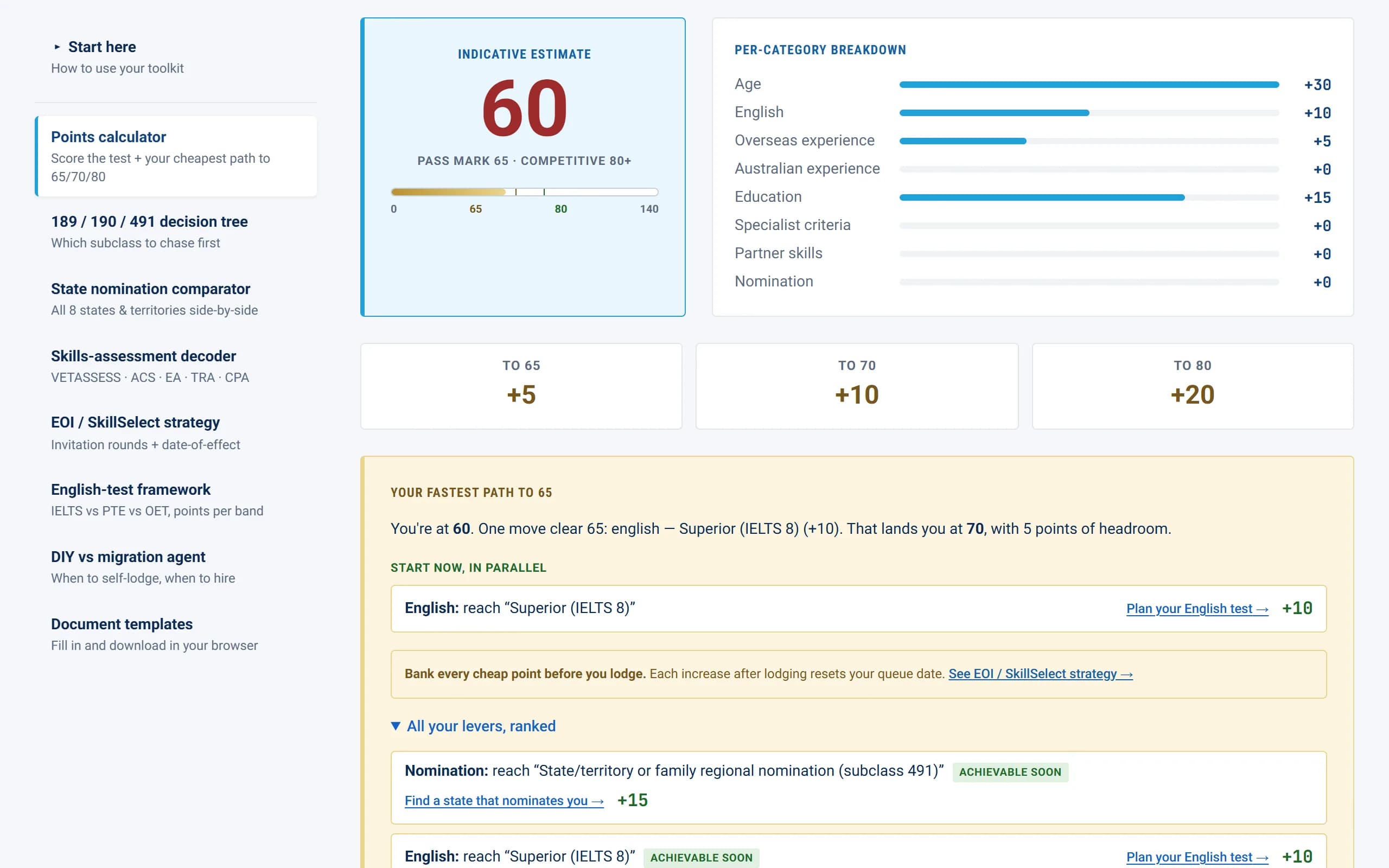
The points test does not apply at the initial visa stage because there is no 189, 190 or 491 pathway for 139917. Employer sponsorship under 482 is based on skills assessment, salary threshold, and a qualifying nomination — not points.
For applicants targeting 186 Direct Entry (offshore PR via employer sponsorship), the eligibility requirements equivalent to a points test still apply:
- Skills assessment: Positive VETASSESS outcome
- English: Competent (IELTS 6.0 across bands) minimum, Proficient (IELTS 7.0) preferred
- Experience: Minimum 3 years post-qualification at appropriate skill level
- Age: Under 45 (limited exemptions for high-income occupations apply)
The Australian Employer Landscape
Pharmaceuticals and Plasma Therapies
CSL is the single largest RA employer in Australia and a global plasma-therapies leader. Pfizer Australia, AstraZeneca Australia, Novartis, Roche, GSK Australia, Johnson & Johnson Pharmaceuticals and MSD all maintain Australian RA teams handling TGA submissions for products marketed locally. Most of these companies sponsor 482 and routinely support 186 TRT.
Biotech and Listed Pharma
Mesoblast, Telix Pharmaceuticals, Clinuvel Pharmaceuticals, Neuren Pharmaceuticals, Imugene, and a long tail of ASX-listed and unlisted biotechs hire RA managers for clinical-stage and commercial products. These employers often want experience across TGA, FDA and EMA simultaneously.
Medical Devices
Cochlear (Sydney), ResMed (Sydney), Compumedics (Melbourne), Nanosonics (Sydney), and a cluster of smaller ASX-listed device companies hire RA managers familiar with TGA medical devices regulation, EU MDR/IVDR, and FDA 510(k) and PMA pathways. The medical devices RA market is smaller than pharma but pays comparably.
Agricultural Chemicals and Veterinary Pharmaceuticals
The APVMA (Australian Pesticides and Veterinary Medicines Authority) framework creates demand at Syngenta, Bayer CropScience, BASF, Corteva, Zoetis, Boehringer Ingelheim Animal Health, and Elanco. Geographic concentration is Sydney and regional centres adjacent to agricultural research stations.
Salary and Employment Outlook
| Role | Typical Salary Range |
|---|---|
| Regulatory Affairs Associate | AUD $95,000-$115,000 |
| Senior RA Associate | AUD $115,000-$140,000 |
| Regulatory Affairs Manager (Mid) | AUD $130,000-$160,000 |
| Senior RA Manager | AUD $160,000-$185,000 |
| Head of Regulatory Affairs / RA Director | AUD $185,000-$260,000 |
| VP Regulatory Affairs (ASX-listed) | AUD $260,000-$400,000+ |
Source: PayScale Australia 2026, SEEK Salary Hub 2026, OnQ Recruitment Regulatory Affairs Salary 2026, SalaryExpert 2026.
Total packages include superannuation at 11.5%, performance bonuses of 15-25% in biotech and pharma, and equity components in listed firms. Senior RA leaders at clinical-stage biotechs often receive significant short-term incentive plans tied to clinical readouts and regulatory approvals.
Highest-Paying Sectors
- Plasma and pharmaceutical manufacturing — CSL leads the market
- Listed biotech — Mesoblast, Telix, Clinuvel and similar ASX-listed firms
- Medical devices — Cochlear, ResMed, Compumedics
- Multinational pharmaceutical — Pfizer, AstraZeneca, Novartis, Roche
- Agricultural and veterinary pharma — Syngenta, Zoetis, Boehringer Ingelheim Animal Health
Tips for a Successful Application
1. Document Submission Strategy Ownership, Not Just Submission Authoring
VETASSESS distinguishes managers (who decide what to submit, where, and in what sequence) from associates (who author the documents). Reference letters should list the submissions you owned strategically: which markets, which products, which regulatory pathway selections you made, which executive committees you presented to. Quote regulatory milestones: approvals you led, deficiencies you cleared, label changes you negotiated.
2. Highlight Cross-Jurisdictional Experience
Australian employers actively want RA managers who can navigate TGA alongside FDA, EMA, MHRA, PMDA or Health Canada simultaneously. If you have led submissions across multiple jurisdictions, document each clearly. Single-jurisdiction experience (e.g., only India CDSCO or only Mexico COFEPRIS) is harder to translate to Australian senior roles.
3. Plan Around Sponsorship, Not Permanent Residency First
The standard sequence is identify Australian employers → secure offer → lodge VETASSESS → lodge 482 → relocate → apply 186 TRT after two years. Applicants who chase VETASSESS first without an employer often end up with a positive assessment and no immediate visa route. CSL, Pfizer Australia, AstraZeneca, Cochlear, ResMed and the listed biotechs all advertise RA manager roles directly and through specialist recruiters (OnQ, NES Fircroft, RA Talent).
4. Lean on Regulatory Society Memberships
Membership of the Regulatory Affairs Professionals Society (RAPS) and RAC (Regulatory Affairs Certification) credentialing is well-recognised by Australian employers. Local engagement with the Australian Regulatory and Clinical Scientists Association (ARCS Australia) before relocating is a strong networking accelerator.
5. Choose Sector Match Carefully
A pharma RA manager moving to medical devices needs to learn TGA medical device regulations, EU MDR/IVDR, ISO 13485 alignment, and 510(k)/PMA processes from scratch. The reverse is true. Target your initial application at sectors where your existing regulatory framework experience is directly transferable, then move laterally inside Australia once established.
Step-by-Step Migration Roadmap
- Confirm the right ANZSCO code — verify duties against the ANZSCO code finder
- Check CSOL eligibility — confirm placement on the Core Skills Occupation List
- Map target Australian employers by sector — pharma, biotech, medical devices or agricultural pharma
- Apply through specialist regulatory affairs recruiters — OnQ Recruitment, NES Fircroft, RA Talent are the established names
- Secure offer with 482 sponsorship commitment
- Lodge VETASSESS skills assessment — AUD $1,096-$1,205.60, Priority Processing optional
- Employer lodges sponsorship and nomination — sponsorship AUD $420, nomination AUD $330, plus SAF levy
- Sit English test — Competent minimum for 482, Proficient for 186
- Lodge subclass 482 visa application — AUD $4,015 (same for both streams)
- Complete health and character checks
- Receive 482 grant and relocate
- Apply for 186 TRT after 2 years — transitions temporary status to permanent residency
Frequently Asked Questions
Why is Regulatory Affairs Manager only on the CSOL Core Skills stream?
The Department of Home Affairs places 139917 on the CSOL because regulatory affairs is in clear shortage in specific Australian industries — pharma, biotech, medical devices — but the demand is concentrated within a finite, identifiable set of employers. The Core Skills stream of the CSOL unlocks the employer-sponsored visas (482 and 186) that match this employer-led shortage. Generic points-tested migration would draw a broader applicant pool than the labour market supports, so the Department has not added 139917 to the MLTSSL or any state nomination list in 2025-26.
Do I need an Australian pharmacy or science qualification to work as an RA manager here?
No, in most cases. The TGA does not require Australian pharmacy or medical qualifications for regulatory affairs roles. A relevant overseas bachelor degree in pharmacy, science, engineering or medicine, combined with strong post-qualification RA experience, is what employers value. The exception is if your role involves signing off as the responsible person for specific TGA-licensed activities, which can require Australian-specific qualifications — but this is unusual for RA managers in industry.
How transferable is FDA regulatory experience to Australia?
Very. The TGA framework draws heavily on ICH guidelines, shares CTD/eCTD structure with FDA and EMA, and harmonises with international standards across most therapeutic categories. An RA manager with strong FDA NDA, ANDA or BLA experience can ramp up on Australian-specific submission requirements inside three to six months. The same applies to EMA-experienced managers, particularly for biologics and biosimilars. ICH-experienced RA managers are highly sought after.
Can I move directly to a 186 Direct Entry from offshore as an RA manager?
It is possible but uncommon. 186 Direct Entry requires the Australian employer to make a direct PR nomination, which most employers do not do for offshore candidates because the 482 route is well-trodden, faster to start, and gives the employer two years to confirm the fit before the TRT step. Senior RA directors with rare, directly transferable experience (e.g., a regulatory leader with global plasma therapeutics experience moving directly to CSL) sometimes qualify for Direct Entry, but the 482-to-186 sequence is the realistic path for most.
What's the difference between Regulatory Affairs Manager and Quality Assurance Manager?
The two roles often coexist in small companies but are functionally distinct. Regulatory Affairs (139917) owns external interaction with regulators: submissions, registrations, variations, inspections. Quality Assurance (139916) owns the internal quality system: SOPs, audits, CAPA, training, supplier quality. In larger pharma and biotech companies, RA and QA are separate departments reporting to different executives. Choose the ANZSCO code based on which function dominated your role — see the Quality Assurance Manager pathway for the alternate route and most in-demand occupations for cross-sector context.