Television Journalist Visa Pathway to Australia: Complete 2026 Guide
Updated: 16 August 2026
Australia classifies Television Journalist under ANZSCO 212416, a Skill Level 1 occupation. VETASSESS conducts the skills assessment as a Group B occupation. The role appears on the Core Skills Occupation List and the STSOL, opening subclasses 190, 491, 482 and 186. Typical 2026 salaries range AUD $75,000 to $120,000. Because the occupation is off the MLTSSL, the 189 independent visa is unavailable and employer sponsorship dominates.
Quick Facts: Television Journalist Migration Pathway
| Detail | Information |
|---|---|
| ANZSCO Code | 212416 (Television Journalist) |
| Skill Level | 1 (Bachelor degree or higher, or five years' relevant experience) |
| Skills Assessment | VETASSESS (Vocational Education and Training Assessment Services) |
| Occupation List | CSOL and STSOL — not on the MLTSSL |
| Visa Options | 190, 491, 482, 186 |
| Demand Level | Moderate — concentrated in a handful of national broadcasters |
| Salary Range | AUD $75,000-$120,000 (SEEK / PayScale, 2026) |
| Typical 190/491 Score | 65-80 points plus state nomination, where a state nominates the code |
| Key Challenge | A small employer base, so sponsored roles are scarce and competitive |
What Television Journalists Do in Australia
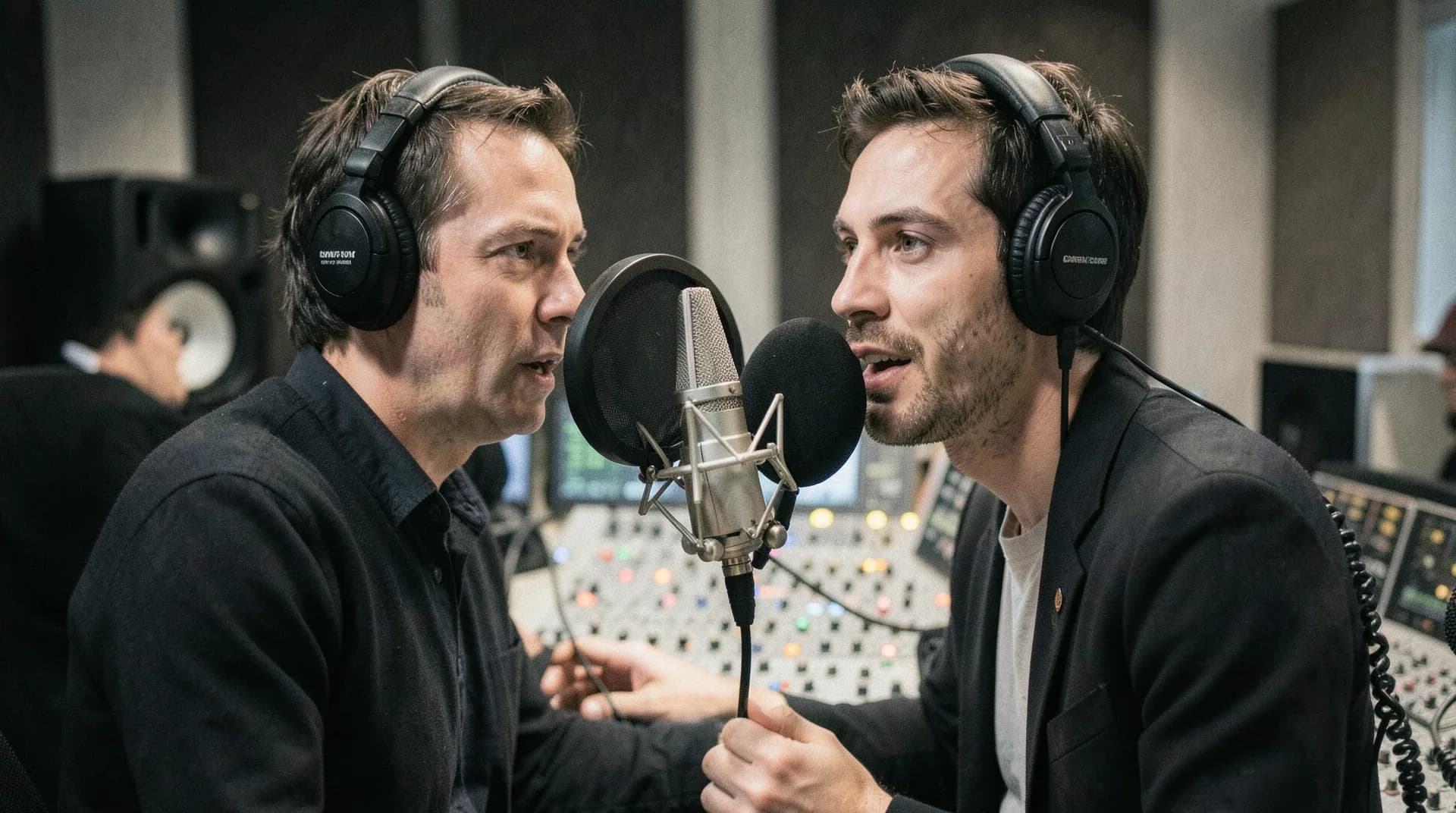
Television journalists gather and verify facts about newsworthy events, then write and present stories for news and current affairs programs. The role mixes reporting with on-camera delivery. A TV journalist might investigate a story, conduct interviews, write the script, record a piece-to-camera and work with editors to cut the package before it airs. Many also file for the broadcaster's website and social channels, since news now runs across platforms simultaneously.
Australian television news is concentrated in a small group of employers. The public broadcasters, the ABC and SBS, run national newsrooms. The commercial networks Seven, Nine and Ten operate metropolitan and regional bulletins. Pay-TV and digital news services add a handful of further roles. That concentration means fewer total positions than print, and strong competition for each opening. On-camera roles in particular tend to be filled from within or through established local talent.
Work clusters in Sydney and Melbourne, where the networks base their main newsrooms and current affairs production. Brisbane, Adelaide, Perth and Canberra carry state bureaus and the federal press gallery. Regional bulletins in New South Wales, Victoria and Queensland occasionally recruit reporters, often as an entry point into the industry.
ANZSCO Code 212416: Television Journalist
ANZSCO 212416 describes professionals who research, write and present news and current affairs material for television. The ABS places it in unit group 2124 (Journalists and Other Writers). The skill level is commensurate with a bachelor degree or higher, with at least five years of relevant experience sometimes substituting for the formal qualification.
Indicative tasks include researching and investigating stories, interviewing sources, writing scripts, fact-checking material and presenting reports on air. The code covers field reporters, presenters and current affairs journalists working in the television medium.
Pick 212416 only if your work is genuinely television reporting and presenting. Print and online reporting maps to Print Journalist (212413), and Radio Journalist (212414) covers audio broadcast. If you plan and coordinate productions rather than report, Video Producer (212318) is the better fit. Confirm the closest match with the ANZSCO code finder before lodging.
Skills Assessment: VETASSESS
VETASSESS assesses Television Journalist as a Group B professional occupation. Group B requires that your qualification be highly relevant to the occupation and your employment be at the right skill level.
Required qualification: An AQF Bachelor degree or higher in a highly relevant field. For journalism occupations VETASSESS treats journalism, media studies and communication-related degrees as relevant.
Employment requirement: The standard pathway needs a highly relevant degree plus at least one year of post-qualification employment in the past five years. Applicants whose qualification is less directly relevant need more experience, scaling up to six years where the degree is in an unrelated field. All pathways require at least 20 hours per week of paid, highly relevant work.
Assessment cost: AUD $1,205.60 from within Australia (GST inclusive), or AUD $1,096.00 from outside Australia. Priority processing adds AUD $825.
Processing time: A fixed seven-week target for professional occupations applies from 1 December 2025, or 10 business days with priority processing.
Common rejection reasons: Reference letters that fail to describe reporting, scripting and on-air duties at the required skill level, and employment that VETASSESS judges below 20 hours per week of relevant work. Presenter-only roles can also draw questions if they show little of the research and writing that defines the occupation.
Compare VETASSESS with other authorities on the skills assessment bodies list.
Visa Pathways for Television Journalists
Television Journalist is on the CSOL and STSOL but not the MLTSSL. The 189 independent visa is closed. Employer sponsorship is the dominant route, with state-nominated options available only where a state lists the code.
Subclass 482 — Skills in Demand Visa
The primary pathway, because it does not depend on a state nominating the occupation. As a CSOL occupation, 212416 qualifies for the Core Skills stream.
- Base application charge: AUD $3,115 (primary applicant)
- Salary floor: The employer must pay at least the Core Skills Income Threshold of AUD $76,515 (from 1 July 2025), rising to AUD $79,499 from 1 July 2026, or the market rate if higher
- Duration: Up to four years
- Quirk: The employer base is small. Securing sponsorship usually means an offer from a national broadcaster or a network, which rarely sponsor offshore on-camera talent. Behind-camera reporting and production roles are a more realistic target.
Subclass 186 — Employer Nomination Scheme
Permanent residency through an employer, available because the occupation is on the CSOL.
- Base application charge: AUD $3,520 (primary applicant)
- Streams: Direct Entry, or Temporary Residence Transition after a qualifying period on a 482
- Quirk: Direct Entry requires three years of relevant experience and a positive VETASSESS result. Most television journalists reach the 186 by transitioning from a 482 with the sponsoring broadcaster.
Subclass 190 — State Nominated Visa
A permanent points-tested visa adding five points, possible because the occupation is on the CSOL. State demand is the limiting factor, and few states nominate journalism codes in 2026.
- Base application charge: AUD $6,140 (primary applicant)
- Points boost: +5 for state nomination
- Obligation: Live and work in the nominating state, generally for two years
Subclass 491 — Skilled Work Regional (Provisional) Visa
A five-year provisional visa with a permanent pathway via subclass 191. Regional or family nomination adds 15 points.
- Base application charge: AUD $6,140 (primary applicant)
- Points boost: +15 for regional nomination
- Quirk: Regional television bureaus occasionally recruit reporters, and a regional offer can support both the job and the visa nomination.
Points Test Strategy
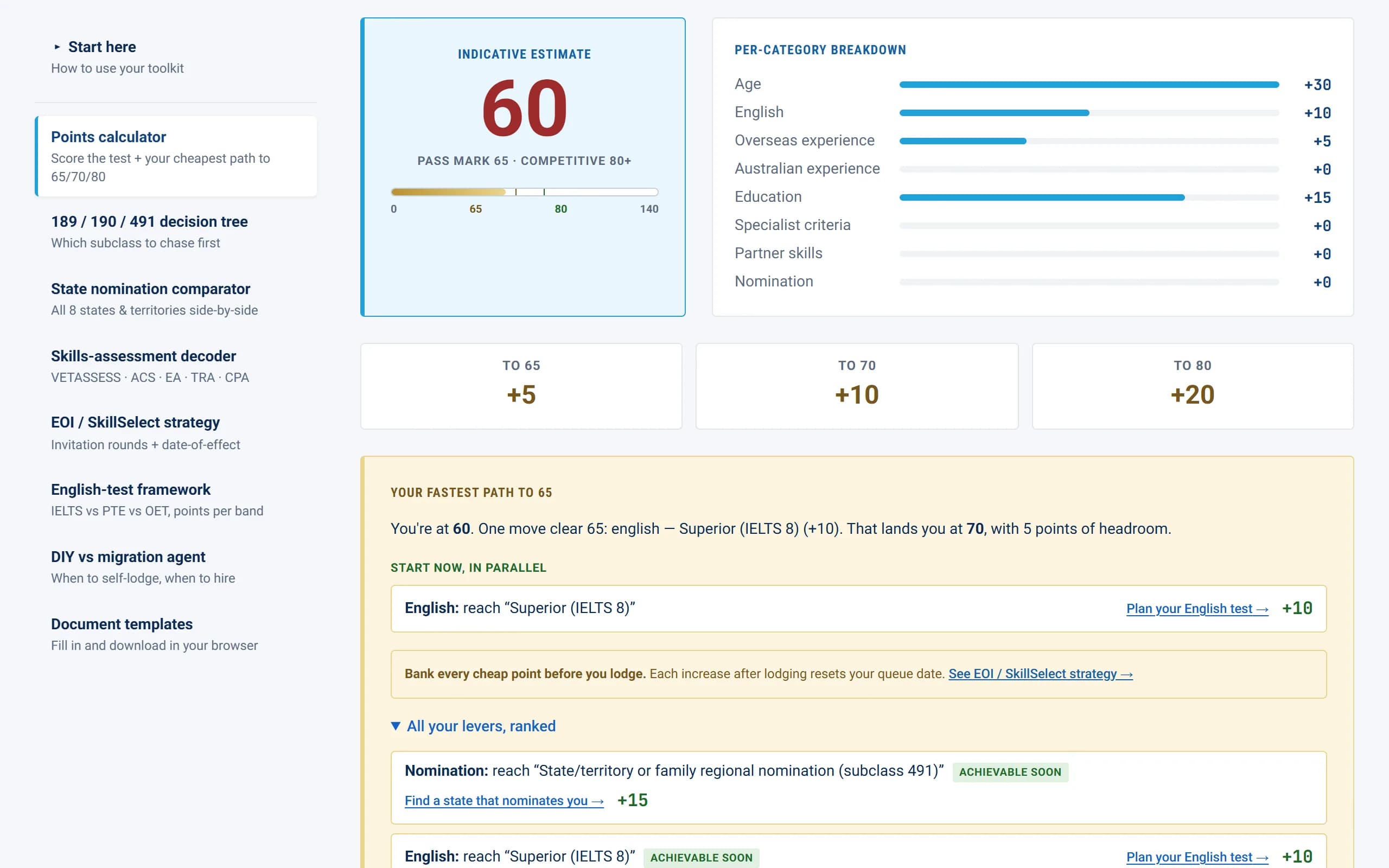
Television Journalist is on the CSOL, not the MLTSSL, so the 189 is out. The points test applies to the 190 and 491, but only when a state nominates the code. Lodge an Expression of Interest through SkillSelect and apply for state nomination in parallel.
| Points Factor | Points | Notes |
|---|---|---|
| Age (25-32) | 30 | Maximum bracket |
| Age (33-39) | 25 | Still competitive |
| English (Superior, IELTS 8/PTE 79) | 20 | Realistic for fluent and native speakers |
| English (Proficient, IELTS 7/PTE 65) | 10 | The common outcome |
| Bachelor degree | 15 | Skill Level 1 minimum |
| Skilled employment (8-10 years) | 15 | Overseas and Australian combined |
| State nomination (190) | 5 | Only where a state nominates 212416 |
| Regional nomination (491) | 15 | Only where a state nominates 212416 |
| Partner skills | 5-10 | If your partner has a skilled occupation |
Realistic Scenarios
Scenario 1: Network reporter, 30, Superior English, eight years' experience. Age 30 + English 20 + degree 15 + experience 15 = 80 points before nomination. A 491 nomination (+15) reaches 95. The score is rarely the obstacle; finding a state that lists 212416 is.
Scenario 2: Mid-career broadcast journalist, 37, Proficient English, six years' experience. Age 25 + English 10 + degree 15 + experience 10 = 60 points. A 491 nomination (+15) lifts this to 75. For most applicants in this position, an employer-sponsored 482 is the more dependable route.
State Nomination
State nomination for television journalism is narrow and shifts each program year. State and territory programs focus on health, engineering, trades and core ICT, where shortages are sharpest. Where Television Journalist does appear on a state list, allocations are small and conditions are specific.
Confirm the occupation against the current nominated occupation list of the state or territory you are targeting before planning around the 190 or 491. For most television journalists, employer sponsorship is the realistic primary route, with state nomination a contingent backup.
Salary and Employment Outlook
| Role | Typical Salary Range |
|---|---|
| Junior / Regional Reporter | AUD $60,000-$80,000 |
| Television Journalist (mid-level) | AUD $80,000-$110,000 |
| Senior Reporter / Correspondent | AUD $100,000-$140,000 |
| News Presenter / Anchor | AUD $120,000-$250,000+ |
| Chief of Staff / News Editor | AUD $130,000-$180,000+ |
Figures draw on SEEK 2026 advertised salary data for journalist roles and PayScale Australia broadcast journalist data, which together span roughly AUD $59,000 at entry to $180,000-plus for senior broadcast roles. Total packages add superannuation at 11.5 per cent. High-profile presenter and anchor salaries at the major networks sit well above the published bands and are negotiated individually.
The principal employers are the ABC, SBS and the commercial networks Seven, Nine and Ten. Sydney and Melbourne carry the best-paid roles and the main current affairs operations. Regional bulletins pay less and serve mainly as entry points.
Tips for a Successful Application
-
Evidence the reporting, not just the airtime. VETASSESS assesses 212416 as a journalism occupation, so references must show research, interviewing, scripting and fact-checking, not only on-camera delivery. A presenter who cannot evidence the underlying journalism risks a negative assessment.
-
Target behind-camera roles for sponsorship. Networks rarely sponsor offshore on-air talent. Reporting, producing and current affairs roles are a more realistic sponsorship target, and they map cleanly to the code.
-
Confirm the employer clears the income threshold. A 482 requires the broadcaster to pay at or above the Core Skills Income Threshold. Mid-level and senior broadcast roles clear it easily; junior regional roles may not.
-
Lead with the employer route. Because few states nominate 212416, the 482 and 186 are usually the surest paths. Treat the 190 and 491 as secondary options that depend on a state listing the code.
-
Keep your evidence single-medium. If your career spans television, radio and print, present the duties that map specifically to television journalism. Blended evidence can lead VETASSESS to question whether your work fits 212416.
Step-by-Step Migration Roadmap
- Confirm your ANZSCO code with the ANZSCO code finder — verify your work is television reporting and presenting.
- Check list status against the Core Skills Occupation List and the skilled occupation list.
- Collect employment evidence showing 20+ hours per week of relevant work.
- Sit an English test — aim for Superior for points-tested visas.
- Lodge a VETASSESS skills assessment (AUD $1,205.60 in Australia / $1,096 outside).
- Secure an employer sponsor for the 482, or check whether a state nominates 212416.
- Submit an Expression of Interest through SkillSelect for the 190 or 491.
- Apply for state nomination where the occupation is listed.
- Lodge the visa after invitation or employer nomination approval.
- Complete health and character checks.
- Receive the grant and relocate.
Frequently Asked Questions
Can a television journalist apply for a 189 visa in Australia?
No. Television Journalist (212416) is on the Core Skills Occupation List and the STSOL but not the MLTSSL, and the subclass 189 draws only from the MLTSSL. The available pathways are employer sponsorship (482 and 186) and, where a state nominates the code, the points-tested 190 and 491.
Is it realistic to be sponsored as an on-camera presenter?
It is difficult. Australian networks rarely sponsor offshore on-air talent, preferring to develop presenters locally. Behind-camera reporting, producing and current affairs roles are a more realistic sponsorship target, and they fit the ANZSCO definition just as well.
How does Television Journalist differ from Print or Radio Journalist for migration?
The visa lists and assessing body are the same; only the medium differs. Choose the code that matches your actual work. If you mix media, present the duties that align most clearly with one code, because VETASSESS assesses against a single occupation and blended evidence can weaken the case.
What does the VETASSESS assessment cost and how long does it take?
The full assessment costs AUD $1,205.60 from within Australia or AUD $1,096.00 from outside, with optional priority processing for an extra AUD $825. Standard processing targets seven weeks; priority is 10 business days.
What is the demand outlook for television journalists in Australia in 2026?
Moderate and concentrated. A small group of national broadcasters and commercial networks employs most television journalists, so total positions are limited and competition is high. The occupation stays on the CSOL because shortages persist in specific reporting and production roles, but openings are fewer than in print or digital journalism.