Tour Guide Visa Pathway to Australia: Complete 2026 Guide
Updated: 16 August 2026
Australia classifies Tour Guide under ANZSCO 451412. VETASSESS conducts the skills assessment. The occupation is on the Core Skills Occupation List, which unlocks employer-sponsored subclasses 482 and 186. Typical 2026 salaries range AUD $58,000-$80,000. There is no points-tested route, so a sponsoring employer who can meet the salary threshold is the practical requirement.
Quick Facts: Tour Guide Migration Pathway
| Detail | Information |
|---|---|
| ANZSCO Code | 451412 (Tour Guide) |
| Skill Level | 3 (AQF Certificate III with two years on-the-job training, or Certificate IV, or three years relevant experience) |
| Skills Assessment | VETASSESS |
| Occupation List | CSOL (Core Skills Occupation List) |
| Visa Options | 482 (Skills in Demand), 186 (Employer Nomination Scheme) |
| Demand Level | Moderate — tied to inbound tourism and seasonal in many regions |
| Salary Range | AUD $58,000-$80,000 (SEEK, 2026) |
| Typical 189 Score | Not applicable — no points-tested pathway (employer sponsorship only) |
| Key Challenge | Meeting the 482 salary threshold in a sector with seasonal, often part-time work |
What a Tour Guide Does in Australia
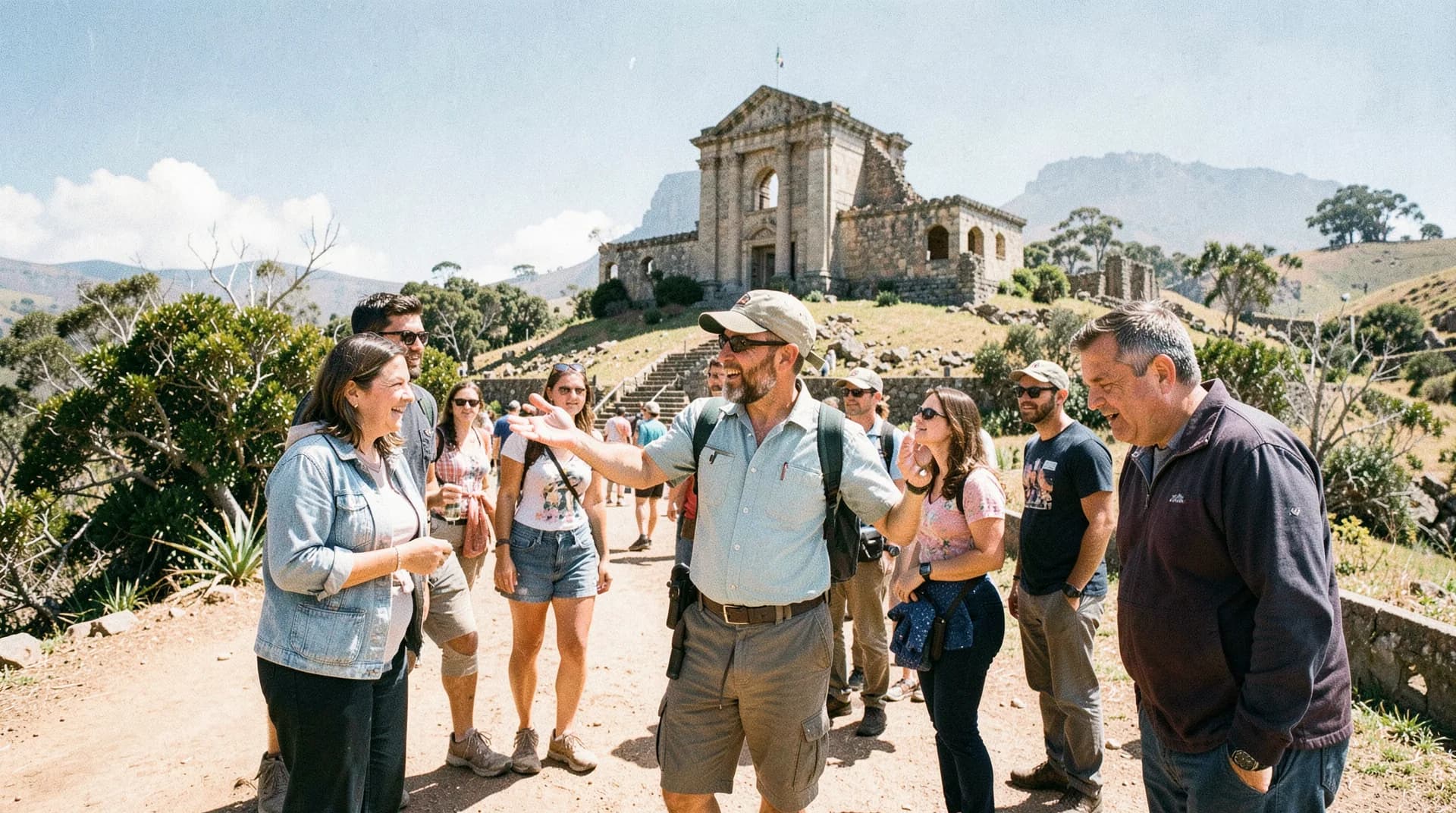
A Tour Guide escorts visitors and explains points of interest at cultural, historical, and natural attractions. The work spans city walking tours, museum and gallery tours, wildlife and wilderness experiences, wine-region tours, and Indigenous cultural tours. A guide plans the route and commentary, manages the group's safety and timing, handles logistics, and answers questions across a wide range of subjects. The role rewards strong communication, local knowledge, and often a second language.
Demand follows inbound and domestic tourism, which makes it geographically and seasonally uneven. International visitor numbers drive guiding work in Sydney, the Red Centre, Tropical North Queensland, Tasmania, and the wine regions, while domestic travel sustains demand in shoulder seasons. The occupation earned its CSOL listing because operators in high-tourism regions report difficulty finding qualified guides, particularly those with specialist knowledge or language skills. The flip side is that much guiding work is seasonal or part-time, which has real consequences for visa eligibility.
Pay is modest and variable. Guides often earn a base wage plus tips or commission, and full-time year-round roles are less common than seasonal ones. For a 482 visa, the sponsoring employer must pay at least the Core Skills Income Threshold of AUD $76,515 or the market rate, whichever is higher. Reaching that figure in a seasonal sector is the central challenge, so senior, specialist, and lead-guide roles are the realistic targets.
ANZSCO Code 451412 Explained
ANZSCO 451412 covers guides who accompany and inform visitors on tours of places of interest. The official tasks include planning tour itineraries and commentary, escorting groups, describing and interpreting points of interest, ensuring visitor safety and comfort, and arranging transport and entry logistics. The code captures a wide span of guiding work, from a museum docent to a multi-day outback expedition leader.
A guide who primarily organises and sells travel arrangements rather than leading tours may fit a travel-consultant or tourism-management code instead. If your role combines guiding with running a tour operation or managing other guides, check whether a hospitality or tourism management code fits better. The ANZSCO code finder carries the full definitions, and matching your references to the genuine duties is what makes the VETASSESS assessment succeed.
Skills Assessment with VETASSESS
VETASSESS assesses Tour Guide against both qualification and employment criteria, comparing your background to Australian standards for the occupation.
VETASSESS (Vocational Education and Training Assessment Services)
- Canonical site: vetassess.com.au
- Qualification requirement: a qualification assessed as comparable to the relevant AQF level for the occupation, in a field relevant to tourism or guiding. Where the qualification is lower or not highly relevant, additional employment may be required under the applicable pathway.
- Experience requirement: post-qualification employment highly relevant to the occupation, at the appropriate skill level, within the last five years, working at least 20 hours a week. The duration depends on the qualification pathway.
- Assessment cost: AUD $1,096 for a full skills assessment (effective 22 October 2025). Priority processing adds AUD $825.
- Processing time: standard processing averages around 7 weeks; priority processing returns an outcome in about 10 business days.
- Common rejection reasons: employment that reads as travel-agency or reception work rather than guiding; experience that cannot be verified through payslips and references; gaps caused by seasonal work that fall outside the recent-experience window.
Because guiding work is often seasonal, keep clear records of every engagement. VETASSESS counts hours worked at the appropriate level, so a well-documented run of seasonal contracts can still satisfy the experience requirement.
Visa Pathways for Tour Guides
Tour Guide is on the Core Skills Occupation List but not on the points-tested lists, so subclasses 189, 190, and 491 are unavailable. Both routes are employer-sponsored.
Subclass 482 — Skills in Demand Visa
The primary pathway. An approved tour operator or attraction sponsors you into a nominated guiding role.
- Visa fee: from AUD $3,210 (primary applicant, Core Skills stream).
- Salary constraint: the role must pay at least the Core Skills Income Threshold of AUD $76,515 or the market rate, whichever is higher. This is the main obstacle in a seasonal, often part-time sector.
- Experience: at least one year of relevant full-time equivalent work in the last five years.
- Quirk: the salary threshold is measured at the full-time equivalent rate. Seasonal and part-time guiding rarely meets it, so target year-round operators and senior or specialist guide roles that pay above award.
Subclass 186 — Employer Nomination Scheme
The permanent residency route, usually reached after time on a 482.
- Visa fee: from AUD $6,140 (primary applicant).
- Streams: Temporary Residence Transition (after qualifying time with the sponsoring employer) or Direct Entry.
- Quirk: the Direct Entry stream requires three years of relevant experience, so most guides transition through a 482 first.
State and Regional Nomination
Tour Guide is not on the points-tested lists, so the standard subclass 190 and 491 state nomination programs do not apply. The relevant lever is the Designated Area Migration Agreement system. Tourism-dependent regions, including Far North Queensland and other resort and wilderness destinations, run DAMAs that include tourism and guiding roles, sometimes with salary or experience concessions. If your sponsoring employer operates in a DAMA region, confirm the current occupation list and any concession with the designated area representative before relying on it.
Salary and Employment Outlook
| Role | Typical Salary Range |
|---|---|
| Tour Guide (entry / seasonal) | AUD $55,000-$65,000 |
| Tour Guide (experienced) | AUD $62,000-$78,000 |
| Specialist / Multi-Day Expedition Guide | AUD $75,000-$95,000 |
| Tour Leader / Operations Coordinator | AUD $80,000-$110,000 |
Source: SEEK, 2026. Tour guide pay sits in a modest band, often supplemented by tips and commission. Superannuation of 11.5 per cent applies on top of base pay. Specialist guides — those leading multi-day wilderness, cultural, or expedition tours, or working in a second language — earn the most and are the likeliest to clear the 482 salary threshold.
The outlook tracks the tourism cycle. Inbound visitor numbers have recovered, and high-tourism regions report guide shortages, but the seasonal and part-time nature of much of the work limits sponsorship to year-round operators and senior roles. Specialist knowledge or language skills materially improve both pay and visa prospects.
Tips for a Successful Application
-
Document every season. Guiding work is often seasonal, and VETASSESS counts verifiable hours at the appropriate level. Keep contracts, payslips, and references for each engagement so a run of seasonal work adds up to the required experience.
-
Distinguish guiding from selling travel. Make sure your references describe leading and interpreting tours, not booking travel arrangements. Travel-agency duties point to a different code.
-
Target year-round and specialist roles for the salary threshold. The 482 requires AUD $76,515 or market rate, whichever is higher, at the full-time equivalent. Seasonal roles rarely reach it, so aim for full-time operators and specialist or lead-guide positions.
-
Use a second language as an advantage. Operators serving international markets value guides who speak the visitors' language. That specialisation raises both pay and the odds of sponsorship.
-
Plan the 482 to 186 sequence. Direct Entry to the 186 needs three years of experience. Most guides build that on a 482, then transition to permanent residency.
Step-by-Step Migration Roadmap
- Confirm your role maps to ANZSCO 451412 rather than to a travel-consultant code.
- Check the occupation remains on the Core Skills Occupation List.
- Confirm your qualification meets the VETASSESS pathway for the occupation.
- Gather contracts, payslips, and references covering each guiding engagement.
- Lodge the VETASSESS skills assessment (AUD $1,096), with priority processing if needed.
- Sit an English test that meets the 482 requirement.
- Find a sponsoring tour operator who offers year-round work at or above the salary threshold.
- Have the employer lodge the nomination for the role.
- Lodge the subclass 482 visa application.
- Work in the sponsored role and build toward the three-year experience mark.
- Apply for subclass 186 through the Temporary Residence Transition or Direct Entry stream.
- Complete health and character checks and receive the grant.
For the full assessing-authority list, see the skills assessment bodies list, and for how employer sponsorship sits alongside the points system, see the SkillSelect EOI overview.
Frequently Asked Questions
Can I get permanent residency as a tour guide?
Yes, through subclass 186. Tour Guide is not on the points-tested lists, so subclasses 189 and 190 are unavailable, but the Employer Nomination Scheme leads to permanent residency. Most guides work on a 482 first and transition once they meet the three-year experience requirement.
Why is the salary threshold such a barrier for tour guides?
Much guiding work is seasonal or part-time, and the 482 requires the role to pay at least AUD $76,515 or the market rate, whichever is higher, measured at the full-time equivalent. Entry and seasonal roles fall short. Year-round, specialist, and lead-guide positions are the ones that realistically clear the threshold.
Does seasonal work count toward the experience requirement?
Yes, if it is documented. VETASSESS assesses verifiable hours at the appropriate skill level within the last five years. A series of well-evidenced seasonal contracts can satisfy the requirement, provided you can prove the duties and hours with contracts, payslips, and references.
How does a second language help my application?
Operators serving international visitors actively seek guides who speak their guests' language. That specialisation raises your market value, which helps meet the salary threshold, and makes a sponsoring operator more willing to take you on. It does not change the assessment criteria, but it improves your practical prospects.
What's the difference between a tour guide and a travel consultant for migration?
A Tour Guide (451412) leads and interprets tours in person. A travel consultant arranges and sells travel products from an office or agency, which falls under a different ANZSCO code. If your work is mostly booking and selling rather than guiding, you should assess under the code that matches those duties, not under Tour Guide.