Building Associate Visa Pathway to Australia: Complete 2026 Guide
Updated: 16 August 2026
Australia classifies Building Associate under ANZSCO 312112. VETASSESS conducts the skills assessment as a Group C professional occupation. The code is on the Core Skills Occupation List (CSOL) for employer-sponsored visas only — the 190 and 491 routes are closed for this code in 2026. Eligible visas are 482 and 186. Typical 2026 salaries range AUD $85,000-$130,000.
Quick Facts: Building Associate Migration Pathway
| Detail | Information |
|---|---|
| ANZSCO Code | 312112 (Building Associate) |
| Skill Level | 2 (AQF Diploma or higher) |
| Skills Assessment | VETASSESS (Group C) |
| Occupation List | CSOL — employer-sponsored streams only |
| Visa Options | 482, 186 |
| Demand Level | High in construction-heavy states — tied to housing and commercial pipelines |
| Salary Range | AUD $85,000-$130,000 (based on SEEK Building/Construction Supervisor data 2026) |
| Typical 482 Salary | Most roles clear Core Skills threshold ($79,423) comfortably |
| Key Challenge | No 190/491 route — employer sponsorship is the only pathway |
What Building Associates Do in Australia
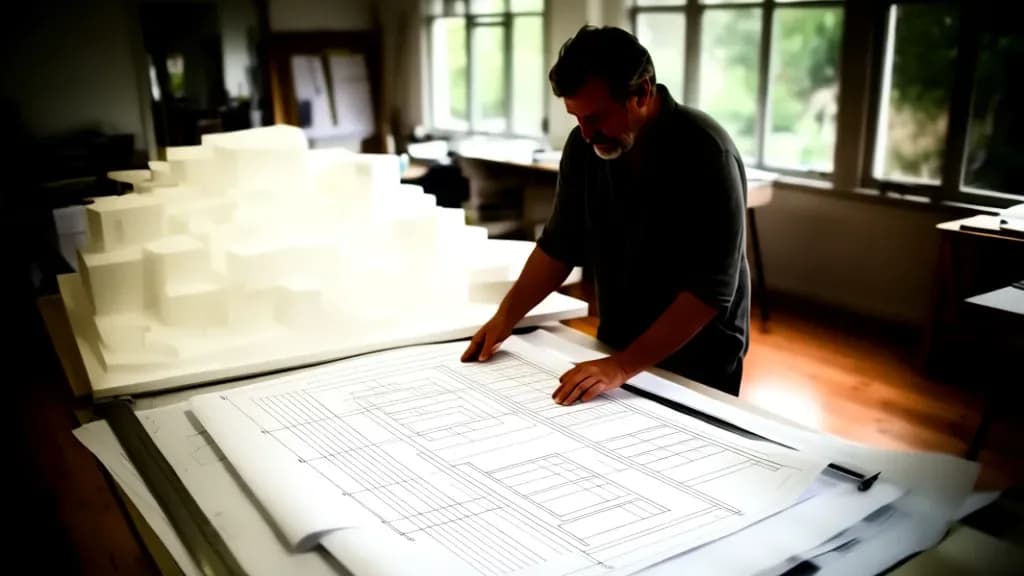
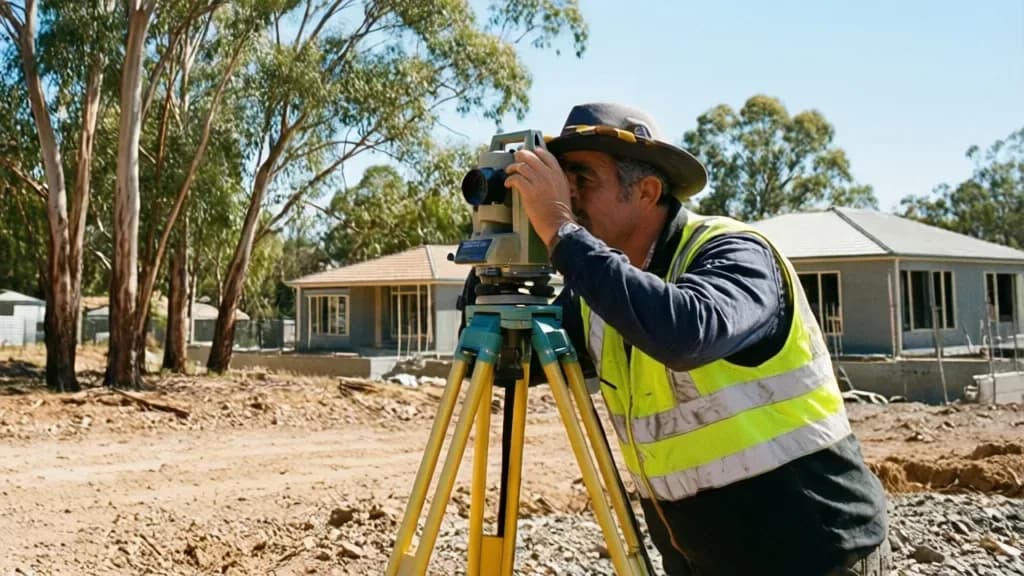
Building Associates assist registered builders and construction managers in technical and supervisory work on construction sites. The role spans site supervision, technical coordination of subcontractors, quality and compliance inspection, documentation control, and liaison between design teams and trades. On a typical Australian construction site, a building associate is the technical authority below the project manager — interpreting drawings, calling out non-conformances, signing off on inspection points, and keeping the build aligned with the National Construction Code.
Demand follows the construction pipeline. The Housing Australia Future Fund, Victoria's Big Housing Build, NSW's Transport Oriented Development program, and the AUKUS-linked infrastructure in South Australia have all kept building-associate roles in steady demand through 2025-26. The big employer types are tier-one and tier-two construction firms (Multiplex, Lendlease, Hutchinson Builders, Built, ICON), commercial fitout specialists, volume residential builders, and specialist project management consultancies (RCP, APP, Aurecon's program-management arm).
Geographically, Melbourne and Sydney dominate by volume. Brisbane has surged on the back of Olympic infrastructure spending. Perth's residential and mining-services construction underpins steady regional demand.
ANZSCO 312112 — The Code in Detail
The ABS description: Building Associates perform technical functions in support of registered builders in the construction, alteration, repair and maintenance of buildings and other structures.
Typical tasks:
- Supervising on-site construction activities
- Coordinating subcontractors and trades
- Inspecting work for compliance with drawings, specifications and the National Construction Code
- Maintaining site documentation, including daily diaries, inspection records and variation logs
- Liaising with architects, engineers, consultants and clients
- Estimating quantities, costs and timelines for sections of work
- Resolving on-site technical issues
The adjacent codes are 133111 Construction Project Manager (more senior, head-of-site responsibility), 312114 Construction Estimator (cost-focused), and 312199 Architectural, Building and Surveying Technicians nec. The boundary against Construction Project Manager is seniority and signing authority — Building Associates work under the supervision of registered builders, while Construction Project Managers carry the overall site responsibility.
Skills Assessment — VETASSESS
VETASSESS classifies Building Associate as a Group C occupation. The assessment evaluates qualification, employment history and the role's technical and supervisory content.
Assessment fees (current schedule from October 2025):
- Full skills assessment (offshore): AUD $1,096
- Full skills assessment (onshore, GST inclusive): AUD $1,205.60
- Priority Processing (additional): AUD $825 (offshore) / $907.50 (onshore)
Processing time: VETASSESS publishes 8-10 weeks for Building Associate assessments. Priority Processing takes about 10 business days. Add 4-6 weeks when overseas qualifications require third-party verification.
Group C qualification + employment pathways:
- AQF Diploma level qualification in a highly relevant field + 1 year post-qualification highly relevant employment in the last 5 years
- AQF Diploma in a highly relevant field + additional AQF Certificate IV in a highly relevant field + 1 year post-qualification employment
- AQF Diploma without a highly relevant field + 2 years post-qualification highly relevant employment in the last 5 years
- No relevant qualification + 4 years employment including 1 year in the last 5 years
Highly relevant fields include Building, Construction Management, Building Surveying, and Construction Supervision. Core competencies VETASSESS examines: Building Codes and Standards, Site Management, Principles of Structures, Occupational Health and Safety, Risk Management and Quality Management.
Common rejection reasons. VETASSESS rejects applicants whose role lacks genuine site-level technical authority. References that describe office-bound administrative roles, or roles confined to estimating without supervisory content, do not clear the role criteria. The second common failure: qualifications from construction backgrounds that lack the structural and codes content VETASSESS reads as core to the occupation.
Visa Pathways for Building Associate
Because 312112 sits on the CSOL only for employer-sponsored streams, the 189, 190 and 491 are all closed for this code. Sponsorship is the route.
Subclass 482 — Skills in Demand Visa
The dominant pathway. Employer sponsorship for up to 4 years.
- Visa application fee (primary): AUD $4,015
- Salary thresholds: Core Skills $79,423; Specialist Skills $146,576 from 1 July 2026 (previously $76,515 and $141,210).
- Reality for Building Associates: Most roles clear the Core threshold comfortably. Senior roles on major projects can clear Specialist Skills, which speeds processing significantly.
- Processing: Core Skills stream typically 1-3 months; Specialist Skills usually under 1 month.
- Labour Market Testing applies to Core Skills nominations — the employer must advertise the role domestically before sponsoring.
Subclass 186 — Employer Nomination Scheme
Permanent residency through employer sponsorship.
- Visa application fee: AUD $6,140
- Streams: Direct Entry (3+ years experience + skills assessment) or Temporary Residence Transition (after time on a 482)
- TRT route is the common pathway: Start on a 482, demonstrate 2+ years with the sponsor, then transition. The 312112 placement on the CSOL keeps the 186 open.
Salary and Employment Outlook
| Role | Typical Range (AUD) |
|---|---|
| Junior Building Associate (0-3 yrs) | $70,000-$85,000 |
| Building Associate (3-7 yrs) | $85,000-$105,000 |
| Senior Building Associate / Site Coordinator | $100,000-$125,000 |
| Building Supervisor (with site-management remit) | $100,000-$130,000 |
| Senior Construction Supervisor | $115,000-$140,000 |
| Contract supervisor (tier-1 builder) | $700-$1,100/day |
Sources: SEEK Career Advice 2026 data for Building Supervisor ($100k-$110k average) and Construction Supervisor ($100k-$120k average); SEEK job-ad disclosures for Building Associate listings in May 2026; cross-checked against Hays Salary Guide construction segments.
Superannuation is 12% on top of base. Tier-one builders (Multiplex, Lendlease, John Holland) add project completion bonuses of 10-20% on major commercial and infrastructure projects. Tier-two and volume builders typically pay closer to the median with steadier project flow but smaller bonuses. Site allowance and overtime add meaningfully where roster-based shutdown projects are involved.
Sydney and Melbourne pay 5-15% above the national median for building associates. Brisbane has converged on Sydney rates through 2025-26 as the Olympic-linked construction pipeline tightens supply. Perth pays a premium for mining-services construction supervisors. Regional Queensland and regional NSW are strong markets when housing-pipeline projects are active.
The highest-paying domains are infrastructure delivery (transport, water, energy projects), tier-one commercial construction, and mining-services construction. Volume residential is the steadiest but lower-paid segment.
Tips for a Successful Application
1. Frame your references around site authority, not office work
VETASSESS specifically looks for site-level supervision and technical coordination. References that describe estimating, takeoffs, or office-bound coordination — without genuine site presence and inspection authority — fail the role criteria. If your overseas role had a hybrid office/site element, ask referees to emphasise the site-supervision content and quantify it (days per week on site, number of trades supervised, inspection points signed off).
2. Have your qualification mapped before lodging
VETASSESS's "highly relevant field" for Building Associate covers building, construction management and building surveying. Civil engineering, quantity surveying and project management qualifications can be borderline. Have transcripts, syllabus details and accreditation documentation ready to substantiate the building content of your qualification — particularly the structures, materials and codes units.
3. Plan around employer sponsorship from day one
With no 190 or 491 pathway, the realistic route is 482 → 186. That means securing a sponsoring employer early. Tier-two builders, regional construction firms and commercial fit-out specialists are more open to sponsorship than tier-one majors. Specialist recruitment agencies — Hays Construction, Marble, Aspect Personnel — are the typical sponsorship channels.
4. Target Specialist Skills if your offered salary reaches $146,576
Senior building associate roles on tier-one projects often clear the Specialist threshold. That stream skips Labour Market Testing and processes in roughly half the time. If your offered salary is between $135k and $145k, push your employer to structure the package over the threshold — the visa processing speed is materially valuable.
5. National Construction Code familiarity is the single biggest credibility lever
Australian construction supervision lives or dies on the National Construction Code (NCC), the Building Code of Australia volumes within it, and state-level building regulations. A migrant who arrives with even introductory NCC knowledge — through online courses or the Australian Building Codes Board free public materials — interviews materially better and ramps faster on site.
Step-by-Step Migration Roadmap
- Confirm role and seniority match ANZSCO 312112 — site-level technical authority is the key test
- Gather qualification documents (degree/diploma, transcripts, accreditation evidence)
- Prepare reference letters quantifying site supervision and technical coordination
- Sit IELTS, PTE Academic or OET — IELTS 6 (or equivalent) is the 482 minimum; higher scores help nomination decisions
- Lodge VETASSESS Group C assessment (AUD $1,096 offshore; 8-10 weeks)
- Identify sponsoring employers — tier-2 builders, fit-out specialists, regional construction firms
- Secure job offer and nomination
- Employer lodges 482 nomination (CSOL confirmation required); pays SAF levy ($1,200-$1,800/yr depending on business size)
- Lodge subclass 482 application
- Work in Australia on 482 for 2+ years
- Transition to subclass 186 via TRT stream once eligible
- Receive PR and renew long-term
Internal references: skills assessment bodies complete list, CSOL hub, construction project manager pathway, SOL 2026.
Frequently Asked Questions
Why is Building Associate restricted to employer-sponsored visas?
The CSOL placement for 312112 in 2026 lists only the 482 and 186 streams. Jobs and Skills Australia reads the labour market as undersupplied for sponsored roles where employers genuinely cannot fill the position locally — but adequately supplied for the points-based stream, where applicants self-select without employer commitment. The pathway is real but the route is narrower than for occupations on the MLTSSL.
Can I move from 312112 to 133111 Construction Project Manager later?
Yes, but it requires a fresh skills assessment under 133111 (assessed by VETASSESS as a Group B occupation) and the seniority to back it. Many migrants enter on a 482 as a Building Associate, build 3-5 years of Australian project experience, then re-assess as a Construction Project Manager when their role and signing authority justify it. The CPM code is on the MLTSSL, which opens the 189 and 190 streams.
Do I need an Australian builder's licence?
For the visa, no. Skills assessment and visa grant do not require an Australian licence. Once working, your activities are limited by what your sponsoring employer's licensed builders authorise. If you want to operate independently or contract directly with clients, you would pursue state-level builder registration — a separate process administered by bodies like the Victorian Building Authority or NSW Fair Trading.
Will the 1 July 2026 salary threshold change affect Building Associate sponsorship?
Yes. From 1 July 2026, the Core Skills threshold rose to AUD $79,423 and the Specialist threshold to AUD $146,576. Nominations lodged from that date must meet the new figures, so an offered salary between the old Core threshold (AUD $76,515) and the new one no longer qualifies. Discuss a salary review with your sponsoring employer well before lodgement.
Which sponsoring employers most commonly hire overseas Building Associates?
Tier-two commercial builders (Built, Hutchinson, FDC, Buildcorp), volume residential builders with strong sponsorship history (Metricon, McDonald Jones), commercial fit-out specialists (Schiavello, Unispace, Sumich Group), and mid-tier infrastructure delivery firms. Tier-one majors sponsor selectively for senior site roles. Specialist construction recruiters are the most effective channel.
Is Australian site experience required before lodging?
No. Skills assessment and 482 sponsorship can be obtained from overseas. However, sponsoring employers usually prefer candidates who have visited Australia, completed a White Card (the basic construction induction), and demonstrated familiarity with Australian site practices. Many migrants do an onshore visit on a visitor visa to interview, then return to lodge.