Other Sports Coach or Instructor Visa Pathway to Australia: Complete 2026 Guide
Updated: 16 August 2026
Australia classifies Other Sports Coach or Instructor under ANZSCO 452317, a Skill Level 4 occupation assessed by VETASSESS. The role sits on the Core Skills Occupation List and the Short-Term Skilled Occupation List, opening subclasses 190, 491, 482, and 186. Typical 2026 salaries run AUD $70,000 to $90,000. VETASSESS requires proof of paid coaching of at least 20 hours per week.
Quick Facts: Sports Coach Migration Pathway
| Detail | Information |
|---|---|
| ANZSCO Code | 452317 (Other Sports Coach or Instructor) |
| Skill Level | 4 (AQF Certificate II or III, or at least one year of relevant experience) |
| Skills Assessment | VETASSESS (Vocational Education and Training Assessment Services) |
| Occupation List | CSOL and STSOL (Short-Term Skilled Occupation List) |
| Visa Options | 190 (state nominated), 491 (regional), 482 (Skills in Demand), 186 (ENS) |
| Demand Level | Moderate — tied to clubs, academies, and the sport coached |
| Salary Range | AUD $70,000-$90,000 (SEEK, Indeed, Jooble, 2026) |
| Typical 189 Score | Not applicable — occupation is on the STSOL, not the 189 list |
| Key Challenge | Proving paid coaching of at least 20 hours a week in one sport |
What a Sports Coach Does in Australia
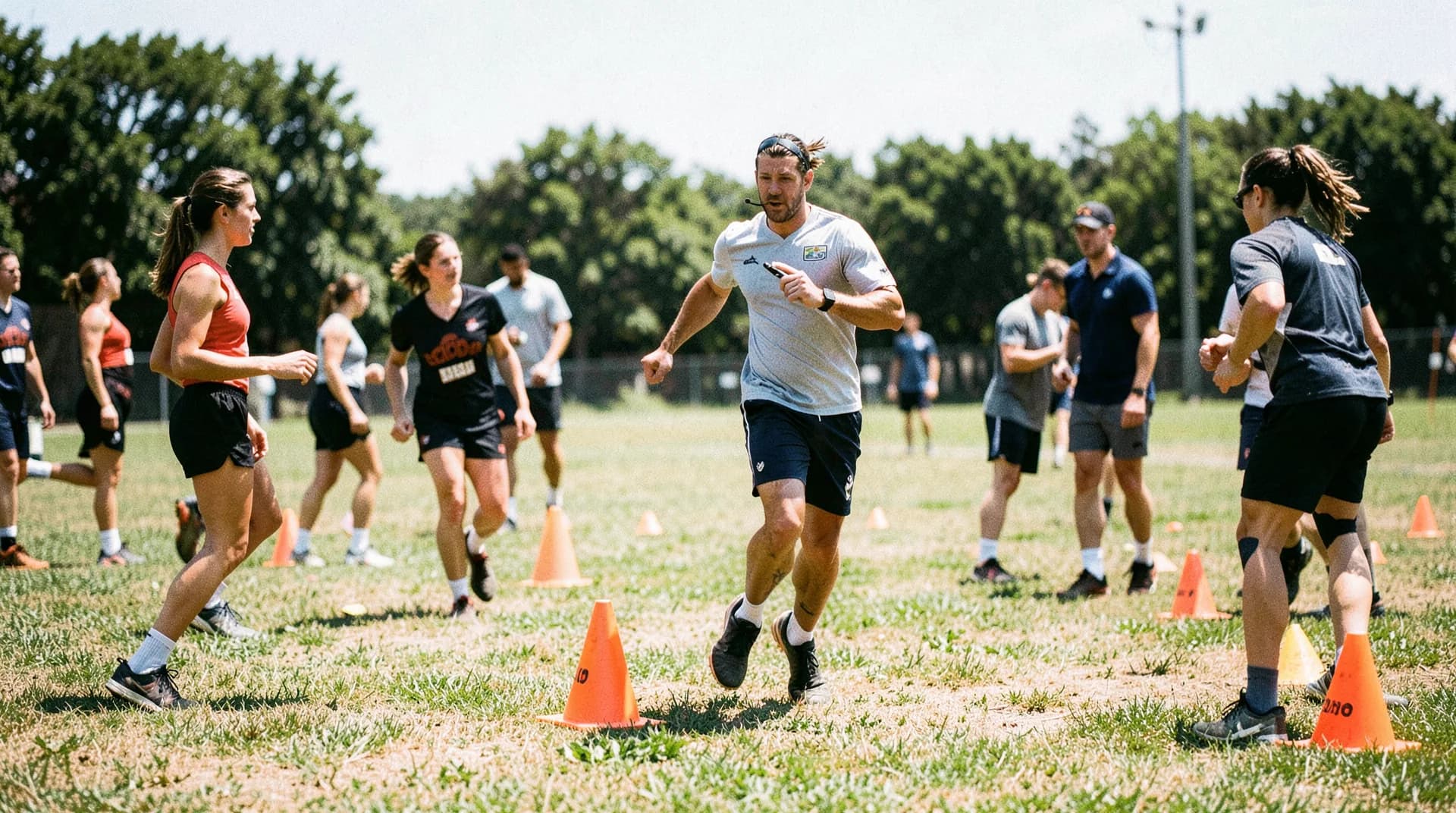
This code covers coaches and instructors of sports not separately classified elsewhere in ANZSCO. They analyse athlete performance, plan training programs, develop skills and tactics, and prepare individuals or teams for competition. The work spans community clubs, private academies, schools that contract external specialists, state sporting institutes, and commercial coaching businesses.
The role is sport-specific in practice even though the code is a catch-all. A swimming coach, a tennis coach, a martial arts instructor, and a gymnastics coach all sit here when their sport lacks its own ANZSCO line. Demand follows the sport and the location: established clubs and academies in the capital cities, plus regional centres with strong junior and pathway programs. Many coaches combine club work with private sessions to build full-time hours.
Australia takes its sport seriously, and the high-performance system runs from grassroots clubs up to the Australian Institute of Sport. That structure creates roles for qualified coaches, but it also means employers expect recognised coaching accreditation and a track record of paid, full-time coaching rather than volunteer or seasonal involvement.
ANZSCO Code 452317 Explained
ANZSCO 452317 covers an Other Sports Coach or Instructor who coaches, trains, and instructs participants in sports by analysing their performance and developing their abilities. It is the residual code in unit group 4523 for sports coaches whose sport is not separately listed.
Core tasks summarised from the ANZSCO description include identifying athlete strengths and weaknesses, planning and running training sessions, teaching techniques and tactics, motivating athletes, monitoring performance and adjusting programs, and arranging competition entries. Applicants must name the specific sport they coach. If your sport has its own ANZSCO code, you should use that code instead; this residual line applies only where no dedicated code exists. Check the position through the ANZSCO code finder.
Skills Assessment with VETASSESS
VETASSESS assesses Other Sports Coach or Instructor, and the assessment for this occupation differs from the standard professional route.
Requirements. The benchmark is a qualification comparable to an AQF Certificate II or higher in a field highly relevant to the nominated sport. The defining requirement is employment evidence: applicants must demonstrate they are employed and paid to coach the sport for at least 20 hours per week, with coaching as the primary engagement with the employer. Volunteer coaching and incidental coaching alongside another main role do not satisfy this.
Assessment cost. AUD $1,096 for the standard offshore application. Priority processing options may not apply to the full sport-specific review; confirm the current fee and options with VETASSESS at lodgement.
Processing time. Around 12 to 20 weeks from the date the application and fee are submitted, depending on how quickly all documents arrive.
Common rejection reasons. The most frequent failure is employment that does not clearly show paid coaching of at least 20 hours per week in a single named sport. Coaches who teach multiple sports, coach part-time, or were primarily employed in another role with coaching on the side struggle to meet the threshold. Coaching accreditation that is informal or unrecognised also weakens the qualification side. References that quantify weekly coaching hours and identify the sport precisely are essential. See how VETASSESS sits among the other assessors in the skills assessment bodies list.
Visa Pathways for Sports Coaches
Other Sports Coach or Instructor is on the CSOL and the STSOL. The STSOL placement means the points-tested options are the 190 and the regional 491.
Subclass 482 — Skills in Demand Visa
Employer sponsorship through a club, academy, or coaching business.
- Visa fee: from AUD $3,210 (Core Skills stream, primary applicant)
- Eligibility note: salary must meet the Core Skills Income Threshold and the market rate; full-time coaching roles meet this more readily than part-time arrangements
- Processing time: faster for accredited sponsors
- Quirk that matters: the sponsoring role must reflect genuine full-time coaching, which aligns with the 20-hour VETASSESS test
Subclass 190 — Skilled Nominated Visa
A points-tested permanent visa requiring state or territory nomination, which adds 5 points.
- Visa fee: from AUD $6,140 (primary applicant)
- Eligibility note: the nominating state must list the occupation for the sport in question
- Processing time: published Home Affairs times apply
- Quirk that matters: states sometimes nominate specific sports tied to local high-performance priorities rather than coaching generally
Subclass 491 — Skilled Work Regional (Provisional)
A points-tested regional visa adding 15 points.
- Visa fee: from AUD $6,140 (primary applicant)
- Eligibility note: suits coaches working with regional clubs and academies
- Processing time: published Home Affairs times apply
- Quirk that matters: regional centres with strong junior pathway programs can offer both the role and the nomination
Subclass 186 — Employer Nomination Scheme
Permanent residency through an employer.
- Visa fee: from AUD $6,140 (primary applicant)
- Eligibility note: Direct Entry needs three years of relevant experience and a positive assessment
- Processing time: published Home Affairs times apply
For the points-tested 190 and 491, an Expression of Interest comes first. The process is set out in the SkillSelect EOI guide.
Points Test Strategy
For the 190 and 491, the standard factors apply.
| Points Factor | Points |
|---|---|
| Age (25-32) | 30 |
| Age (33-39) | 25 |
| English (Proficient — 7.0) | 10 |
| English (Superior — 8.0+) | 20 |
| Diploma / trade qualification | 10 |
| Skilled employment (overseas, 5-8 yrs) | 10 |
| State nomination (190) | 5 |
| Regional nomination (491) | 15 |
| Partner skills | 5-10 |
Realistic Scenarios
Scenario 1 — Experienced regional coach. A 31-year-old coach with a relevant diploma, seven years of full-time coaching, and Proficient English: 30 (age) + 10 (English) + 10 (qualification) + 10 (experience) = 60, plus 15 for a 491 regional nomination = 75 points.
Scenario 2 — Younger coach, strong English. A 27-year-old with Superior English and four years of full-time coaching: 30 (age) + 20 (English) + 10 (qualification) + 5 (experience) = 65, plus 5 for a 190 = 70 points, or plus 15 for a 491 = 80 points.
The 189 independent visa does not apply, because the occupation is on the STSOL rather than the points-tested independent list.
State Nomination
State and territory programs that nominate Other Sports Coach or Instructor often tie the nomination to particular sports or to local high-performance priorities, and the lists are reviewed annually. A coach in a sport a state is actively developing has a stronger case than one in a sport with little local infrastructure. Eligibility must be confirmed against each state's published nomination list at the time you apply, because the lists shift year to year. Verify the current position with the relevant state before lodging an Expression of Interest.
Salary and Employment Outlook
Coaching pay varies with the sport, the level coached, and whether the role is full-time.
| Role | Typical Salary Range |
|---|---|
| Community / club coach | AUD $65,000-$75,000 |
| Academy / development coach | AUD $75,000-$85,000 |
| High-performance / head coach | AUD $85,000-$100,000+ |
Figures draw on SEEK, Indeed, and Jooble data current to 2026. Superannuation of 11.5% applies on top of base pay. Pay rises with the level of competition coached and the reputation of the program. Coaches who run private sessions alongside a salaried role can lift total income further.
The strongest earnings come from high-performance and head-coach positions in well-resourced clubs and state institutes. The catch-all nature of the code means outcomes differ sharply by sport: well-funded sports with professional structures pay more than community-level codes. Compare against other roles in the salary expectations guide.
Tips for a Successful Application
- Document at least 20 paid coaching hours a week. This is the decisive VETASSESS test for the occupation. Employer references should state weekly coaching hours explicitly and confirm coaching was your primary engagement.
- Name one sport and stay consistent. The application requires you to specify the sport you coach. Spreading the evidence across several sports weakens the case; concentrate it on one.
- Use recognised coaching accreditation. National or international coaching credentials in your sport strengthen the qualification side and reassure Australian employers.
- Match the route to your sport's local profile. A sport a state is actively developing supports a 190 or 491 nomination; a niche sport may depend more on direct employer sponsorship through a 482.
- Pursue full-time roles for sponsorship. A 482 nomination must be genuine and meet salary requirements, which full-time coaching positions satisfy far more easily than part-time or sessional work.
Step-by-Step Migration Roadmap
- Confirm your ANZSCO code with the ANZSCO code finder — use this residual code only if your sport has no dedicated line.
- Check list status on the Core Skills Occupation List.
- Assemble coaching accreditation in your nominated sport.
- Gather employer references that state weekly coaching hours and the sport.
- Lodge the VETASSESS skills assessment (AUD $1,096) and allow 12-20 weeks.
- Sit an English test, aiming for Superior for maximum points.
- For the 190 or 491, submit an Expression of Interest through SkillSelect.
- Apply for state or regional nomination, or secure a sponsoring club for a 482 or 186.
- Receive the invitation or nomination approval.
- Lodge the visa application.
- Complete health and character checks.
- Receive the visa grant and relocate.
Frequently Asked Questions
Which sports fall under ANZSCO 452317?
ANZSCO 452317 is the residual code for sports coaches and instructors whose sport is not separately classified. It covers many individual and team sports without their own ANZSCO line. If your sport has a dedicated code, you must use that instead of this catch-all.
Why does VETASSESS require 20 hours of coaching a week?
The 20-hour threshold confirms that coaching is genuine, paid, full-time work rather than volunteer or sessional involvement. It is the central employment test for this occupation, so references that quantify weekly coaching hours in a single sport are essential to a positive outcome.
Is the 189 visa available for sports coaches?
No. The occupation is on the Short-Term Skilled Occupation List, not the points-tested independent list, so the subclass 189 does not apply. The points-tested routes are the 190 and the regional 491, both of which need nomination.
How long does the VETASSESS assessment take for a sports coach?
Around 12 to 20 weeks from lodgement, which is longer than the standard professional assessment. The timeframe depends on how quickly VETASSESS receives all the required employment and qualification documents.
Can my coaching qualifications from overseas be recognised?
Recognised national or international coaching accreditation in your sport strengthens the qualification side of the assessment. VETASSESS still weighs the employment evidence heavily, so accreditation works best when paired with documented full-time paid coaching.