Other Spatial Scientist Visa Pathway to Australia: Complete 2026 Guide
Updated: 16 August 2026
Australia classifies Other Spatial Scientist under ANZSCO 232214. VETASSESS conducts the skills assessment under qualification Group A. The occupation sits on the MLTSSL and CSOL, unlocking subclasses 189, 190, 491, 482 and 186. Typical 2026 salaries range AUD $95,000-$140,000 (SEEK / PayScale, May 2026). The code captures GIS specialists, remote-sensing scientists, photogrammetrists and cartographers.
Quick Facts: Other Spatial Scientist Migration Pathway
| Detail | Information |
|---|---|
| ANZSCO Code | 232214 (Other Spatial Scientist) |
| Skill Level | 1 (Bachelor degree or higher in a highly relevant discipline) |
| Skills Assessment | VETASSESS (Group A — Professional Occupations) |
| Occupation List | MLTSSL and CSOL |
| Visa Options | 189, 190, 491, 482, 186 |
| Demand Level | High — driven by spatial-data adoption across mining, defence, agriculture, government |
| Salary Range | AUD $95,000-$140,000 (PayScale GIS Specialist AU$103,406 average, May 2026) |
| Typical 189 Score | 70-85 points |
| Key Challenge | Demonstrating "highly relevant" employment to VETASSESS standards |
Role Context in Australia
Other Spatial Scientists in Australia work across a broader sector base than surveyors. The largest employers are state government departments (planning, environment, transport), federal agencies (Geoscience Australia, the Bureau of Meteorology, the Department of Defence), the resources sector (BHP, Rio Tinto, Fortescue, Woodside), agricultural-technology firms, environmental consultancies, and a growing band of geospatial-software companies (Esri Australia, Maxar, Hexagon).
The skill base spans Geographic Information Systems (GIS) analysis, remote sensing (satellite and aerial imagery analysis), photogrammetry, cartography, spatial data engineering, and spatial software development. Demand has shifted decisively towards data-engineering and analytics-heavy roles. A 2026 spatial scientist is typically writing Python in a cloud environment, working with PostGIS or Google Earth Engine, and building dashboards in ArcGIS Online or Mapbox — closer to a data scientist than a traditional cartographer.
Geographically, Canberra (federal government and defence intelligence), Brisbane (mining and government), Perth (resources), Sydney (financial services and government) and Melbourne (planning and consulting) employ the bulk of the workforce. The role overlaps with Data Scientist roles at the senior level — some employers list senior spatial analyst roles as either 232214 or 261313 Software Engineer depending on responsibilities.
ANZSCO Code 232214
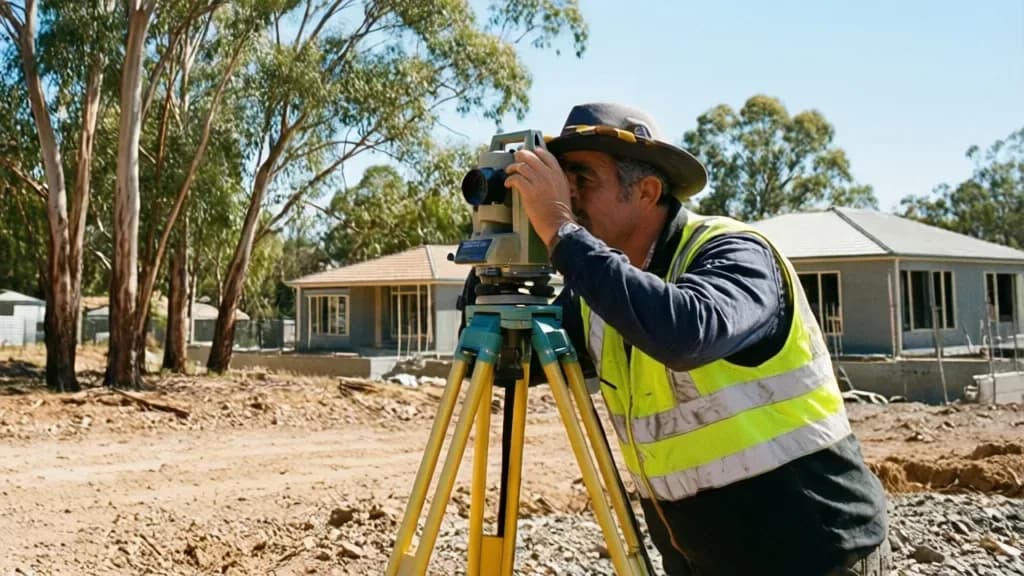
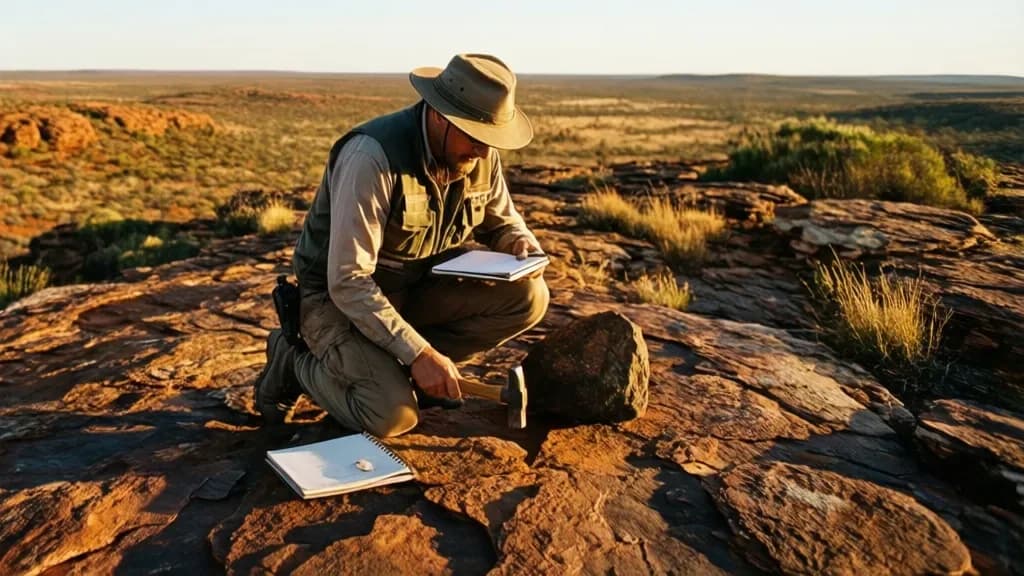
The code applies to professionals who acquire, integrate, analyse, interpret, present, manage and distribute information about locations in space and time, and who develop related equipment, software and services. Day-to-day work includes designing and managing spatial databases, running spatial analyses, processing satellite or LiDAR imagery, producing maps and dashboards, building automated geoprocessing workflows, and advising end-users on spatial-data interpretation.
The code excludes professionals whose primary work is field surveying — they map to Surveyor 232212. It also excludes cartographers in publishing or media (a different code 232213 covers traditional cartographers). The "Other" prefix in the occupation title reflects ABS's grouping convention — 232214 was the catch-all within the Surveyors and Spatial Scientists unit group when GIS and remote-sensing roles did not have their own ANZSCO category. Use the ANZSCO code finder if your role straddles spatial science and another discipline.
Skills Assessment — VETASSESS
VETASSESS is the designated assessing authority for ANZSCO 232214 and places the occupation in Group A — the highest-bar Professional Occupations group. Group A means VETASSESS requires both the qualification and the employment to be "highly relevant" to the nominated occupation.
Core requirements:
- A qualification assessed as comparable to AQF Bachelor degree or higher in a highly relevant field of study (geographic information science, geomatics, geography with strong spatial-science content, surveying with spatial-science specialisation, environmental science with GIS specialisation)
- At least 1 year of post-qualification highly relevant employment in the nominated occupation within the last 5 years, working 20+ hours per week
- Employment must demonstrate spatial-science tasks — generic IT, software development, or environmental consulting roles without a clear spatial-science focus may be assessed as not highly relevant
- English language proficiency — Competent English at minimum for Home Affairs; VETASSESS does not impose a higher requirement
Assessment fee (effective 22 October 2025 schedule, current 2026): Approximately AUD $1,096 (outside Australia, GST exclusive) / AUD $1,205 (within Australia, GST inclusive). Confirm current fee directly at vetassess.com.au before lodgement, as the schedule was adjusted for inflation in October 2025. Points Test Advice (optional, qualifications only): AUD $311 (outside) / AUD $342 (within Australia) Priority Processing: AUD $825 (outside) / AUD $907 (within Australia) Standard processing time: 8-10 weeks for complete applications Priority processing time: approximately 10 business days where available
Common rejection reasons:
VETASSESS Group A rejections concentrate on two issues. First, qualifications that are nominally in geography or environmental science but where spatial-science content was only a minor component (one or two GIS units in an otherwise broad degree). Second, employment that uses spatial software (e.g. an environmental consultant who occasionally runs maps in ArcGIS) but where spatial science is not the primary professional activity. VETASSESS reads job descriptions, project lists and percentage-of-time breakdowns carefully — generic letters fail.
Visa Pathways for Other Spatial Scientists
Subclass 189 — Skilled Independent
Permanent residency with no nomination required. 232214 sees relatively low invitation competition compared to ICT codes.
- Visa fee: AUD $6,135 (primary applicant)
- Minimum points: 65; realistic invitation thresholds 70-80 in 2026
- Processing time: median 6-9 months (Home Affairs March 2026 data)
Subclass 190 — Skilled Nominated
State-nominated PR with a +5 point boost.
- Visa fee: AUD $6,140 (primary applicant)
- Obligation: Live and work in the nominating state for 2 years
- Best states: ACT, Queensland, NSW
Subclass 491 — Skilled Work Regional
Regional 5-year provisional visa with +15 points.
- Visa fee: AUD $6,140 (primary applicant)
- Pathway: Convert to PR via subclass 191
Subclass 482 — Skills in Demand
Employer-sponsored temporary visa. Government departments, mining services and geospatial-software companies sponsor under 482.
- Visa fee: AUD $3,210 (Core Skills stream)
- Income threshold: Core Skills $76,515 — most spatial-scientist roles clear this; senior analytics roles clear the $141,210 Specialist threshold
- Duration: Up to 4 years
- Processing time: 4-7 months for the visa stage in 2026
Subclass 186 — Employer Nomination Scheme
Permanent residency via employer sponsorship.
- Visa fee: AUD $6,140 (primary applicant)
- Streams: Direct Entry or Temporary Residence Transition
Points Test Strategy
| Points Factor | Points | Notes |
|---|---|---|
| Age (25-32) | 30 | Maximum |
| Age (33-39) | 25 | |
| Bachelor degree | 15 | Minimum for Skill Level 1 |
| Masters/Doctorate | 20 | Common in spatial-science roles |
| English — Superior (IELTS 8.0+) | 20 | |
| English — Proficient (IELTS 7.0) | 10 | |
| Overseas experience (5-8 years) | 10 | |
| Overseas experience (8+ years) | 15 | |
| State nomination (190) | 5 | |
| Regional (491) | 15 | |
| Partner skills | 5-10 |
Realistic Scenarios
Scenario A — Indian-trained GIS specialist, age 28, Masters in Geoinformatics, IELTS 7.5, 4 years experience Age 30 + Masters 20 + English 10 + Experience 5 = 65 points. Adding 190 nomination from ACT or NSW gives 70 — competitive.
Scenario B — UK-trained remote sensing scientist, age 33, PhD in Earth Observation, IELTS 8.0, 6 years experience Age 25 + PhD 20 + English 20 + Experience 10 = 75 points. Adding 190 gives 80 — strong for invitation. PhD plus Superior English unlocks the highest tier of competitive scoring.
State Nomination for Other Spatial Scientists
Australian Capital Territory
Canberra is the most concentrated employer of spatial scientists in Australia — Geoscience Australia, the Department of Defence's Australian Geospatial Intelligence Organisation, the Australian Bureau of Statistics and the Department of Agriculture all run substantial spatial teams. ACT nominates 232214 under its Canberra Matrix system, with strong priority for applicants holding job offers from Commonwealth agencies. Many roles require Australian citizenship for security clearance — but defence-adjacent contractor roles are open to permanent residents.
Queensland
Queensland's resources sector and state government employ spatial scientists in Brisbane, Townsville and Toowoomba. The 2025-26 program included 232214 on the offshore list. Applicants with mining-sector experience face the lowest competition.
New South Wales
NSW nominates 232214 for both 190 and 491. Sydney's financial services, government planning and consulting sectors employ the largest urban concentration. Regional NSW also has demand (agricultural-technology firms in the Riverina and New England).
Victoria
Victoria accepts national SOL occupations through its ROI process. Spatial scientists in planning, environmental management and agricultural technology see steady demand. Melbourne is a hub for geospatial-technology vendors.
South Australia
SA nominates 232214 with priority on defence-sector and environmental-management roles. Adelaide hosts the Lot Fourteen innovation precinct, which clusters geospatial and space-technology firms.
Western Australia
WA's resources sector employs spatial scientists across iron-ore, lithium, copper and gas operations. Perth-based mining houses (BHP, Rio Tinto, Fortescue) and oil and gas operators (Woodside, Chevron, INPEX) run substantial in-house spatial teams.
Tasmania
Tasmania nominates 232214 under its onshore skilled occupation list. Forestry, environmental management and aquaculture create demand.
Salary and Employment Outlook
| Role / Specialisation | Typical Salary Range |
|---|---|
| Graduate / Junior GIS Analyst | AUD $75,000-$90,000 |
| GIS Analyst (mid-career) | AUD $95,000-$115,000 |
| Senior GIS Analyst / Spatial Analyst | AUD $115,000-$135,000 |
| Remote Sensing Scientist | AUD $110,000-$140,000 |
| Spatial Data Engineer | AUD $130,000-$165,000 |
| Geospatial Lead / Manager | AUD $150,000-$180,000 |
| Principal Spatial Scientist | AUD $170,000-$210,000+ |
| Defence Intelligence Geospatial Specialist (cleared) | AUD $140,000-$200,000 |
Source: SEEK Salary Hub (May 2026) and PayScale GIS Specialist Australia (AU$103,406 average, 2026).
Total packages add superannuation (12% from July 2026). Defence and federal-government roles include leave and conditions above market average; private-sector resources and technology roles add bonuses and equity. Cleared roles (Negative Vetting 1 or higher) attract 15-25% premiums over equivalent non-cleared positions.
Highest-Paying Contexts
- Defence intelligence and geospatial-intelligence roles (Canberra, with security clearance)
- Resources-sector spatial leadership (Perth, Brisbane)
- Geospatial software vendor engineering roles (Esri Australia, Maxar, Mapbox)
- Senior consulting roles at Aurecon, GHD, Jacobs, AECOM, Mott MacDonald
- Federal scientific agency roles (Geoscience Australia, CSIRO, BOM)
Tips for a Successful Application
-
Request a VETASSESS Points Test Advice before lodging the full assessment. At AUD $342, it confirms whether your qualification is "highly relevant" before you commit to the full $1,200 fee. This is the single highest-leverage decision in the assessment process.
-
Write employment letters that quantify spatial-science work. VETASSESS Group A assessors want percentages: "70% of role involved GIS analysis, 20% spatial database administration, 10% reporting." Generic responsibility lists fail.
-
Highlight programming and cloud skills in your CV. Modern Australian spatial science demands Python (geopandas, rasterio, GeoPandas), SQL/PostGIS, cloud (AWS, Azure, GCP), and DevOps for spatial pipelines. These skills double your candidate pool.
-
For defence-sector roles, plan citizenship over PR. Many high-paying geospatial-intelligence roles require Negative Vetting clearance, which requires Australian citizenship (4 years after PR). Build the strategy long-term — PR first, citizenship second, defence clearance third.
-
Consider Esri/OGC certifications. Esri Technical Certification (Enterprise Administration, ArcGIS Pro) and Open Geospatial Consortium credentials carry weight with Australian employers. Document them in the CV and assessment file.
Step-by-Step Migration Roadmap
- Confirm ANZSCO 232214 fits using the ANZSCO code finder
- Check MLTSSL/CSOL status on the SOL 2026
- Request VETASSESS Points Test Advice if any doubt about qualification fit
- Sit IELTS Academic or PTE Academic
- Lodge full VETASSESS Group A skills assessment (allow 8-10 weeks, faster with Priority Processing)
- Calculate points realistically
- Submit EOI in SkillSelect for 189, 190 or 491
- For 190/491 — apply for state nomination (ACT Canberra Matrix is the standout for spatial scientists)
- Receive invitation and lodge visa within 60 days
- Complete health and character checks
- Receive visa grant and relocate
- For defence-track candidates — begin residency clock for citizenship and clearance
Frequently Asked Questions
What's the difference between Other Spatial Scientist 232214 and Surveyor 232212?
Surveyor 232212 covers field-based surveying (land surveying, mining surveying, engineering surveying, cadastral surveying). 232214 covers desk-based spatial science (GIS, remote sensing, photogrammetry, spatial data engineering). The two codes have different assessing bodies (SSSI vs VETASSESS) and different qualification expectations. If you do both, choose the code that matches the majority of your duties.
Can I migrate as a GIS specialist with a geography degree?
Yes, provided the geography degree had substantive GIS, cartography and spatial-analysis content. VETASSESS Group A requires the qualification to be "highly relevant." A general physical geography degree with a minor in GIS may be assessed as not highly relevant. A specialist GIS Masters following a geography Bachelor typically resolves the issue.
Is the 482 employer-sponsored route easier than 189?
For senior or specialist spatial scientists, often yes. Geospatial vendors (Esri Australia, Maxar) and large consultancies (Aurecon, GHD, Jacobs) sponsor under 482 routinely. The Specialist Skills threshold of $141,210 covers many senior spatial-scientist salaries. The 482-to-186 conversion at 2+ years is straightforward.
Can my MSc in Geoinformatics from India, the Netherlands or Germany be recognised?
Indian MSc Geoinformatics from IIRS Dehradun, IIT Bombay or JNTU Hyderabad is commonly assessed positively. Dutch MSc Geo-Information Science from Wageningen and ITC Twente are well-recognised. German Geoinformatik degrees from TU Munich and TU Dresden are accepted. Always request a Points Test Advice for confirmation.
What's the demand outlook through 2030?
Strong. Spatial-data adoption is accelerating across mining (digital twin), agriculture (precision farming), defence (geospatial intelligence), urban planning (smart cities) and climate (emissions monitoring). The skill ceiling is rising — pure cartography demand is shrinking; spatial data engineering and machine-learning-with-spatial-data demand is growing fastest.
Can I work towards a security clearance from a 482 visa?
Generally no. Australian Government security clearances (Baseline, Negative Vetting 1, NV2, Positive Vetting) typically require Australian citizenship. Some contractor and lower-trust positions are open to permanent residents under a Baseline clearance, but high-trust intelligence roles require citizenship.
Sources: Home Affairs visa fees and processing, VETASSESS Professional Occupation Fees, VETASSESS Other Spatial Scientist, SEEK Salary Hub and PayScale, Jobs and Skills Australia.