Veterinary Nurse Visa Pathway to Australia: Complete 2026 Guide
Updated: 16 August 2026
Australia classifies Veterinary Nurses under ANZSCO 361311. VETASSESS conducts the skills assessment. The occupation sits on the Core Skills Occupation List (CSOL), unlocking subclasses 190, 491, 482 and 186. SEEK reports 2026 salaries between AUD $65,000 and $80,000. New South Wales nominates the occupation under both 190 and 491 streams.
Quick Facts: Veterinary Nurse Migration Pathway
| Detail | Information |
|---|---|
| ANZSCO Code | 361311 (Veterinary Nurse) |
| Skill Level | 3 (AQF Certificate IV or Diploma with relevant experience) |
| Skills Assessment | VETASSESS (Vocational Education and Training Assessment Services) |
| Occupation List | CSOL — Core Skills Occupation List |
| Visa Options | 190, 491, 482, 186 |
| Demand Level | High — listed on Jobs and Skills Australia 2025 Occupation Shortage List with regional shortage signals |
| Salary Range | AUD $65,000-$80,000 (SEEK, April 2026) |
| Typical 491 Score | 65-80 points after regional nomination boost |
| Key Challenge | No mandatory national registration, but most employers expect AVNAT registration through the Veterinary Nurses Council of Australia |
Role Context: Veterinary Nursing in Australia
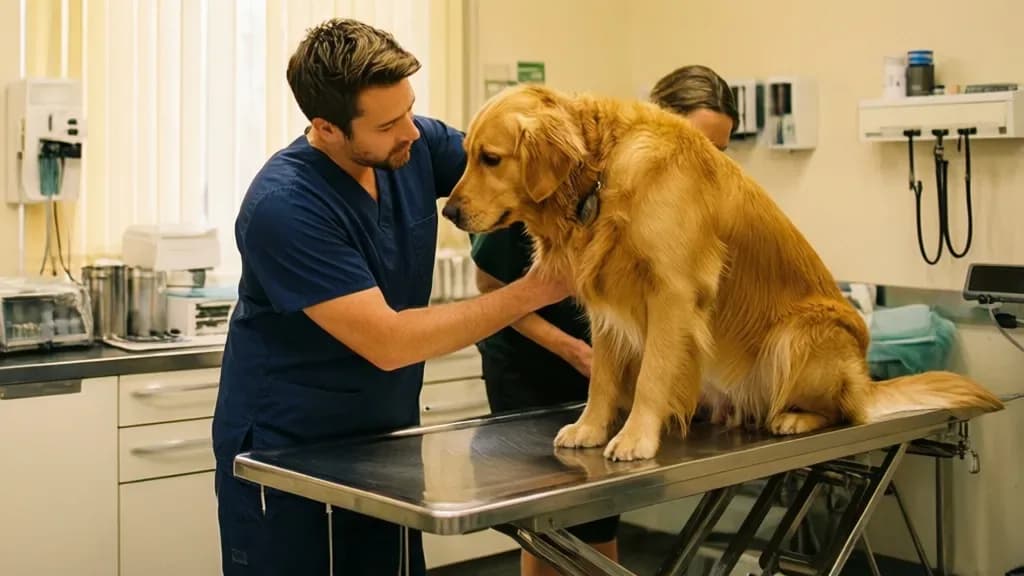
The Australian veterinary nursing workforce sits at the intersection of two pressures. Pet ownership climbed during the pandemic and has not retreated — roughly 69% of Australian households now keep an animal. At the same time, the veterinary sector reports persistent staffing gaps, particularly in regional clinics and after-hours emergency practices. Vet nurses keep clinics running. They assist surgeries, administer medication, run laboratory tests, manage anaesthesia recovery, and handle client communication.
Demand concentrates in mixed-practice rural clinics, suburban small-animal hospitals, university teaching hospitals, and corporate groups such as Greencross and VetPartners. Sydney, Melbourne and Brisbane absorb the highest absolute volume of roles, but regional and remote clinics offer the strongest visa case because shortages are sharpest outside metropolitan areas. Specialty referral hospitals — oncology, surgery, emergency, exotics — pay above the SEEK median and are the fastest route to senior pay bands.
ANZSCO Code Mapping: 361311
ANZSCO 361311 covers veterinary nurses who provide nursing care to sick, injured or recuperating animals and assist veterinarians in clinical procedures. The official task list includes holding animals during examination, preparing surgical instruments, administering medication and fluids under veterinary direction, monitoring patients during anaesthesia and recovery, performing routine diagnostic tests, and educating owners about post-operative care.
The code sits within ANZSCO Unit Group 3613 (Veterinary Nurses). There is no separate code for veterinary technologists or specialised veterinary technicians — those roles map back to 361311 for migration purposes. If your duties focus on animal training or animal attending, the appropriate codes are 361211 (Animal Attendants and Trainers) and not 361311. The distinction matters: VETASSESS rejects applications where the duties described in employment references do not align with the nursing scope.
Skills Assessment with VETASSESS
VETASSESS is the assessing authority for Veterinary Nurse under the migration framework. The body offers four pathways depending on your qualification level and post-qualification experience.
Requirements:
- AQF Certificate IV or Diploma comparable qualification in Veterinary Nursing, Veterinary Medicine, or Animal Science and Behaviour
- Minimum one year of relevant post-qualification employment within the last five years (or three years across various pathway tiers)
- Highly relevant tasks must match the ANZSCO description
- English language evidence at the level required by the visa subclass
Assessment Cost: AUD $1,205.60 for Australian residents (includes GST) / AUD $1,096.00 for non-residents (excludes GST)
Processing Time: 8 to 10 weeks for standard processing. Priority processing returns an outcome in 10 business days for an additional AUD $825.
Common rejection reasons: Employment references that read like animal attendant duties rather than clinical nursing, qualifications below AQF Certificate IV equivalent, and gaps in the five-year experience window. VETASSESS expects references to itemise clinical tasks — surgery prep, anaesthesia monitoring, medication administration — not generic "looking after animals" language.
Professional Recognition: AVNAT Registration
Veterinary nursing is not nationally registered in the way doctors or nurses are. There is no equivalent of AHPRA for vet nurses. Most reputable employers, however, require AVNAT registration through the Veterinary Nurses Council of Australia (VNCA), and many state award classifications reference it.
AVNAT recognises holders of an Australian Certificate IV in Veterinary Nursing, Bachelor of Veterinary Technology, Bachelor of Veterinary Nursing, Associate Degree in Veterinary Nursing, or equivalent overseas qualifications. Annual continuing professional development of 20 CPD points keeps registration current. Overseas-trained nurses can apply through the VNCA's recognition of prior learning pathway.
AVNAT is separate from your VETASSESS skills assessment. The two run independently. Plan to obtain both before lodging an employer-sponsored visa.
Visa Pathways for Veterinary Nurses
Subclass 482 — Skills in Demand Visa
The 482 is the dominant pathway for overseas-trained vet nurses because Australian clinics actively sponsor.
Key Details:
- Visa fee: AUD $3,210 (primary applicant, Core Skills stream)
- Salary threshold: Core Skills stream AUD $76,515 (the new Core Skills Income Threshold)
- Processing time: Median 51 days for Core Skills stream, with 90% completed within three months
- Duration: Up to 4 years
- Pathway to PR: Yes, through subclass 186 after 2 years on 482
The clinical reality: many entry vet nurse salaries sit below the AUD $76,515 Core Skills threshold. Senior vet nurses, specialty nurses, and head nurses do clear the threshold. If your offer is below threshold, the visa will not be granted regardless of clinic willingness.
Subclass 491 — Skilled Work Regional (Provisional)
A five-year provisional visa for nominated applicants willing to live and work in designated regional areas. Veterinary Nurse is one of the occupations NSW nominates under the 491 stream.
Key Details:
- Visa fee: AUD $6,140 (primary applicant)
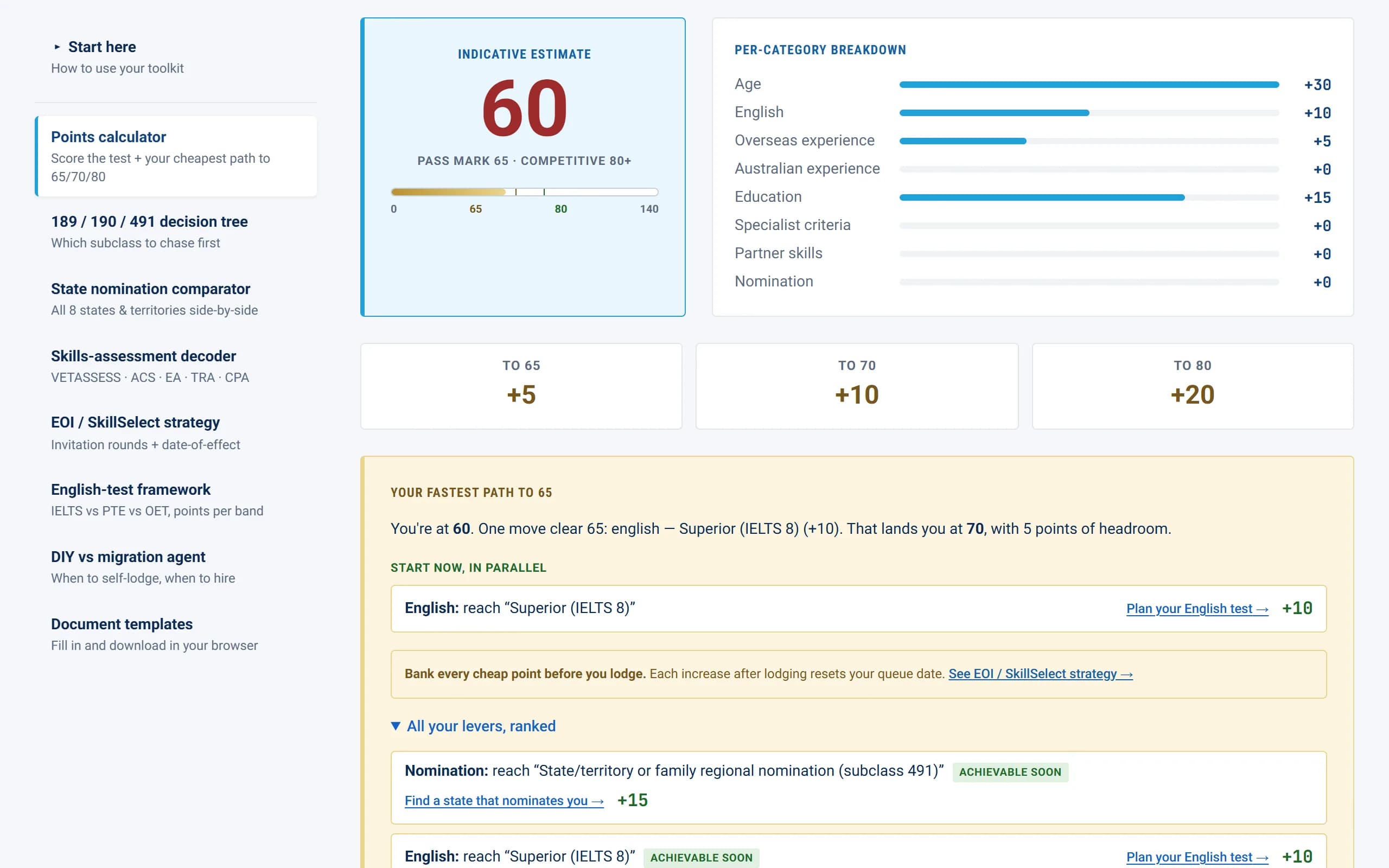
- Points boost: +15 from regional nomination
- Processing time: Typically 9-12 months from invitation
- Regional definition: Most of Australia except Sydney, Melbourne, Brisbane — vast majority of vet nursing roles outside the three biggest cities qualify
For vet nurses, the 491 is often more achievable than the 190 because regional shortage signals are stronger.
Subclass 190 — Skilled Nominated Visa
Permanent residency through state nomination. NSW nominates Veterinary Nurses under both 190 and 491 lists, making it currently the most accessible state.
Key Details:
- Visa fee: AUD $6,140 (primary applicant)
- Points boost: +5 from state nomination
- Obligation: Live in nominating state for 2 years
- Processing time: 12-18 months typical
Subclass 186 — Employer Nomination Scheme
Permanent residency via direct employer sponsorship.
Key Details:
- Visa fee: AUD $6,140 (primary applicant)
- Streams: Direct Entry or Temporary Residence Transition (after 2 years on 482)
- Processing time: Current Direct Entry stream is stretching to 12-19 months. TRT stream slightly faster. Accredited sponsors and regional roles continue to move more quickly than this median.
Points Test Strategy
Veterinary Nurse is a Skill Level 3 occupation, and the points hurdle is lower than for ICT or engineering. Most successful applicants invite at 65-80 points.
| Points Factor | Points | Notes |
|---|---|---|
| Age (25-32) | 30 | Maximum bracket |
| Age (33-39) | 25 | Still strong |
| Qualification (Diploma/AQF Cert IV) | 10 | Typical for vet nurses |
| English (Proficient — IELTS 7.0) | 10 | Realistic for trained nurses |
| English (Superior — IELTS 8.0) | 20 | Worth chasing |
| Overseas experience (5-7 years) | 10 | After VETASSESS deduction |
| State Nomination (190) | 5 | NSW |
| Regional (491) | 15 | NSW regional |
| Partner Skills | 5-10 | If applicable |
Realistic Scenario: 29-year-old vet nurse with five years post-qualification experience, IELTS 7.0, and a regional NSW employer willing to sponsor. Age 30 + qualification 10 + English 10 + experience 5 + regional nomination 15 = 70 points. Comfortable for 491.
State Nomination
New South Wales
Veterinary Nurses appear on both the NSW 190 and 491 skills lists for the 2025-2026 program year. NSW nominates based on points score, English level, and regional employer demand. Regional NSW clinics — Tamworth, Wagga Wagga, Dubbo, Coffs Harbour, Albury — produce most of the 491 invitations. A signed regional job offer materially strengthens an application.
Other States
Most other states do not currently nominate Veterinary Nurse under their 190 or 491 lists for the 2025-2026 program year. Victoria's nomination program prioritises healthcare, education and certain trades. Designated Area Migration Agreement (DAMA) regions — including the Northern Territory and Goldfields in Western Australia — may offer pathways through labour agreement streams where standard state nomination is unavailable.
Salary and Employment Outlook
Salary by Role
| Role | Typical Salary Range |
|---|---|
| Entry Vet Nurse (Cert IV, < 2 yrs) | AUD $52,000-$60,000 |
| Vet Nurse (general practice, 2-5 yrs) | AUD $60,000-$72,000 |
| Senior Vet Nurse | AUD $70,000-$85,000 |
| Head Vet Nurse / Practice Manager | AUD $80,000-$100,000+ |
| Specialty Nurse (emergency, surgery, oncology) | AUD $75,000-$95,000 |
| Vet Tech / Technologist (degree-qualified) | AUD $75,000-$95,000 |
SEEK reported the April 2026 national range at AUD $65,000-$80,000, and Talent.com Australia tracked a similar median. Total package figures should include 11.5% superannuation. Larger corporate groups (Greencross, VetPartners) add CPD allowances and uniform stipends.
Highest-Paying Settings
- Specialty referral hospitals — emergency, oncology, surgery, dermatology
- University teaching hospitals — Sydney, Melbourne, Murdoch, Queensland
- Corporate group head nurse roles — Greencross, VetPartners, National Veterinary Care
- Equine and large animal practice — generally pays a premium for travel and after-hours
- Pharmaceutical and animal-health industry — technical support, training, sales education
Geographic Variation
Sydney and Melbourne pay 5-10% above regional ranges. Regional and remote roles often package accommodation, vehicle, or sign-on bonuses worth AUD $5,000-$15,000 — particularly in WA's Pilbara and the NT.
Tips for a Successful Application
1. Get your employment references written in clinical language
VETASSESS rejects vet nurse assessments most often because references describe animal handling rather than nursing. References must itemise surgery prep, anaesthesia monitoring, IV catheter placement, dental scaling, radiography, lab work, and medication administration. Work with your supervising vet to draft references that map directly to the ANZSCO 361311 task list.
2. Apply for AVNAT registration in parallel with VETASSESS
These two processes are independent. Running them sequentially adds three to four months. Start AVNAT recognition of prior learning at the same time you lodge the VETASSESS application — they share most of the same evidence.
3. Target regional clinics for the 491 visa
Regional employer demand is real and persistent. Clinics in northern NSW, the Riverina, the Hunter, and inland Queensland post vet nurse vacancies for months. A signed offer from one of these clinics adds substance to a 491 application that a metro-based EOI cannot match.
4. Pursue Superior English
Veterinary nursing rarely demands IELTS 8.0 on the job, but the 10 extra points are decisive when state nomination ceilings tighten. The cost of one extra IELTS sitting is trivial against the points value.
5. Document continuing professional development
VETASSESS pathways reward applicants who can demonstrate active CPD. Save certificates from manufacturer training, online modules, in-clinic workshops, conference attendance. Twenty hours per year for the last three years is a credible threshold.
Step-by-Step Migration Roadmap
- Verify your qualification maps to ANZSCO 361311 — review the VETASSESS task descriptors and check your qualification against AQF Certificate IV equivalence
- Check the occupation list — confirm Veterinary Nurse remains on the CSOL
- Prepare employment references — itemise clinical nursing duties, not general animal handling
- Sit IELTS, PTE or OET — aim for Proficient minimum, Superior if achievable
- Apply for AVNAT registration in parallel — recognised qualifications pathway via VNCA
- Lodge VETASSESS application — AUD $1,205.60, 8-10 weeks standard processing
- Submit Expression of Interest in SkillSelect — for 190 or 491
- Apply for NSW nomination if pursuing 190/491
- Alternatively, secure employer sponsorship — a Core Skills stream 482 from a regional clinic remains the fastest practical option
- Receive invitation and lodge visa — within 60 days of invitation
- Complete health and character checks — including biometrics
- Receive grant and relocate
Frequently Asked Questions
Why is Veterinary Nurse on the CSOL but not the MLTSSL?
The CSOL replaced previous occupation lists when the Skills in Demand framework launched in December 2024. Veterinary Nurse was reclassified as a Core Skills occupation reflecting persistent shortages in clinics, particularly regionally. It is not on the MLTSSL because the 189 Skilled Independent visa is reserved for higher-skill (Level 1 and 2) occupations.
Can I work as a Veterinary Nurse in Australia without AVNAT registration?
Yes, but practically it limits your employment options. AVNAT registration is voluntary at the federal level — there is no statutory licensing requirement equivalent to AHPRA. Major corporate groups, university teaching hospitals, and specialty practices treat AVNAT as a baseline expectation, and several state awards reference it for senior pay grades.
What's the demand outlook for Veterinary Nurses in Australia in 2026?
Strong, particularly regionally. Jobs and Skills Australia listed Veterinary Nurse on the 2025 Occupation Shortage List with shortage signals in multiple regions. Pet ownership remains elevated, the workforce has high turnover, and the training pipeline has not kept pace. The clinical reality on the ground: many regional clinics have had vet nurse vacancies open for six months or longer.
Is employer sponsorship easier than state nomination for Veterinary Nurses?
For most applicants, yes — provided your salary meets the AUD $76,515 Core Skills threshold. Sponsorship sidesteps the SkillSelect lottery entirely. The catch is that entry-level vet nurse pay often falls below threshold. Senior, head nurse and specialty nurse roles clear it comfortably.
Can my Veterinary Nursing qualification from the UK, US or New Zealand be recognised?
Generally yes. VETASSESS accepts Royal College of Veterinary Surgeons (UK), AVMA-accredited US programs, and New Zealand veterinary nursing qualifications as comparable, subject to individual assessment. Applicants from these countries typically clear assessment with documented experience and aligned task references. Applicants from countries without a formal veterinary nursing qualification framework may need to demonstrate competence through extended experience evidence under one of VETASSESS's alternate pathways.